
Thinking that an “As-Is” contract shields you from telling a buyer about property issues is a mistake that could cost you thousands in legal fees. In reality, understanding florida real estate disclosure laws isn’t just about following the rules; it’s your best tool for protecting your hard-earned equity. It’s completely normal to feel a bit anxious that revealing a past repair might scare off a buyer, especially in a market where Sarasota and Manatee homes are sitting for an average of 60 to 90 days. You’ve worked hard on your property, and you want the closing to be the end of the story, not the start of a dispute.
We’re here to help you move through this process with total clarity and confidence. You’ll learn exactly what needs to be revealed to keep your transaction stress-free while protecting yourself from future legal headaches. This guide breaks down the essential 2026 requirements, including the updated flood disclosure rules and the specifics of the Johnson v. Davis ruling, so you can sign those papers and move on to your next chapter without looking back.
Key Takeaways
- Understand why “buyer beware” doesn’t apply in Florida and how the Johnson v. Davis rule places the responsibility on you to speak up about hidden issues.
- Get a clear handle on florida real estate disclosure laws so you know which structural or mechanical defects must be put in writing to avoid future lawsuits.
- Discover why selling a home “As-Is” doesn’t give you a pass on sharing known problems and how being transparent actually protects your sale.
- Learn which sensitive topics, like past crimes or deaths on the property, are legally off the table for mandatory disclosure under state law.
- Find out how a professional property manager or Realtor can act as your safety net to ensure every document is handled correctly.
The Foundation: What is the Johnson v. Davis Rule?
The way we sell homes in Florida changed forever in 1985. Before that year, the state followed a very old legal tradition often referred to as The Foundation: What is the Johnson v. Davis Rule?, which basically meant “let the buyer beware.” In those days, if you bought a house with a leaky roof or a cracked foundation, it was mostly your problem. The seller didn’t have a legal duty to point out flaws unless they were specifically asked. It was a stressful time for buyers, and it left sellers in a bit of a moral gray area.
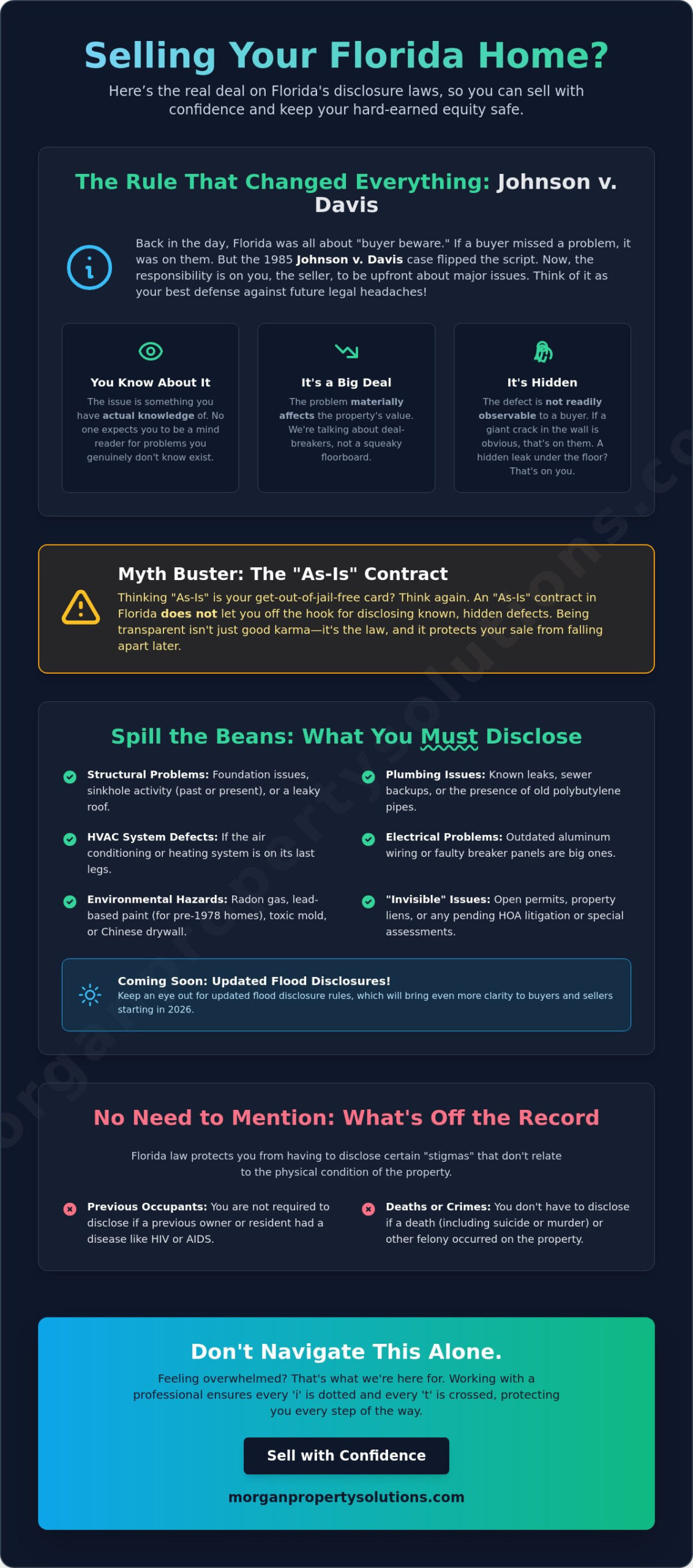
That all shifted with the Florida Supreme Court case of Johnson v. Davis. The court decided it wasn’t fair for a seller to stay quiet about major issues that a buyer couldn’t easily see. This landmark case is now the bedrock of modern florida real estate disclosure laws. It created a standard that requires honesty and transparency, which actually helps you as a seller. By being upfront, you’re closing the door on future lawsuits and ensuring the sale stays final. It’s about setting clear boundaries so everyone knows exactly what they’re signing up for.
The Three Pillars of Mandatory Disclosure
To keep things simple, the law usually looks at three specific factors to decide if you should have spoken up about a property issue. First, you must have actual knowledge of the defect. You aren’t expected to be a mind reader or a structural engineer; if you truly didn’t know the pipes were corroded behind the drywall, you generally aren’t liable. Second, the defect must “materially affect” the value of the property. In plain English, this means the problem is significant enough that it would change how much a buyer is willing to pay. Finally, the defect must not be “readily observable.” If a window is smashed and visible to anyone walking by, it’s usually on the buyer to notice it. If the leak is hidden under the floorboards, that’s where your duty to disclose kicks in.
Why Silence is Not Golden in Florida Real Estate
There’s a big difference between truly not knowing about a problem and intentionally hiding it. If you paint over a water stain to hide a roof leak right before a showing, that moves from “forgetting” into the territory of active fraud. Under florida real estate disclosure laws, staying silent about a major issue you know exists can lead to serious legal trouble long after you’ve moved out. This is also why working with a professional is so helpful. Licensed real estate agents have their own independent duty under Florida Statute 475.278 to disclose facts that affect a property’s value. They’re your partners in making sure everything is handled correctly. If you’re feeling a bit overwhelmed by these requirements, checking out our landlord resources can provide extra clarity on staying compliant throughout your journey.
The Big List: What You Absolutely Must Disclose
Knowing the history of these rules is helpful, but now you’re probably asking: “What exactly do I need to put on paper?” Under florida real estate disclosure laws, you aren’t required to list every tiny scratch on the floorboards. You do, however, have to reveal anything that significantly impacts the home’s value or the safety of the people living there. Think about the “big ticket” items first. For instance, if you’ve had past sinkhole activity or repairs, Florida Statute § 627.7073 requires you to disclose that. The same goes for a roof that’s reaching the end of its life or an HVAC system that’s currently struggling to keep the house cool.
It’s not just about the bones of the house. You also need to look at the systems that keep the property running. Electrical issues, like outdated aluminum wiring or a breaker panel that’s known for being a fire hazard, must be mentioned. Plumbing problems, including old polybutylene pipes or recurring sewer backups, also fall into this category. If you’re feeling unsure about whether a specific repair you’ve made needs to be listed, our real estate articles offer more deep dives into specific property conditions to help you decide.
Environmental & Health Hazards
Certain requirements are non-negotiable because they’re baked into the state’s legal code, which you can find in The Big List: What You Absolutely Must Disclose. For example, any home built before 1978 must include a federal lead-based paint disclosure. Florida law also requires a specific radon gas notification for every real estate contract under Section 404.056(5). In our local Central Florida market, we also watch for “red flags” like toxic mold or Chinese drywall from the mid-2000s. These aren’t just polite suggestions; they are legal must-haves for a smooth sale.
The “Invisible” Issues: Liens and Permits
Sometimes the biggest problems aren’t physical at all. Unpaid utility bills or property taxes can follow the land, and under florida real estate disclosure laws, you must warn buyers if taxes will likely increase significantly after the sale due to a lost homestead exemption. Open permits are another common headache. If a previous owner did a major renovation without a permit, that’s a material fact that needs to be shared. Finally, don’t forget about the HOA. If there’s pending litigation or a large special assessment coming up, it’s your duty to share that information before the closing date.
The Seller’s Disclosure Form vs. The Home Inspection
A common misconception among sellers is that a professional home inspection replaces the need for a detailed disclosure. While Florida doesn’t technically mandate a specific, statewide form, using the standard Florida Realtors Disclosure Form is one of the smartest moves you can make. This document acts as your paper trail. It helps you fulfill the requirements of Florida Statute 475.278, which requires that all known facts materially affecting a property’s value must be shared with the buyer. Think of the form as a guide that prompts you to remember details you might otherwise overlook during the excitement of a sale.
Relying solely on the buyer’s inspector to find problems is a risky gamble. Inspectors are only human. They look at what is visible on a specific day. If your roof only leaks during the intense tropical downpours we see in August, an inspector visiting during a dry week in May might never see the evidence. If you knew about that leak and stayed silent, you could still be on the hook for repairs after the closing. Providing your disclosure early, ideally right when you list the property, sets a tone of honesty. It prevents the deal from falling apart later when a buyer feels they’ve been misled.
Filling Out the Form Without the Stress
You don’t need to be an expert to fill out these papers. If you truly don’t know the answer to a question, “I don’t know” is a completely valid and legal response. Never guess on technical details like the exact age of the electrical panel or the specific year the AC was installed if you don’t have the receipts. If you’ve had a problem fixed in the past, simply state what happened and mention that it was professionally repaired. Being upfront about a resolved issue shows you’ve maintained the home well. For more tips on preparing your property for the market, you can learn more about our approach to transparent transactions.
Does a Good Inspection Excuse a Bad Disclosure?
The short answer is no. The home inspector works for the buyer, not for your legal protection. Their report doesn’t “clear” you from the duty to disclose hidden defects you already knew about. While the “readily observable” rule means buyers should notice obvious things like a shattered sliding glass door, it doesn’t excuse you from mentioning a foundation crack hidden behind stacked boxes in the garage. A transparent disclosure actually speeds up the sale. It builds trust with the buyer, making them feel much more comfortable moving forward with the purchase because they know exactly what they’re getting.
Busting Common Myths: Murders, Deaths, and “As-Is” Sales
Selling a home often brings up “what if” scenarios that can keep you awake at night. You might wonder if you need to tell a buyer about a burglary that happened down the street or a natural death that occurred in a bedroom years ago. These are often called “stigmatized” properties. While some states have blurry rules about this, florida real estate disclosure laws are actually quite clear. They help draw a line between what is a physical defect and what is simply an emotional concern. Knowing these distinctions can save you a lot of unnecessary anxiety during the listing process.
The “As-Is” Contract Misconception
Stigmas and Superstitions
If you’re worried about “ghosts” or past tragedies, you can breathe a sigh of relief. Under Florida Statute 689.25, a death, suicide, or homicide that occurred on a property is not considered a material fact. You aren’t legally required to disclose these events to a buyer. This also applies to the HIV or AIDS status of a previous occupant, which is strictly protected information. You don’t have to answer questions about these topics, and doing so could actually lead to different legal complications.
What about the world outside your front door? Neighborhood nuisances can be a tricky area. Generally, you don’t have to disclose a neighbor’s barking dog or the fact that the person next door is a bit loud. However, some external factors do reach the level of a mandatory disclosure:
- Noise from a nearby public airport or frequent flight paths.
- Known boundary disputes or shared driveway agreements.
- Environmental hazards in the immediate area that aren’t obvious.
If you’re feeling stuck on how to phrase a specific issue or want to ensure your listing is fully compliant, our team can guide you through every step. We specialize in Real Estate Seller Representation to help you navigate these hurdles without the stress.
Navigating Disclosures with a Professional Ally
Keeping up with the specific details of florida real estate disclosure laws can feel like a heavy lift. Whether you’re a long-term landlord or a homeowner getting ready to list, the sheer volume of paperwork is enough to make anyone pause. This is exactly where having a professional ally makes a massive difference. We don’t just hand you a form; we help you interpret the requirements so you can sleep soundly knowing you’ve done everything by the book. It’s all about removing the stress that usually comes with these big transitions. A seasoned expert knows which local red flags to look for, ensuring your paperwork is as thorough as it is accurate.
Landlord-Specific Disclosures
If you’re leasing property rather than selling it, your disclosure duties don’t just disappear. Federal law still requires lead-based paint disclosures for any rental home built before 1978. Beyond that, Florida landlords must be transparent about things like shared utility meters or the specifics of fire protection systems in multi-unit buildings. Keeping these details organized between tenants is vital for staying compliant and avoiding future disputes. It’s much easier to manage these requirements when you have a systematic approach to property care. For a deeper dive into these rules, you should check out our Landlord Resources for more legal tips and guidance.
Partnering for Success in Orlando and Tampa
In a competitive market like Orlando or Tampa, the way you handle disclosures can set your property apart. At Morgan Property Solutions Inc., we focus on breaking these complex processes into manageable steps. One strategy we often suggest is a pre-listing inspection. By finding potential issues before a buyer does, you can address them or disclose them upfront. This prevents those stressful moments that often happen during the buyer’s inspection period. It’s a proactive way to build trust from day one. When a buyer sees a clean, honest disclosure, they feel much more comfortable making a strong offer because they know exactly what they’re getting.
As we look toward the 2026 Florida market, transparency is more important than ever. Buyers are more informed and have more leverage with inventory levels sitting higher than in previous years. You want to make sure your deal doesn’t fall through because of a missed detail. Being a steady ally means Morgan Property Solutions Inc. is here to help you navigate these shifts with confidence. If you’re ready to see how your property stacks up, get a professional valuation today to start your journey on the right foot. We are committed to your long-term success throughout this entire process.
Moving Forward with Total Peace of Mind
Handling property transactions shouldn’t feel like walking through a legal minefield. By now, it’s clear that being upfront about material defects is your best defense against future disputes. Whether you’re navigating the latest flood requirements or filling out a standard seller’s form, transparency is what keeps your hard-earned equity safe. Understanding florida real estate disclosure laws is simply about turning what could be a stressful hurdle into a straightforward part of your success story.
You don’t have to manage these technical details alone. With over 20 years of experience in Central Florida, Morgan Property Solutions Inc. has built a reputation as a top-rated Orlando property management firm and a trusted partner for residential sales. We specialize in distilling these requirements into a clear path forward. Our expertise in both sales and long-term management ensures you have a steady ally throughout every phase of the process.
Your successful closing is just around the corner, and we’re here to make sure you get there with absolute confidence.
Frequently Asked Questions
Do I have to disclose a roof leak that was fixed three years ago?
Yes, it’s a good idea to disclose a fixed roof leak to be completely safe. Even if the repair was successful, the fact that a leak occurred is a material piece of the home’s history. Sharing the repair details and any warranties from the roofing company actually reassures buyers that you’ve maintained the property well. It turns a potential red flag into proof of good homeownership.
What happens if I forget to disclose a defect and the buyer finds it later?
If a buyer discovers a major issue you knew about after the closing, you could face a lawsuit for fraudulent concealment. Under florida real estate disclosure laws, being “forgetful” isn’t a valid legal defense if the buyer can prove you were aware of the defect. It’s always better to be transparent now than to spend thousands on legal fees later trying to defend a mistake.
Is a seller disclosure required for a vacant land sale in Florida?
Yes, you have a duty to disclose facts that affect the value of vacant land, such as drainage issues or protected wildlife on the property. While the most famous court cases involve houses, florida real estate disclosure laws still require honesty regarding land-use restrictions or environmental hazards. Being upfront about these details prevents the buyer from claiming they were misled about what they could build.
Do I have to disclose that a registered sex offender lives in the neighborhood?
No, you don’t have to disclose that a registered sex offender lives in the neighborhood. Florida law is very specific about this; stating that the presence of an offender isn’t a material fact that must be shared. Buyers have the responsibility to check the public registries if they want to know about the people living in the surrounding area.
Can a buyer back out of a contract if they don’t like the disclosure?
A buyer can usually back out if they are still within the inspection period outlined in the contract. If you provide a disclosure that reveals a major problem they weren’t expecting, they can use that time to cancel the deal and get their deposit back. This is why it’s so important to share your disclosure form right when the property is listed.
Do Florida disclosure laws apply to inherited properties or probate sales?
Yes, the duty to disclose known material defects still applies to probate sales and inherited homes. While you might not know as much about the house because you didn’t live there, you must still share any issues you’ve actually discovered. You aren’t required to do a deep dive to find new problems, but you cannot stay silent about the ones you know exist.
What is the “Lead-Based Paint Disclosure” and does it apply to my 1980s home?
The Lead-Based Paint Disclosure does not apply to your 1980s home because the federal requirement only covers properties built before 1978. Since your house was built after the ban on lead-based paint, you don’t need to worry about this specific paperwork. You can focus your energy on the other standard disclosures required for a modern Florida home instead.
How do I disclose unpermitted work done by a previous owner?
You should disclose unpermitted work by clearly stating what was done and that you don’t have records of a permit. If you bought the house with a finished garage and found out later it wasn’t permitted, simply list it as “unpermitted work by previous owner.” This protects you from claims that you tried to hide the legal status of the renovation.

Article by
Oliver Overton-Morgan
Oliver Overton-Morgan is a full-time Real Estate Broker since 2003, with years of experience helping thousands of people purchase and sell real estate throughout Central Florida. He holds a Graduate Realtor Institute designation, LCAM, and has held licenses in good standing as a Florida Mortgage Broker and a Notary Public. Oliver immigrated to central Florida in 2001, and within 5 years Oliver built a successful Real Estate brokerage in central Florida, where he recruited over 75 Sales Associates with 25+ million in sales production.