
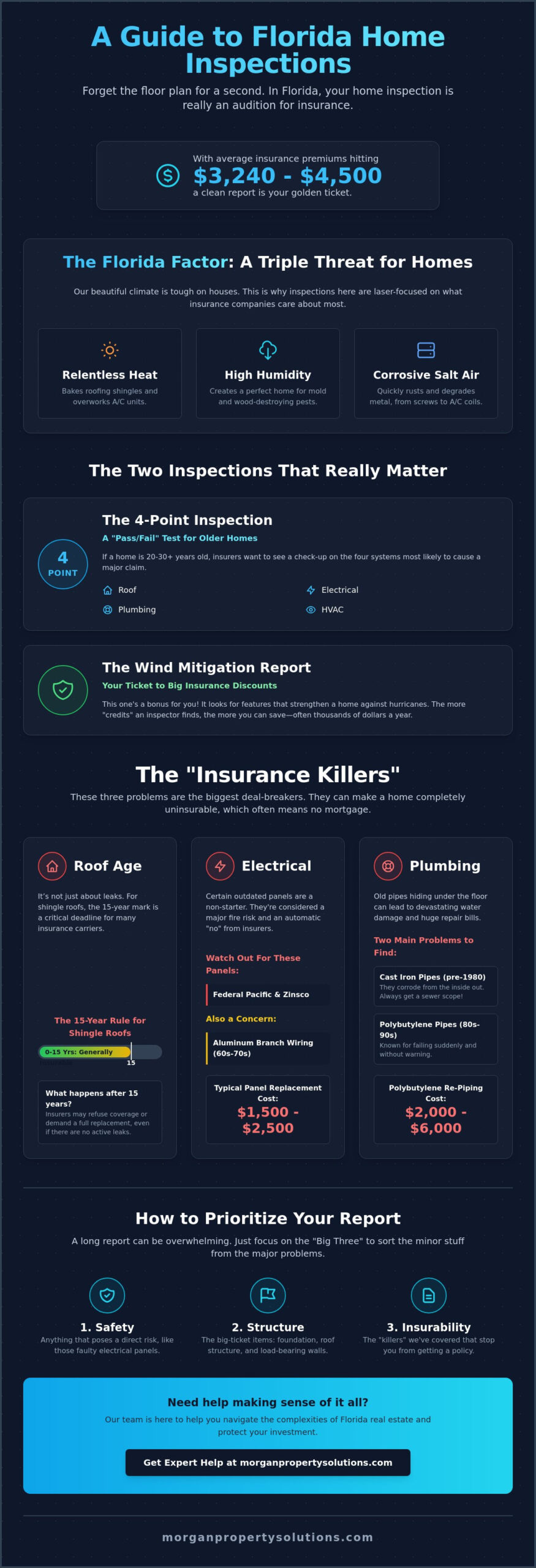
Imagine finding your dream home in the Sunshine State, only to have the deal fall apart because of a roof that’s just a few years too old. Many buyers and sellers face this exact stress when they encounter common home inspection issues in florida that impact more than just the walls and floors. It’s completely natural to feel a bit of “inspection anxiety,” especially when you realize that in 2026, a home inspection is often more about insurance than it is about the floor plan. With average Florida insurance premiums now ranging between $3,240 and $4,500, the stakes for a clean report have never been higher.
We understand that you want a smooth transition without any expensive surprises. You deserve to know exactly what you’re walking into before you sign on the dotted line. In this guide, you’ll discover the specific red flags that derail deals and learn how to handle the state’s unique climate and insurance requirements. We’ll walk through the “insurance killers” like Federal Pacific panels, explain why the 15-year roof rule matters, and show you how to tell a simple fixer-upper from a true money pit so you can negotiate with total confidence.
Key Takeaways
- Florida’s heat and salt air turn a standard inspection into a high-stakes insurability audit.
- You’ll learn which roof ages and specific electrical brands are considered “deal-killers” by modern insurance carriers.
- We’ve identified the common home inspection issues in florida that lead to mold growth and wood-destroying organism damage.
- See how to evaluate your yard’s grading to protect your foundation from the pressure of intense seasonal thunderstorms.
- Our “Big Three” strategy helps you prioritize repairs by focusing on safety, structure, and long-term insurability.
The Florida Factor: Why Our Home Inspections Are Different
Florida is a paradise for people, but it’s a challenge for real estate. The combination of relentless tropical heat, high humidity, and salt air creates a unique set of stressors for any structure. While looking at a property here, the standard inspection process takes on a much more specialized role compared to other states. A baseline home inspection covers the basics of safety and function. However, Florida owners must focus on a more critical goal: insurability.
In 2026, the local market is heavily driven by insurance requirements. If a home can’t be insured, the deal usually can’t be financed. This is why you might see common home inspection issues in florida that seem minor but carry heavy weight with carriers. Don’t let a thick inspection report scare you off. A long list of findings often includes simple maintenance items that are easy to fix. The key is knowing which issues are just “house character” and which ones will stop you from getting a policy. Our team often helps owners navigate these reports through our landlord resources, ensuring every detail is addressed correctly.
What is a 4-Point Inspection?
The Importance of Wind Mitigation
The ‘Insurance Killers’: Roofs, Pipes, and Panels
In our state, some problems carry much more weight than others. We call these “insurance killers” because they don’t just affect the home’s value; they can actually block you from getting a policy. If you can’t get coverage, you usually can’t get a mortgage. While these common home inspection issues in florida can feel like a total deal-breaker, they’re often the starting point for a fair negotiation between a buyer and a seller. Most of these high-priority items have clear solutions, even if they require an upfront investment.
Roofing: It’s About Age, Not Just Leaks
Florida law provides some protection by stating insurers can’t refuse a policy based solely on the age of a roof if it’s less than 15 years old. However, once a shingle roof hits that 15-year mark, the rules change. Even if the roof is currently leak-free, an insurer might demand a full replacement or a certification proving it has at least 3 to 5 years of remaining life. The relentless sun causes granule loss and curling shingles long before the water starts coming in. Recent legislation has changed how claims are handled, making inspectors even more diligent about spotting these signs of wear early on.
Electrical Red Flags: Outdated Panels
Certain electrical issues are automatic “no-go” zones for insurance companies. Brands like Federal Pacific and Zinsco are the most frequent culprits because their breakers are known to fail during a power surge. Replacing an outdated panel typically costs between $1,500 and $2,500. You might also find aluminum wiring in homes built during the 1960s and 70s, which is another common home inspection issue in florida. While aluminum wiring can be made safe with specialized connectors, many insurers still view it as a high risk. On the bright side, smaller issues like “double tapping,” where two wires are connected to a single breaker, are usually simple and inexpensive for an electrician to fix.
Plumbing: The Ghost of Cast Iron
If you’re looking at a charming home built before 1980, you need to consider what’s happening beneath the concrete slab. Cast iron pipes eventually corrode from the inside out, leading to major backups or slow drains. We always recommend a sewer scope as an add-on for these older properties to see the condition of the lines. You should also keep an eye out for polybutylene piping, which was common in the 80s and 90s. It’s notorious for bursting without warning, and a full replacement can cost anywhere from $2,000 to $6,000. Following a preventative home maintenance checklist can help you stay ahead of these systems, but an inspection is the only way to know for sure.
Managing these high-stakes repairs is a standard part of owning property in our state. If you’re feeling overwhelmed by a report, our team at Morgan Property Solutions Inc. can help you navigate these challenges and protect your investment’s value.
Fighting the Humidity: Moisture, Mold, and Pests
Living in Florida means living with water in all its forms. Whether it’s the 90% humidity or the sudden afternoon downpours, moisture management is a full-time job for any homeowner. When you’re looking at common home inspection issues in florida, moisture intrusion is often at the top of the list. It’s not just about a few drops of rain; it’s about how that water interacts with our heat to create an environment where mold and wood-destroying organisms can thrive. The goal of a good inspection isn’t just to find existing damage, but to identify the conditions that make damage inevitable.
The Mold and Moisture Connection
Mold is often called the “M-word” in real estate because of the anxiety it causes. In Florida, a small window leak can turn into a significant mold issue in as little as 48 hours. Inspectors look for subtle signs like “ghosting,” which are dark streaks on ceilings or walls that indicate temperature differences and moisture buildup. To get a clearer picture, many professionals now use thermal imaging cameras. These tools can “see” temperature variations behind Florida stucco or inside walls, helping to find hidden leaks that aren’t visible to the naked eye. Finding these early allows for simple remediation before a small leak becomes a major project.
Wood-Destroying Organisms (Termites)
A Wood-Destroying Organism (WDO) inspection is a non-negotiable part of the process. In Florida, we deal with both Subterranean termites, which come up from the ground, and Drywood termites, which enter through the attic or vents. It’s important to remember that a WDO report isn’t just looking for bugs. It also documents “wood rot” and “fungi,” which are just as destructive to a home’s structure. If you’re using a VA or FHA loan to buy your home, keep in mind that these lenders strictly require a clear WDO report before they will fund the loan. Dealing with these issues upfront is a standard part of our real estate guidance for both buyers and sellers.
Beyond the Walls: Grading, Drainage, and Foundations
Florida’s ground is basically a giant sandbox. While our sandy soil drains quickly, it’s also prone to shifting during those intense afternoon thunderstorms. This movement is why grading and drainage are such critical parts of a home inspection. If water isn’t moving away from your house, it’s working against it. Many of the most common home inspection issues in florida involve how a property handles the heavy summer rains. When water has nowhere to go, it starts looking for a way into your foundation or crawlspace.
Then there’s the “S-word” that every homeowner fears: sinkholes. While they make for dramatic news headlines, actual structural sinkholes are relatively rare. Most inspectors look for specific signs like deep depressions in the yard or jagged, diagonal cracks in the foundation. Don’t let every little dip in the grass keep you up at night. Most of what people fear are simply minor settling issues that can be managed with proper yard maintenance and consistent drainage strategies.
Negative Grading and Standing Water
Negative grading happens when the ground slopes toward your home instead of away from it. This allows water to pool right against your concrete slab. Over time, that constant moisture can weaken the foundation or seep into the walls. The culprits are often simple: clogged gutters or downspouts that dump water right at the base of the house. You can usually fix these common home inspection issues in florida with DIY solutions like splash blocks, downspout extensions, or even a basic French drain to redirect the flow.
Florida Foundations: Settling vs. Structural Issues
It’s helpful to know that almost every Florida home will settle. Our high water table fluctuates constantly, causing the soil to expand and contract. This often leads to cosmetic hairline cracks in the stucco or floor tiles. These are usually nothing to worry about. The real red flags are “stair-step” cracks in brickwork or cracks wider than a quarter inch. Remember, most Florida homes settle, and a crack doesn’t always mean the sky is falling. It’s often just the house finding its “seat” in the sand.
If you’re looking for a partner to help you evaluate a property’s long-term stability and value, our team offers expert Real Estate Buyer Representation to guide you through every step of the inspection process.
Turning the Inspection Report into an Actionable Strategy
A 50-page inspection report can feel like a mountain of bad news, but it’s really just a roadmap. When we look at common home inspection issues in florida, our goal is to separate the “noise” from the “deal-killers.” A professional property manager or seasoned agent doesn’t get rattled by a long list of minor defects. Instead, we use a specific filter called the ‘Big Three’ strategy. We focus almost entirely on Safety, Structure, and Insurability. If an issue doesn’t fall into one of those categories, it’s usually just a maintenance item that shouldn’t derail your investment.
One of the biggest decisions you’ll make after the inspection is whether to ask for a repair credit or have the seller handle the work. Asking for a credit is often the smarter move for investors. It gives you total control over the quality of the repair and the contractor doing the work. On the other hand, having the seller fix the issue can be faster and saves you from spending cash out of pocket right after closing. We help our clients weigh these options based on the severity of the findings and the current market conditions.
Prioritizing the ‘Must-Fix’ Items
Safety issues are your absolute first priority. This includes things like active gas leaks, exposed electrical wiring, or fire hazards. These are non-negotiable because they protect the people living in the home. Right behind safety are insurability items. As we’ve discussed, if a roof is over 15 years old or there’s a recalled electrical panel, your mortgage lender might refuse to fund the loan. Addressing these before closing is essential to keep the deal alive. Finally, we advise our clients to ignore cosmetic flaws. Scuffed baseboards or a leaky faucet shouldn’t stop a good deal from moving forward.
How Morgan Property Solutions Inc. Simplifies the Process
At Morgan Property Solutions Inc., we believe that a thorough understanding of common home inspection issues in florida is the best way to protect your long-term returns. Our detailed inspections are designed to identify potential liabilities before they become expensive emergencies. We don’t just hand you a report and wish you luck. Our team takes an active role in coordinating with vetted, reliable contractors to ensure repairs are done right the first time. This methodical approach removes the psychological friction of managing a property.
We’ve spent years serving as a steady ally for owners in the Central Florida market. Whether you’re a first-time landlord or a seasoned investor, we’re here to provide the guidance and partnership you need to succeed. If you’re looking for more ways to stay ahead of the curve, check out our Landlord Resources for more tips on maintaining your investment.
Take Control of Your Florida Property Journey
Understanding the unique landscape of our state makes all the difference when you’re closing a deal. By focusing on the “Big Three” of safety, structure, and insurability, you can filter out the minor maintenance noise and focus on what really matters for your long-term investment. Whether you’re managing a 15-year-old roof or ensuring your drainage is ready for the next tropical storm, knowing the common home inspection issues in florida gives you the upper hand during negotiations. You don’t have to face these technical reports alone.
With over 20 years of combined experience in Central Florida, we’ve helped countless owners in Orlando, Tampa, and Miami navigate these complex transitions. We pride ourselves on providing the detailed inspections and clear financial reporting you need to stay organized and informed. Let Morgan Property Solutions Inc. help you navigate your next Florida home sale or management journey. We’re ready to be your steady ally, ensuring you move forward with total confidence and peace of mind.
Frequently Asked Questions
Does a home inspection report mean a ‘pass’ or ‘fail’ for the house?
A general home inspection isn’t a pass or fail test; it’s a detailed snapshot of the property’s current health. While the report might look like a long list of problems, it’s simply meant to inform you about what you’re buying. However, keep in mind that specialty reports like the 4-point inspection are treated differently. For those, an insurance company might effectively fail a home by refusing coverage until specific repairs are made.
What are the absolute ‘deal-breakers’ in a Florida home inspection?
How much does a typical 4-Point and Wind Mitigation inspection cost in 2026?
In 2026, a 4-point inspection typically costs between $100 and $150, while a wind mitigation report ranges from $100 to $200. If you’re bundling these together during a full home inspection, you might find slightly different rates. These reports are essential investments because the wind mitigation report alone can often save you enough on your annual premiums to pay for itself within the first year.
Can I get a mortgage if the home fails its inspection?
Who pays for the repairs found during a home inspection in Florida?
Repair costs are entirely negotiable between the buyer and the seller. In many standard Florida real estate contracts, there’s a default repair limit of 1.5% of the purchase price that the seller is responsible for. However, this isn’t a set rule. You can negotiate for the seller to fix the issues, provide a closing credit, or even lower the sale price so you can handle the repairs yourself after you move in.
Are sinkholes included in a standard Florida home inspection?
No, a standard home inspection does not include a specialized sinkhole investigation. A general inspector will look for settling signs like cracks in the foundation or depressions in the yard, but they aren’t geologists. If they see something suspicious, they’ll recommend a separate sinkhole inspection. This usually involves ground-penetrating radar or soil testing to determine if there’s a real structural risk beneath the surface.
How long does a home inspection take for an average Orlando property?
Should I be present during the home inspection?
You should absolutely try to be present for the final hour of the inspection. It’s the best time to walk through the property with the professional and see the issues firsthand. They can explain the difference between a simple DIY fix and a major structural problem. Being there helps take the scare factor out of the written report and gives you a chance to ask specific questions about the home’s systems.

Article by
Oliver Overton-Morgan
Oliver Overton-Morgan is a full-time Real Estate Broker since 2003, with years of experience helping thousands of people purchase and sell real estate throughout Central Florida. He holds a Graduate Realtor Institute designation, LCAM, and has held licenses in good standing as a Florida Mortgage Broker and a Notary Public. Oliver immigrated to central Florida in 2001, and within 5 years Oliver built a successful Real Estate brokerage in central Florida, where he recruited over 75 Sales Associates with 25+ million in sales production.