
What if the biggest threat to your home sale isn’t a low-ball offer, but a single report from an inspector? It’s a question that keeps many homeowners awake at night, especially with our state’s unique climate and strict insurance requirements. You’ve worked hard to build equity in your property, and the last thing you want is a surprise roof issue or a hidden mold concern to derail your closing. Understanding the home inspection process for sellers in Florida is the best way to stay in control and protect your investment.
It’s completely normal to feel a bit of dread when an inspector starts poking around your attic or checking your electrical panel, but this stage doesn’t have to be a source of anxiety. You can actually use this phase to your advantage to ensure a faster, smoother closing. We’re going to walk through the specific requirements for 2026, from 4-point inspections to wind mitigation, so you know exactly what to expect. This guide will help you address red flags early, manage buyer negotiations, and move toward your sale with total confidence.
Key Takeaways
- Learn why the 4-point inspection is the ultimate gatekeeper for insurance and how it differs from a standard home assessment.
- Discover how a proactive pre-listing inspection builds immediate trust with buyers and prevents late-stage deal-killers.
- Use our seller’s checklist to tackle low-cost fixes that create a great first impression for the inspector.
- Master the home inspection process for sellers florida homeowners rely on to navigate complex reports and negotiate repairs with confidence.
- Understand the typical timeline and system access requirements to ensure the inspection goes off without a single hitch.
Understanding the Home Inspection Process for Florida Sellers
Selling a home is already a whirlwind of emotions. When you finally get a contract, the last thing you want is more stress. But the home inspection process for sellers florida homeowners face is often the most nerve-wracking part of the journey. Many sellers feel like their home is being put on trial. It’s helpful to remember that an inspector isn’t looking for reasons to kill your deal. They are there to provide a factual snapshot of the home’s current condition. In Florida, this means looking specifically at how our intense heat and summer storms have affected the structure over time.
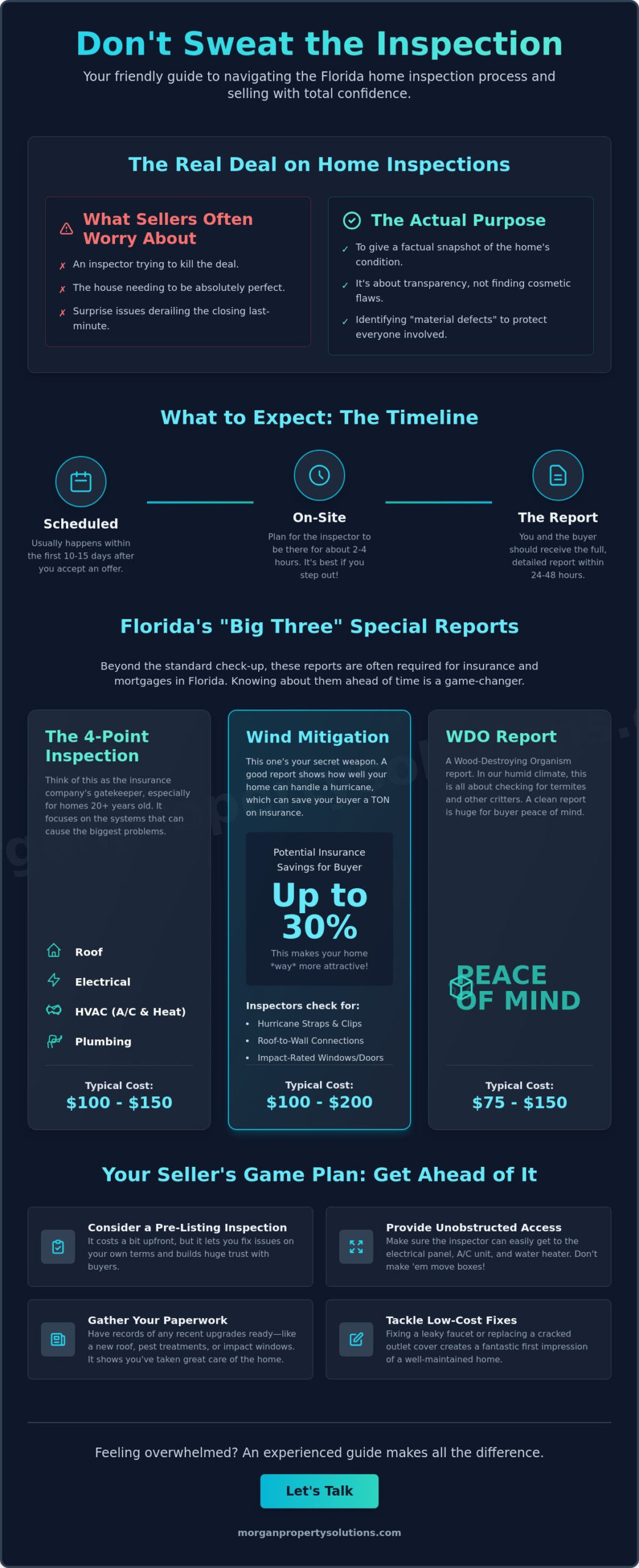
Most inspections are scheduled within the first 10 to 15 days of the contract. This is the standard window defined in most Florida real estate agreements. Once the inspector finishes their walkthrough, you can usually expect the final report within 24 to 48 hours. During the actual inspection, it’s generally best if you aren’t there. It sounds counterintuitive to leave your own house, but it gives the buyer space to ask questions and allows the inspector to focus. If you stay, it can accidentally lead to defensive conversations that might make a buyer feel uneasy. Your absence shows you’re confident in the home and respect the buyer’s due diligence.
The Purpose of the Inspection in a Florida Real Estate Transaction
A common myth is that a home has to be perfect to pass an inspection. That simply isn’t true. No home is perfect, and even brand-new builds often have a list of minor findings. Understanding the Home Inspection Process helps you realize it’s really about transparency. The goal is to identify “material defects” that significantly affect the property value, rather than “cosmetic flaws” like a scratched baseboard or an outdated paint color. Identifying these issues early protects you from future lawsuits and ensures both parties are on the same page before the keys change hands.
What to Expect During the 2 to 4 Hour Window
You should plan for the inspector to be on-site for about two to four hours. They’ll start with the exterior, checking the grading and the foundation. In Florida, they will spend a significant amount of time on the roof and in the attic. They are looking for signs of moisture intrusion or wood-destroying organisms, which are common in our humid climate. You can help the process move faster by ensuring they have “unobstructed access” to your HVAC unit, water heater, and electrical panel. If they have to move your boxes or furniture to reach a system, it can delay the report and create a negative impression of the home’s maintenance.
Florida-Specific Inspections: 4-Point, Wind Mitigation, and More
The 4-Point Inspection: Electrical, Plumbing, HVAC, and Roof
Insurance companies are particularly cautious about older Florida homes. If your property is 20 to 30 years old, a 4-point inspection is almost certainly required. This report focuses strictly on the four systems most likely to cause a major claim. Inspectors follow specific guidelines outlined in the Florida Statutes for home inspections to ensure these systems are in good working order. A 4-point inspection generally costs between $100 and $150, which is a small price to pay to ensure your deal doesn’t stall due to an uninsurable roof or an outdated electrical panel.
Common 4-point failures often involve specific brands of electrical panels, like Federal Pacific or Zinsco, which many insurers now refuse to cover. Plumbing is another big one; if your home still has polybutylene pipes, a buyer might struggle to get a policy. By taking proactive steps to fix these issues before you list, you remove the “gatekeeper” obstacles that often stop a mortgage approval in its tracks.
Wind Mitigation and WDO Reports
A wind mitigation inspection is actually one of your best marketing tools. It looks at how well your home can withstand hurricane-force winds by checking roof-to-wall connections, hurricane straps, and impact protection. According to reAlpha Tech Corp. (April 2026), a strong wind mitigation report can lower insurance premiums by up to 30%. When you can show a buyer they’ll save thousands of dollars over the next few years, your home becomes much more attractive than a similar house without those credits. This inspection typically costs between $100 and $200, but the value it adds to your listing is much higher.
You also need to consider the Wood-Destroying Organism (WDO) report. In our humid climate, termites are a constant concern. A WDO inspection usually costs between $75 and $150, and having a clean report provides massive peace of mind in high-humidity regions like Orlando. Keeping records of your roof upgrades, pest treatments, or impact window installations is vital. If you’re feeling overwhelmed by these requirements, working with experienced seller representation can help you organize these documents and present them effectively to potential buyers.
The Pros and Cons of a Pre-Listing Home Inspection
You might be wondering if it’s worth spending money on an inspection before you even have a buyer. It is a fair question. Most sellers in Central Florida wait for the buyer to trigger the inspection period, but being proactive can change the entire energy of your sale. Spending between $300 and $500 for a pre-listing report might feel like an extra cost, but it’s often a smart investment to protect your equity. When you understand the home inspection process for sellers florida homeowners realize that surprises usually cost more than preparation.
Transparency is a powerful tool in a competitive market. When you provide a completed inspection report to potential buyers, you build immediate trust. It shows you’ve nothing to hide and that you’ve maintained the property well. However, you have to consider the “Disclosure Dilemma.” Florida law requires sellers to disclose any known defects that materially affect the home’s value. Once you have a professional report in your hands, you’re legally obligated to share those findings with every future buyer, even if the first deal falls through. This is why some sellers hesitate, but knowing the truth early is usually better than a deal collapsing a week before closing.
Advantages of a Pre-Listing Inspection
The biggest benefit is eliminating the surprise factor. Surprises lead to aggressive price re-negotiations. If a buyer’s inspector finds a $6,000 roof issue, the buyer might demand a $10,000 credit just for the hassle. If you find it first, you have time to get three different quotes and choose the most cost-effective repair. You can even fix minor issues yourself. A clean or recently updated report also serves as a great marketing tool, giving you a distinct edge over other listings in your neighborhood.
Potential Drawbacks to Consider
The legal requirement to disclose is the primary risk. If your inspector finds a major structural flaw you didn’t know about, you must tell everyone who views the house. You also have to deal with “inspector variance.” No two inspectors look at a house the same way. A buyer’s inspector might still find different issues or disagree with your inspector’s assessment. If you want to dive deeper into these strategies, Learn more about selling your home in Florida to see how transparency can lead to a more successful sale. Navigating the home inspection process for sellers florida requires balancing this transparency with a solid negotiation strategy.
Your Florida Seller’s Home Inspection Prep Checklist
Preparation is about more than just making your home look nice for photos. When it comes to the home inspection process for sellers florida homeowners often forget that an inspector is there to perform a technical evaluation, not an aesthetic one. Your goal is to remove every possible point of friction. If an inspector can’t reach a system or has to guess why a light won’t turn on, they’ll likely flag it as a potential defect. By taking a few hours to handle these “easy wins,” you can ensure the walkthrough goes smoothly and the final report remains as clean as possible.
Interior and System Preparation
Start with the simplest fix in the book: replace every burnt-out lightbulb in your house. It sounds minor, but if an inspector flips a switch and nothing happens, they don’t know if it’s a dead bulb or a serious wiring issue. They’ll often list it as “further evaluation needed,” which sounds much scarier to a buyer than it actually is. You should also check your smoke detectors and carbon monoxide alarms. Ensure they have fresh batteries and aren’t past their expiration dates, as these are basic safety requirements in any 2026 inspection.
Next, focus on access. Clear a 3-foot path around your air handler, water heater, and electrical panel. If these systems are tucked behind boxes in the garage, the inspector may skip them entirely and mark them as “unaccessible.” This forces a re-inspection, which can delay your closing. Don’t forget to unlock all gates, crawl space hatches, and attic access points. If you have a “man-door” in the garage or a specific shed that needs a key, leave it on the kitchen counter with a clear label. Making the inspector’s job easier creates a much better overall impression of how the home has been maintained.
Exterior and Florida Climate Prep
Our climate requires a specific type of exterior maintenance. Check your stucco or siding for any hairline cracks that might suggest moisture intrusion. You should also clear your gutters of pine needles and debris. In Florida, proper drainage is a top priority for inspectors. If they see clogged gutters, they’ll look much closer at the foundation and fascia for signs of rot or water damage. Trim your trees and shrubs so they are at least 12 inches away from the siding and roofline. Vegetation touching the house is a highway for pests and can trap moisture against your walls.
Finally, if you have a pool, double-check your safety features. Florida code is very specific about pool barriers and door alarms. Ensure that any self-closing gates actually latch and that door alarms are functioning properly. If you want a steady ally to help you navigate these requirements, our team provides expert Real Estate Seller Representation to help you cross the finish line with total confidence.
Navigating the Inspection Report and Post-Inspection Negotiations
Opening that email with the final inspection report can feel like opening a Pandora’s box. It is often a 50-page document filled with red text and close-up photos of things you never even noticed. It’s enough to make any seller’s heart race. But take a deep breath. Most of that report is just the inspector doing their due diligence by documenting every single detail, no matter how small. The home inspection process for sellers florida properties undergo is designed to be exhaustive, but a long report doesn’t mean your deal is in trouble.
Once the dust settles, you’ll likely face the “Big Three” negotiation outcomes: making the repairs yourself, offering a financial credit at closing, or reducing the sale price. Your best defense against unreasonable requests is a professional Realtor who can help you distinguish between a genuine safety concern and a buyer just trying to “nickel and dime” you. Remember, you aren’t obligated to fix every minor item. In fact, the standard FAR/BAR contract in Florida often defaults to a “Repair Limit” of 1.5% of the purchase price. On a $400,000 home, that means your potential obligation is capped at $6,000 for specific covered items.
Deciphering the Report: Maintenance vs. Safety Issues
The trick to staying calm is learning to filter the noise. Most inspectors include a summary section that highlights the most critical findings. You should focus your energy on the true deal-killers. These are typically issues related to active mold, structural instability, or outdated electrical systems that make the home uninsurable. Minor maintenance items, like a cracked floor tile or a foggy window pane, are usually just part of owning a home. If you’re looking for ways to keep your home in top shape before the inspector arrives, Explore our landlord resources for property maintenance tips.
The Art of the Counter-Offer
When the buyer’s repair request list arrives, you don’t have to say “yes” to everything. In a seller’s market, you have more leverage to stand your ground on cosmetic issues. One of the most effective strategies is offering a “repair credit” instead of doing the work yourself. This removes the liability from your shoulders. You won’t have to worry about a buyer complaining that a repair wasn’t done to their specific liking.
Morgan Property Solutions Inc. helps sellers navigate these high-stakes conversations by providing a steady, experienced perspective. Once you’ve agreed on the terms, make sure to “close the loop” by providing all receipts and transferable warranties for any work performed. This final step ensures a smooth hand-off and allows you to walk away from the closing table with total peace of mind.
Take the Next Step Toward a Successful Closing
You don’t have to navigate these technical documents or high-stakes negotiations alone. With over 20 years of Central Florida real estate experience, we provide the expert guidance and supportive, client-focused care you need to significantly reduce your stress. We’re here to be your steady ally, ensuring that every red flag is managed and every negotiation is handled with your best interests in mind. Ready to sell your Central Florida home? Let’s get a free valuation started today! We look forward to helping you move into your next chapter with total confidence and peace of mind.
Frequently Asked Questions
Do I have to leave my house during the home inspection in Florida?
You aren’t legally required to leave, but it is much better for the sale if you do. Giving the buyer and inspector space allows them to speak freely and move through the property without feeling like they’re intruding. Most sellers find that leaving for those 2 to 4 hours reduces their own anxiety and helps the transaction feel more professional and transparent.
What are the most common home inspection deal-breakers in Florida?
The most common deal-breakers in our state usually involve “big ticket” items like roofs older than 20 years or hazardous electrical panels. Mold and active termite infestations are also major red flags. Because these issues can make a home uninsurable, they often stop a mortgage approval in its tracks, making them the primary focus of the home inspection process for sellers florida homeowners should prepare for.
How long is a home inspection report valid in Florida?
There isn’t a single legal expiration date for a general inspection, but specialized insurance reports have specific lifespans. A 4-point inspection is usually valid for one to three years, while a wind mitigation report typically lasts for five years. For a standard home inspection, the report is really only intended for the specific transaction at hand, as a property’s condition can change quickly.
Who pays for the home inspection, the buyer or the seller?
In a typical Florida real estate transaction, the buyer is responsible for the cost of the home inspection. This allows them to choose their own licensed professional and feel confident in the results. However, if you decide to get a pre-listing inspection to identify issues early, you would cover that cost yourself. This is often a smart move to prevent aggressive negotiations later.
What is a 4-point inspection and why do I need one to sell my house?
A 4-point inspection is a specialized report that looks at four systems: the roof, electrical, plumbing, and HVAC. Insurance companies in Florida often require this for homes that are 20 to 30 years old to ensure the property is insurable. Without a passing 4-point report, your buyer might not be able to secure a mortgage, which is why it’s a critical part of the home inspection process for sellers florida properties require.
Can a buyer back out after a home inspection in Florida?
Yes, a buyer can generally back out of the contract during the inspection period for almost any reason. In the standard FAR/BAR contract, this window is usually 10 to 15 days. If the inspector finds issues the buyer isn’t comfortable with, and you can’t reach an agreement on repairs or credits, they can cancel the deal and receive their earnest money deposit back.
Should I fix everything on the inspection report before closing?
You don’t need to fix every minor maintenance item on the list. Instead, focus your efforts and budget on “material defects” like structural issues, safety hazards, or major system failures. Many sellers find it’s easier to offer a repair credit at closing for smaller items. This keeps the deal moving forward without you having to manage multiple contractors while you’re trying to pack.

Article by
Oliver Overton-Morgan
Oliver Overton-Morgan is a full-time Real Estate Broker since 2003, with years of experience helping thousands of people purchase and sell real estate throughout Central Florida. He holds a Graduate Realtor Institute designation, LCAM, and has held licenses in good standing as a Florida Mortgage Broker and a Notary Public. Oliver immigrated to central Florida in 2001, and within 5 years Oliver built a successful Real Estate brokerage in central Florida, where he recruited over 75 Sales Associates with 25+ million in sales production.