What if the biggest risk to your rental business isn’t a bad tenant, but a simple misunderstanding of the law? Many owners assume that because Florida is generally landlord-friendly, the rules are lax, but missing a single deadline can lead to expensive legal disputes. Understanding your landlord responsibilities florida is about more than just checking boxes; it’s about protecting your hard-earned assets and building a stable relationship with your tenants.
It’s natural to feel a little anxious about things like repair timelines or the latest rules for security deposits. You want to do the right thing, but legal jargon often feels overwhelming. We’re here to help you move forward with confidence by providing a clear, human-friendly breakdown of your duties and the best ways to handle them. You’ll gain the peace of mind that comes from knowing exactly how to stay compliant while keeping your investment profitable.
This guide covers everything you need to know for 2026, from the updated five-day notice for non-payment to mandatory flood disclosures. We’ll walk through a practical checklist of your legal requirements and explain how to handle the “7-day notice” without the stress.
Key Takeaways
- Understand the legal standard of “habitability” and why Chapter 83 of the Florida Statutes is the foundation for every lease you sign.
- Find out exactly which major systems, like plumbing and HVAC, you’re responsible for keeping in good working order to avoid disputes.
- Master your landlord responsibilities florida regarding security deposits, including the strict 30-day disclosure rule and banking requirements.
- Discover the specific safety requirements you can’t skip, such as mandatory lock standards and window screen maintenance.
- See how building a repeatable system for inspections and repairs can protect your investment and give you much-needed peace of mind.
The Foundation: What Are Landlord Responsibilities in Florida?
The core of your job is simple: you have to provide a home that is safe and fit for living. If the roof leaks or the plumbing fails, it isn’t just an inconvenience; it’s a potential legal violation. Failing to keep up with these standards can lead to serious headaches. In some cases, it can even give a tenant the legal right to withhold rent until the issues are resolved. Understanding these boundaries early on is the best way to protect your investment and your reputation.
The Warranty of Habitability
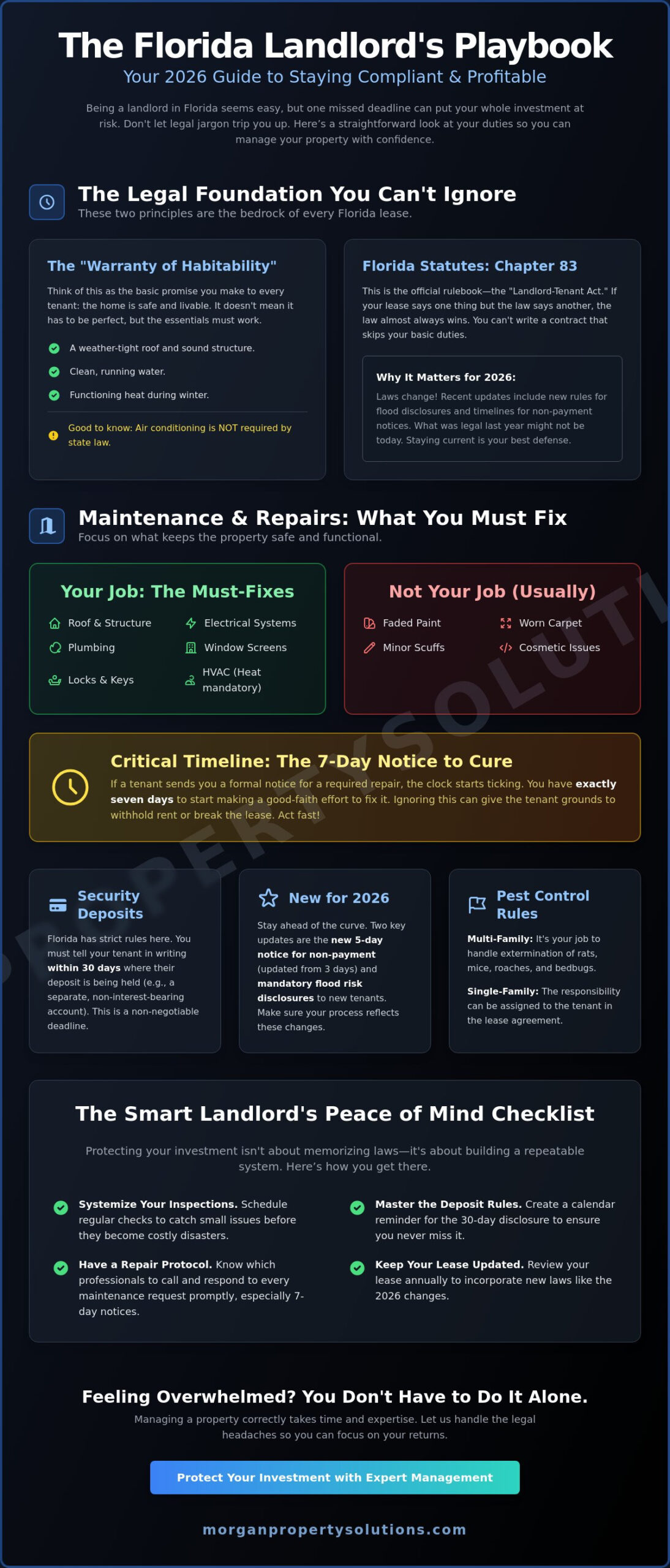
Every rental agreement in the state includes something called an implied warranty of habitability. This is a fundamental concept in U.S. Landlord-Tenant Law that basically says a property must be fit for human occupation. In Florida, this means you’re responsible for the basics. You need to provide a weather-tight roof, working heat for the winter, and clean running water. Interestingly, while heat is required, air conditioning is not a mandatory amenity under Florida state law, though most modern rentals include it to remain competitive.
Habitable doesn’t mean the property has to be perfect or have high-end finishes. It means the structural integrity is sound and the environment is healthy. If there’s a hole in the floor or a major mold issue, the home isn’t habitable. Keeping things safe isn’t just about avoiding a lawsuit; it’s about protecting the value of your property over the long term. A well-maintained home attracts better tenants and keeps your turnover costs low.
Florida Statutes Chapter 83
Staying on top of these shifting regulations is a full-time job. That’s why the team at Morgan Property Solutions Inc. stays deeply involved in the industry. We make sure our clients are always on the right side of the law. When you understand the rules, you can manage your property with confidence instead of anxiety. It’s about turning those legal requirements into a roadmap for a successful, stress-free rental business.
Maintenance and Repairs: What You Must Fix (and When)
Once you’ve handed over the keys, the real work of property ownership begins. Keeping up with landlord responsibilities florida means you’re the primary person responsible for the structural health of the home. This includes the roof, the exterior walls, and the foundation. You also need to keep the “big three” systems-plumbing, electrical, and HVAC-in good working order. If a water heater dies or a breaker panel starts acting up, it’s your job to get a professional out there to handle it promptly.
You don’t have to worry about every little scuff on the wall, though. Cosmetic repairs, like faded paint, worn carpet, or a slightly scratched countertop, aren’t usually a legal requirement. Unless you’ve specifically promised to fix these things in your lease agreement, you can generally focus your budget on the systems that keep the home safe and functional. Distinguishing between a “want” and a “need” helps you prioritize your maintenance budget without overspending on non-essential updates.
The 7-Day Notice to Cure
If a tenant feels you aren’t meeting these standards, they might send you a formal 7-day notice. This isn’t just a casual email; it’s a legal step that starts a specific countdown. According to the Florida Landlord/Tenant Law, you have seven days to either finish the repair or at least make a good-faith effort to start the process. If you ignore this notice, the tenant might have the right to terminate the lease early without penalty or, in some cases, withhold a portion of the rent. It’s a high-stakes situation, so responding quickly is always the best move for your business.
Exterminations and Pest Control
Pest control is another area where the rules depend on the type of property you own. If you have an apartment or a multi-family building, the law says you’re responsible for exterminating rats, mice, roaches, and bedbugs. For single-family homes, the law is more flexible. You can actually write into the lease that the tenant is responsible for their own pest control. For those managing Orlando rentals, the responsibility for pest control usually rests with the landlord in multi-family units but can be shifted to the tenant in a single-family lease agreement.
Handling these repairs and timelines can be a lot to juggle, especially if you have multiple properties. If you’d rather spend your weekends doing something else, looking into Orlando property management can take that weight off your shoulders. It’s a simple way to ensure every repair happens on time and stays within the law. Staying on top of landlord responsibilities florida doesn’t have to be a solo mission when you have the right support in place.
Safety and Security: Mandatory Requirements for Florida Rentals
Safety isn’t just a “nice to have” feature for your rental property; it’s a core component of landlord responsibilities florida. You want your tenants to feel secure in their homes, and the law backs that up with several non-negotiable requirements. Every exterior door and window must have a working lock that is safe and functional. If a tenant can’t properly secure their front door, you’re looking at a major liability issue that needs immediate attention. It’s a simple standard, but it’s one that protects both your tenant and your investment.
One detail that often surprises new owners is the requirement for window screens. In Florida, you’re legally required to provide and maintain screens in good condition for all windows. While this might seem like a small detail, it’s actually tied to health and safety codes. In areas like Orlando, municipal codes are particularly strict about this to help prevent mosquitoes and other pests from entering the home. If you’re looking for more details on these specific local requirements, our landlord resources page has helpful guides to keep you on track.
Beyond the windows and doors, you must also ensure that every residential unit has working smoke detectors. If you’re managing a multi-family property, like a duplex or an apartment building, you’re also responsible for keeping all common areas clean and safe. This means hallways, stairwells, and parking lots should be free of hazards and properly lit. When everyone follows the Rights and Duties of Tenants and Landlords, the rental experience becomes much smoother for everyone involved.
Locks, Keys, and Access
While you’re required to provide working locks, it’s also a best practice to re-key the home between every tenant. You never know who might have a spare key from a previous lease, and starting fresh is the only way to guarantee security. You should also remember that while you own the property, the tenant has a right to privacy. Florida law generally requires you to give at least 24 hours of notice before entering the property for repairs or inspections. Respecting this boundary is a key part of maintaining a professional relationship with your renters.
Environmental Hazards
There are a few specific disclosures you can’t afford to skip. If your property was built before 1978, federal law requires a lead-based paint disclosure. In Florida, you’re also required to provide a notification regarding radon gas, which is a standard part of almost every lease in the state. Mold is another common concern in our humid climate. While you’re responsible for fixing leaks that cause mold, the tenant is usually responsible for keeping the home clean and using the A/C to manage humidity. It’s a shared effort that keeps the environment healthy for everyone. Staying on top of these landlord responsibilities florida ensures your property remains a safe, legal, and profitable asset.
Administrative Duties: Deposits, Disclosures, and Notices
While fixing a leaky faucet is a visible part of the job, the paperwork side of landlord responsibilities florida is where most legal disputes actually begin. Florida law is incredibly specific about how you handle a tenant’s money. It isn’t enough to just keep the security deposit in a separate account; that account must be held in a Florida-based banking institution. You also have a strict 30-day window from the moment you receive the funds to notify the tenant in writing about where that money is being kept. Missing this deadline is a common mistake that can lead to unnecessary friction right at the start of a lease.
Communication is the key to avoiding these administrative traps. Any time you need to change the terms of the rental agreement, you can’t just mention it in passing or send a quick text. Proper written notice is required to make any changes legally binding. As of 2026, you can deliver many of these legal notices electronically through a secure portal, but only if the tenant has provided their written consent first. This protects you just as much as it protects the tenant, as it creates a clear digital trail that can be referenced later if there’s ever a disagreement. By staying organized and following these procedural steps, you’re building a professional foundation for your rental business.
Handling Security Deposits Correctly
In Florida, you have three main options for holding a security deposit. You can place it in a non-interest-bearing account, an interest-bearing account where the tenant receives a portion of the interest, or you can purchase a surety bond. Most independent landlords choose the non-interest-bearing route for simplicity. Once the tenant moves out, the clock starts ticking. You have exactly 15 days to return the full deposit if you aren’t making a claim. If you do intend to keep some of the money for damages, you must send a certified letter to the tenant within 30 days. To help you get the wording right, we offer several templates on our landlord resources page.
Required Disclosures
There are a handful of disclosures that must be included in every Florida lease. Along with the security deposit location, you’re required to provide notices regarding radon gas and lead-based paint for older homes. One of the most important administrative steps you can take is completing a thorough move-in inspection report. Documenting the property’s condition with photos and notes before the tenant moves in is the only way to prove damages later on. We also recommend using pet screening during the application process. It helps you manage potential risks early and ensures that all animals on the property are properly documented from day one.
Managing these deadlines and disclosures can feel like a lot to track on your own. If you want to ensure your paperwork is always bulletproof, our Orlando property management services can handle the entire administrative process for you. It’s the easiest way to stay compliant without having to memorize every statute yourself.
Practical Management: Turning Legal Duties into a Smooth Operation
Knowing the rules is just the first step toward a successful investment. The real challenge of landlord responsibilities florida is staying consistent over months and years. When you have a repeatable system for inspections and repairs, compliance stops being a source of stress and becomes a routine part of your business. It’s much easier to handle a small leak today than it is to scramble when a tenant sends a formal notice later. Think of your management strategy as the foundation of your investment. If the foundation is solid, the rest of the operation runs smoothly.
The Value of Professional Oversight
This is where Orlando property management can truly change your experience as an investor. A professional manager acts as a vital buffer between you and the daily legal liabilities of owning a rental. At Morgan Property Solutions Inc., we bring over 20 years of local Central Florida experience to the table. We’ve seen how the laws have shifted and we know exactly how to distill those complex processes into manageable steps for our clients. You get the peace of mind that comes from knowing every notice is legally sound and every repair is documented correctly. This partnership allows you to focus on your high-level financial goals while we handle the day-to-day details. It’s a collaborative effort designed to ensure your long-term success.
Next Steps for Florida Landlords
If you’re managing your own properties, your first move should be a thorough review of your current lease agreements. Ensure they meet all 2026 compliance standards, especially regarding the new notice periods and flood disclosures discussed earlier. We also suggest setting up a dedicated maintenance fund. Having a reserve of cash specifically for property needs ensures you can respond to issues quickly, which is the best way to stay on the right side of the law. If you want to keep learning about how to optimize your investment, feel free to explore our other real estate articles for more expert tips. Building a successful rental business takes time, but with the right systems and partners, it becomes a much more rewarding journey.
Secure Your Rental Future Today
Owning a rental property should feel like a step toward financial freedom, not a source of constant legal anxiety. By focusing on the standards we’ve discussed-from habitability to those strict deposit timelines-you can navigate your duties with ease. Remember that proactive management and clear communication are the most effective ways to build trust and avoid disputes. Managing landlord responsibilities florida is a continuous process, but it doesn’t have to be overwhelming when you have a solid system in place.
If you’re ready to take the stress out of your daily operations, we’re here to help. Simplify Your Rental Business with Morgan Property Solutions Inc. and leverage our 20+ years of Central Florida expertise. As an A+ rated team, we provide the transparent financial reporting and reliable guidance you need to protect your assets. You’ve got the tools and the knowledge to make 2026 your most successful year yet. We look forward to seeing your rental business thrive and helping you reach your long-term goals.
Frequently Asked Questions
What are the main landlord responsibilities in Florida?
Your primary landlord responsibilities florida involve providing a habitable home that meets all building, housing, and health codes. This means ensuring the roof doesn’t leak, the plumbing works, and the structure is sound. You also have to follow specific rules for handling security deposits and giving notice before entering the home. Staying compliant helps you avoid legal disputes and protects the value of your investment over time.
Does a landlord have to provide air conditioning in Florida?
No, Florida state law does not require landlords to provide air conditioning, though it does require working heat. While A/C is almost always expected in our climate, it’s technically an amenity rather than a legal necessity. If your lease says you provide it, you’re responsible for keeping it running. If it isn’t mentioned, you aren’t legally forced to install or fix it under the habitability statutes.
How long does a landlord have to make repairs in Florida?
You have seven days to address major repairs once you’ve received a formal written notice from your tenant. This 7-day window applies to “material” issues that affect the safety or habitability of the home, like a broken water heater or a hole in the roof. For minor issues that don’t violate health codes, the law is less specific, but it’s always best to handle them quickly to keep the tenant happy.
Can a tenant withhold rent in Florida for repairs?
Yes, but tenants can only withhold rent if they follow a strict legal process first. They must give you a written 7-day notice explaining the problem and stating they’ll withhold rent if it isn’t fixed. If you don’t address the material repair within those seven days, they may be able to keep a portion of the rent. It’s a complex process that usually requires legal advice to do correctly.
What are the rules for security deposits in Florida?
Florida law requires you to hold security deposits in a Florida-based bank and notify the tenant of the bank’s location within 30 days. When they move out, you have 15 days to return the money in full. If you need to make a claim for damages, you must send a certified letter to the tenant within 30 days. Failing to meet these deadlines usually means you forfeit your right to keep any of the deposit.
How much notice must a landlord give before entering a property?
You’re required to give at least 24 hours of notice before entering a rental unit for an inspection or a repair. This entry should happen at a reasonable time, typically between 7:30 a.m. and 8:00 p.m. You don’t need to give notice in an emergency, like a fire or a burst pipe, but for everything else, respecting the tenant’s privacy is a key part of your legal duties.
Is a landlord responsible for pest control in Florida?
In multi-family properties like apartments, the landlord is legally responsible for pest control. For single-family homes, you can choose to make the tenant responsible by including that detail in the lease. This usually covers common pests like roaches, ants, and rodents. It’s important to be clear about this in your agreement so everyone knows who to call when a pest problem pops up in the heat of summer.
What happens if a landlord violates the lease agreement in Florida?
When a landlord fails to meet their landlord responsibilities florida, the tenant might have the right to end the lease early or sue for damages. This usually happens if the home becomes uninhabitable or if the landlord repeatedly violates the tenant’s privacy. To protect yourself, always document your repairs and keep a paper trail of all your communications. Professional management can also act as a buffer to ensure these violations never happen.

Article by
Oliver Overton-Morgan
Oliver Overton-Morgan is a full-time Real Estate Broker since 2003, with years of experience helping thousands of people purchase and sell real estate throughout Central Florida. He holds a Graduate Realtor Institute designation, LCAM, and has held licenses in good standing as a Florida Mortgage Broker and a Notary Public. Oliver immigrated to central Florida in 2001, and within 5 years Oliver built a successful Real Estate brokerage in central Florida, where he recruited over 75 Sales Associates with 25+ million in sales production.