With Florida’s statewide rental vacancy rate hovering near 10% in early 2026, have you wondered why some owners are still struggling with high turnover while others stay fully occupied? It’s a valid concern because the market is shifting toward a normalization phase where tenants have more leverage than ever. If you’re feeling the weight of rising insurance premiums or the new July 2026 requirement to provide a 5-day notice for non-payment, you aren’t alone. Developing a smart long term rental strategy for property owners in florida is the only way to turn a stressful job back into a truly passive investment.
Key Takeaways
- Discover why a long term rental strategy for property owners in florida is shifting toward stable growth hubs like Lake Nona and Orlando to avoid the volatility of the 2026 market.
- Learn how to use real-time local data instead of generic online estimates to find the “sweet spot” price that maximizes your actual profit while keeping vacancies low.
- See how a thorough screening process that looks at both financial history and human behavior can help you find a tenant who treats your home like their own.
- Find out how the “low-friction” approach to proactive repairs keeps your tenants happy and saves you thousands in turnover costs over the long run.
- Understand why navigating 2026’s strict rental regulations makes a professional partnership more valuable than trying to handle every detail yourself.
Understanding the Florida Rental Market in 2026
Why Central Florida is Still a Landlord’s Paradise
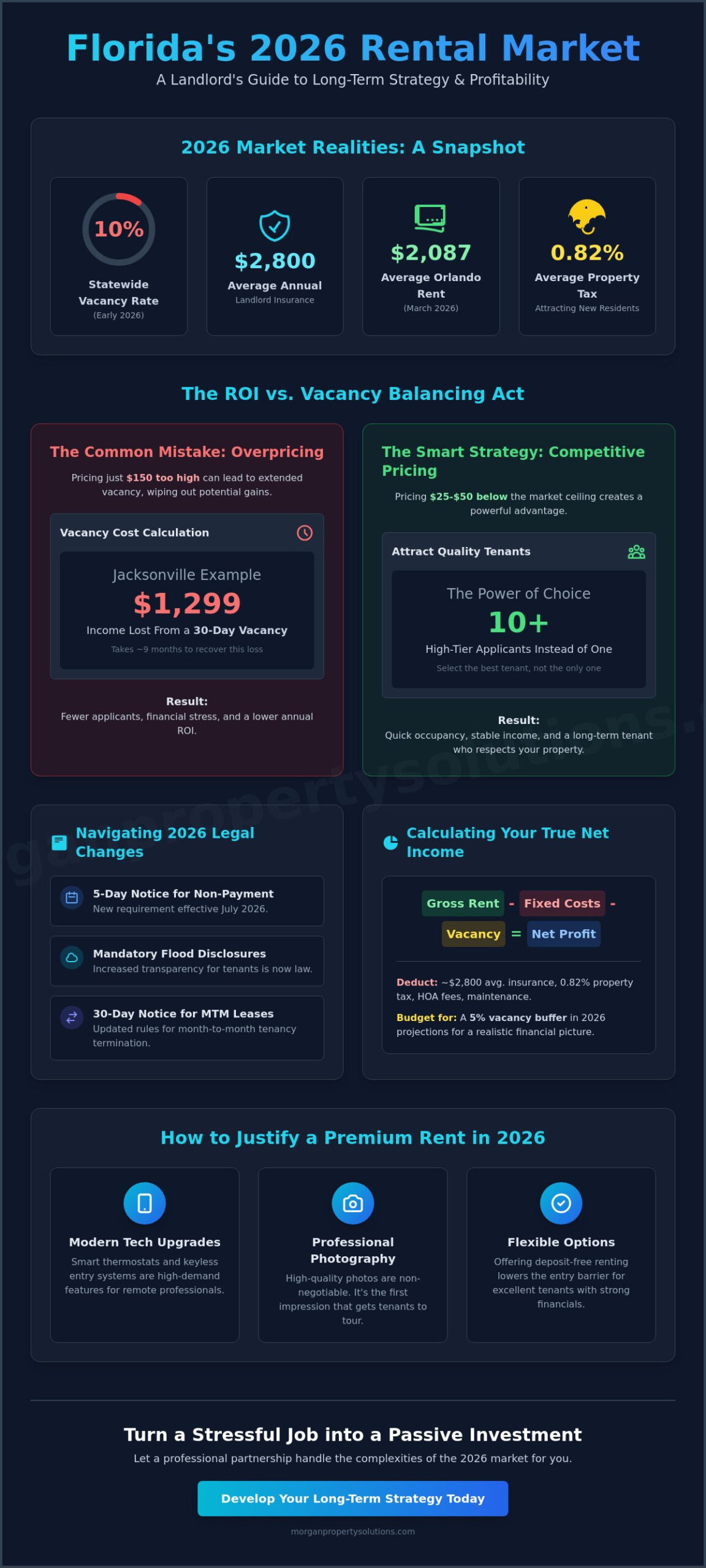
Orlando is no longer just a destination for theme park fans. The growth in the local tech sector and the massive expansion of Lake Nona’s Medical City have created a steady stream of high-earning professionals looking for long-term homes. Average rent in Orlando reached $2,087 in March 2026, showing that demand remains strong even as the overall market normalizes. If you’re looking for local expertise in these areas, our Orlando property management team sees this demand firsthand every day. Florida’s tax-friendly environment continues to pull people from higher-tax states, and these residents are looking for reliable housing. Long-term rentals provide much better protection during economic shifts because a home is a necessity, while a vacation is a luxury that can be cut when budgets get tight.
The 2026 Rental Reality Check
We have to be honest about the current costs of doing business. Landlord insurance in Florida is averaging around $2,800 a year, and the statewide vacancy rate is sitting near 10% as of early 2026. This means you can’t just put a sign in the yard and expect a line of perfect applicants. Your property has to be “rent-ready” and well-maintained to stand out in a competitive market. Understanding the foundational principles of landlord-tenant law is more important now than ever, especially with the new rules regarding notice periods and disclosures that took effect this year. A 2026 Florida Landlord is someone who prioritizes stability over speculative gains. Following a smart long term rental strategy for property owners in florida is what separates successful investors from those who are constantly stressed by the changing market.
Setting Your Price: The ROI vs. Vacancy Balancing Act
Instead of relying on Zestimates or outdated online tools that don’t understand local nuances, look at actual signed leases in your specific zip code. In a market where tenants have more leverage, pricing your home just $25 or $50 below the absolute ceiling can be a brilliant move. It creates a psychological advantage. Instead of one desperate applicant, you might get ten high-tier professionals. This allows you to be selective and find a tenant who will follow Florida’s official landlord-tenant laws while treating your investment with respect. A high-quality tenant who stays for three years is always more profitable than three different tenants who pay slightly more but leave after twelve months.
Calculating Your True Net Income
To find your real ROI, you need to look past the monthly check. Start with your gross rent and subtract fixed costs like the $2,800 average landlord insurance premium and the 0.82% property tax. Don’t forget about HOA fees or the cost of keeping that AC running during a humid Florida summer. We recommend using a 5% vacancy buffer in your 2026 projections, even if the current statewide vacancy is higher. You can learn more about calculating rental income to see how these numbers impact your bottom line and long-term wealth.
Factors That Justify a Premium Rent
If you want to charge a bit more, you have to offer more value. Simple upgrades like smart thermostats or keyless entry systems are huge draws for the remote workers moving to Central Florida hubs. Professional photography is also a non-negotiable in 2026. Most tenants decide to tour a home based on the first few photos they see on their phones. Another way to stand out is by offering deposit-free renting options. This lowers the barrier to entry for great tenants who would rather keep their cash in savings, while still giving you the protection you need. If you’re feeling overwhelmed by the math, you can always check out our landlord resources for more guidance.
The “Bulletproof” Tenant Screening Process
A successful long term rental strategy for property owners in florida relies heavily on who you let through the front door. We don’t just view screening as a background check; it’s a proactive process of verifying both financial and behavioral history. Think of your tenant as a partner who will be caring for your investment while you aren’t there. If you want that passive income to actually feel passive, you need someone who respects the home as much as you do. Establishing clear, written screening criteria is the first step in making this process objective and stress-free.
Florida landlords need to be especially diligent in 2026. With the state’s rental vacancy rate near 10%, you might feel pressured to accept the first person who applies. However, a bad tenant is much more expensive than a few extra weeks of vacancy. Taking the time to verify every detail ensures that your long term rental strategy for property owners in florida stays on track and profitable. It’s about finding that perfect balance between a person who can afford the rent and a person who has a proven track record of being a good neighbor.
Beyond the Credit Score
While a FICO score tells you about someone’s past debt, their rental history tells you about your future. We find that employer verification and speaking with previous landlords are often more telling than a credit number. You want to look specifically for any previous Florida evictions or late payment patterns. Since the law changed in July 2026 to require a 5-day notice for non-payment, you want tenants who prioritize their housing costs above all else. Don’t forget about the four-legged tenants, either. Using a professional service like PetScreening.com helps you manage risk while remaining pet-friendly, which is a huge draw for the Florida market.
Staying Compliant with Fair Housing Laws
The legal side of landlording has become more complex with the 2026 updates to Florida Fair Housing guidelines. The safest way to protect yourself is to use a “first-qualified” approach. This means you approve the first applicant who meets all of your written requirements without exception. It removes bias from the equation and keeps you on the right side of the law. If you’re unsure about the latest changes, we always recommend visiting our landlord resources for updated legal checklists. Staying compliant isn’t just about avoiding fines; it’s about building a professional reputation that attracts the highest quality residents in the state.
Proactive Maintenance and the Retention Secret
Most landlords treat maintenance as an annoying, reactive chore. We see it differently. It is actually the heart of a successful long term rental strategy for property owners in florida. We call this the “Low-Friction” concept. When a home simply works, tenants are far less likely to browse other listings when their lease comes up for renewal. Think about the math for a second. With the average rent in Florida sitting at $1,683 as of May 2026, losing a tenant costs you that full month of income plus at least $500 in cleaning and marketing. A $200 proactive repair suddenly looks like a bargain compared to $2,000 in turnover expenses.
The Seasonal Florida Maintenance Checklist
- Step 1: Inspect A/C units every spring. You don’t want a system failure during the July heat.
- Step 2: Check window seals and hurricane shutters. Small leaks lead to massive mold bills in our humidity.
- Step 3: Schedule regular pest control. Bugs are the “Florida roommates” no one wants, and they’ll drive a good tenant away faster than a rent increase.
- Step 4: Perform a semi-annual walkthrough. Catching a tiny drip under a sink today saves you a floor replacement tomorrow.
Building Tenant Loyalty
Retention is about the human side of the business. A simple “Welcome Home” packet with local shop recommendations and a few essentials goes a long way. However, the best marketing you can ever do is responding to a repair request within 24 hours. It shows the tenant that you’re a professional who cares about their quality of life. We also find that offering deposit-free renting helps attract high-quality applicants who appreciate the financial flexibility. When you treat your tenants like valued partners, they stay longer and take better care of your home. If you want to see how we simplify this entire process for you, feel free to learn more about our approach.
Why a “Trusted Partner” Approach Wins in Florida
The Morgan Property Solutions Inc. Difference
Ready to Simplify Your Move?
You’ve worked incredibly hard to build your real estate portfolio. You deserve to see that investment work for you without the late-night emergency calls or the stress of tracking new state preemptions. We are here to provide a stress-free experience that prioritizes your peace of mind and your bottom line. If you’re ready to see how professional guidance can transform your business, we encourage you to visit our Orlando property management page. We’re here to help you every step of the way; making sure your journey in Florida real estate is a successful one.
Take Control of Your Florida Investment Today
You don’t have to navigate these new regulations by yourself. With our A+ BBB rating and over 20 years of combined experience, we specialize in helping owners succeed in Central Florida markets. We’re here to simplify the hard parts so you can actually enjoy the benefits of your investment. Let us make your Florida rental simple—see how we can help! We’re here to support you every step of the way.
Frequently Asked Questions
Is a long-term rental better than an Airbnb in Florida right now?
Long-term rentals offer much better stability in 2026 compared to the volatile vacation market. While Airbnb demand fluctuates with the economy, people always need a place to live. With the statewide vacancy rate near 10%, a consistent long term rental strategy for property owners in florida protects your cash flow from the high turnover and seasonal dips that often plague short-term hosts.
How much do property management companies in Orlando typically charge?
What are the most important Florida landlord-tenant laws I should know?
You should be aware of several new 2026 updates, including the requirement to provide a 5-day notice for non-payment of rent starting in July. Landlords must also provide a written flood damage disclosure before any lease is signed per Senate Bill 948. Additionally, the notice period for terminating a month-to-month tenancy has increased from 15 to 30 days, giving both parties more time to plan.
Do I really need an LLC for a single rental property in Florida?
While you aren’t legally required to have an LLC, many owners choose one to separate their personal assets from their rental business. It can provide an extra layer of protection, but it also comes with filing fees and extra paperwork. We recommend speaking with a legal professional to see if the benefits outweigh the costs for your specific financial situation and long-term goals.
What happens if a tenant stops paying rent in Florida?
If a tenant stops paying, you must provide a formal 5-day notice to pay or vacate as of July 2026. Under House Bill 615, you and your tenant can actually agree in writing to use email for these official notices. If they still don’t pay after the five days, you can then begin the formal eviction process through the county court system to regain possession of your property.
How do I handle maintenance if I don’t live in the same city as my rental?
Can I require renters insurance for my tenants in Florida?
Yes, you can absolutely require your tenants to carry renters insurance as part of your lease agreement. This is a very common practice in Florida because it protects the tenant’s personal belongings and provides them with liability coverage. It also gives you peace of mind knowing that certain accidents won’t result in a complicated financial dispute between you and your resident during their stay.
How long does it usually take to find a tenant in Central Florida?
In the current 2026 market, it typically takes between 21 and 45 days to find a high-quality tenant in Central Florida. Because the statewide vacancy rate is near 10%, your home needs to be priced correctly and “rent-ready” to attract the best applicants quickly. A smart long term rental strategy for property owners in florida involves using real-time local data to ensure your listing stands out from the competition.

Article by
Oliver Overton-Morgan
Oliver Overton-Morgan is a full-time Real Estate Broker since 2003, with years of experience helping thousands of people purchase and sell real estate throughout Central Florida. He holds a Graduate Realtor Institute designation, LCAM, and has held licenses in good standing as a Florida Mortgage Broker and a Notary Public. Oliver immigrated to central Florida in 2001, and within 5 years Oliver built a successful Real Estate brokerage in central Florida, where he recruited over 75 Sales Associates with 25+ million in sales production.