
What if that lien on your property wasn’t the deal-killer you’ve been led to believe? It’s completely natural to feel a knot in your stomach when a title search reveals a surprise debt or a contractor dispute. You might worry about losing a great buyer or feel overwhelmed by the complex rules in Chapter 713 of the Florida Statutes. If you’re wondering how to sell a house with a lien in florida without the constant anxiety, you’re in the right place. Most sellers assume they need a mountain of cash upfront to clear their title, but that’s rarely the case in our Central Florida market.
We’re here to help you turn that confusion into a clear, manageable plan. This guide will show you exactly how to navigate Florida’s lien laws and successfully sell your property without the typical closing delays. We’ll walk through the 2026 updates to construction notice requirements, explain how to handle different types of debts directly at the closing table, and show you the steps to maximize the equity you walk away with after the sale.
Key Takeaways
- Understand that a lien isn’t a permanent “no” to your sale; it is often just a line item we handle together during the settlement process.
- Learn the step-by-step process for how to sell a house with a lien in florida, including how to identify title “clouds” before they surprise you.
- Discover how to request payoff letters and negotiate with creditors to potentially lower the amount you owe at the closing table.
- Get insights into Florida’s lien priority rules so you know exactly which debts take precedence when your home sells.
- Find out why professional seller representation makes a world of difference in clearing complex title issues and protecting your equity.
Can You Sell a House with a Lien in Florida? (The Short Answer is Yes)
If you’ve just discovered a lien on your property, take a deep breath. You aren’t alone, and this isn’t a sign that your sale is over. In fact, many sellers in Central Florida encounter this exact hurdle every day. The most important thing to know about how to sell a house with a lien in florida is that you can absolutely do it. You don’t usually need a pile of cash sitting in your bank account to make it happen, either.
What Exactly is a Property Lien?
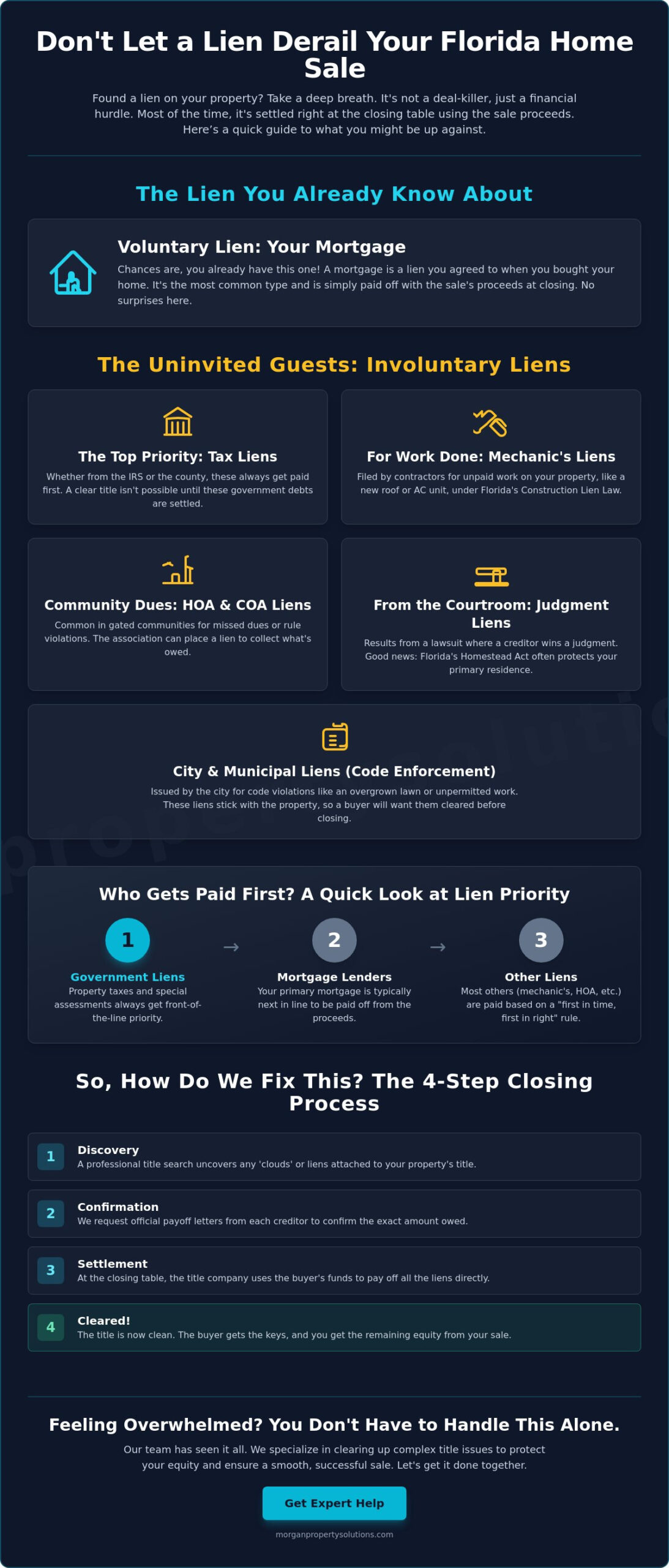
Think of a lien as a “cloud” on your title. It acts as security for a debt, ensuring that the creditor gets their fair share when the property changes hands. To get a better grasp of the technical side, you can read more about what is a lien on Wikipedia. Most people don’t realize they already have a voluntary lien on their home right now; it’s called a mortgage. You agreed to that one when you bought the place. Involuntary liens, like those from unpaid property taxes or a contractor’s bill, work the same way. They stay attached to the property until they are paid off or legally removed by the court.
Why Selling With a Lien is Actually Common in 2026
In 2026, Florida’s title search technology is more thorough than ever. It’s very common for a search to turn up small issues like an old utility bill from three years ago or a forgotten HOA fine. Because these searches are so precise, buyers and agents are used to seeing them. As long as you have a clear plan to address the debt, it doesn’t have to scare off your buyers. In our Central Florida market, we see these disclosures constantly. It’s just a matter of showing the buyer that the title will be “clean” by the time they get the keys. You can find more helpful advice in our real estate articles to see how common these situations truly are and how we help sellers move past them every day.
The Most Common Types of Property Liens We See in Central Florida
When we talk about liens, we’re really looking at two categories: voluntary and involuntary. A mortgage is a voluntary lien; you signed for it and welcomed it as part of your homeownership journey. Involuntary liens are the ones that usually cause the most stress because they happen without your permission. Understanding these differences is the first step in knowing how to sell a house with a lien in florida without losing your mind. In our state, who gets paid first depends on the “priority” of the lien. Usually, it follows a “first come, first served” timeline, but government debts like property taxes always skip to the front of the line.
It’s also important to distinguish between liens that “attach” to you personally and those that “attach” to the real estate. Most property liens stay with the house. This means a buyer won’t touch the deal until the debt is settled because they don’t want to inherit your old bills. Dealing with these effectively requires a clear understanding of what you’re up against.
Involuntary Liens: When the Choice Isn’t Yours
Tax liens are the heavy hitters. Whether it’s the IRS or the local county tax collector, these must be cleared for a title to be considered “marketable.” Then there are mechanic’s liens. If you had a new roof put on a home in Orlando or Tampa and there was a dispute with the contractor, they might file a claim against your property. This falls under Florida’s Construction Lien Law, which gives workers a legal path to ensure they get paid for their labor. We also see many HOA or COA liens in Central Florida’s gated communities. If you missed a few months of dues or ignored a violation notice, the association can place a lien that can eventually lead to foreclosure if it isn’t addressed.
Judgment Liens and Municipal Issues
Clearing these hurdles is much easier when you have a partner who has seen it all before. If you’re feeling a bit overwhelmed by a surprise title search, you can learn more about our team and how we’ve helped hundreds of Central Florida neighbors navigate these exact title issues. Knowing how to sell a house with a lien in florida starts with identifying exactly which “cloud” is hanging over your home.
How to Sell Your House with a Lien: A 5-Step Game Plan
If you’re wondering how to sell a house with a lien in florida, having a clear roadmap is the best way to lower your heart rate. We don’t wait for a buyer to find problems for us. Instead, we take a proactive approach to ensure your closing stays on track. By following a methodical plan, you can transform a complex legal hurdle into a simple line item on your closing day documents. Here is the five-step game plan we use to get our clients to the finish line.
- Step 1: Perform a preliminary title search. Don’t wait for the buyer’s title company to uncover surprises. Running your own search early lets you see every “cloud” on the title before you even list the home.
- Step 2: Request “Payoff Letters.” You need to know the exact dollar amount required to satisfy each creditor. These letters provide the official number needed to clear the debt.
- Step 3: Negotiate with lienholders. Many creditors, especially contractors or collection agencies, are willing to accept a lower settlement if it means they get paid immediately from the sale proceeds.
- Step 4: Use the settlement statement. Your title company will list these debts on the final settlement statement. This ensures the creditors are paid directly from your home’s equity at closing.
- Step 5: Record the “Satisfaction of Lien.” After the debt is paid, the title company ensures a formal release is recorded with the county clerk. This officially clears your name and the property.
Getting Your Payoff Figures in Writing
A payoff letter is much more than just a balance statement. It’s a formal document that includes the principal balance, any interest, and legal fees. One thing to keep in mind is the “good through” date. Liens often accrue daily interest, so your payoff figure might change if your closing date shifts. We recommend reaching out to creditors early, but doing so with a professional tone. This prevents triggering aggressive collection efforts while you’re trying to move. It’s especially helpful when dealing with the strict timelines found in Florida’s Construction Lien Law, where missing a deadline can complicate your sale.
Using Sale Proceeds to Clear the Debt
The most common question we hear is, “Do I have to pay this now?” The answer is usually no. The title company acts as a neutral middleman. They take the money from the buyer, pay off your mortgage, pay the lienholders according to those payoff letters, and then give you the remaining balance. This all happens through the settlement statement, which is the master math sheet for your sale. As long as you have enough equity in the home to cover the debts, you won’t need to write a check out of your own bank account. It’s a seamless way to handle how to sell a house with a lien in florida while protecting your cash flow. If you’re curious about how this looks in practice, our landlord resources offer more deep dives into managing property equity and title challenges.
Clearing the Path: Negotiating Liens and Handling the Title Search
Many sellers feel like a lien is a set-in-stone figure that can’t be changed. In reality, a lien is often just the starting point for a negotiation. If you’re trying to figure out how to sell a house with a lien in florida, you should know that many creditors are surprisingly open to a deal. They would often rather have a guaranteed check from a closing today than wait years for a payment that might never come. This is where your strategy shifts from legal defense to simple, practical negotiation.
Your title company is your biggest ally during this phase. They don’t just “check” for problems; they verify that every debt is truly settled and that the paperwork is in a format the county clerk will accept. If a lien is paid but the paperwork isn’t filed correctly, the “cloud” stays on your title. It’s their job to make sure the “Satisfaction of Lien” is recorded so the debt doesn’t haunt the new owner or your credit score later on.
The Art of the Lien Settlement
It’s very common for creditors, especially subcontractors or private collection agencies, to accept 50% to 70% of the original debt just to settle the matter quickly. They understand that a house sale is their best chance to get paid in full or at all. However, you can’t just take their word for it over the phone. You need a formal “Release of Lien” document. A professional Realtor can often facilitate these conversations to keep the deal alive when things get tense. If you are a property owner dealing with liens stemming from tenant disputes or property management issues, our landlord resources offer specific guidance for those unique situations.
Dealing with Mistakes on Your Title
Sometimes the lien showing up on your search isn’t even yours. Name-matching errors happen frequently in Florida’s public records, especially with common last names. If someone with a similar name has a judgment against them, it might mistakenly attach to your property. This is a common fix that doesn’t require a lawyer. Most title companies will simply have you sign an “Affidavit of Identity” to swear that you aren’t the person mentioned in the judgment. This usually clears the issue within a few days.
In more frustrating cases, you might encounter a “zombie lien.” This is a debt you already paid off years ago, but the creditor never filed the satisfaction paperwork. If the company has gone out of business, you might need a “Quiet Title” action. This is a legal process where a judge officially clears the title of any old, unenforceable claims. While it takes a bit longer, it’s a permanent solution that ensures your sale can move forward. If you want to ensure your equity is protected during these complex negotiations, reach out for professional seller representation to guide you through every step.
Navigating the Complexities with a Trusted Florida Real Estate Partner
At Morgan Property Solutions Inc., we take that weight off your shoulders. We don’t just put a sign in your yard and hope for the best. Our team acts as the central hub for the entire transaction, coordinating between title agents, creditors, and the buyer’s counsel. We’ve spent over 20 years helping Central Florida homeowners navigate these exact hurdles. Whether it’s an old municipal lien in Orlando or a complex contractor dispute in Tampa, we know how the local court systems and recording offices work. This local expertise is what allows us to turn a “messy” title into a clear path forward.
Why Experience Matters in a Lien Sale
Experience isn’t just a number; it’s the ability to anticipate problems before they delay your move. When you work with us, we help you calculate your “net proceeds” with high accuracy before the house even hits the market. We look at the payoff letters, the daily interest accruals, and the potential for negotiation to give you a realistic picture of the check you’ll receive at closing. You can learn more about our team and our long-standing presence in the community on our about us page. Morgan Property Solutions Inc. believes in transparency, and that starts with making sure you aren’t surprised by the math on closing day.
Your Next Steps to a Clear Title
The first step toward a stress-free sale is simply having an honest conversation about your situation. We offer confidential consultations where we can look at your title issues and map out a plan that protects your equity. You don’t have to be a legal expert to get your home sold; you just need a partner who is. If you’re still researching the market or looking for tips on home valuations, feel free to read more real estate articles on our site. We’ve seen almost every type of lien imaginable over the last two decades, and we’re confident we can help you navigate yours.
When you’re ready to move forward, we’ll be here to handle the complex details so you can focus on your next chapter. Don’t let a “cloud” on your title stop you from moving on; let’s work together to clear it once and for all.
Moving Forward with Confidence and a Clear Title
Selling a home when you’re facing title issues doesn’t have to be a nightmare. We’ve explored how most liens are just hurdles we can clear together at the closing table. Whether you’re dealing with a contractor’s bill or a surprise municipal fine, the key is to stay proactive. By following a methodical plan and using those payoff letters we discussed, you can protect your equity and ensure your buyer feels confident enough to close the deal.
Understanding exactly how to sell a house with a lien in florida takes the mystery out of the process. You don’t need to be a legal expert to achieve a successful closing; you just need the right team in your corner. With over 20 years of Central Florida expertise, Morgan Property Solutions Inc. has become top-rated by Orlando and Tampa homeowners for handling these exact types of complex residential transactions. We’re here to be your steady ally from the first title search to the final recorded satisfaction paperwork.
Let’s get your Florida home sold, liens and all. Contact Morgan Property Solutions Inc. today.
You’ve worked hard for your home’s equity, and we’re ready to help you keep as much of it as possible. Your next chapter is waiting, and we’re excited to help you get there.
Frequently Asked Questions
Can a lien prevent the sale of my house in Florida?
A lien doesn’t stop you from selling your home, but it does mean you can’t transfer a clear title until the debt is resolved. Buyers and their lenders will not finalize a deal if a debt stays attached to the property. Most sellers handle this by having the title company pay the lienholder directly from the sale proceeds at the closing table. It’s a standard part of the process that we manage to keep your move on schedule.
How do I find out if there is a lien on my Florida property?
You can search the Official Records of the county clerk where your property is located, such as the Orange County or Hillsborough County Comptroller websites. Look for your name or address in the public records index to see what has been recorded. While you can do this yourself, hiring a professional title company to run a preliminary search is the most reliable way. They’ll find everything from old utility bills to major court judgments.
Do I have to pay off a lien before I can list my house for sale?
You don’t need to pay off the debt before listing your home on the market. In fact, most people wondering how to sell a house with a lien in florida use the money they make from the sale to cover what they owe. As long as your home’s value is higher than the total debt, the title company handles the math at the closing table. You can focus on staging and marketing while we coordinate the payoff figures.
What happens if the lien is for more than the house is worth?
If your total debt is higher than the sale price, you’re looking at a short sale scenario. In this case, you’ll need the lienholders to agree to accept less than the full amount they’re owed to release the title. This is a more complex process that requires specific documentation and approval from your mortgage lender or the creditor. It takes extra patience, but it’s a path many Florida homeowners take to avoid the foreclosure process.
How long does it take to clear a lien from a title in Florida?
The actual payoff happens instantly at the closing table, but getting the official paperwork filed can take a few weeks. If the lien is straightforward, like a mortgage or unpaid taxes, it’s settled the day you sell. If you’re disputing a mistake on your title or a debt that was already paid, it might take thirty to sixty days to resolve. Starting your title search early is the best way to ensure these timelines don’t delay your move.
Can I sell a house with an IRS tax lien in Orlando?
Yes, you can sell with an IRS lien, but the federal government always gets priority over other creditors. You’ll need to apply for a Certificate of Discharge from the IRS so the lien doesn’t follow the property to the new owner. This process can be slow, so we recommend starting the paperwork at least sixty days before you hope to close. Our team can help you coordinate with the right departments to keep the transaction moving forward.
Will a property lien affect my credit score after the house is sold?
Paying off the debt at closing is actually a great way to start repairing your credit score. While the initial filing of an involuntary lien might have caused a dip in your rating, showing that the debt is satisfied or released proves you’ve cleared the obligation. When you learn how to sell a house with a lien in florida, you’re also learning how to clean up your financial history. It’s a positive step toward your next home purchase.
What is a ‘satisfaction of lien’ and why do I need it?
A Satisfaction of Lien is the official document that proves a debt has been paid in full. You need this document recorded in the county’s public records to officially clear your title. Without it, the lien stays attached to the property even if you’ve already handed over the money. Your title company will usually handle the recording process after the sale, but you should always keep a copy for your own records just in case a mistake happens.

Article by
Oliver Overton-Morgan
Oliver Overton-Morgan is a full-time Real Estate Broker since 2003, with years of experience helping thousands of people purchase and sell real estate throughout Central Florida. He holds a Graduate Realtor Institute designation, LCAM, and has held licenses in good standing as a Florida Mortgage Broker and a Notary Public. Oliver immigrated to central Florida in 2001, and within 5 years Oliver built a successful Real Estate brokerage in central Florida, where he recruited over 75 Sales Associates with 25+ million in sales production.