
Choosing a new tenant for your Florida rental property can feel like a high-stakes gamble. You’re not just filling a vacancy; you’re entrusting a valuable asset to a stranger, hoping they’ll pay on time and care for your property. Without a thorough tenant screening checklist Florida landlords can rely on, the process can quickly become overwhelming, leaving you worried about potential legal missteps or a costly eviction down the road.
We believe finding the right tenant shouldn’t be a source of stress. That’s why we’ve created this comprehensive, step-by-step guide to help you simplify the entire process. We’ll walk you through every essential check-from the initial application to the final credit and background verification-all while staying compliant with state and federal law. Follow along to protect your investment, ensure consistent rental income, and confidently select a high-quality, responsible tenant for your property.
Key Takeaways
- Establish objective, written rental criteria before you advertise to create a fair, compliant, and defensible process from the start.
- Understand the critical steps of a thorough background check, from analyzing an applicant’s full credit report to looking beyond just the score.
- Learn why you should never skip verifying information directly with previous landlords and employers to protect your investment from false claims.
- Our step-by-step tenant screening checklist florida landlords can rely on helps streamline these tasks to confidently find a reliable tenant.
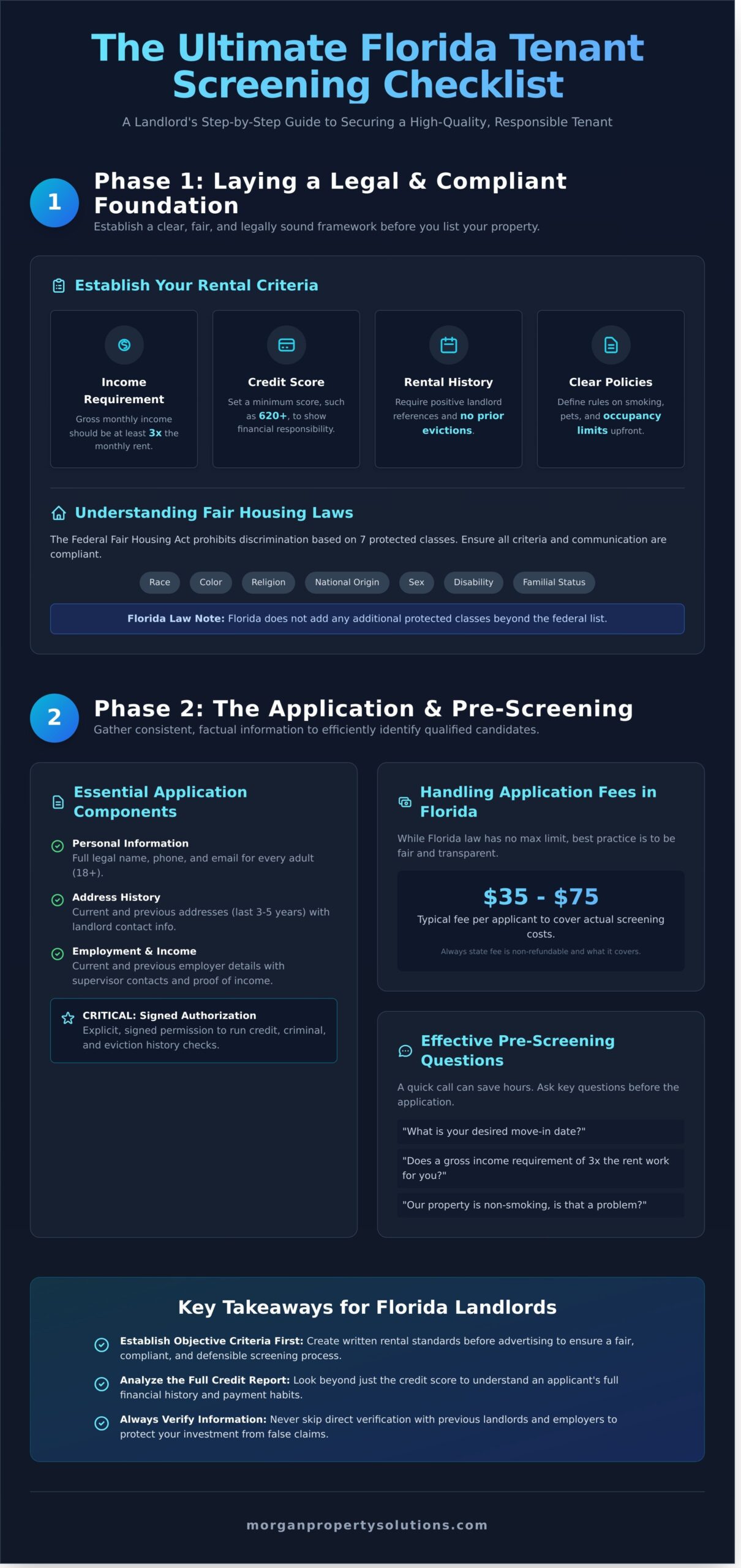
Phase 1: Laying a Legal and Compliant Foundation
Before you even list your property, the most critical step is to establish a clear, fair, and legally sound framework. A well-prepared landlord is a protected landlord, and this proactive approach is the cornerstone of a successful tenant screening process that minimizes risk. Creating this foundation ensures you treat every applicant consistently and professionally, which is essential for avoiding legal complications. Think of this as the blueprint for your entire rental business.
Building a comprehensive tenant screening checklist Florida landlords can rely on starts here, with objective standards that protect both you and your potential tenants. This initial work simplifies decision-making later and helps you confidently navigate the applicant pool to find the right fit for your property.
Establishing Your Rental Criteria
Your rental criteria are your non-negotiable standards for tenancy. They must be objective, measurable, and directly related to a tenant’s ability to pay rent and care for your property. By documenting these standards beforehand, you create a fair system for everyone. We recommend keeping a written copy to provide to all prospective tenants.
- Income Requirement: A common standard is requiring a gross monthly income of at least three times the monthly rent.
- Credit Score: Set a minimum credit score you will accept, such as 620 or higher. This demonstrates a history of financial responsibility.
- Rental History: You can require positive references from previous landlords and no history of evictions.
- Clear Policies: Define your rules on important topics like smoking, pets (including breed or size restrictions), and the maximum number of occupants per bedroom.
Understanding Fair Housing Laws in Florida
Compliance with fair housing laws is not optional-it’s the law. The federal Fair Housing Act prohibits discrimination based on seven protected classes: race, color, religion, national origin, sex, disability, and familial status. It is important to note that while some states add their own protected classes, Florida law does not add any additional classes beyond the federal list. Ensure your rental ads, conversations, and screening criteria are free of any discriminatory language. A key part of compliance is also understanding your duty to provide “reasonable accommodations” for tenants with disabilities, such as allowing a service animal in a no-pet building.
Phase 2: The Rental Application and Pre-Screening
Once you’ve attracted potential renters, the next step is to gather consistent, factual information. This phase is all about using a structured application and pre-screening process to efficiently identify the most qualified candidates. A well-designed system is a cornerstone of any effective tenant screening checklist florida, helping you stay organized and compliant while saving valuable time.
What to Include on Your Florida Rental Application
Your rental application is your most important data-gathering tool. It must be comprehensive enough to give you a full picture of the applicant while strictly adhering to Florida’s fair housing laws to ensure a fair and equitable process for everyone. A legally sound application provides the foundation for the background checks to come. We’re here to guide you in creating an application that includes:
- Full legal name, phone number, and email address for every adult (18+) who will be living in the unit.
- Current and previous addresses from the last 3-5 years, including landlord names and contact information.
- Current and previous employment details, including supervisor contact information and verifiable proof of income (e.g., pay stubs, offer letters).
- A signed authorization clause that explicitly gives you permission to run credit, criminal background, and eviction history checks. This consent is non-negotiable.
Handling Application Fees in Florida
Florida law does not set a maximum limit on rental application fees. However, building trust starts with transparency and fairness. The best practice is to charge a reasonable fee that covers your actual, out-of-pocket costs for background and credit checks-typically between $35 and $75 per applicant. Always be upfront about the cost, clearly state that it is non-refundable, and specify what the fee covers. This simple act of clarity helps manage applicant expectations and reflects positively on you as a professional landlord.
Effective Pre-Screening Questions
A brief, 5-minute pre-screening phone call can save you and the applicant hours of wasted time. Before they even fill out an application, you can quickly determine if they are a potential fit. This isn’t an interrogation; it’s a helpful conversation to ensure you’re on the same page. Consider asking:
- What is your desired move-in date and preferred lease term?
- Just to be transparent, our property requires an income of 3x the rent and is a non-smoking residence. Do these policies work for you?
- Do you have any questions about the property, the lease, or our application process?
Phase 3: Conducting In-Depth Background Checks
Once you have a qualified applicant, the next step is a comprehensive background check. This isn’t just a formality; it’s your most effective tool for mitigating risk and protecting your investment. Moving beyond the initial application, this phase provides a clear, data-driven picture of the applicant’s financial responsibility and rental history. A well-executed background check is a non-negotiable part of any thorough tenant screening checklist florida landlords should use, helping you make a confident and informed decision.
Credit Report Analysis
A credit score offers a quick snapshot, but the full credit report tells the complete story. As a landlord, you need to look for patterns that indicate financial stability and responsibility. We recommend paying close attention to:
- Payment History: Look for a consistent record of on-time payments, especially for rent and utilities. Late payments or accounts in collections can be a significant red flag.
- Debt and Judgments: High levels of debt, active collections, or recent bankruptcies may suggest the applicant is overextended and could struggle to pay rent consistently.
- Identity Verification: The report helps confirm the applicant’s identity, Social Security Number, and previous addresses, ensuring the information on their application is accurate.
Remember, all credit checks must be conducted in strict compliance with the Fair Credit Reporting Act (FCRA).
Criminal History Review
Navigating an applicant’s criminal history requires a careful and consistent approach to avoid discrimination. A blanket policy of denying anyone with a criminal record could violate Fair Housing Act (FHA) guidelines. Instead, focus on creating a fair screening policy that considers convictions that could genuinely threaten the safety of your property or other residents. It’s crucial to assess the nature and severity of the crime and how much time has passed since the conviction. Your policy must be applied equally to every single applicant, as outlined in the Florida Statutes on discriminatory practices, to ensure you are operating legally and ethically.
Eviction and Rental History Check
Of all the items on your tenant screening checklist florida, an applicant’s eviction history is often the most critical predictor of their future reliability. A past eviction is a direct indication of a serious breach of a prior lease agreement. A thorough check should uncover any eviction filings or judgments from previous landlords. Because this data can be difficult to access across different counties and states, using a reputable, professional screening service is essential to get a complete nationwide picture.
This detailed verification process can feel overwhelming, but it’s a vital step we are here to help you manage. Our professional screening process simplifies this for you.
Phase 4: Verifying Information and Making a Decision
You’ve collected applications and run the necessary background checks. This final phase is where your diligence pays off. Never skip the verification step, as even the most promising applications can contain inaccuracies. The final part of your tenant screening checklist florida involves personally confirming the details provided to ensure you’re making a confident and informed decision based on facts.
Contacting Previous Landlords
A conversation with a previous landlord provides invaluable insight that a report cannot. When you call, be prepared with specific questions to guide the conversation. This simple step helps you understand the applicant’s real-world history as a tenant. Key questions to ask include:
- Did the tenant consistently pay their rent on time and in full?
- Did they leave the property in good condition, beyond normal wear and tear?
- Did they provide proper notice before vacating the property?
- Based on your experience, would you rent to them again?
Verifying Employment and Income
Stable income is the foundation of a successful tenancy. Always call the employer listed on the application to confirm the applicant’s employment status, position, and stated salary. Supplement this call by reviewing their two most recent pay stubs or bank statements to verify their income meets your criteria (typically 3x the monthly rent). For self-employed applicants, it’s standard practice to request the last two years of tax returns or relevant 1099 forms.
Accepting or Denying an Applicant
Once your verification is complete, make your final decision based on the pre-set, written rental criteria you established at the beginning. This ensures a fair process and protects you from discrimination claims.
If you approve an applicant, send a formal acceptance letter or email outlining the next steps, such as signing the lease and paying the security deposit. If you deny an applicant based on information from a consumer report (like a credit or background check), you are legally required to provide them with an adverse action notice. This notice must state the reason for denial and include the name, address, and phone number of the agency that provided the report.
Finally, it’s crucial to keep organized records of all applications, communications, and screening reports for every applicant-not just the one you choose-for at least two years. This thorough documentation is a best practice that completes a professional tenant screening checklist florida and safeguards your business.
Navigating these final steps can feel complex, but they are essential for protecting your investment. If you need expert guidance on making the tenant screening process simple and stress-free, Morgan Property Solutions Inc. is here to help.
Simplify Your Screening and Secure Your Investment
Successfully navigating the tenant screening process in Florida is about more than just finding a renter; it’s about protecting your valuable investment. From establishing a solid legal foundation compliant with Fair Housing laws to conducting thorough background checks and verifying every detail, a systematic approach is essential. Following a comprehensive tenant screening checklist florida landlords can trust is your first and most important line of defense in securing a reliable, long-term tenant for your property.
While this checklist provides a clear roadmap, the process can be complex and time-consuming. Feeling overwhelmed? Let our experts handle tenant screening for you. With over 20 years of dedicated experience in Central Florida and a consistent A+ rating with the Better Business Bureau, the team at Morgan Property Solutions is your trusted partner. We manage a comprehensive, legally-compliant screening process from start to finish, helping you find qualified tenants while you save time and reduce stress. Let us give you the confidence and peace of mind you deserve.
Frequently Asked Questions
How much can a landlord legally charge for a security deposit in Florida?
Florida state law does not set a maximum limit on security deposits, giving landlords some flexibility. However, it is standard practice to charge an amount equivalent to one or two months’ rent to remain competitive in the market. We always advise checking for any specific city or county ordinances, as local rules can sometimes differ from state-level guidelines. This helps ensure you are fully compliant while protecting your property investment.
Can I deny an applicant for having a criminal record in Florida?
Yes, you can deny an applicant based on their criminal history, but you must do so carefully to comply with the Fair Housing Act. Your policy should focus on convictions that are relevant and could pose a risk to your property or other residents, such as violent crimes or property damage. It is essential to apply your criteria consistently to every applicant to avoid any appearance of discrimination and ensure a fair and legal screening process.
What is the maximum application fee I can charge in Florida?
While Florida law doesn’t state a maximum application fee, it must be reasonable and should only cover your actual out-of-pocket costs for screening. This typically includes the price of running credit and background checks. Most landlords in Florida charge between $35 and $75 per adult applicant. Being transparent about what the fee covers is a great way to build trust with potential tenants from the very beginning.
Do I have to run a background check on every adult who will live in the property?
It is a crucial best practice to screen every person aged 18 and over who will be living in the rental unit. This ensures you have a complete picture of who is occupying your property and helps maintain a safe environment for the entire community. Applying this policy uniformly to all applications is also a key step in complying with fair housing laws and protecting yourself from potential liability. It’s a simple step that provides significant peace of mind.
What should I do if an applicant’s information on their application is false?
If you discover an applicant has provided false information, you have clear grounds to deny their rental application. Your application form should include a clause that the applicant signs, confirming that all information is accurate and acknowledging that any falsification will result in immediate denial. Be sure to document the specific discrepancy, such as an incorrect income or a fabricated reference, as the basis for your decision.
How long should I keep records from a denied rental application?
We recommend keeping all documents from a denied application for at least two years. This period covers the statute of limitations for an individual to file a fair housing complaint. Maintaining these records-including the application, screening reports, and any notes-provides essential proof that your decision was based on legitimate, non-discriminatory business reasons. Following a complete tenant screening checklist Florida landlords trust will help ensure you have all necessary documentation.

Article by
Oliver Overton-Morgan
Oliver Overton-Morgan is a full-time Real Estate Broker since 2003, with years of experience helping thousands of people purchase and sell real estate throughout Central Florida. He holds a Graduate Realtor Institute designation, LCAM, and has held licenses in good standing as a Florida Mortgage Broker and a Notary Public. Oliver immigrated to central Florida in 2001, and within 5 years Oliver built a successful Real Estate brokerage in central Florida, where he recruited over 75 Sales Associates with 25+ million in sales production.