
Dealing with a tenant who has fallen behind on rent is one of the most stressful situations a landlord can face. Each day that passes means more lost income, and the fear of making a costly legal mistake or improperly serving a notice can feel paralyzing. The legal system can seem intimidating and complex, but navigating the florida eviction process for nonpayment of rent doesn’t have to be a source of anxiety.
As your trusted partner in property management, we’re here to help simplify the complex. This guide provides a clear, step-by-step roadmap designed to give you confidence and control. We will walk you through each critical stage, from drafting and serving the correct legal notices to understanding the potential timelines and costs involved. Our goal is to empower you with an actionable checklist so you can legally and efficiently either collect the owed rent or regain possession of your property. Let’s begin.
Key Takeaways
- The eviction process must begin with a legally compliant 3-Day Notice to Pay Rent or Quit; this is a non-negotiable first step with specific requirements.
- Successfully navigating the florida eviction process for nonpayment of rent involves a precise legal sequence, from filing a lawsuit to obtaining a Final Judgment.
- A tenant’s response within a strict 5-day window after being served directly determines your next actions and the potential for court proceedings.
- Winning a judgment and receiving a Writ of Possession legally returns the property to you, but your responsibilities regarding the security deposit must still be followed.
Understanding the Legal Grounds: Before You Start the Eviction
Navigating an eviction can be a stressful and complex situation for any property owner. Before initiating the formal florida eviction process for nonpayment of rent, it’s crucial to ensure your foundation is solid. This isn’t just a matter of asking a tenant to leave; it is a structured legal procedure with strict rules. A general Understanding Eviction as a legal concept highlights that landlords must follow specific steps and cannot take matters into their own hands. The first step is always to review your own paperwork and confirm you have the legal right to proceed.
Start by locating the signed, written lease agreement. This document is the cornerstone of your landlord-tenant relationship and will be a key piece of evidence. Carefully review the clauses related to rent payments, including the exact due date, any specified grace periods, and the terms for applying late fees. Having a clear, legally-sound lease prevents misunderstandings and provides a clear framework for enforcement.
The Importance of Proper Documentation
Meticulous record-keeping is not just good practice; it’s essential for a successful eviction case. Your documentation serves as the primary evidence to support your claim of nonpayment. Maintain a detailed ledger showing all payments received, the dates they were posted, and any outstanding balances. Be sure to save copies of all communication-including emails, text messages, or formal letters-regarding the late rent. This paper trail demonstrates your attempts to resolve the issue and will be invaluable if you must present your case in court.
Prohibited Actions: What Landlords CANNOT Do
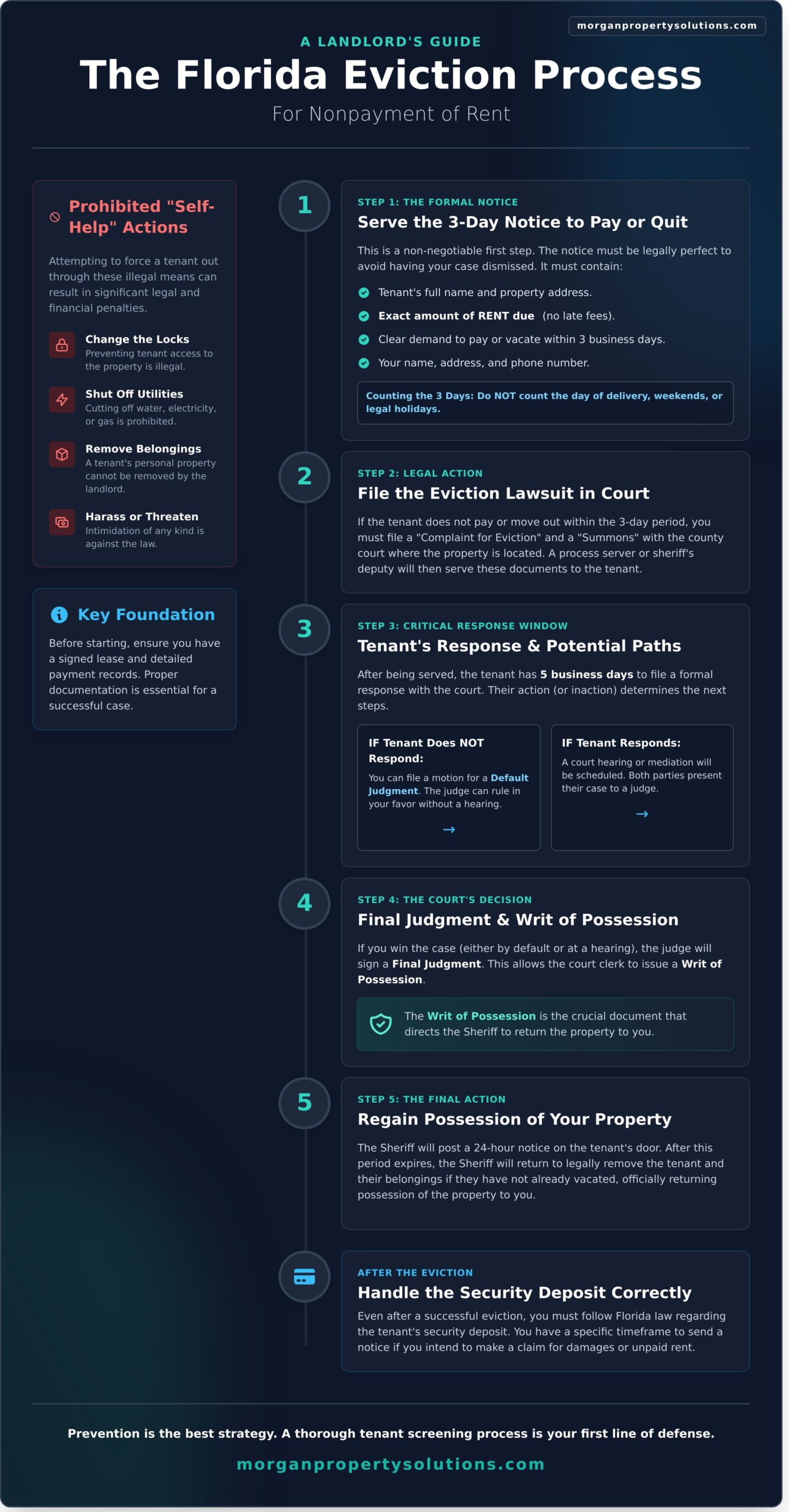
Florida law is very clear about protecting tenants from “self-help” evictions. Attempting to force a tenant out through illegal means can result in significant legal and financial penalties for you. As a landlord, you are strictly prohibited from:
- Changing the locks or adding new ones to prevent the tenant from entering.
- Shutting off essential utilities like water, electricity, or gas.
- Removing the tenant’s personal belongings from the property.
- Harassing, threatening, or intimidating the tenant in any way.
Following the correct legal florida eviction process for nonpayment of rent is your only path forward.
Preventing Evictions Before They Start
The most effective way to handle an eviction is to prevent it from happening in the first place. A robust tenant screening process is your first and best line of defense against late or unpaid rent. By verifying income, checking credit history, and reviewing rental references, you can significantly increase your chances of placing a reliable and responsible tenant in your property. We believe in simplifying this crucial step to help you find peace of mind. Explore our thorough tenant screening criteria to see how we help owners find reliable renters.
Step 1: Serving the Florida 3-Day Notice to Pay Rent or Quit
Before you can file a lawsuit, the florida eviction process for nonpayment of rent legally requires you to give your tenant a formal written warning. This document is known as the Florida 3-Day Notice to Pay Rent or Quit. This isn’t just a friendly reminder; it’s a critical legal document that sets the entire eviction in motion. Getting this step perfect is essential. Even a minor mistake in the notice’s content, calculation, or delivery method can invalidate your case, forcing you to start over from square one and causing significant delays.
What the 3-Day Notice Must Include
To be legally valid, your notice must be precise and contain specific information. Ambiguity or errors can give the tenant grounds to challenge the eviction. We’re here to help you get it right. Ensure your notice clearly states the following:
- The tenant’s full name as it appears on the lease and the complete property address.
- The exact amount of rent currently due. Important: Do not include late fees, interest, or other charges. The notice must only demand the past-due rent.
- A clear statement that the tenant must pay the specified amount or vacate the property within three business days.
- Your name, address, and phone number so the tenant knows who and where to pay.
How to Correctly Calculate the 3-Day Period
Calculating the deadline seems simple, but it’s a common area for mistakes. Florida law is very specific about how to count the days. The day you deliver the notice does not count as the first day. Furthermore, you cannot count weekends (Saturday and Sunday) or any legal holidays. For example, if you serve the notice on a Tuesday and there are no holidays that week, the three-day period begins on Wednesday, and the tenant has until the end of the business day on Friday to pay the rent or move out.
Proper Methods for Serving the Notice
Simply sending an email or text message is not sufficient. The law dictates how you must deliver, or “serve,” the notice to ensure the tenant receives it. Understanding the official Florida Eviction Rules is crucial for compliance. The three acceptable methods are:
- Personal Delivery: Handing the notice directly to the tenant.
- Substituted Service: If the tenant is not home, you may leave the notice with another resident at the property who is at least 15 years old.
- Posting and Mailing: If no one is home, you can post the notice in a conspicuous place, like the front door. If you use this method, you should also mail a copy to the tenant.
No matter which method you use, always document it. Note the date, time, and method of service. This documentation will be vital if you need to proceed to court.
Step 2: Filing the Eviction Lawsuit in Court
When the 3-Day Notice expires and your tenant has neither paid the overdue rent nor vacated the property, your next move is to take formal legal action. This involves filing an eviction lawsuit with the court. While this step can feel daunting, it is the necessary and lawful procedure for reclaiming your property. This stage officially begins the legal phase of the florida eviction process for nonpayment of rent, and careful attention to detail is crucial for a successful outcome.
The lawsuit is officially known as a “Complaint for Eviction” or, in some cases, an “Unlawful Detainer.” It is filed with the Clerk of Court in the county where your rental property is located.
Preparing the Complaint and Summons
Before you can file, you must prepare the correct legal documents. This package includes two primary items that work together to initiate the lawsuit:
- The Complaint: This document is your formal statement to the court. It outlines the reasons for the eviction, including the property address, the tenant’s name, the amount of rent owed, and the fact that you provided a proper 3-Day Notice.
- The Summons: This is an official notice issued by the court that informs the tenant they are being sued. It commands them to respond to the Complaint within a specific timeframe (usually five business days, excluding weekends and holidays).
You must attach copies of the signed lease agreement and the delivered 3-Day Notice to the Complaint as evidence.
The Filing Process with the County Clerk
With your paperwork prepared, the next step is to file it at the correct county courthouse. You will need to bring multiple copies of all documents-typically one for the court, one for your records, and one for each tenant named in the lawsuit. At the time of filing, you must pay the required filing fees to the Clerk of Court. These fees can vary by county, so we recommend checking your local clerk’s website for the current fee schedule.
Arranging for Service of Process
After your case is filed, the tenant must be officially notified of the lawsuit. This formal delivery of the Complaint and Summons is known as “service of process,” and it is a critical step you cannot do yourself. Florida law requires that the lawsuit be served by a neutral third party to ensure fairness. This is handled by either the local Sheriff’s department or a certified private process server. This formal notification is a non-negotiable part of the legal proceedings, as detailed in The Florida Bar’s guide to landlord-tenant rights, and it protects the tenant’s right to due process. Once service is complete, the server will provide you with a “Proof of Service” document to file with the court.
Step 3: The Tenant’s Response and Potential Court Action
Once the tenant has been officially served with the Eviction Summons and Complaint, a crucial five-day clock begins to tick. The tenant has five business days (excluding weekends and legal holidays) to file a formal response with the Clerk of Court. Their action-or inaction-during this period determines the next steps in the florida eviction process for nonpayment of rent and can significantly alter the timeline.
This is the stage where a straightforward case can become complex and time-consuming. Navigating the different legal responses requires careful attention to detail and adherence to strict deadlines. For many property owners, managing this process is stressful and confusing. A professional property manager can expertly handle these legal steps, ensuring everything is filed correctly and protecting your interests.
Scenario 1: The Tenant Does Not Respond
This is the most direct and common outcome. If the five-day deadline passes without any response from the tenant, you can immediately file a Motion for a Default Judgment. This motion asks the court to rule in your favor because the tenant failed to contest the eviction. In most cases, the judge will grant the motion and sign a Final Judgment for Eviction without the need for a hearing, accelerating the process to regain possession of your property.
Scenario 2: The Tenant Responds and Pays Rent into Court
A tenant may choose to fight the eviction by filing a formal Answer with the court. However, to legally defend against an eviction for unpaid rent, they must also deposit the total amount of rent alleged in the complaint into the court registry. If they successfully file an Answer and deposit the funds, the court will schedule a hearing or mediation. At this point, both parties will have an opportunity to present their case before a judge.
Scenario 3: The Tenant Responds but Disputes the Rent Amount
Sometimes, a tenant will file an Answer claiming the amount of rent you stated is incorrect. In this situation, they can also file a Motion to Determine Rent. This action requires the court to hold a preliminary hearing to establish the correct amount that must be deposited into the court registry for the case to proceed. This adds an extra step and can delay the final resolution of the eviction.
Step 4: The Final Judgment and Writ of Possession
After presenting your case, either through a court hearing or a default because the tenant did not respond, the judge will issue a Final Judgment. This official court order is a significant victory, as it legally grants you possession of your property. However, the judgment itself does not physically remove the tenant.
Even with a court order, some tenants may not leave voluntarily. This is a common challenge, but it’s the final hurdle in the process. To legally reclaim your property, you must proceed to the next crucial step: obtaining a Writ of Possession.
Obtaining the Writ of Possession
A Writ of Possession is a powerful legal document. It is a direct order from the court to the Sheriff, instructing them to remove the tenant and return possession of the property to you, the landlord. After the judge signs the Final Judgment, you must formally request the Writ from the Clerk of Court. Be prepared for additional fees, which typically include a court fee for issuing the Writ and a separate service fee for the Sheriff to execute it.
The Sheriff’s Role in Removing the Tenant
Once the Sheriff receives the Writ, a deputy will travel to your property and post a notice on the tenant’s door. This notice gives the tenant 24 hours (excluding weekends and legal holidays) to vacate the premises with all their belongings. This is their last chance to leave on their own. If the tenant has not moved out after the 24-hour period expires, the Sheriff will return to the property to peacefully remove them and supervise the hand-off of possession back to you. This enforcement step is a non-negotiable part of the florida eviction process for nonpayment of rent.
What to Do After Regaining Possession
Once the Sheriff has returned possession of the property to you, there are immediate actions you should take to secure it and protect yourself from future disputes. Following these steps helps conclude the florida eviction process for nonpayment of rent properly.
- Change the Locks: Your first priority should be to hire a locksmith to change all the locks. This prevents the former tenant from re-entering the property.
- Document Everything: Thoroughly document the condition of the unit by taking detailed photos and videos. This evidence is vital for assessing damages and making a claim against the security deposit.
- Handle Abandoned Property: If the tenant leaves personal belongings behind, you must follow specific Florida statutes for handling abandoned property. You cannot simply dispose of it.
Navigating these final legal steps requires careful attention to detail. If you need expert guidance to ensure the process is managed correctly and stress-free, the experienced team at Morgan Property Solutions Inc. is here to help.
After the Eviction: Handling the Security Deposit and Damages
Successfully regaining possession of your property is a major milestone, but it doesn’t conclude your responsibilities. How you handle the former tenant’s security deposit and any outstanding debts is governed by strict Florida laws. Proper accounting and communication are key to protecting your financial interests and avoiding future legal trouble after completing the florida eviction process for nonpayment of rent.
Taking the correct steps now ensures you can recover what you are owed while remaining fully compliant, giving you the peace of mind to move forward.
Complying with Florida’s Security Deposit Laws
Florida Statute 83.49 provides a clear timeline for handling a former tenant’s security deposit. Failure to follow these rules precisely can result in you forfeiting your right to make any claim on the funds. To protect your claim, you must:
- Send a written “Notice of Intention to Impose Claim on Security Deposit” to the tenant’s last known address.
- This notice must be sent via certified mail within 30 days of the tenant vacating the property.
- The notice must itemize the specific charges you are claiming, such as unpaid rent or costs for repairing damages beyond normal wear and tear.
If you do not follow this procedure, you may be required to return the full deposit, regardless of the money the tenant owes you.
Seeking a Judgment for Unpaid Rent and Damages
Many landlords are surprised to learn that an eviction lawsuit is primarily for possession of the property, not for a monetary award. While the florida eviction process for nonpayment of rent removes the tenant, it doesn’t automatically grant you the back rent. You may, however, be able to seek a money judgment for past-due rent and other damages as part of the eviction or in a separate lawsuit. Obtaining this judgment is the first step; actually collecting the funds can be another challenging process involving wage garnishment or bank levies.
Need More Guidance on Post-Eviction Steps?
Navigating the legal and financial aftermath of an eviction can feel just as complex as the process itself. As experienced property management experts, we believe in making real estate simple and stress-free for owners. If you need more information on protecting your investment and streamlining your operations, we are here to help. Explore our comprehensive Landlord Resources page for more expert tips, or contact the team at Morgan Property Solutions for trusted guidance.
Navigating the Eviction Process with Confidence
As we’ve outlined, the legal path to an eviction in Florida requires careful attention to detail. From correctly serving the 3-Day Notice to properly handling the security deposit after a tenant leaves, each step is governed by strict laws. Missteps in the florida eviction process for nonpayment of rent can result in costly delays and legal challenges, adding unnecessary stress to an already difficult situation.
You don’t have to manage this complex process alone. At Morgan Property Solutions, we are dedicated to making real estate simple for owners. With over 20 years of combined experience in Central Florida and a proven A+ Rating with the Better Business Bureau, our team is here to protect your investment while you enjoy peace of mind. Let us handle the stress of property management. Learn more about our Orlando services. Partner with us and gain the confidence that comes from having an expert on your side.
Frequently Asked Questions
How long does the eviction process take in Florida for nonpayment of rent?
While every situation is unique, a straightforward, uncontested eviction in Florida typically takes about 3 to 4 weeks from serving the 3-Day Notice to the sheriff removing the tenant. If the tenant contests the eviction, the process can take longer. The total timeline for the Florida eviction process for nonpayment of rent depends on court schedules, the tenant’s response, and how quickly each step is completed correctly.
What happens if the tenant tries to pay part of the rent after I serve the 3-Day Notice?
Under Florida law, you are not required to accept partial rent payments after serving a 3-Day Notice. If you choose to accept a partial payment, it can legally waive your right to evict under that specific notice, forcing you to start the process over. To proceed with the eviction, you should only accept the full amount of rent owed, plus any applicable late fees as stated in your lease, within the three-day window.
Do I need to hire a lawyer to evict a tenant in Florida?
While an individual property owner can technically file an eviction themselves, it is highly recommended to hire an experienced attorney. The eviction process has strict legal requirements, and a simple procedural mistake can get your case dismissed. If your property is owned by a corporation, LLC, or trust, you are legally required to be represented by a lawyer in court. Professional guidance helps ensure the process is handled correctly and efficiently.
Can I charge the tenant for my legal fees and court costs?
Yes, but only if your written lease agreement contains a clause that specifically allows you to recover attorney’s fees and court costs from the tenant in the event of an eviction. If this provision exists and the court rules in your favor, these costs can be included in the final judgment against the tenant. Without this clause in the lease, you generally cannot recover these expenses, so it’s vital to have a well-drafted agreement.
What do I legally do with the personal belongings a tenant leaves behind?
After a legal eviction, you must follow a specific procedure for abandoned property. You must provide the former tenant with written notice detailing the items left behind and where they can be claimed. The tenant has 10 days to respond if the notice was mailed or 15 days if it was hand-delivered. If the property’s value is less than $500, you can dispose of it if it goes unclaimed. Otherwise, you may need to hold a public sale.
Can a tenant stop an eviction by filing for bankruptcy?
Filing for bankruptcy can temporarily halt an eviction. This is due to an “automatic stay” that freezes all collection and legal actions against the person filing. However, as the landlord, you can file a “Motion to Lift the Automatic Stay” with the bankruptcy court. If the judge grants your motion, you can then proceed with the eviction. This adds a complex step, making legal guidance from an experienced professional essential.
What is the difference between an eviction and an unlawful detainer?
These are two distinct legal actions. An eviction is used to remove a tenant who once had a legal right to occupy the property (a lease) but has since violated its terms. An unlawful detainer is used to remove an occupant who never had a legal right to be there in the first place, such as a guest who overstays their welcome or a squatter. The correct legal action depends on the occupant’s original relationship to the property.

Article by
Oliver Overton-Morgan
Oliver Overton-Morgan is a full-time Real Estate Broker since 2003, with years of experience helping thousands of people purchase and sell real estate throughout Central Florida. He holds a Graduate Realtor Institute designation, LCAM, and has held licenses in good standing as a Florida Mortgage Broker and a Notary Public. Oliver immigrated to central Florida in 2001, and within 5 years Oliver built a successful Real Estate brokerage in central Florida, where he recruited over 75 Sales Associates with 25+ million in sales production.