On September 28, 2022, Florida landlords saw exactly how quickly a safe investment could change when Hurricane Ian caused over $112 billion in damage. If you’re like most property owners we talk to, you’ve spent nights worrying about more than just the weather. You likely worry about a “tenant from hell” damaging your hard-earned equity or the threat of a lawsuit that could put your personal savings at risk. It’s a heavy burden to carry alone, but we believe that protecting your rental property investment should be a simple process that leads to freedom rather than stress.
We’re here to help you find that peace of mind. We’ve developed a multi-layered strategy that goes beyond just a basic insurance policy to safeguard your assets. In this 2026 guide, we’ll walk you through the essential legal structures, the specific insurance riders Florida owners need, and the human element of property management that keeps your ROI high. By the time you’re done reading, you’ll have a clear checklist to ensure your retirement nest egg stays secure and your properties continue to thrive for years to come.
Key Takeaways
- Understand the multi-layered strategy needed to shield your personal wealth from business-related liabilities.
- Find out how the right tenant screening can save you from the high price of a “bad fit,” including legal fees and property damage.
- Get tips on protecting your rental property investment by addressing “hidden” maintenance issues before they impact your bottom line.
- Navigate the specifics of Florida law to ensure your notices and procedures are airtight, preventing simple errors from causing major setbacks.
- Learn how professional management serves as your 24/7 buffer, keeping small issues from turning into expensive disasters.
The Foundation: Legal and Financial Shields for Your Investment
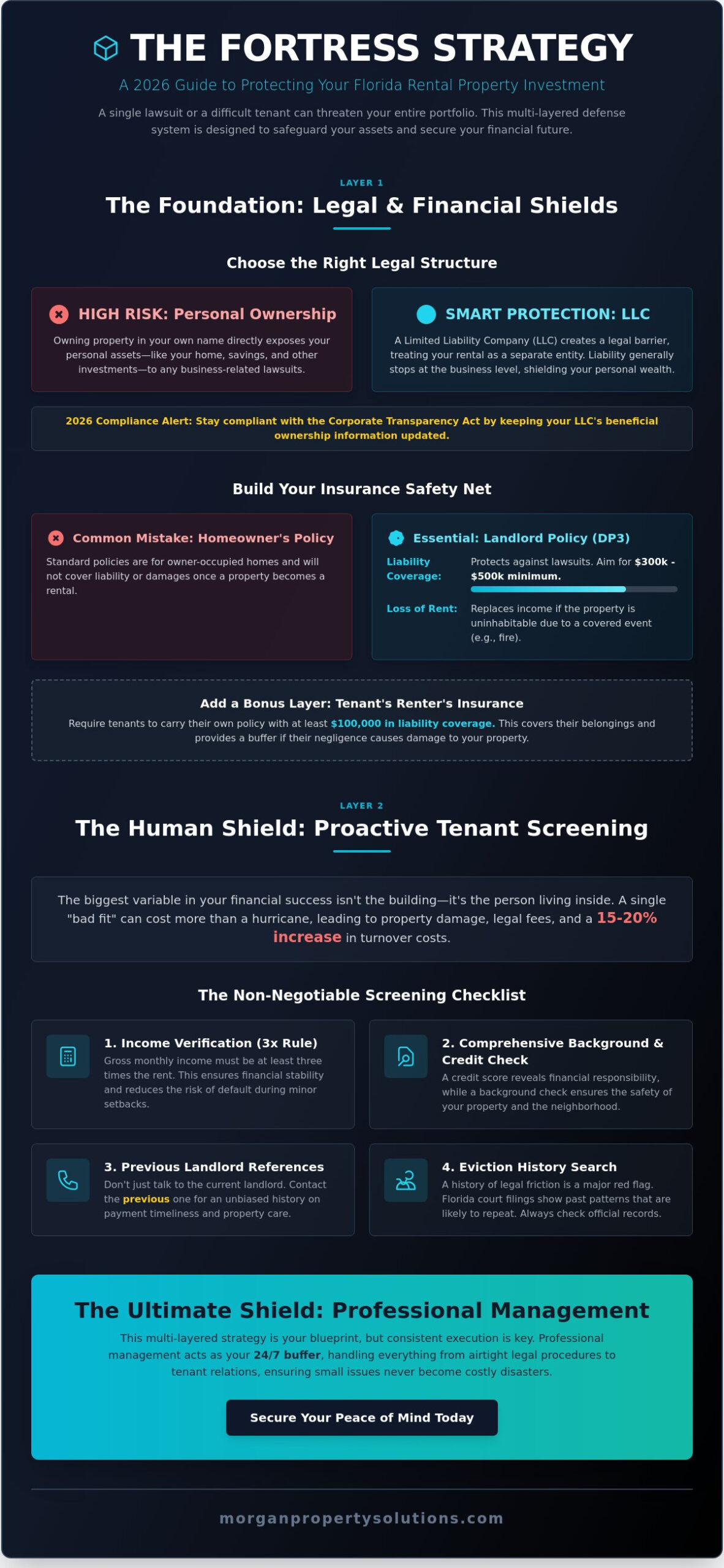
You need to understand where the line is drawn between your personal life and your business liability. If a guest trips on a loose floorboard, they aren’t just looking at the property assets; they might try to reach for everything you own. The duties of a landlord include maintaining a safe environment, and failing to do so creates a direct path to your personal bank account unless you have the right shields in place. A single judgment in Florida can exceed $100,000 quickly, making these barriers essential for your survival in the market.
Choosing the Right Legal Structure
Owning a rental in your own name is a massive risk that we don’t recommend. For investors in Central Florida, setting up a Limited Liability Company (LLC) is often the first step toward peace of mind. An LLC treats your rental as its own entity. If something goes wrong at the property, the legal liability generally stops at the business level. By 2026, staying compliant with the Corporate Transparency Act means you’ll need to keep your beneficial ownership information updated with federal registries. Because Florida laws and tax codes are specific, you should always sit down with a local attorney to ensure your entity is structured correctly for your specific portfolio; to see how a professional legal team can support your broader asset protection goals, you can visit Nanda & Associate Lawyers Professional Corporation for more information.
Insurance: Your Safety Net When Things Go Wrong
Don’t make the mistake of thinking a standard homeowners policy has your back. It won’t. Once a property becomes a rental, you need a specific Landlord Policy, often called a DP3 policy. This covers the physical structure and provides much higher liability limits, often starting at $300,000 or $500,000. You also want to look for “Loss of Rent” coverage. If a fire makes the home uninhabitable for four months, this coverage replaces that missing income so you can still pay the mortgage. This is a critical part of protecting your rental property investment over the long term, and consulting with a local agency like SI Insurance can help you secure the right policy for your needs.
We also advise our clients to require tenants to carry their own renter’s insurance with at least $100,000 in liability coverage. This covers their personal belongings and provides a buffer if their negligence causes damage to your building. You can find more details on these coverage basics by looking through our landlord resources. Making real estate simple starts with having the right safety nets in place before the first tenant moves in.
The Human Shield: Why Tenant Screening is Your Best Defense
While a leaky roof or a broken HVAC system is expensive, the biggest variable in your financial success isn’t the building itself. It’s the person living inside it. When we talk about protecting your rental property investment, we have to start with the human element. A single bad tenant can quickly turn a profitable asset into a legal and financial nightmare. It isn’t just about the missing rent checks. You also have to account for the cost of property damage, the 15% to 20% increase in turnover costs, and the heavy emotional toll of a high-conflict relationship.
Our philosophy is simple: placing the right person first is the only way to truly avoid the eviction process. By taking a professional, data-driven approach to every application, you remove the emotional bias that often leads DIY landlords into trouble. It’s easy to feel sympathy for a candidate’s story, but as a business owner, you need to rely on facts. We’ve seen over our 20 years of experience that a rigorous process is the best way to keep your stress levels low and your bank account full.
A Non-Negotiable Screening Checklist
A solid defense starts with a standardized checklist. First, we always verify income using the 3x rent rule. If a tenant’s gross monthly income isn’t at least three times the rent, the risk of default during a minor financial hiccup is too high. Second, you must run a comprehensive credit and background check. A credit score tells you about their financial responsibility, while the background check ensures your property and the neighborhood stay safe.
Third, don’t just talk to the current landlord. They might be tempted to give a glowing review just to get a problem tenant out of their house. Instead, reach out to the previous landlord for a more honest perspective on how they treated the home. Finally, check for a history of evictions in Florida courts. In 2024, eviction filings in some Florida counties saw a noticeable uptick, and a history of legal friction is a major red flag when protecting your rental property investment.
Fair Housing and Pet Screening
Staying compliant with Florida landlord-tenant laws is vital to avoid expensive discrimination lawsuits. You must apply your criteria consistently to every applicant to stay on the right side of the Fair Housing Act. This gets particularly tricky with animals. You need to know the legal difference between a standard pet, a Service Animal, and an Emotional Support Animal (ESA). You can’t charge pet fees for verified assistance animals, but you can verify the documentation carefully.
To keep things simple and secure, we recommend using a third-party service like PetScreening. They specialize in validating ESA letters and assessing the risk of traditional pets, which keeps you out of the legal gray zone. If you want to see exactly how we vet applicants, you can review our screening criteria to see the standards we use for every property we manage. If you’re feeling overwhelmed by the paperwork, you can always explore our management services to see how we take the weight off your shoulders.
Physical Preservation: Protecting the Bricks and Mortar
Your property’s market value is tied directly to its physical condition. It’s easy to think of a rental as just a line item on a balance sheet, but in reality, it’s a physical asset that requires constant attention. If you let maintenance slide, you’re not just saving a few dollars today; you’re actively eroding your long-term ROI. In the Orlando market, a small leak or a struggling AC unit can turn into a $10,000 repair in a matter of weeks because of our unique climate. Successfully protecting your rental property investment means staying ahead of wear and tear before it becomes a vacancy-causing disaster; to enhance your property’s physical safety and resilience, you can discover Boss Security Screens.
We’ve seen that deferred maintenance is a silent profit killer. When a home looks neglected, it attracts tenants who might not respect the space, leading to a downward spiral of property value. Keeping the “bricks and mortar” in top shape ensures you can always command top-market rent and keeps your exit strategy flexible if you ever decide to sell. Additionally, for owners interested in improving energy efficiency and moisture control, you can discover Standard Insulation to see how high-quality insulation protects your investment from the Florida heat.
The Power of Routine Inspections
Inspections aren’t about being intrusive; they’re about being a responsible owner. We recommend a three-tier approach to keep your eyes on the asset. First, move-in and move-out inspections must include high-resolution photos and video of every room, including the insides of cabinets and closets. This documentation is your only real evidence if a security deposit dispute arises later. It’s also helpful to remember that physical preservation is much easier when you start with a comprehensive tenant screening to find residents who will treat your home with care.
- Mid-lease walk-throughs: These are vital for spotting lease violations like unauthorized pets or extra guests before they cause significant damage to flooring or plumbing.
- Drive-by inspections: A quick visual check every 90 days helps you monitor curb appeal and ensure the lawn is being maintained according to local Orlando ordinances.
Preventative Maintenance and Weather Prep
Central Florida presents specific challenges that landlords in other states don’t face. The heat and humidity are relentless, making HVAC servicing the number one maintenance call we handle. You should have a licensed technician service the cooling system twice a year. For investors with properties in the Port St. Lucie area, First Choice Plus Plumbing & Air provides the specialized HVAC and plumbing maintenance required to prevent a system failure in August, which can lead to expensive repairs and mold issues.
Roof and gutter health is another priority, especially with hurricane season running from June 1 to November 30 every year. Clogged gutters lead to water intrusion that can rot fascia boards and damage ceilings. To stay prepared, we suggest setting aside 10% of your monthly rent into a dedicated maintenance fund. This ensures you’re never caught off guard by a sudden repair. If you’re looking for more ways to stay organized, our landlord resources page offers tools to help you track these essential tasks. Protecting your rental property investment is much simpler when you have a proactive plan in place.
Legal Compliance: Staying on the Right Side of Florida Law
Florida law doesn’t leave much room for “I didn’t know.” Protecting your rental property investment depends heavily on your ability to follow Florida Statute 83 to the letter. Local courts in areas like Orange County or Seminole County are known for being very strict about procedural details. If you make one small typo on a notice, such as getting the date wrong or miscalculating the amount due, a judge might dismiss your entire case. This forces you to start the multi-week eviction process from scratch while your tenant stays in the home without paying.
Since the Florida legislature passed HB 1417 on July 1, 2023, many local ordinances were replaced by state-wide standards. This makes it even more important to have a rock-solid, Florida-specific lease agreement rather than a generic template you found online. Protecting your rental property investment also means being meticulous about how you handle money. Under Florida Statute 83.49, you must hold security deposits in a separate account and notify your tenant in writing within 30 days of receiving the funds. If you miss this deadline, you might lose your legal right to claim any of that money for repairs when the tenant moves out.
The Legalities of Rent Collection and Notices
When rent is late, the legal clock officially starts with a 3-Day Notice. It’s vital to remember that those three days don’t include weekends or court-observed holidays. You have to serve this notice correctly, either by handing it to the tenant or by posting it in a conspicuous place on the property. We always tell owners to never try “self-help” evictions. Changing the locks or cutting off the water is illegal and can lead to heavy fines from a judge. Also, don’t accept partial payments during a dispute. Taking even $20 can legally waive your right to continue with an eviction for that month, forcing you to issue a brand-new notice.
Record Keeping as a Defense
If a dispute ever reaches a courtroom, your records are your best friend. We recommend keeping a digital paper trail of every single interaction with your tenants. Using an online portal is a great way to do this because it provides transparent, timestamped documentation of when a maintenance request was made or when a payment was submitted. This level of organization makes things simple and stress-free for everyone involved. Keeping these records isn’t just for legal protection; it’s also vital for tax audits and long-term financial planning. You should generally keep these files for at least 7 years to stay safe.
If you’re feeling overwhelmed by the legal requirements of managing a home, we’re here to help you every step of the way. You can explore our landlord resources to see how we simplify the process for you.
The Professional Advantage: How Morgan Property Solutions Guards Your Asset
Owning a rental property should feel like a big win for your portfolio, not a second job that keeps you up at night. We see professional management as a high-tech security system for your finances. Our team acts as the primary buffer between you and the inevitable risks that come with the rental market. By handling the day-to-day friction and tenant interactions, we ensure your role stays focused on the big picture while we sweat the small stuff. It’s about creating a barrier that keeps your personal life separate from your business liabilities.
One of the biggest threats to your bottom line is a maintenance issue left ignored. A small drip under a kitchen sink can turn into a full-blown flood in just a few hours if nobody is watching. Because we offer a 24/7 emergency response, we’re often on-site before a minor leak becomes a $15,000 mold remediation project. Quick action saves our clients thousands in repair costs and prevents long-term structural damage. It’s one of the most direct ways we focus on protecting your rental property investment over the long haul.
We’ve spent decades refining a system that takes the complexity out of the equation for you. You shouldn’t have to worry about shifting local regulations or the stress of late-night phone calls. Our goal is to turn your property into a source of truly passive income. We take on the active stress so you can enjoy the financial benefits of your hard work without the burnout that many DIY landlords face. The ultimate goal is protecting your rental property investment while you focus on what matters most to you.
Our Approach to Your Investment
With over 20 years of experience in the Central Florida market, we’ve developed a keen eye for spotting trouble before it actually starts. Our Orlando property management services are designed to maximize your profit by keeping vacancies low and tenant quality high. We aren’t just a service you hire; we’re a trusted partner. We treat every home like it’s our own, providing the peace of mind that comes from a team with an A+ rating from the Better Business Bureau.
Getting Started with a Simple Plan
Secure Your Florida Future Today
Owning a rental in the Sunshine State is a smart move, but it’s definitely not a “set it and forget it” project. Keeping up with Florida’s evolving laws and staying ahead of property maintenance requires constant attention. The real secret to protecting your rental property investment is having a partner who understands the local landscape. We’ve spent over 20 years helping Central Florida landlords navigate these challenges, ensuring their homes stay occupied and profitable. It starts with our proven 12-step tenant screening process, which is designed to find reliable residents who will treat your property like their own.
You shouldn’t have to worry about legal compliance or midnight repair calls. Our team holds an A+ rating from the Better Business Bureau because we’re committed to making property management simple and stress-free. We believe in building a partnership that lets you enjoy the benefits of your investment without the daily headaches. You’ve worked hard to build your portfolio; let us help you keep it safe and thriving for years to come.
Let us help you protect your investment; connect with Morgan Property Solutions today!
We’re excited to help you make your next move a success!
Frequently Asked Questions
Do I really need an LLC for a single rental property in Florida?
Yes, forming an LLC is a smart move for separating your personal assets from your business liabilities. Under Florida Statutes Chapter 605, this legal structure prevents a lawsuit from a tenant from reaching your personal savings or family home. It’s a foundational step in protecting your rental property investment because it creates a legal firewall. You’ll need to file with Sunbiz and pay the annual report fee, which was $138.75 in 2024.
What is the most important type of insurance for a landlord?
A DP-3 policy is the most critical insurance for any landlord in the Sunshine State. This policy covers the structure itself and includes liability protection, which is vital if a guest trips on a loose floorboard. Standard homeowners’ policies don’t cover business activities like renting, so skipping this leaves you exposed. According to the Insurance Information Institute, liability claims can reach $50,000 or more, making this specific coverage essential for your peace of mind.
How often should I realistically inspect my rental property?
You should aim to walk through your property every 6 months to catch small issues before they turn into major expenses. Florida Statute 83.53 requires you to give at least 24 hours of notice before entering for these checks. Regular visits help you spot leaks or mold early, which is much better than waiting for a 2 am emergency call. We find that biannual checks keep the relationship with the tenant positive and transparent.
Can I require my tenant to pay for all repairs under a certain amount?
You can’t legally shift all repair costs to a tenant because Florida Statute 83.51 requires landlords to maintain the roof, windows, and plumbing. Even if you put a $50 repair clause in the lease, it’s often safer to handle it yourself. This ensures the work meets your standards. It also prevents a tenant from ignoring a small leak that could eventually cause $2,000 in water damage while they try to save a few dollars.
What happens if a tenant refuses to leave after their lease expires in Florida?
If a tenant stays past their lease, they become a holdover tenant, and you can charge them double rent under Florida Statute 83.58. You’ll need to file an eviction in county court if they won’t leave voluntarily. Florida’s summary procedure for evictions usually takes 25 to 35 days from the initial filing to the sheriff’s lockout. Our team helps you navigate this process so you don’t miss a single legal deadline or notice requirement.
Is it worth hiring a property manager just for tenant screening?
Hiring an expert for screening is absolutely worth it because it’s the best way to avoid a costly $3,500 eviction later. Professional managers use background checks that pull data from 50 states, not just local records. Since 90% of tenant issues start with a bad application, getting this right is the most effective way of protecting your rental property investment from the start. We take the guesswork out of the process to find reliable neighbors.
How does Florida law handle normal wear and tear vs. actual damage?
Florida law views normal wear and tear as the expected decline in a home’s condition, like carpet matting in high-traffic areas after 3 years. Actual damage is something caused by abuse or neglect, such as a cracked tile or a broken window. To avoid disputes, take 40 to 50 high-resolution photos during the move-in walk-through. This provides clear evidence if you need to make a claim against the security deposit at the end.
What should I do if my tenant gets a pet without my permission?
You should issue a 7-day notice to cure as soon as you discover an unauthorized pet on the premises. This formal document, based on Florida Statute 83.56, gives the tenant one week to remove the animal or move out. If they don’t comply, you have the legal right to start the eviction process. We’ve seen that addressing this immediately prevents property damage and keeps you in total control of your rental agreement and property standards.

Article by
Oliver Overton-Morgan
Oliver Overton-Morgan is a full-time Real Estate Broker since 2003, with years of experience helping thousands of people purchase and sell real estate throughout Central Florida. He holds a Graduate Realtor Institute designation, LCAM, and has held licenses in good standing as a Florida Mortgage Broker and a Notary Public. Oliver immigrated to central Florida in 2001, and within 5 years Oliver built a successful Real Estate brokerage in central Florida, where he recruited over 75 Sales Associates with 25+ million in sales production.