
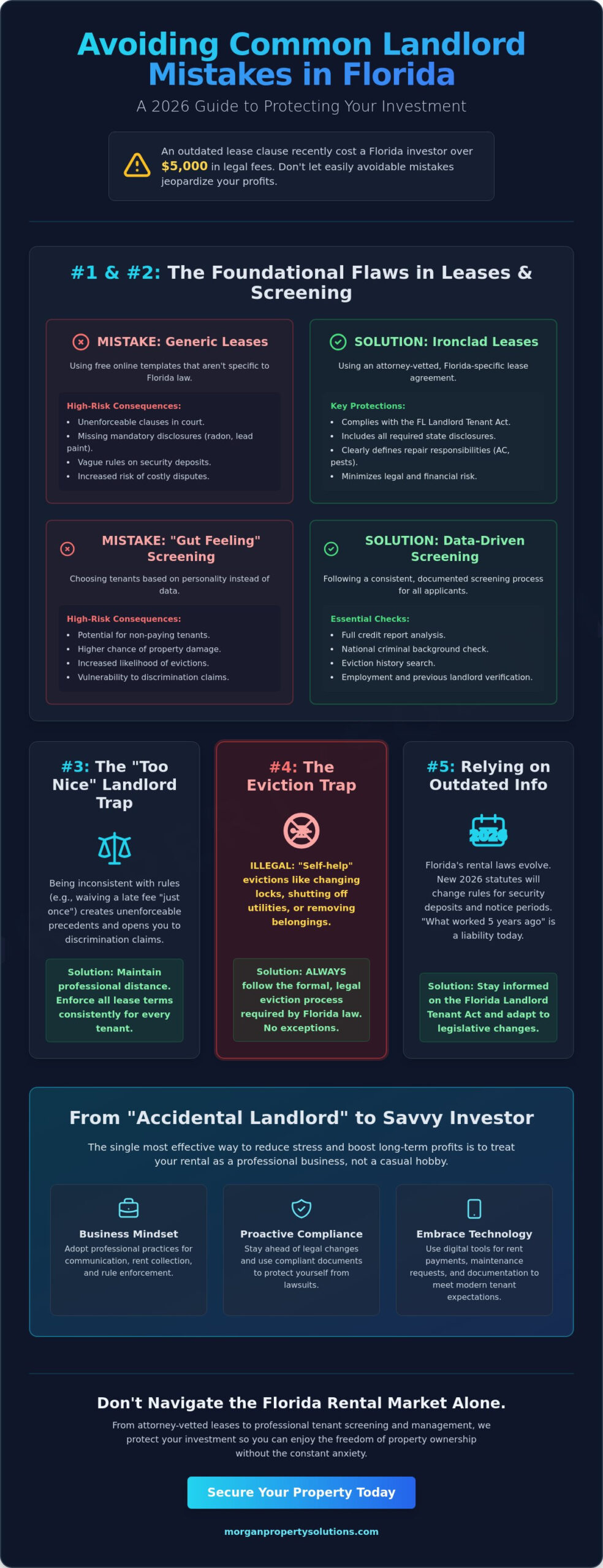
Last Tuesday, an investor named Marcus discovered that a single outdated clause in his lease agreement could cost him over $5,000 in legal fees. It’s a stressful realization that hits many property owners when they least expect it. Even if you’ve been in the game for years, falling into common landlord mistakes in florida is easier than you might think, especially with the legislative changes taking effect in 2026.
You’ve likely felt that knot in your stomach when a tenant calls about a broken AC during a 98-degree afternoon or when you worry if your paperwork will actually hold up in court. We believe that owning property should provide freedom, not constant anxiety. This article provides a clear roadmap to avoid the latest legal traps and financial hurdles so you can secure your profits and enjoy true peace of mind. We’ll walk through the essential steps to stay compliant and keep your investment thriving for years to come.
Key Takeaways
- Discover how to transition from an “accidental landlord” to a savvy investor by navigating the specific legal demands of the 2026 Florida market.
- Learn how to steer clear of common landlord mistakes in florida by using state-specific leases and professional screening tools that keep your investment safe.
- Protect yourself from massive financial penalties by understanding why “self-help” evictions are illegal and how to handle non-paying tenants the right way.
- Find out how a proactive maintenance schedule can save your home from Florida’s humidity while ensuring you meet all legal habitability requirements.
- See why treating your rental as a business—rather than a hobby—is the most effective way to reduce your stress and boost your long-term profits.
Why Florida Landlords Often Trip Up (and How to Stay Ahead in 2026)
Many people find themselves in the rental business by chance. We often call this the “accidental landlord” syndrome. Maybe you inherited a property in a high-growth area like Orlando or decided to rent out your old home instead of selling it during a market shift. While it’s a fantastic way to build long-term wealth, treating a rental like a casual side hobby is one of the most common landlord mistakes in florida. By 2026, the Florida market has become far too complex for “handshake” deals or casual verbal agreements. If you have inherited property, Flex Legal, PLLC can assist with the probate and estate planning necessary to protect your new business assets.
Today’s tenants expect a digital-first experience. They want to pay rent through a secure app and submit maintenance requests via a mobile portal. If you aren’t responsive or tech-savvy, you risk losing high-quality renters to institutional investors who have these systems ready to go. To stay protected, you’ve got to treat your property like a legitimate business. This starts with a deep understanding of the Florida Residential Landlord and Tenant Act. Think of this statute as your primary rulebook for every single interaction you have with a tenant.
The High Cost of Being a “Nice” Landlord
It’s natural to want to be liked, but being too flexible often creates legal traps that are hard to escape. If you let a tenant pay late without a fee just once, you might find it difficult to enforce that rule later in a court of law. Consistency isn’t just about being firm; it’s your best defense against potential discrimination claims. If you have different rules for different people, you’re opening the door to a lawsuit. Professional distance is the practice of maintaining a clear boundary between your personal feelings and your business obligations to ensure every tenant is treated fairly and by the book.
Florida’s Evolving Legal Landscape
The rules governing rental housing are constantly shifting. In 2026, new updates to state statutes have changed how security deposits and notice periods are handled. Relying on “what worked five years ago” is a recipe for a costly legal battle. While Florida has its specific quirks, it’s helpful to understand the broader context of U.S. landlord-tenant law to see how regional trends eventually influence our local statutes.
Staying informed is the only way to protect your investment from unnecessary risk. You can find updated guides, checklists, and tools on our landlord resources page. Keeping up with these changes ensures you don’t fall victim to common landlord mistakes in florida that could have been easily avoided with the right information and a proactive mindset.
Screening and Leases: Where Most Legal Headaches Begin
One of the most common landlord mistakes in florida is assuming you can judge a tenant’s reliability just by meeting them. It’s easy to be charmed by a friendly smile, but a handshake won’t pay the mortgage if things go sideways. Skipping a thorough background check is the fastest way to jeopardize your investment. You need to look at the hard data, not just a personality. This means pulling a full credit report, checking criminal backgrounds, and looking for any history of evictions.
The Danger of “Gut Feeling” Tenant Selection
Relying on your “gut” is a recipe for disaster. A tenant might seem perfect in person, but their financial history could tell a completely different story. To keep things fair and legal, you should always follow set screening criteria. This protects you from claims of discrimination and ensures you’re treating every applicant equally. In 2023, data from the Florida Department of Commerce showed a steady rise in rental demand, which means you usually have plenty of applicants to choose from. There’s no reason to rush or settle for someone who doesn’t meet your standards. Make sure you verify employment and talk to previous landlords to get the full picture.
Crafting a Florida-Specific Lease Agreement
Using a generic lease template you found for free online is a massive risk. These documents often lack the specific protections required by the Florida Residential Landlord Tenant Act. If your lease doesn’t follow state law, it might not hold up in court. Florida requires very specific disclosures, including information about radon gas, lead-based paint, and exactly how you’re holding the security deposit. You also need to be crystal clear about who is responsible for repairs like AC maintenance or pest control.
To avoid security deposit disputes later, you must document the property’s condition before the tenant moves in. Take high-resolution photos and videos of every room, including the insides of appliances. This creates a clear paper trail that’s hard to argue with. At Morgan Property Solutions, we use attorney-vetted leases that are designed to protect owners from these exact issues. Having a professional team handle the paperwork can save you thousands in potential legal fees. It’s all about setting clear expectations from day one so there are no surprises down the road.
The Eviction Trap: Why You Can’t Take the Law into Your Own Hands
Dealing with a tenant who won’t pay rent or follow the rules is incredibly frustrating. It’s tempting to want to take matters into your own hands to protect your property. However, “self-help” evictions are one of the most common landlord mistakes in florida. If you try to force a tenant out by changing the locks, removing their belongings, or shutting off the water, you are breaking the law. Florida statutes are very clear about this. You can’t bypass the legal system, no matter how much money you’re losing each month.
The state protects the tenant’s right to due process. This means you must follow a specific legal path to regain possession of your home. A court-ordered sheriff is the only legal way to remove a person from a property in Florida. If you attempt a shortcut, you’ll likely find yourself in a courtroom being sued by the person you’re trying to evict.
The Reality of Self-Help Eviction Lawsuits
Florida judges take a dim view of landlords who ignore the law. If you’re found guilty of an illegal eviction, the financial fallout is steep. You could be ordered to pay the tenant actual damages or three times the monthly rent, whichever is higher. This applies even if the tenant hasn’t paid you a dime in months. Understanding Florida landlord-tenant laws is vital because even a “bad” tenant has rights. You don’t want to turn a simple non-payment issue into a multi-thousand dollar liability for your business.
Mastering the 3-Day and 7-Day Notice
Winning an eviction case starts with the very first piece of paper you give the tenant. Most cases get thrown out of court because of “improper notice.” For non-payment of rent, you must provide a 3-day notice. A common error here is including late fees, utility bills, or interest in the total amount demanded. This notice should only reflect the base rent owed. If the amount is wrong by even a few dollars, the judge will likely dismiss your case, forcing you to start the entire process over from scratch.
- 3-Day Notice: Used strictly for non-payment of rent. It gives the tenant three business days to pay or leave.
- 7-Day Notice (Cure): Used for lease violations like unauthorized pets or noise complaints. The tenant has seven days to fix the problem.
- 7-Day Notice (Non-Cure): Used for serious issues like intentional property damage or repeated violations where no second chance is required.
Properly serving these documents is just as important as the content. According to Florida Statute 83.56, you must deliver the notice by mail, hand-deliver it, or leave a copy at the residence if the tenant isn’t home. Cutting corners here is one of the common landlord mistakes in florida that leads to months of lost income and high legal fees. We’re here to help you get it right the first time so your investment stays protected.
Neglecting the Property: Florida-Specific Maintenance Blunders
When maintenance is deferred, small issues turn into catastrophes overnight. A tiny roof leak during a summer afternoon thunderstorm can lead to a collapsed ceiling by the weekend. Tenants also have rights when it comes to neglect. Under Florida law, if a landlord fails to keep the premises in a livable condition, a tenant may be able to withhold rent after providing a formal 7-day notice to cure. It’s much cheaper to fix a pipe today than to fight an eviction or a rent withholding case in court tomorrow.
Winning the Battle Against Mold and Humidity
The Art of the Property Inspection
You can’t manage what you don’t see. Being a “set it and forget it” landlord is a recipe for disaster. We suggest conducting thorough walkthroughs every six months to catch problems before they scale. Here is how to handle it professionally:
- Step 1: Provide notice. Florida Statute 83.53 requires you to give at least 24 hours of notice before entering for an inspection. It’s best to send this in writing to keep everyone on the same page.
- Step 2: Document everything. Take photos of the water heater, the under-sink plumbing, and the ceilings. Even if everything looks perfect, having a dated photo proves you’re staying on top of maintenance.
- Step 3: Check for “silent killers.” Look for rust at the base of the water heater. Most tanks only last 8 to 12 years in Florida. Look for soft spots on the flooring near sliding glass doors where rain often blows in.
- Step 4: Build a partnership. Ask your tenant if they’ve noticed any slow drains or weird noises. When you show you care about the home, they’re more likely to treat it with respect.
By staying proactive, you protect your cash flow and keep your tenants happy. If you want to stay ahead of these issues, explore our landlord resources for more tips on protecting your Florida investment.
Treating Your Rental Like a Hobby Instead of a Business
Many owners start their journey thinking a rental property is just a side project or a way to make a little extra cash. By the time 2026 rolls around, the Florida market will be far too competitive for that casual mindset. One of the most common landlord mistakes in florida is letting emotions drive the bus. If you’re making choices based on how much you like a tenant rather than their documented payment history, your ROI is going to suffer. A business mindset means looking at the hard numbers every single month and making decisions that protect the asset first.
DIY management often feels like it’s saving you money, but it usually does the opposite. Think about the 40 hours or more you might spend every year just chasing down repairs, managing paperwork, or dealing with late-night emergencies. Data from late 2024 suggests that self-managed properties often lag behind market rent by 10% or more. This happens because owners feel guilty about raising rates on people they’ve met personally. Professional Orlando property management isn’t just another expense; it’s a strategic investment that ensures your property stays profitable and your stress levels stay low.
Instead of managing maintenance, you could be enjoying the best of Florida’s outdoors with a professional guide from Bass Online, turning your saved time into memorable experiences on the water.
The “Friendship” Pitfall
Becoming friends with your tenant makes it almost impossible to enforce the rules of the lease. When rent is late, a friend gives you a long list of excuses; a business owner simply applies the agreed-upon late fee. We act as the buffer, taking on the “bad guy” role so you don’t have to have those awkward conversations at the front door. If you’re worried about how to transition from a DIY setup to a professional firm, don’t be. We handle the switch smoothly by explaining to tenants that the change provides them with better service, like 24/7 maintenance portals and easier payment options. Most tenants actually prefer the clarity of a professional relationship.
Scaling Your Portfolio with a Trusted Partner
As we move through 2026, your focus should be on your long-term investment strategy, not fixing leaky faucets at 2 AM. Using a trusted partner gives you access to online portals and detailed financial reporting that makes tax season a breeze. You’ll see exactly where every dollar goes without having to dig through a shoebox of receipts. If you want to grow your portfolio from one property to five, you need systems that can scale with you. Simplify your real estate journey with Morgan Property Solutions and let our 20 years of experience help you avoid the common landlord mistakes in florida that hold so many investors back.
Set Your Rental Property Up for Long-Term Success
Owning a rental property shouldn’t feel like a second full-time job that keeps you up at night. By tightening your tenant screening process and treating your investment like a real business, you can avoid the legal pitfalls that catch so many others off guard. Staying proactive with maintenance through a professional network ensures your property stays in top shape even as Florida’s climate changes. Avoiding common landlord mistakes in florida starts with having the right systems in place before problems arise.
You don’t have to navigate these complexities alone. With an A+ rating from the Better Business Bureau and over 20 years of experience in Central Florida, Morgan Property Solutions knows how to protect your assets. We provide a vetted vendor network for 24/7 maintenance so you never have to worry about a midnight emergency. We’re here to help you simplify the process and maximize your returns. Let us take the stress out of your rental; get a free management quote today!
You’ve got a great investment on your hands, and we’re excited to help you watch it grow.
Frequently Asked Questions
Can a landlord enter without notice in Florida?
No, you can’t enter a tenant’s home without giving notice unless it’s a genuine emergency. Florida Statute 83.53 requires you to provide at least 24 hours of notice for things like repairs or inspections. We suggest sending this notice in writing so you have a clear record of it. Keeping a professional boundary helps build trust and ensures you’re following the law every time you visit.
What is the maximum late fee a landlord can charge in Florida in 2026?
Florida law doesn’t set a specific dollar limit on late fees, but the amount must be reasonable. Most property managers and courts consider a fee between 5% and 10% of the monthly rent to be fair. To avoid common landlord mistakes in florida, you should clearly state the exact fee and when it applies in your written lease. This prevents any confusion when rent day rolls around.
How long does a landlord have to return a security deposit in Florida?
You have exactly 15 days to return a security deposit if you’re giving the full amount back to the tenant. If you plan to keep any of the money for repairs, you must notify the tenant by certified mail within 30 days. Missing these specific windows can lead to legal trouble and might force you to pay the tenant’s legal fees. We always keep a calendar to track these important dates.
Can I evict a tenant myself if they stop paying rent?
You can’t evict a tenant yourself by changing the locks or cutting off the water. This is a violation of Florida Statute 83.67 and can be a very expensive mistake for any owner. A judge could order you to pay the tenant a penalty equal to three months of rent. It’s much better to follow the official court eviction process to protect your investment and stay on the right side of the law.
Is a written lease required for rentals in Florida?
Technically, Florida law allows oral leases for rentals lasting less than one year, but we strongly advise against it. Without a written contract, you don’t have proof of the specific rules you’ve set for your property. A solid, written lease protects you and your tenant by outlining everyone’s responsibilities. It’s the best way to make the rental process simple and stress-free for both parties involved in the agreement.
What happens if I don’t fix the A/C in my Florida rental property?
If your lease agreement includes air conditioning, you’re legally required to maintain it. While Florida state law doesn’t classify cooling as a basic necessity like water, many local municipalities have stricter rules. If the unit breaks and you don’t fix it, the tenant could give you a seven day notice to cancel their lease. We recommend fixing cooling issues immediately to keep your tenants happy and your property occupied.
Can a tenant withhold rent for repairs in Florida?
A tenant can legally withhold rent if you fail to maintain the property, but only after they give you a formal seven day notice. This notice must explain the problem and state they’ll stop paying if it isn’t fixed. Learning how to handle these situations is vital to avoid common landlord mistakes in florida. We always tell our clients that quick communication can stop a small repair from becoming a big legal issue.
Are landlords responsible for pest control in Florida?
For multi-family properties like duplexes or apartments, Florida Statute 83.51 requires landlords to handle pest control for rodents and roaches. In a single-family home, the responsibility usually depends on what’s written in your specific lease agreement. We suggest taking care of it yourself to ensure the job is done right. This helps protect the long-term value of your home and keeps your residents satisfied with their living environment.

Article by
Oliver Overton-Morgan
Oliver Overton-Morgan is a full-time Real Estate Broker since 2003, with years of experience helping thousands of people purchase and sell real estate throughout Central Florida. He holds a Graduate Realtor Institute designation, LCAM, and has held licenses in good standing as a Florida Mortgage Broker and a Notary Public. Oliver immigrated to central Florida in 2001, and within 5 years Oliver built a successful Real Estate brokerage in central Florida, where he recruited over 75 Sales Associates with 25+ million in sales production.