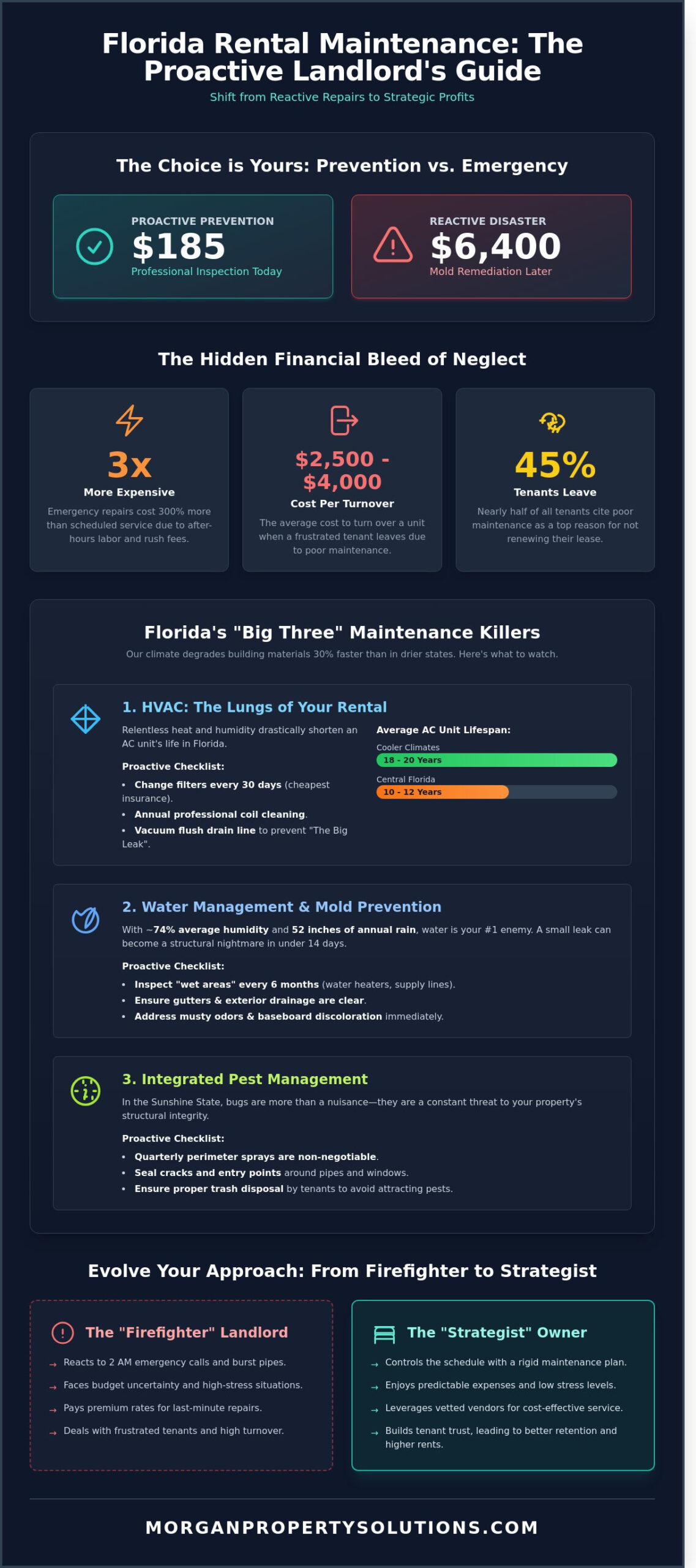
Would you rather spend $185 on a professional inspection today or face a $6,400 bill for mold remediation three months from now? It’s a choice many Florida property owners face every summer when the humidity peaks. You likely already know that reacting to disasters is the fastest way to lose your rental income. This is why staying consistent with preventative maintenance for rental properties is the only way to keep your profits from being swallowed by avoidable repairs.
We’re here to help you simplify that process. We want to show you how to stop those 2:00 AM emergency calls and extend the lifespan of your HVAC systems by up to 30%. This guide provides the exact steps you need to protect your investment, keep your tenants happy, and ensure your monthly expenses remain predictable throughout 2026. You can trust us to guide you through the details so you can focus on growing your portfolio without the constant stress of unexpected breakdowns.
We’ve put together a clear, seasonal roadmap that focuses on Florida-specific challenges like moisture control and storm readiness to keep your business running smoothly.
Key Takeaways
- Learn how to shift from a “firefighter” landlord to a strategist by using proactive habits that keep your investment profitable and stress-free.
- Discover why consistent preventative maintenance for rental properties is the only way to protect your home from Florida’s aggressive humidity, heat, and pests.
- See the real-world math behind how a small inspection fee today prevents a $6,000 emergency repair and boosts your property’s resale value.
- Get a seasonal maintenance roadmap built specifically for Orlando owners, featuring quick monthly tasks that take less than 30 minutes.
- Find out how a professional property management team uses vetted vendors and 24/7 portals to handle repairs so you never have to take a midnight phone call.
What is preventative maintenance for rental properties and why does it matter?
Think of Preventive maintenance as a routine health check for your financial future. It is the practice of inspecting and servicing your property assets before they actually break. For many owners, this represents a massive psychological shift. You move from being a “firefighter” landlord, always reacting to 2 AM phone calls about burst pipes, to a “strategist” owner who controls the schedule. When you control the timing of repairs, you control your budget and your stress levels.
Effective preventative maintenance for rental properties serves as a primary driver for tenant retention. Data shows that 45% of tenants cite poor maintenance as a top reason for not renewing a lease. When a tenant sees you proactively changing air filters or cleaning gutters, they feel valued. This care translates into better online reviews and a reputation that allows you to command higher rents. By 2026, property standards will move even further toward tech integration. Smart leak detectors and automated HVAC monitors are becoming the new baseline for “well-maintained” homes, helping owners spot issues before a human even notices a drop of water.
This focus on higher standards extends to sustainability and energy efficiency. For investors looking to document their property’s quality and appeal to eco-conscious tenants, resources from firms like Ekocentric offer guidance on green building certifications that are becoming increasingly valuable in the market.
The “Invisible” costs of reactive landlording
Waiting for things to break is a recipe for financial bleeding. Industry data consistently shows that emergency repairs cost 3x more than scheduled service. You aren’t just paying for the part; you’re paying for “after-hours” labor rates and expedited shipping. Beyond the invoice, there is the hidden drain of tenant turnover. It costs an average of $2,500 to $4,000 to turn over a unit when a frustrated tenant leaves. Worse yet, a neglected $100 plumbing leak can quickly evolve into a $15,000 structural insurance claim involving black mold and subfloor rot. Consistency prevents these catastrophes.
Making real estate simple through consistency
Creating a rigid maintenance schedule does more than save money; it reduces the heavy mental load of property ownership. You no longer have to wonder if the roof will last the winter because you’ve already had it inspected in October. This level of care builds a “trusted partner” relationship with your tenants. They become your eyes and ears, reporting small issues because they know you’ll actually fix them. If managing these moving parts feels overwhelming, Morgan Property Solutions Inc. acts as a partner in simplifying this process. We help you transition from chaotic reactive fixes to a streamlined, professional strategy that protects your equity. Preventative maintenance for rental properties is the foundation of a stress-free investment journey.
The “Big Three” Florida maintenance killers: HVAC, Water, and Pests
Florida’s sunshine comes with a hidden cost for landlords. Our tropical climate is uniquely aggressive toward residential systems, especially since relative humidity in Central Florida often averages 74% year-round. This constant moisture means appliances and building materials degrade 30% faster than they do in drier states. Many owners try a “set it and forget it” approach, but that mindset is dangerous in Orlando. If you aren’t proactive, a small drip becomes a structural nightmare in less than 14 days. By 2026, we expect 65% of professional managers to use smart leak and humidity sensors to track these systems in real-time. This shift makes preventative maintenance for rental properties easier, but it doesn’t replace the value of a physical walkthrough.
HVAC: The lungs of your Florida rental
Your AC works harder than any other system in the house. Changing filters every 30 days is the cheapest insurance you can buy for your investment. Dust and pet hair clog coils quickly, which forces the compressor to run longer and hotter than intended. We recommend an annual professional coil cleaning and a vacuum flush of the primary drain line to prevent “The Big Leak” that ruins drywall and flooring. Because of the relentless heat and salt air, a Central Florida AC unit typically lasts only 10 to 12 years, while units in cooler northern climates often reach a lifespan of 18 to 20 years.
Water management and mold prevention
Water is the fastest way to lose a tenant and damage your ROI. You should inspect “wet areas” like water heaters, supply lines, and fridge connections every six months. Orlando receives about 52 inches of rain annually, making gutter health and exterior drainage critical for keeping foundations dry. Under Florida’s landlord-tenant laws, you’re required to maintain a habitable environment, which includes a mold-free home. Watch for musty odors or slight baseboard discoloration. These are early warning signs that need immediate attention before they become expensive health hazards. If you’re feeling overwhelmed by these checks, our team can help you manage the details and keep things simple.
Integrated pest management in the Sunshine State
In Florida, bugs aren’t just a nuisance; they’re a constant pressure on your property’s integrity. Quarterly perimeter sprays are non-negotiable for rentals because they create a chemical barrier that stops infestations before they start. You also need to “seal the envelope” by checking for gaps in window caulking and door sweeps. A hole the size of a pencil is enough for a cockroach or a small rodent to enter; to learn more about the health risks they bring, check out Jones Bros Pest Control, Inc.. We also suggest educating your tenants on their role. Simple habits, like keeping kitchen counters dry and reporting leaks immediately, go a long way in keeping the home pest-free. Consistent preventative maintenance for rental properties ensures your investment stays profitable and your tenants stay happy. This proactive approach saves you from $1,000 emergency calls later.
Establishing a regular service is key. For a comprehensive approach to keeping your property secure from pests year-round, you can explore General Pest Control Plans.
Reactive vs. Proactive maintenance: A 2026 cost-benefit analysis
In 2026, savvy investors don’t view repairs as just an annoying expense. They see them as a vital risk management strategy. The old way of waiting for a call at 2:00 AM because a water heater exploded is a fast track to losing your profit margins. We’re seeing more Florida landlords shift toward a “maintenance-first” management style. This isn’t just about being a “nice” landlord. It’s about protecting your equity and staying ahead of a volatile market.
The math is simple but powerful. A $150 annual HVAC inspection might feel like an extra cost today. However, that small check-up prevents a $6,000 full unit replacement that inevitably happens during a Florida heatwave in July. Beyond the immediate cash outlay, preventative maintenance for rental properties directly impacts your insurance costs. Florida insurers in 2026 are increasingly requiring proof of roof age and plumbing updates before they’ll even issue a quote. Properties with documented maintenance logs often see a 12% reduction in annual premiums compared to homes with “unknown” status.
When you decide to sell, those records are worth their weight in gold. A buyer in 2026 isn’t just looking at the granite countertops; they’re looking at the service dates on the electrical panel. Providing a digital history of every air filter change and termite bond can increase your final sale price by roughly 5% to 8%. It proves to the buyer that the home has been cared for, reducing their perceived risk.
This principle holds true globally, especially in competitive luxury markets. Premier agencies like King Estates in Spain’s Costa del Sol, for example, know that a pristine maintenance history is a non-negotiable factor for securing top-tier property valuations.
Similarly, in the Australian market, you can check out Regal Gateway Property to see how a focus on property condition and management underpins successful residential sales.
This focus on quality is just as critical in the short-term accommodation sector, where the success of providers like Swasproperties hinges on immaculate presentation and seamless guest experiences.
This long-term view is crucial for any property investor. To see how a well-maintained portfolio translates to market value, you can explore Residential Property Sales and see examples of how top-tier properties are presented, which can offer valuable insights no matter your location.
Beyond protecting the property itself, a comprehensive long-term view includes protecting the investor’s legacy. Ensuring your portfolio can be passed on without forcing a sale to cover final expenses is a key part of wealth management. For those interested in this aspect of financial planning, you can discover McBango Insurance Services.
The financial math of a well-oiled rental
Think about your roof. A $300 annual inspection catches a loose shingle or a clogged valley before it leads to an $18,000 interior mold remediation project. That’s a massive return on investment. If you let issues pile up, you’re dealing with “deferred maintenance.” This is a silent killer that eats away at your property value every single month. You can find templates and tools to track these costs in our landlord resources section. Staying organized makes the math work in your favor and keeps your budget predictable.
Tenant satisfaction as a financial metric
Repairs aren’t just about the building. They’re about the person living in it. Data shows that 82% of tenants cite “slow maintenance response” as their primary reason for moving out at the end of a lease. Since a single vacancy can cost you $2,500 or more in lost rent and marketing, keeping a tenant is always cheaper than finding a new one. Well-kept homes also attract people who take pride in where they live. When you review our screening criteria, you’ll see that high-quality applicants look for high-quality management. They want to know you’re a partner in their housing experience, not just a bill collector. Using preventative maintenance for rental properties shows them you’re proactive, which builds trust and encourages them to stay for years instead of months.
Ultimately, 2026 investors who prioritize these small, regular tasks are the ones seeing the highest net yields. They don’t get hit with $10,000 emergency bills because they spent $1,000 throughout the year to keep things running smoothly. It’s about making real estate simple and stress-free for everyone involved.
The Ultimate Central Florida preventative maintenance checklist
Owning a home in Orlando is a different beast than owning one in the Midwest or out West. Our 100-degree afternoons and 90% humidity levels put massive strain on every component of a building. If you want to keep your investment profitable, you need a localized strategy for preventative maintenance for rental properties. Following a strict schedule helps you catch a $50 problem before it turns into a $5,000 emergency repair. It’s about being proactive rather than reactive.
Monthly tasks are your quick wins. These shouldn’t take more than 30 minutes, but they save thousands over time. First, change the HVAC filters. A standard 1-inch pleated filter costs about $12, yet it prevents the evaporator coil from freezing up. You should also do a quick walk-through to check under every sink for moisture. In the Florida heat, a tiny drip can turn into a mold colony in less than 48 hours. A fast visual check of the landscaping is also vital; ensure grass isn’t overgrown and blocking the AC condenser unit’s airflow.
Every 90 days, you need to look at the systems that keep the property running. Orlando receives an average of 52 inches of rain annually, which means gutters must stay clear. If water overflows, it rots the fascia boards and attracts Formosan termites. You should also test the irrigation system. A single broken sprinkler head can waste 1,000 gallons of water in a single cycle, sticking you or your tenant with a massive utility bill. Quarterly pest control is also a non-negotiable in Central Florida to keep roaches and ants at bay before they settle in. If you’re looking for a reliable partner for this, you can learn more about Jones Bros Pest Control, Inc..
Annual milestones focus on structural health. Have a licensed professional inspect the roof every October after hurricane season ends. They’ll look for loose shingles or compromised flashing that could lead to leaks during the next summer storm cycle. You also want to flush the water heater once a year. Florida water is notoriously hard, and sediment buildup can reduce the lifespan of a $1,200 heater by 40% if left unaddressed. These big-picture checks protect the integrity of the home for the long haul.
Spring and Summer: Preparing for the heat and storms
Hurricane season kicks off on June 1, and your preparation should start in May. Trim any tree branches that are within 10 feet of the roofline to prevent wind damage. Check the seals on your windows and ensure hurricane shutters are accessible and functional. If the property has a pool, inspect the lanai screening for tears. A small hole in a screen can lead to a mosquito infestation that makes the outdoor space unusable for tenants during the July heatwaves.
Fall and Winter: The dry season refresh
When the humidity drops in November, it’s time to check the home’s envelope. Recaulk gaps around windows and doors to keep the cool air in and the pests out. Even though we only use the heat for about 14 days out of the year, you must test the heating elements before the first cold snap. Many older units will burn off dust and smell like smoke the first time they turn on; it’s better to handle those tenant concerns in November than during a freeze in January. Finally, make it a tradition to swap smoke detector batteries every New Year’s Day.
How professional property management removes the maintenance headache
Managing a rental property by yourself often feels like a second full-time job you never actually applied for. It is usually that 2:00 AM phone call about a backed-up sewer line or a broken HVAC unit in the middle of a Florida summer that pushes landlords to their breaking point. Professional management changes that dynamic entirely. Instead of reacting to disasters as they happen, you shift the focus to a consistent strategy of preventative maintenance for rental properties.
One of the biggest advantages we offer is a pre-vetted vendor network. We’ve spent over 20 years building relationships with more than 65 licensed and insured contractors. These aren’t just random names from a search engine; they’re pros who prioritize our calls because of the volume of business we provide. You don’t have to spend your Saturday morning calling five different electricians just to find one who might show up. We handle the scheduling, the follow-up, and the quality control so you don’t have to.
Think of professional management as a shield for your time and your bank account. Our 24/7 maintenance portals allow tenants to report issues the second they notice them. This is vital because a small leak under a kitchen sink can turn into a $4,000 mold remediation project if it sits for a week. By making it easy for tenants to communicate, we catch problems while they’re still cheap to fix. This proactive approach typically saves our clients between 15% and 20% on annual repair costs compared to the reactive “fix-it-when-it-breaks” method many DIY landlords use.
We also take the guesswork out of property condition with documented inspections. Our team conducts thorough walk-throughs that include 30 to 50 high-resolution photos of the interior and exterior. This creates a clear digital paper trail. If a tenant claims a hole in the wall was there when they moved in, we have the photographic evidence to prove otherwise. This level of detail protects your security deposit claims and ensures your asset stays in top shape.
Leveraging technology for better upkeep
Our online portals act as a central hub for owners, tenants, and vendors. Tenants can upload photos of a repair need directly from their phones, which helps our vendors bring the right parts the first time. For owners, these digital logs are a massive help during tax season or if you ever need to file an insurance claim. You can download a complete history of every dollar spent on your home with one click. Our Orlando property management services ensure that every repair is tracked, timestamped, and archived for your records.
Your partner in “Making Real Estate Simple”
At Morgan Property Solutions, we believe owning a rental should be about building wealth, not managing stress. Transitioning from a DIY struggle to professional oversight means you get your weekends back and stop worrying about the “what-ifs.” We treat your investment like our own, ensuring that preventative maintenance for rental properties is handled on a strict, professional schedule. We’re here to guide you through the complexities of ownership so you can enjoy the rewards of your investment without the daily grind.
Comprehensive professional oversight ensures your property remains in peak condition while significantly extending the functional lifespan of every major system and appliance.
These principles of proactive oversight are universal, whether you’re managing properties in Orlando or on the West Coast. For instance, leading firms like True Property Management demonstrate how a professional team can protect valuable coastal assets by applying similarly rigorous maintenance schedules.
Secure Your Investment’s Future Today
Owning real estate in Central Florida is a proven way to build long term wealth, but the local climate doesn’t go easy on your physical assets. By focusing on the “Big Three” killers like HVAC systems and pest control, you’ll avoid the $5,000 emergency repair bills that often catch reactive landlords off guard. Implementing a consistent strategy for preventative maintenance for rental properties is the most effective way to keep your 2026 profit margins high and your tenants happy. It’s truly about working smarter, not harder.
You don’t have to manage the complex checklists and vendor calls alone. Morgan Property Solutions has spent over 20 years helping local owners navigate the Orlando market. With our A+ BBB rating and 24/7 professional maintenance coordination, we provide the expert support you deserve. We’ll guide you through every step of the process to ensure your property stays in top condition without the typical stress of being a landlord.
Let us handle the maintenance for you-explore our Orlando property management services.
We’re ready to help you simplify your portfolio and reach your financial goals with total confidence.
Frequently Asked Questions
How much should I budget for preventative maintenance annually?
Plan to set aside 1% of your property’s total value each year for upkeep. If your Orlando home is worth $400,000, you’ll need $4,000 in a dedicated savings account to stay ahead of repairs. This ensures you’re never caught off guard when a water heater reaches its 10-year lifespan or a roof needs a minor patch. It’s a simple way to protect your investment.
Is preventative maintenance tax-deductible for Florida landlords?
Yes, the IRS allows you to deduct 100% of your maintenance costs as ordinary and necessary business expenses on Schedule E. This includes the money you spend on preventative maintenance for rental properties like pest control or gutter cleaning. Just keep every receipt from the last 7 years to stay compliant during an audit. It makes tax season much easier for you.
What happens if a tenant refuses to allow access for preventative inspections?
Florida Statute 83.53 gives you the right to enter with 24 hours of notice for necessary repairs or inspections. If a tenant blocks your path, you should issue a 7-day notice to cure the lease violation. We’ve seen that 95% of access disputes are resolved once the tenant understands their legal obligations under the rental agreement. It’s all about clear communication from the start.
Can I charge the tenant for maintenance caused by their negligence?
You can charge a tenant for repairs if the damage exceeds normal wear and tear, such as a 3-inch hole in the drywall. It’s vital to document the issue with at least 5 clear photos and a written estimate from a contractor. Send the bill within 30 days of the repair to ensure you’re following standard Florida property management practices. This keeps things fair for everyone involved.
How often should I professionally service the HVAC system in Florida?
You should have a licensed technician service your AC unit 2 times every year to handle the intense Florida humidity. Scheduling these checkups in March and October helps prevent the 40% of emergency calls that happen during July heatwaves. It’s a small $150 investment that can extend the life of a $6,000 system by several years. We want your cooling system to stay reliable all year.
What are the most common maintenance issues in Orlando rental properties?
Clogged AC drain lines and mold growth are the top two issues we see in Central Florida homes. High humidity levels mean 1 in 4 properties will face moisture problems if the ventilation isn’t checked regularly. Termite activity is also a major concern, requiring a professional inspection at least once every 12 months to protect the structure. These steps help you avoid massive repair bills later on.
Is it better to use a general handyman or specialized contractors for maintenance?
Use a handyman for small tasks under $500 like fixing a leaky faucet, but hire specialized contractors for electrical or HVAC work. Most Florida counties require a license for any job that impacts the structural, plumbing, or electrical systems. Hiring a licensed pro might cost 20% more upfront, but it protects you from liability and ensures the job meets building codes. It’s the safest way to manage your property.
How does preventative maintenance impact my property insurance rates?
Regular upkeep can lower your annual premiums by 10% or more through credits for updated roofing or plumbing. Many Florida insurers now require a 4-point inspection for homes older than 20 years before they’ll even issue a policy. By staying on top of preventative maintenance for rental properties, you avoid the “deferred maintenance” red flags that lead to policy cancellations. Insurance companies love seeing a well-cared-for home.

Article by
Oliver Overton-Morgan
Oliver Overton-Morgan is a full-time Real Estate Broker since 2003, with years of experience helping thousands of people purchase and sell real estate throughout Central Florida. He holds a Graduate Realtor Institute designation, LCAM, and has held licenses in good standing as a Florida Mortgage Broker and a Notary Public. Oliver immigrated to central Florida in 2001, and within 5 years Oliver built a successful Real Estate brokerage in central Florida, where he recruited over 75 Sales Associates with 25+ million in sales production.