
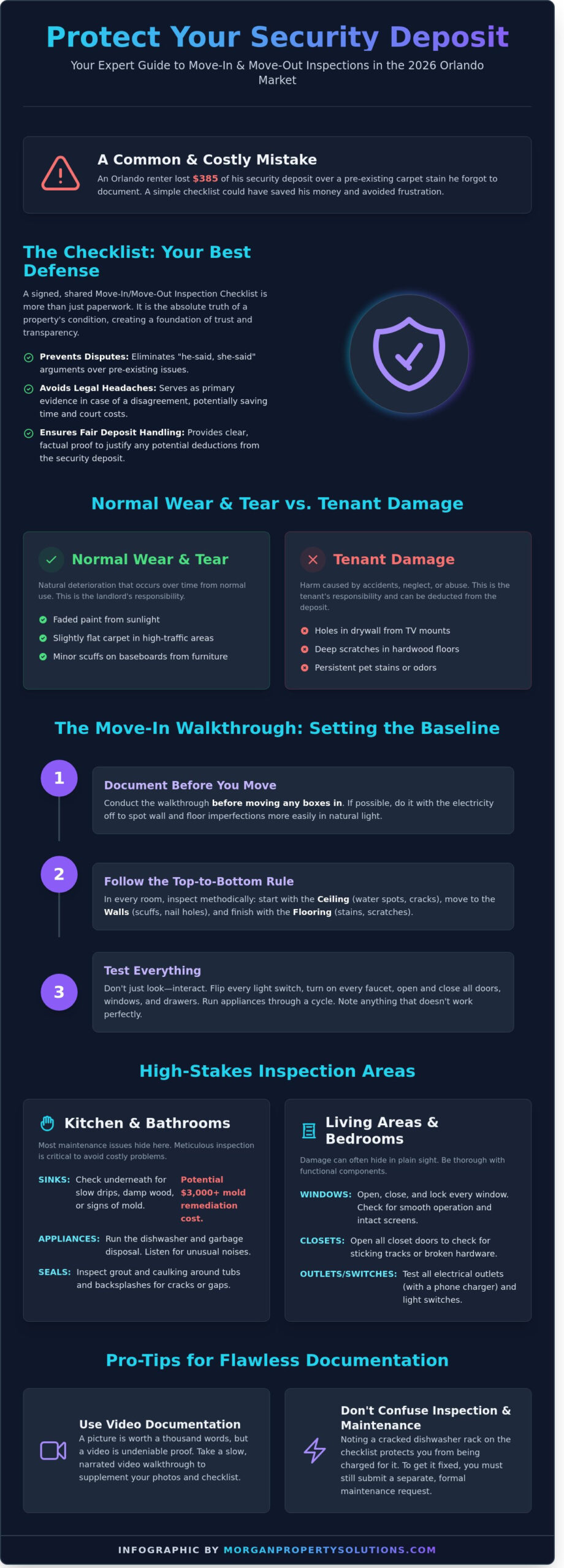
Last July, an Orlando renter named Marcus spent three days cleaning his apartment, yet he still lost $385 of his security deposit because of a pre-existing carpet stain he forgot to photograph. It’s a story we hear too often at Morgan Property Solutions, where we’ve spent 20 years helping neighbors. You shouldn’t have to guess if a scuffed baseboard is your responsibility. Using a comprehensive move-in move-out inspection checklist is the only way to guarantee that everyone stays on the same page and your money stays where it belongs.
If you have properties in other states, we always recommend finding a local expert who provides Full-Service Property Management; in the Maryland area, for instance, such services are essential for navigating regional rental requirements and protecting your assets.
We know moving feels overwhelming, and the fear of hidden costs can ruin the excitement of a new home. You deserve a process that’s transparent, rather than a stressful gamble. We’re here to help with this expert-led walkthrough guide designed for the 2026 Orlando market to protect your security deposit. We’ll show you how to document every corner and distinguish between normal wear and tear and actual damage. This printable-style resource will give you the peace of mind you need for a smooth transition.
Key Takeaways
- Learn why a signed, shared document is your best defense for keeping property condition reports factual and fair for everyone involved.
- Discover how to set a perfect baseline for your home by capturing its condition before the very first box—or even the electricity—is moved in.
- Master our expert move-in move-out inspection checklist to ensure your security deposit is protected and handled with total transparency.
- Pick up pro-tips on using video documentation and the “smell test” to catch those hidden details that standard photos often miss.
- See how partnering with a professional team can remove the stress and emotion from inspections, making the entire transition simple and easy.
Why a Move-In Move-Out Inspection Checklist is Your Best Defense
Moving is a whirlwind of boxes, bubble wrap, and logistics. It’s easy to overlook a small scuff on the baseboard or a loose cabinet handle when you’re focused on getting the couch through the door. That’s why a move-in move-out inspection checklist is your best defense. This document serves as the absolute truth of a property’s condition at two specific moments in time. It’s a shared record that protects everyone involved, ensuring that nobody is held responsible for issues they didn’t cause.
To free up your focus for these crucial details, many people find it helpful to hire professional movers. A full-service company, like the one you can find at all-movingandstorage.com, can manage the entire physical move, allowing you to concentrate on the important task of documentation.
When landlords and tenants walk through a home together and sign this document, they’re creating a foundation of trust. It’s not just a formality; it’s a way to prevent the “he-said, she-said” arguments that often lead to frustration. This single piece of paper is often the only evidence needed to avoid expensive legal headaches or time-consuming visits to small-claims court. It provides the clarity required to handle the Security Deposit fairly and transparently at the end of the lease.
It’s also vital to understand the difference between an inspection and a maintenance request. An inspection is a snapshot for documentation purposes. If you notice the dishwasher has a cracked rack during your walk-through, you note it on the move-in move-out inspection checklist so you aren’t charged for it later. However, noting it doesn’t automatically trigger a repair. You’ll still need to submit a formal maintenance request to get the item fixed. Keeping these two processes separate keeps the documentation clean and the repairs on track.
Defining Normal Wear and Tear vs. Damage
The line between “normal wear” and “damage” can sometimes feel blurry. Generally, normal wear and tear includes things that happen naturally over time, like faded paint from the Florida sun or a carpet pile that’s become slightly flat in high-traffic areas. Damage, on the other hand, is the result of accidents or neglect. This includes things like holes in the drywall from a TV mount, deep scratches in hardwood floors, or persistent pet stains. In 2026, the standard for a “clean” unit is higher than in years past. Tenants now expect a home to be move-in ready with polished appliances and dust-free ceiling fans. Florida’s high humidity also adds a layer of complexity. Mildew in a bathroom might be a cleaning issue for a tenant, but a soft spot in the drywall caused by a slow leak is a maintenance issue that the landlord needs to address.
When such damages occur, it’s crucial for landlords to have a reliable team to handle the repairs. Services like Fenelon Handyman Services are often called upon to fix these types of issues, helping to restore the property before the next tenant moves in.
For more complex electrical maintenance or safety upgrades, Sanford Electric, LLC has been a trusted name in Central Florida since 1925, ensuring that all systems are up to code.
Understanding this distinction is crucial not only for managing rentals but also for preserving a property’s value for an eventual sale. For a deeper look into long-term investment strategies from an international perspective, you can learn more about Regal Gateway Property.
The Legal Weight of the Checklist in Florida
Florida statutes are very specific about how rental agreements and deposits are handled. While the law provides a framework, a signed inspection checklist acts as your primary evidence if a dispute arises. We’ve found that signing the document together is a best practice for local landlords because it shows a commitment to transparency. It’s much harder to dispute a charge when there’s a signed document and accompanying photos from day one. If you want to dive deeper into the legal side of property management, you can find more details on our Landlord Resources page. We’re here to make the process simple and stress-free for everyone involved.
The Move-In Walkthrough: Setting the Baseline for Success
Think of your move-in walkthrough as your best defense against future disputes. You want to capture the home in its current state before you bring in a single heavy box. Using a detailed move-in move-out inspection checklist ensures you document every scratch, scuff, or leaky pipe before they become your responsibility. We recommend doing this walkthrough before the electricity is even turned on if the natural light allows. Without the hum of appliances or the glow of overhead lights, you can often spot wall imperfections or floor stains more clearly. When you use a move-in move-out inspection checklist correctly, you protect your investment and your peace of mind from day one.
Follow the top-to-bottom rule for every room. Start your gaze at the ceiling to look for water spots or cracks, then move down the walls to the baseboards, and finally check the flooring. Don’t just glance at things. You need to flip every switch, turn every faucet, and open every drawer. This level of detail is a major part of following state laws on security deposits, which often require clear proof of a property’s condition to justify any later deductions. Taking 20 minutes extra now can save you weeks of headaches later.
Kitchen and Bathrooms: The High-Stakes Areas
These rooms are where most maintenance issues hide. Check under every sink for slow drips or damp wood; these are early warning signs of mold that can cost $3,000 or more to remediate. Run the dishwasher through a full cycle and listen for unusual grinding in the garbage disposal. You should also document the condition of the grout and caulking around tubs and backsplashes. If the seal is broken, water can seep behind walls, leading to expensive water damage claims that you shouldn’t have to pay for later.
Living Areas and Bedrooms
In these spaces, damage often hides in plain sight. Open every closet and look at the tracks; doors that stick now will only get worse. Perform the window test by opening, closing, and locking every single one to ensure the hardware works and the screens are intact. In Orlando, where humidity levels often hit 90%, checking the A/C vents is non-negotiable. Look for dust buildup or dark spots that might suggest the system hasn’t been serviced recently. If you need more help staying organized, check out our landlord resources for extra tips and guidance.
The Move-Out Inspection: Proving Your Care for the Property
This is the moment where your initial move-in move-out inspection checklist becomes your best friend. It acts as the bridge between the day you moved in and the day you hand back the keys. You should have that original document in hand as you walk through the rooms one last time. It isn’t just about looking for holes in the walls; it’s about verifying that the property is in the same condition, minus normal wear and tear, as when you arrived. If you noted a crack in the window on day one, having that documented ensures you aren’t held responsible for it on day 365.
There’s often a bit of confusion about “broom clean” versus “professional deep cleaning.” Most Florida leases require the home to be left in broom clean condition. This means you’ve swept the floors, wiped down the counters, and cleared out every bit of trash from the cabinets and closets. However, if the carpets were professionally steamed before you moved in, you might be expected to provide a receipt showing you did the same. Checking your specific lease terms 14 days before you leave saves you from a surprise deduction.
Don’t forget the final logistics of the handoff. Returning every key, mailbox key, and garage door opener is a simple way to show you’ve respected the property. It’s also vital to keep the power and water on until the day after your inspection. If a landlord can’t test the appliances or lights because the utilities are off, they might have to schedule a second visit, which can lead to administrative fees.
The Security Deposit Conversation
Florida law is quite specific about timelines. If everything is perfect, a landlord has 15 days to return your deposit. If they intend to keep any portion for repairs, they have 30 days to notify you via certified mail. We know that upfront costs can be heavy, which is why we offer Deposit-Free Renting to help keep your move simple and affordable. Dealing with minor scuffs? Usually, those fall under normal wear and tear, so you shouldn’t lose your whole deposit over a few marks on the baseboards.
When Damages Are Found: The Dispute Process
If an issue comes up, stay calm and professional. This is why those 40 or 50 photos you took on move-in day are so valuable. If a landlord points out a stain that was already there, you can simply show them the timestamped photo. Open communication solves about 90% of these conflicts before they ever escalate. Being helpful and showing your evidence clearly makes the process much smoother for everyone involved.
Beyond the Paperwork: Pro-Tips for an Orlando Move
Moving day is chaotic; we’ve helped thousands of families navigate it over the last 20 years. While a paper move-in move-out inspection checklist is your foundation, technology in 2026 makes protection easier than ever. Start by recording a continuous five-minute video walkthrough of the entire property before the first box enters the house. A video captures the functional state of things, like the sound of a rattling ceiling fan or the slow drain of a sink, which a still photo simply can’t convey. It’s your best defense against future disputes because it provides a real-time narrative of the home’s condition.
Don’t forget the “Smell Test” during your walkthrough. Odors from pets or cigarette smoke are invisible to cameras but can lead to expensive cleaning fees later. If you notice a scent, write it down immediately on your report. In our Florida climate, specific details matter. Check the A/C filter; a dirty one can increase your energy bill by 15% and cause the system to freeze up during a heatwave. Look for small gaps around exterior doors where pests might enter, as even a 1/4-inch opening is an invitation for local critters to move in with you.
Photography Tips for Non-Photographers
You don’t need to be a pro to take great evidence photos. Open all the blinds to let in natural light, which prevents weird shadows that people often mistake for carpet stains. Take wide shots of every room to show the overall context, then move in for close-ups of specific scuffs or chips. We recommend creating a dedicated folder in your Google Drive or iCloud account right away. This ensures your timestamped evidence is safe even if your phone gets lost or damaged during the move.
The ‘Commonly Missed’ Checklist Items
It’s the small things that usually cause friction at the end of a lease. Check every single light bulb to ensure they’re working and match in color temperature; mismatched bulbs look messy. Test the smoke detector batteries and look at the fire extinguisher gauge to see if it’s in the green zone. Finally, inspect the garage floor and driveway for existing oil stains. A single 4-inch oil spot can be a headache to remove later, so documenting it now is vital for your move-in move-out inspection checklist.
Simplifying the Process with Morgan Property Solutions
Let’s be honest. Inspections are often the most stressful part of a lease for both owners and tenants. When a tenant moves out, emotions can run high, especially if there’s a disagreement about the security deposit. That’s where we come in. Since 2004, Morgan Property Solutions has acted as a neutral third party to ensure every move-in move-out inspection checklist is handled with total objectivity. We don’t guess; we document everything with precision.
Our team treats every home in Orlando like it’s our own. We’ve managed over 1,000 properties across Central Florida since opening our doors, and that deep experience helps us spot the small issues before they become $5,000 repairs. By taking the “dirty work” of move-out inspections off your plate, we save you from awkward confrontations and potential legal headaches. This includes everything from checking the age of the HVAC filters to testing every single outlet and faucet in the house. You get a fair, transparent report that protects your investment while remaining completely fair to the tenant.
Our Tech-Forward Approach to Management
We don’t believe in messy paperwork or blurry polaroids. Our team uses advanced digital portals to generate instant reports that you can access from anywhere. These include 30 to 50 high-resolution photos for every walkthrough, which are shared immediately with both owners and tenants. This level of clarity is a core part of our Orlando Property Management services. By setting clear expectations from day one through our Screening Criteria, we find high-quality tenants who respect your property. This proactive approach and the use of a digital move-in move-out inspection checklist reduces the likelihood of damage disputes by about 40% compared to self-managed rentals.
Ready to Make Your Next Move Simple?
A simple move isn’t a happy accident. It’s the result of having a partner who knows the local market inside and out. Whether you’re a first-time landlord or a seasoned investor with a large portfolio, we’re here to help you every step of the way. We’ve spent the last 20 years refining our process so you don’t have to worry about the details. You can trust us to take good care of you and your property.
Reach out to our team today for a free rental analysis or some honest advice on your next move-out. We’re ready to show you how we make real estate simple, stress-free, and profitable for you.
Protect Your Investment and Move Forward with Confidence
Navigating a property transition doesn’t have to feel like a gamble. When you use a detailed move-in move-out inspection checklist, you’re creating a clear, factual record that protects both your property and your financial interests. This simple step sets the baseline for success by documenting the exact condition of the home at every stage. It’s the most effective way to prevent disputes over security deposits and ensure your rental remains in top shape for the long haul. By prioritizing these walkthroughs, you’re choosing transparency over guesswork.
Managing these details can get overwhelming, but you don’t have to do it by yourself. With over 20 years of experience in the Central Florida market, our team at Morgan Property Solutions knows exactly how to handle the heavy lifting. We maintain an A+ BBB rating by focusing on the small details, like providing comprehensive digital inspection reporting that leaves nothing to chance. We’re here to make sure your rental process stays simple and profitable while you enjoy the peace of mind you deserve.
Let us handle the stress—explore our Orlando Property Management services today!
We’re ready to help you simplify your property management journey and make your next move a total success.
Frequently Asked Questions
Is a move-in move-out inspection checklist required by law in Florida?
Florida law doesn’t actually require a written move-in move-out inspection checklist, but skipping it is risky for both sides. Under Florida Statute 83.49, landlords must follow specific notice rules for deposits. Without a documented starting point, proving who caused what damage becomes a difficult battle that often ends up in small claims court. We always recommend using one to keep things simple and clear.
What happens if the landlord doesn’t provide a move-in checklist?
You should create your own document if your landlord doesn’t hand you a move-in move-out inspection checklist on day one. Send a dated copy to the property manager within 72 hours of getting your keys. This protects your security deposit by creating a paper trail of pre-existing issues like cracked tiles or leaky faucets before you officially move your furniture into the home.
Can a landlord charge for cleaning if the tenant already cleaned?
A landlord can only charge for cleaning if the unit isn’t returned in the same condition as the start, minus normal wear. If you spent 5 hours scrubbing but left grease in the oven, they might hire a professional and deduct that 150 dollar fee from your deposit. Most Florida leases require “broom clean” status, so keep your receipts for any professional cleaners you hired yourself.
How long does a landlord have to return a security deposit in Florida?
Landlords have exactly 15 days to return your full deposit if there are no claims being made. If they intend to keep any portion for repairs, they must send you a certified letter within 30 days detailing the specific costs. If they miss this 30 day window, they generally forfeit their right to keep any of your money according to Florida Statute 83.49(3).
Do I need to take photos if I have a written checklist?
You definitely need photos even if you have a detailed written list. A single high resolution image of a 2 inch scratch on the floor is worth more than a vague written note in a legal dispute. We recommend taking at least 50 photos of the entire property, including the inside of appliances and closets, to ensure you have 100 percent coverage of the condition.
What should I do if I disagree with the move-out inspection results?
You must object in writing within 15 days of receiving the landlord’s notice of intent to impose a claim. Send your response via certified mail so you have proof of delivery for the court. Include your own photos and your copy of the initial move-in report to show why the charges are unfair. Most disputes are settled here before they ever reach a judge.
Can a landlord charge for old carpet replacement?
Landlords cannot charge you the full price for a new carpet if the old one was already 5 years old. The IRS considers the useful life of apartment carpet to be exactly 5 years. If you damage a carpet that’s already 6 years old, the replacement cost should be zero for you because it has already reached the end of its expected life cycle.
Is the move-out inspection done with the tenant present?
Florida law doesn’t force landlords to walk through the property with the tenant, but it’s a smart move to ask for one anyway. About 90 percent of misunderstandings are cleared up on the spot when both parties look at a scuff mark together. If your landlord refuses a joint walk through, take a 10 minute video of the entire place the moment you finish cleaning.

Article by
Oliver Overton-Morgan
Oliver Overton-Morgan is a full-time Real Estate Broker since 2003, with years of experience helping thousands of people purchase and sell real estate throughout Central Florida. He holds a Graduate Realtor Institute designation, LCAM, and has held licenses in good standing as a Florida Mortgage Broker and a Notary Public. Oliver immigrated to central Florida in 2001, and within 5 years Oliver built a successful Real Estate brokerage in central Florida, where he recruited over 75 Sales Associates with 25+ million in sales production.