
Recent data from Zillow indicates that nearly 70% of pet-owning renters struggle to find housing, while a 2024 study by the Pet Inclusive Housing Initiative found that pet-friendly properties lease 21 days faster than those with strict bans. You might be staring at your pristine tile floors in a Winter Park condo and asking yourself, “should i allow pets in my rental property florida?” It’s a tough call when you’re balancing the potential for a 10% to 15% boost in monthly revenue against the fear of a $3,000 carpet replacement bill after move-out.
We know that the thought of pet-related damage or a complex legal dispute over an Emotional Support Animal keeps many Central Florida property owners up at night. You want a reliable tenant who respects your investment, not a headache involving neighbor complaints or Fair Housing violations. In this guide, we’ll show you how to build a pet policy that maximizes your ROI while keeping your property protected. We’re going to break down the latest 2026 Florida statutes, explain the difference between service animals and pets, and give you a clear framework for screening that makes the whole process simple and stress-free.
Key Takeaways
- See how opening your doors to four-legged residents can boost your monthly income and keep your tenants staying 21% longer on average.
- Learn how to handle Florida-specific challenges like humidity-trapped odors and pool safety to keep your investment in great condition.
- Get a clear answer to the question, “should i allow pets in my rental property florida,” by mastering a rigorous screening process and a solid pet addendum.
- Find out how to navigate the complexities of ESA regulations and use professional guarantees to eliminate the stress of pet management.
The Florida Pet Dilemma: Why Landlords are Thinking Twice in 2026
Deciding on a pet policy is one of the most frequent hurdles we help owners clear. In the 2026 market, being “pet-friendly” involves more than just saying yes to a dog. It means creating a structured environment that protects your investment while welcoming a tenant’s companion. When you ask yourself, “should i allow pets in my rental property florida,” you’re really weighing market reach against potential wear and tear.
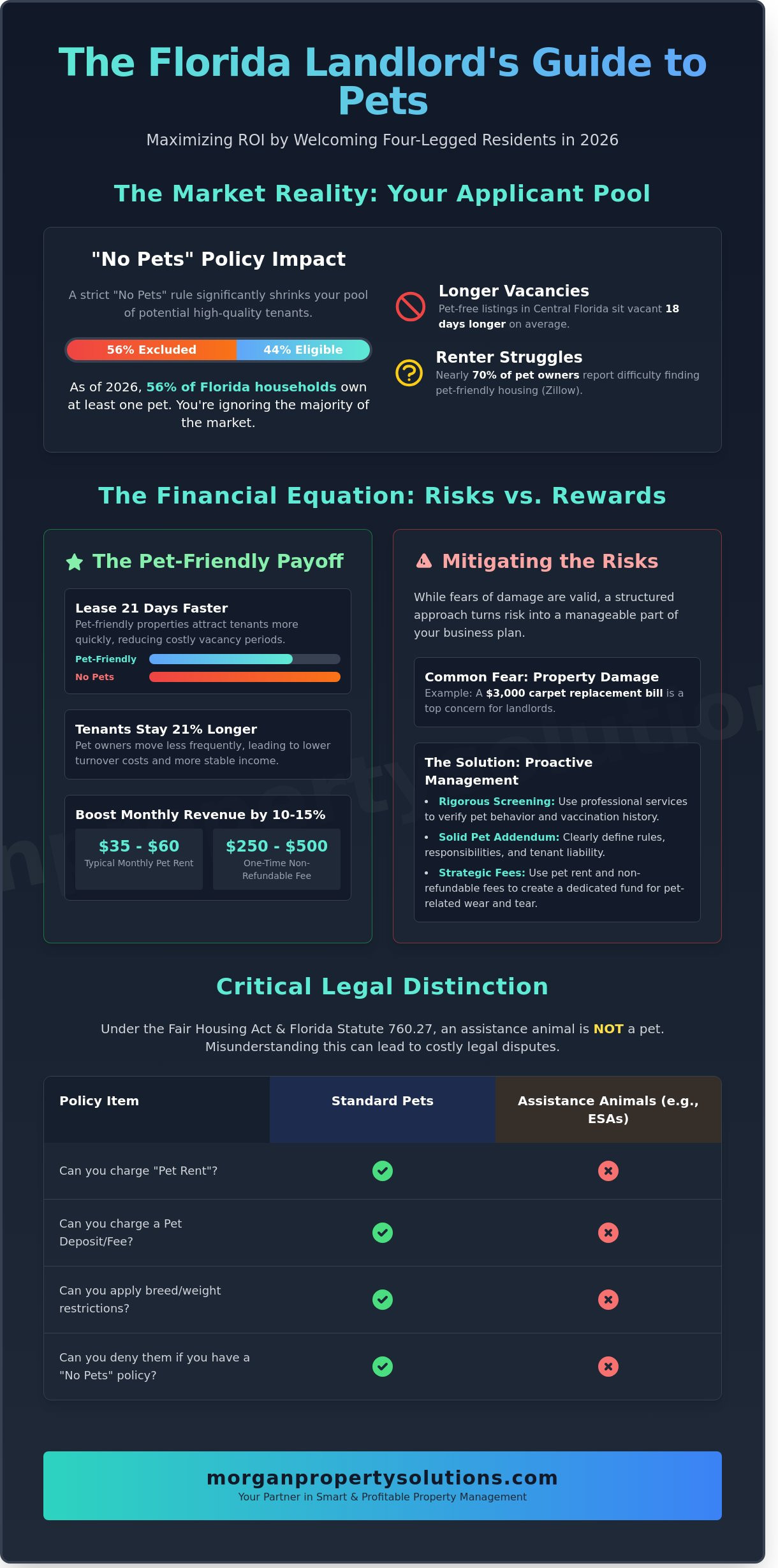
The numbers in the Sunshine State are hard to ignore. As of January 2026, 56% of Florida households own at least one pet. If you choose a strict “no pets” policy, you’re effectively cutting your pool of potential renters in half. This leads to longer vacancies. On average, pet-free listings in Central Florida sit on the market 18 days longer than those that allow animals. We’ve seen that those 18 days of lost rent often cost more than minor carpet cleaning at the end of a lease.
It’s also vital to understand the legal distinction between a pet and an assistance animal. Under Florida Statute 760.27, which provides specific guidelines for housing providers, an assistance animal is not a pet. These animals provide support for individuals with disabilities. You cannot charge pet fees, pet rent, or security deposits for these animals, regardless of your standard policy. Understanding this difference is the first step toward a stress-free management experience.
The Shift in Tenant Expectations
Renters in 2026 view their pets as non-negotiable family members. In competitive areas like Orlando, a “no pets” rule is often a dealbreaker. When options are plentiful, a tenant will choose the home that welcomes their 40-pound Golden Retriever every single time. One of the biggest risks of a total ban is the “hidden pet” syndrome. If a tenant feels forced to sneak an animal in, you lose the chance to use tools like professional pet screening to verify the animal’s behavior and vaccination history. Dealing with an unauthorized animal is much more difficult than managing an approved one from the start.
A Quick Legal Reality Check
The Fair Housing Act (FHA) creates a framework that every landlord must follow. You might think a blanket ban protects you, but it can actually lead to legal trouble. If a tenant provides valid documentation for an Emotional Support Animal (ESA), you’re generally required to allow it, even with a “no pets” policy. In our litigious market, being too rigid can lead to costly discrimination claims. We always suggest looking at our landlord resources to stay updated on how these laws evolve. Our goal is to make your experience simple by helping you set a policy that stays compliant while protecting your property’s value.
The Financial Upside: How Pets Boost Your Florida Rental ROI
Deciding should i allow pets in my rental property florida is a choice that affects your bottom line more than almost any other policy you’ll set. In 2026, the rental market is more competitive than ever. Landlords who welcome four-legged family members often see a much healthier return on investment. It isn’t just about being a fan of animals; it’s about making your property a more profitable, stable asset.
One of the biggest wins for your wallet is the massive reduction in turnover. Data shows that pet owners stay in their homes about 21% longer than those without pets. When a tenant stays for three or four years instead of just one, you avoid the high costs of deep cleaning, repainting, and marketing the home. This stability is the secret to building long-term wealth in real estate. Every month your property sits empty while you look for a “perfect” pet-free tenant, you’re losing money that you’ll never get back.
Expanding Your Applicant Pool
The math is simple. Roughly 70% of households in the United States own at least one pet. If your listing says “No Pets,” you’re instantly ignoring seven out of every ten people looking for a home in Florida. This often leads to your property sitting vacant for weeks. By being pet-friendly, you attract higher-income professionals who view their pets as family. These tenants are often willing to pay a premium for a high-quality home that welcomes their dog or cat. Our experts in Orlando property management frequently see pet-friendly homes rent 15 days faster than those with strict bans.
Pet Rent vs. Pet Deposits
In Florida, you can structure your income to protect your investment while boosting your monthly cash flow. A pet deposit is a refundable amount held for potential damage, which provides peace of mind. However, pet rent is where the real profit happens. In the current Central Florida market, landlords are successfully charging between $35 and $60 per month in pet rent.
While that seems like a small amount, an extra $50 a month adds $600 to your annual revenue without increasing your mortgage or tax bill. You can also use non-refundable pet fees, usually ranging from $250 to $500, to create a maintenance cushion. This money stays in your pocket to cover professional carpet cleaning or minor yard repairs after a tenant moves out. If you want to see how this fits into your overall strategy, you can browse our landlord resources for more tips on maximizing your income.
Addressing the Risks: Damage, Liability, and the Florida Environment
Deciding whether you should i allow pets in my rental property florida usually triggers three main fears: physical damage, noise complaints, and legal liability. These aren’t just abstract worries; they’re the practical realities of owning an investment in the Sunshine State. We’ve spent over 20 years helping owners navigate these choices, and we’ve found that most risks are manageable with the right systems in place. Our goal is to make your experience as a landlord simple and stress-free while protecting the value of your home.
The Florida environment adds its own flavor to these risks. Our high humidity can turn a small pet accident into a permanent odor problem if the home has the wrong materials. Additionally, our year-round warm weather means fleas never truly go dormant. Without a strict prevention plan, a single infestation can cost a landlord $500 or more in professional remediation after a tenant moves out. Managing these risks isn’t about saying no to every pet; it’s about setting clear expectations from day one and using tools that give you peace of mind.
Physical Damage and Maintenance
Most pet damage is actually preventable maintenance. We often suggest that landlords swap out old carpets for Luxury Vinyl Plank (LVP) flooring. LVP is scratch-resistant and waterproof, which handles accidents much better than traditional wood or carpet. In our experience, replacing carpet in a standard 1,500-square-foot home can cost upwards of $3,500, while LVP lasts through multiple tenancies. It’s a smart upgrade that pays for itself by reducing turnover costs.
Don’t forget the “Florida Humidity Factor.” Odors get trapped in porous surfaces when the AC isn’t running or when humidity climbs above 60%. To protect your investment, we recommend adding a mandatory pest control addendum to your lease. This ensures the tenant stays proactive with flea and tick treatments, which is vital in our tropical climate. We also advise regular HVAC filter changes to prevent pet dander from clogging your system and reducing its lifespan.
Liability and Dog Bites
Liability is the biggest concern for many, especially since Florida operates under strict liability for dog bites. According to Florida Statute 767.04, a dog owner is liable for damages regardless of the animal’s former viciousness. To protect yourself, we suggest requiring every tenant to carry a renters insurance policy with at least $100,000 in pet liability coverage. This simple requirement shifts the financial risk away from you and onto an insurance carrier.
Building a Bulletproof Pet Policy for Your Florida Property
Deciding to allow animals isn’t a “yes or no” coin flip. It’s about setting boundaries that protect your investment while opening your doors to a larger pool of qualified renters. When you ask yourself, “should i allow pets in my rental property florida,” the answer usually depends on the strength of your system. We use a four step approach to keep the process stress free and your property safe.
The Power of Professional Screening
We don’t just take a tenant’s word that their dog is well behaved. To get the full picture, we use PetScreening.com to vet every animal that comes through our doors. This platform is a game changer for Florida landlords. It verifies vaccination records, checks for any past bite history, and confirms that the animal’s behavior matches the owner’s claims. Every pet receives a “Fido Score” based on these factors. This data driven score helps us predict risk levels with incredible accuracy. With over 20 years of experience, we’ve found that a high Fido Score almost always points to a responsible tenant who will treat your home with respect.
The Pet Addendum: What to Include
Your lease needs a strong backbone to handle the “what ifs” of pet ownership. A comprehensive Pet Addendum is that backbone. It shouldn’t just say “pets allowed.” It needs to be specific. We include strict requirements for immediate waste removal and leash usage in all common areas. We also mandate that tenants pay for professional carpet cleaning and a specialized flea treatment once they move out. You can find more lease tips and document advice on our landlord resources page. These small details prevent a $200 cleaning bill from turning into a $2,000 floor replacement project later on.
Clear rules keep the peace for everyone in the neighborhood. When you’re weighing whether you should i allow pets in my rental property florida, remember that your neighbors’ comfort matters too. We set clear expectations from day one. If an animal is aggressive or causes a noise disturbance, our lease provides a formal path for warnings or even removal. Consistency is the key to making this work for the long term.
You can’t just barge into a home to check for pet damage. Florida law is very clear about a tenant’s right to privacy, so we always provide at least a 24 hour notice before any walk through. We schedule these inspections regularly to look for chewed baseboards, scratched doors, or lingering odors. Catching a minor issue in April prevents a massive repair bill when the lease ends in December. It’s about being proactive and maintaining the high standards we’ve set for our properties since we started.
How Morgan Property Solutions Simplifies the Pet Process
Deciding “should i allow pets in my rental property florida” is a big step, but you don’t have to figure it out alone. At Morgan Property Solutions, we’ve spent more than 20 years helping Central Florida landlords turn pet-friendly policies into profit centers. We know the risks are real, so we created a “Pet Guarantee” to give you total peace of mind. If a pet we approve causes damage that exceeds the tenant’s security deposit, we stand behind our screening and help cover the costs. It’s our way of showing you that we’re truly in this together.
One of the biggest frustrations for owners is dealing with “ESA fraud.” Florida laws regarding Emotional Support Animals are specific, and many tenants try to use online certificates to bypass standard pet fees. We handle this entire verification process for you. We use a rigorous, legal framework to vet every request, ensuring that legitimate needs are respected while protecting your property from those trying to bend the rules. You won’t have to spend your weekends researching statutes or arguing with applicants.
Our team also stays ahead of potential issues through a strict inspection schedule. We don’t wait until a tenant moves out to see if there’s a problem. By catching a small scratch or a minor stain during a routine walkthrough, we can address it immediately. This proactive approach prevents a $50 fix from turning into a $4,500 flooring replacement down the road.
Our Proven Screening Criteria
We’ve found the perfect middle ground between being pet-friendly and property-protective. Our process involves a detailed evaluation of every animal, looking at age, breed, and past rental history. You can review our transparent screening criteria to see exactly how we filter out high-risk situations. With two decades of experience in the local market, we know which red flags to look for before a lease is ever signed.
Making Real Estate Simple
Our mission is to make your investment journey as easy and stress-free as possible. When you partner with us, you aren’t just hiring a manager; you’re gaining a guide who will be there every step of the way. We focus on boosting your bottom line while reducing the daily headaches of property ownership. If you’re still asking “should i allow pets in my rental property florida,” let us provide some clarity with a free rental analysis. We’ll show you how much more you could be earning each month by opening your doors to the 70 percent of renters who own animals. When you’re ready to experience a better way to rent, contact Morgan Property Solutions and let’s get to work.
Set Your Florida Rental Up for Success in 2026
Deciding on the big question, “should i allow pets in my rental property florida” doesn’t have to feel like a gamble. You’ve seen how welcoming pets can increase your rental income by 10% to 15% and help you tap into the 70% of households that own an animal. It’s about turning a potential risk into a reliable stream of revenue while keeping your property protected through a solid policy. By opening your doors to pets, you’re not just being friendly; you’re making a calculated move to boost your long term ROI.
We’ve spent over 20 years mastering the Central Florida market to make these decisions easy for you. With our A+ BBB Rating and a Comprehensive Pet Guarantee that covers up to $1,000 in pet-related damage, you can enjoy higher profits without the typical stress. We’re here to handle the screenings and the paperwork so you can focus on your personal goals.
Let us help you manage your pet-friendly rental, stress-free!
You can trust us to take good care of your investment and guide you through every step of this journey. We look forward to helping you grow your portfolio with confidence and ease, whether you are focused on Florida or want to learn more about Northern Michigan Escapes for vacation rental management in other regions.
Frequently Asked Questions
Can I legally charge a pet deposit for a service animal in Florida?
No, you can’t legally charge a pet deposit or any pet-related fees for a service animal in Florida. Under the Fair Housing Act and Florida Statutes Section 413.08, these animals aren’t considered pets but are essential tools for people with disabilities. We’ve seen landlords face federal fines starting at $16,000 for non-compliance. It’s best to treat them as a medical necessity rather than a household pet to keep your business protected and compliant.
What are the most common dog breeds restricted by Florida insurance companies?
Florida insurance providers usually restrict breeds like Pit Bulls, Rottweilers, and Doberman Pinschers. Other common list entries include Chow Chows, Akitas, and German Shepherds. If a tenant has one of these breeds, your liability premiums could jump by 20% or your policy might be canceled entirely. Working with a knowledgeable provider like SI Insurance can help you navigate these restrictions to ensure you maintain your coverage and peace of mind.
How much pet rent should I charge for a house in Orlando?
You should typically charge between $25 and $50 per month for pet rent in the Orlando market. This range is standard for the 32801 and 32804 zip codes where we manage many properties. Some landlords choose to scale this based on the pet’s weight, charging $35 for small dogs and $50 for larger ones. This extra income helps cover the 15% increase in wear and tear often seen in pet-friendly homes.
What happens if a tenant brings in a pet without telling me?
If a tenant sneaks in a pet, you should issue a 7-Day Notice to Cure according to Florida Statute 83.56. This gives the tenant one week to either remove the animal or officially add it to the lease if you allow pets. If they don’t comply by the eighth day, you can start the eviction process. Dealing with this quickly helps you maintain control over who, and what, is living in your investment property.
How do I handle an Emotional Support Animal (ESA) request in Florida?
You handle an ESA request by asking for a reliable letter from a licensed healthcare professional as outlined in Florida Senate Bill 1084. This law, passed in 2020, helps prevent fraudulent claims by requiring a genuine provider-patient relationship. You can’t charge pet rent for an ESA, but the tenant is still responsible for any physical damage the animal causes. We’ll help you navigate these documents to ensure everything is legitimate and stress-free.
Is it better to charge a one-time pet fee or monthly pet rent?
Most Orlando landlords find that a combination of a $300 non-refundable fee and $35 monthly pet rent works best. The one-time fee covers the deep cleaning needed after move-out, while the monthly rent builds a buffer for minor repairs. When asking should i allow pets in my rental property florida, consider that monthly rent can add $420 to your annual bottom line. It’s a simple way to boost your profits while providing a needed service.
Do pet-friendly rentals really lease faster in Central Florida?
Yes, pet-friendly rentals in Central Florida typically lease 10 to 14 days faster than those with strict no-pet policies. Since 70% of U.S. households own a pet as of 2024, you’re opening your doors to a much larger pool of qualified applicants. This high demand often leads to multiple applications within the first 48 hours of listing. You’ll likely see lower vacancy rates and more stable, long-term tenants who appreciate finding a home for their whole family.
What kind of flooring is best for a pet-friendly Florida rental?
Luxury Vinyl Plank (LVP) is the absolute best choice for a pet-friendly rental because it’s 100% waterproof and scratch-resistant. We recommend choosing a 12-mil or 20-mil wear layer to handle heavy claws and accidental spills. It’s much more durable than carpet, which usually needs replacing every 3 years in pet homes. Switching to LVP can save you roughly $2,500 in flooring replacement costs over a five-year period, making your property management much easier.

Article by
Oliver Overton-Morgan
Oliver Overton-Morgan is a full-time Real Estate Broker since 2003, with years of experience helping thousands of people purchase and sell real estate throughout Central Florida. He holds a Graduate Realtor Institute designation, LCAM, and has held licenses in good standing as a Florida Mortgage Broker and a Notary Public. Oliver immigrated to central Florida in 2001, and within 5 years Oliver built a successful Real Estate brokerage in central Florida, where he recruited over 75 Sales Associates with 25+ million in sales production.