
What if that online cost-of-living calculator you just used for Tampa is off by as much as 25%? It’s a frustrating thought, especially when you’re planning a major life move. You’ve likely spent hours trying to piece together a realistic budget, only to find conflicting numbers and vague warnings about “hidden” Florida expenses. That kind of uncertainty is stressful, and you deserve clear, reliable information before making such an important decision.
That’s exactly why we built this guide. We’re here to help you move past the generic data and understand the true living expenses in Tampa Florida for 2026. This isn’t another automated report; it’s a realistic, human-centered breakdown to give you the confidence you need. We’ll walk you through everything from actual housing costs in neighborhoods like Seminole Heights and Hyde Park to the real numbers on insurance and utilities, so you can build a budget that truly works for your family.
Key Takeaways
- Learn why Tampa remains an affordable option, with living costs tracking just below the national average for 2026.
- Understand the real numbers behind renting vs. buying in Tampa, helping you make a confident and informed housing decision.
- Uncover the hidden living expenses in Tampa Florida, including the real scoop on 2026 homeowners insurance and property tax rules.
- Use our step-by-step guide to build a personalized “Tampa Transition Budget” before you even pack a box.
The Big Picture: Is Tampa Still Affordable in 2026?
Let’s address the question on everyone’s mind: As we move through 2026, has Tampa lost its affordable charm? The simple answer is no, but the definition of “affordable” has certainly evolved. For years, Tampa has been a magnet for new residents, drawing people in with its promise of sunshine, opportunity, and a reasonable cost of living. This massive influx has naturally driven up prices, but the core value proposition remains strong. The city’s economic foundation is robust, and this detailed Overview of Tampa, Florida shows a diverse economy that isn’t solely reliant on tourism.
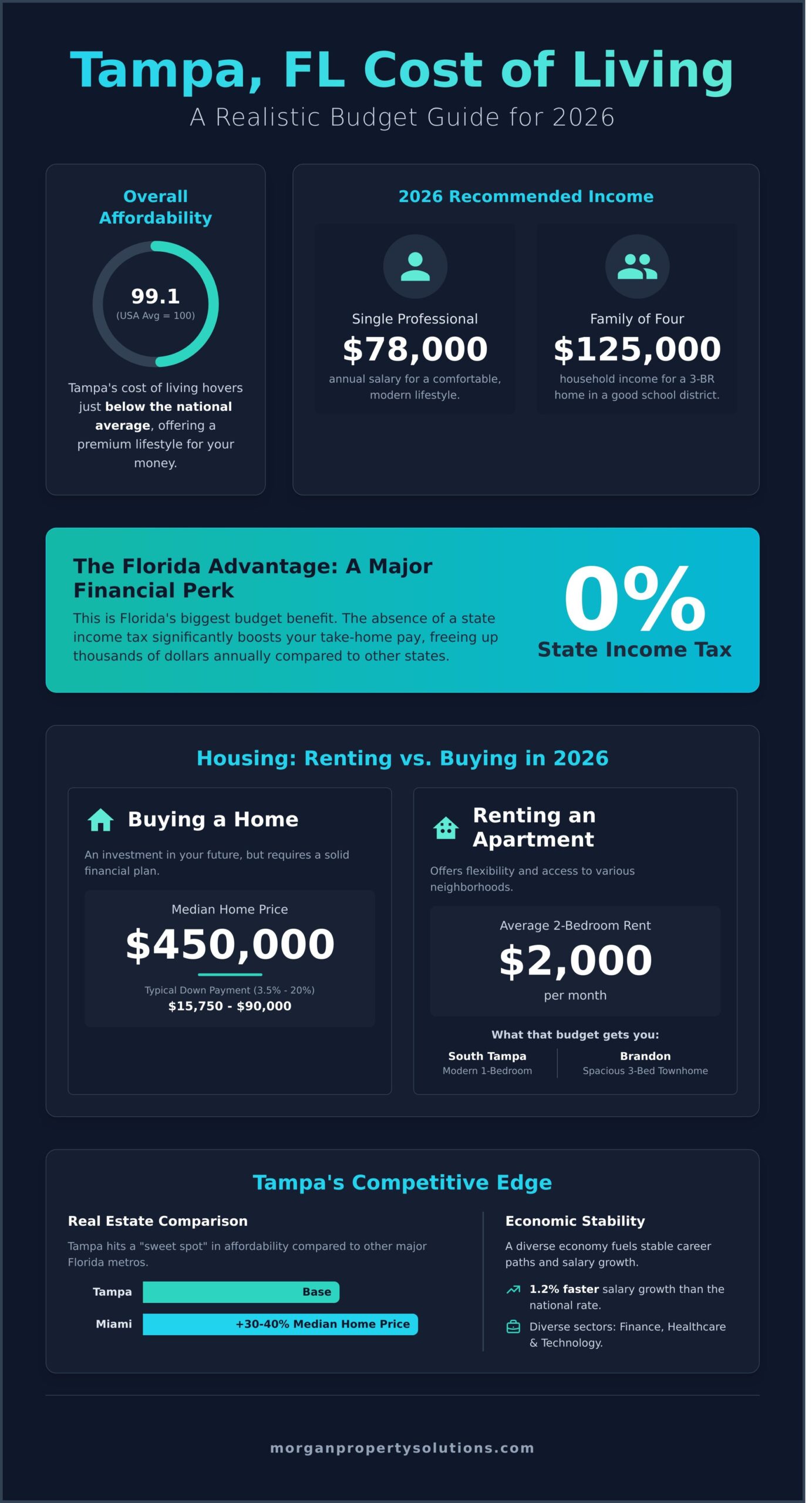
Even in 2026, the overall living expenses in tampa florida hover just below the national average, a remarkable feat for a city of its size and appeal. While the days of it being a deep bargain are behind us, it provides a financial advantage over many other major U.S. metros. This is what we call the “Sunshine Dividend”: the premium lifestyle you get for your money. You’re not just paying for housing and groceries; you’re investing in year-round outdoor activities, a vibrant cultural scene, and a thriving community. Understanding this balance is key to setting realistic budget expectations for your move.
Tampa vs. The Rest of Florida
Compared to its Florida counterparts, Tampa hits a sweet spot. Miami’s real estate market often feels like it’s in a different stratosphere, with median home prices easily exceeding Tampa’s by 30-40%. Orlando, while closer in cost, has an economy heavily weighted toward tourism, which can lead to more volatility in the job market. Tampa’s diverse sectors, including finance, healthcare, and technology, are projected to see salary growth exceed the national rate by 1.2% in 2026, offering more stable, high-paying career paths.
The 2026 Inflation Reality Check
After the turbulent price surges of the early 2020s, the economic climate has settled. By 2026, we’ve seen a return to more predictable, modest inflation around 2.5% annually. But what does “affordable” look like now? The numbers on sites like Payscale don’t capture the full picture because they don’t factor in Florida’s biggest financial perk: no state income tax. That alone can boost your take-home pay significantly compared to other states. Here’s a practical breakdown:
- For a single professional: An annual salary of $78,000 can support a comfortable lifestyle, including renting a modern apartment and enjoying the city’s amenities.
- For a family of four: A household income of around $125,000 is a more realistic target to afford a three-bedroom home in a desirable school district and manage the higher costs associated with raising children.
Ultimately, the living expenses in tampa florida require a clear-eyed assessment. The city offers incredible value, but it’s essential to align your budget with the realities of a premier, growing metropolitan area. We’re here to help you understand every detail and make your move a confident one.
Housing and Real Estate: Renting vs. Buying in the Tampa Bay Area
Your biggest decision when moving to Tampa will undoubtedly be where you live. Housing is the largest slice of the pie when calculating your total living expenses in Tampa, Florida, and the choice between renting and buying is more complex than ever. As we look toward 2026, the market presents two distinct paths. Projections show the median home price hovering around $450,000, while the average rent for a two-bedroom apartment sits near $2,000 per month. Let’s break down what these numbers truly mean for your budget and lifestyle.
The decision isn’t just about a monthly payment. It’s about stability, flexibility, and long-term financial goals. Whether you’re drawn to the vibrant city life of Tampa proper or the sprawling, family-friendly communities in suburbs like Wesley Chapel, understanding the real costs involved is the first step to feeling at home. If you’re also weighing nearby Central Florida options, our Delaney Park Orlando neighborhood guide offers a detailed look at one of Orlando’s most charming and affordable historic communities.
For those drawn to modern, urban living, it can be inspiring to see how different cities approach luxury development. For example, premier riverfront condominiums in global hubs like Singapore often set a benchmark for design and amenities. If you’re interested in what high-end urban properties look like on an international scale, you can learn more.
The Rental Market Deep Dive
A $2,000 monthly budget for rent offers a variety of options across the Tampa Bay area. In a trendy neighborhood like South Tampa (ZIP 33606), this might secure you a modern, well-appointed one-bedroom apartment. Head east to Brandon (ZIP 33511), and that same budget could easily land you a spacious three-bedroom townhome with a garage. The key is understanding that your dollar stretches differently depending on the ZIP code. Beyond the base rent, don’t forget to budget for common fees like pet rent (averaging $25-$50 per pet monthly), valet trash services, and one-time application fees. The biggest variable, however, is your landlord. That’s why renting from a professional firm provides invaluable peace of mind. You get responsive maintenance, clear lease terms, and the stability of knowing you have a dedicated team managing the property.
Homeownership Realities in 2026
Buying a home in Tampa is an incredible investment in your future, but it requires a solid financial plan. For a median-priced $450,000 home, you’ll need to prepare for more than just the mortgage. A down payment can range from $15,750 (3.5% for an FHA loan) to $90,000 (a traditional 20% to avoid private mortgage insurance). On top of that, closing costs in Florida typically run between 2% and 5% of the sale price, adding another $9,000 to $22,500 in upfront expenses. Getting educated is your best defense against surprises, and browsing through real estate articles is a great way for first-time buyers to understand the process. Your home’s location also directly impacts your insurance premiums. A property in a designated flood zone in St. Petersburg could have an insurance bill that’s thousands of dollars higher annually than a similar home in a non-flood zone like Carrollwood. It’s a critical detail that significantly affects your total housing costs.
Ultimately, deciding whether to rent or buy depends on your personal financial picture and how long you plan to stay. Tools that break down the cost of living in Tampa can help you see how housing fits into your overall budget. The market can feel complicated, but you don’t have to figure it out alone. If you need help making sense of your options, our team is always here to guide you toward the right choice for your family.
Beyond the Mortgage: Utilities, Taxes, and the ‘Florida Factor’
Once you have a handle on mortgage payments, it’s time to budget for the costs that truly define homeownership in the Sunshine State. These recurring expenses-from your electric bill to your property tax statement-are a critical component of the total living expenses in Tampa Florida. Understanding these costs is the key to creating a realistic and stress-free budget for 2026. We’re here to guide you through the numbers so there are no surprises.
Insurance and Resilience
In Florida, homeowners insurance isn’t just a single line item; it’s a strategy. You’ll need to budget for two distinct policies: standard hazard insurance (covering wind, fire, and theft) and, if you’re in a designated flood zone, a separate flood insurance policy. As of 2026, expect annual premiums for a typical single-family home to range from $4,000 to over $7,000. You can lower these costs by investing in mitigation. Homes with a roof replaced after 2002, impact-resistant windows, or hurricane shutters often see premium reductions of 15% or more. This is why new construction, built to the latest storm codes, is often significantly cheaper to insure.
Navigating these high costs requires local expertise, which is why getting a quote from a Florida-based provider like SI Insurance can help you find the most competitive rates and appropriate coverage for your new home.
Property taxes in Hillsborough County are calculated using a millage rate, which typically hovers around 21 mills (or $21 for every $1,000 of assessed home value). The good news is that Florida offers powerful tools to manage this cost. The first is the Homestead Exemption, which can shave up to $50,000 off your home’s taxable value, saving you hundreds of dollars each year. You must apply for this by March 1st after purchasing your primary residence.
Even more impactful is the Save Our Homes assessment cap. Once you have your Homestead Exemption, this cap prevents the assessed value of your home from increasing more than 3% per year, regardless of how much your market value grows. This provides incredible long-term predictability for your budget, protecting you from sharp tax increases as Tampa’s property values rise.
The Monthly Utility Bill
Your monthly utility costs are dominated by one major variable: air conditioning. From May through October, expect your electric bill to be your largest utility expense. According to the U.S. Energy Information Administration, the average monthly electric bill in Florida is around $159, but in Tampa’s summer heat, bills of $235 to $350 for a single-family home are common. To manage this, we recommend a smart thermostat and annual HVAC servicing. These utility figures are a significant part of the overall budget, and detailed Tampa cost of living data from research institutes often confirms that energy costs are a major variable for residents.
Here’s a quick look at other typical monthly utilities:
- Water, Sewer, and Trash: Hillsborough County bundles these services. For a family of four, expect a monthly bill between $90 and $130.
- Internet and Phone: Major providers like Spectrum and Frontier offer high-speed internet plans starting around $50-$80 per month. Bundling with a mobile plan can sometimes offer additional savings.
By planning for these essential living expenses in Tampa Florida, you’ll be well-prepared to enjoy everything your new home has to offer without financial stress. It’s all about creating a complete picture of your costs from day one.
Daily Living: Food, Transportation, and Healthcare Costs
Beyond your rent or mortgage, the daily details are where your budget truly takes shape. How much will you spend at the grocery store? What does it cost to get to work? These are the practical questions that define the living expenses in tampa florida. We’re here to guide you with a realistic breakdown for 2026, so you can plan with confidence.
Feeding the Family in Tampa
For a family of four, the monthly grocery budget in Tampa typically lands around $1,200. Your choice of supermarket plays a huge role in that number. A weekly grocery run for essentials at a discount store like Aldi might cost you $150. That exact same shopping list at Publix, known for its outstanding customer service and wider selection, could easily climb to $190 or more. Many families mix and match, using Walmart for staples and visiting local spots like the Ybor City Saturday Market for fresh, seasonal produce. When it comes to dining out, Tampa offers a wide spectrum. You can enjoy a fantastic meal from a food truck at Sparkman Wharf for about $15, while a sit-down dinner for two at a trendy restaurant on the Riverwalk will likely set you back $90-$120 in 2026.
Getting Around the Bay
Let’s be direct: Tampa is a car-dependent city. While public transit options exist, the vast majority of residents rely on a personal vehicle for their daily commute. You should budget for gasoline prices that are projected to hover above $3.10 per gallon. The bigger shock for newcomers is often car insurance. Florida’s “no-fault” insurance system and a high number of uninsured drivers contribute to premiums that were nearly 45% higher than the national average in 2024. This isn’t a minor detail; it’s a significant monthly expense. While a single ride on the HART bus system is an affordable $2.00, the network’s limited reach means a trip from a suburb like Brandon to downtown can take over 90 minutes with transfers, compared to a 30-minute drive. Don’t forget to factor in tolls, especially if you use the Selmon Expressway, where a daily commute can add $80-$100 to your monthly budget.
One of the most pleasant surprises for those moving to Tampa is the affordability of healthcare. On average, healthcare costs here are 8% lower than the national benchmark, according to the Council for Community and Economic Research. This isn’t just about lower insurance premiums. The savings extend to co-pays for specialist visits and costs for common medical procedures, thanks to a robust and competitive network of providers including Tampa General, AdventHealth, and BayCare.
Balancing these costs is the key to enjoying everything this city has to offer. You can offset a pricey dinner by spending a beautiful afternoon walking or biking for free along the iconic Bayshore Boulevard. Understanding these trade-offs helps you build a realistic budget. Choosing a home in a neighborhood that fits your commute and lifestyle can dramatically reduce your daily expenses and stress. Our team has the local expertise to help you find a Tampa home that works for your budget, not against it.
Moving to Tampa: How to Budget Like a Local Expert
You’ve seen the numbers and explored the neighborhoods. Now, it’s time to create a plan that turns your dream of moving to Tampa into a reality. A successful move isn’t just about packing boxes; it’s about building a solid financial foundation before you even arrive. Creating a “Tampa Transition Budget” is your first and most important step. This isn’t just about tracking your future living expenses in tampa florida; it’s a roadmap for a stress-free start in your new city.
Your transition budget should cover three key areas:
- One-Time Moving Costs: This includes everything from hiring movers (which can cost between $2,500 and $5,000 for a long-distance move in 2026) to security deposits, utility setup fees, and new furniture.
- Initial Living Expenses: Plan for your first month’s rent, groceries, and transportation costs before your first Tampa paycheck arrives.
- A 3-Month Emergency Fund: Having at least three months of core living expenses saved provides a crucial safety net as you settle in.
When it comes to the move itself, choosing a reliable partner is crucial. While based in South Florida, many families making a statewide move trust family-owned businesses like All American Moving And Storage to handle their belongings with care.
Once you’re here, the 50/30/20 rule is a fantastic tool for managing your budget. Let’s say your new job in Tampa pays an annual salary of $75,000. Your monthly take-home pay would be around $4,800. Here’s how you’d split it:
- 50% for Needs ($2,400): This covers rent, utilities, groceries, and car payments.
- 30% for Wants ($1,440): Enjoying Tampa life! This is for dining out, entertainment, and beach trips.
- 20% for Savings & Debt ($960): Building your future through savings, investments, or paying down debt.
This ‘wants’ category also covers personal wellness and self-care, which are a big part of the Florida lifestyle. For those exploring options in the greater Tampa Bay area, you can visit Organic Skin & Body Med Spa for a range of aesthetic treatments.
Planning a move and managing a new budget can feel overwhelming, but you don’t have to do it alone. Working with a professional property manager is like having a local expert on your side from day one. We are here to guide you, simplify the process, and help you find a home that fits your budget perfectly.
Pro Tips for New Residents
Finding the right rental is critical. A reputable property manager will have clear screening criteria, which protects you by ensuring a well-maintained and secure community. To save on relocation costs, try to schedule your move between October and April. The weather is milder, and moving companies are often less busy than in the peak summer months. You can even get a head start by reviewing landlord resources; it helps you understand what property owners look for in a great tenant, making your application stronger.
Making Real Estate Simple
At Morgan Property Solutions, our mission is to make your transition easy. We help you find the right home by listening to your needs and matching you with properties that fit your lifestyle and budget. In the fast-paced 2026 market, trust and experience matter more than ever. Our two decades of experience in the Tampa Bay area means we can navigate the complexities for you. If you’re considering the broader Central Florida region, our complete guide to Delaney Park Orlando is an excellent resource for understanding what a historic, community-focused neighborhood looks like just an hour away. Your next step is simple. Let’s connect and start the conversation about your move to Tampa.
Ready to Call Tampa Home? Here’s Your Next Step
Planning your move for 2026 means getting an honest look at your budget. While costs are shifting, Tampa continues to offer incredible value, especially when you have a solid strategy for housing and daily spending. Understanding the full picture of living expenses in tampa florida is the first step, but you don’t have to take the next ones alone. Navigating the real estate market can feel complex, but our goal is to make it simple.
With over 20 years of Central Florida experience and a consistent A+ BBB Rating, our team at Morgan Property Solutions Inc. provides the expert guidance you can trust. We’ve built our reputation on turning complicated real estate decisions into clear, confident choices for families just like yours. When you’re ready to turn your budget into a new address, we’re here to help you every step of the way. Let us help you make your next move simple and stress-free!
Your Tampa adventure is waiting.
Frequently Asked Questions About Living in Tampa
Is Tampa, Florida expensive to live in 2026?
Tampa is moderately expensive, with a cost of living projected to be about 5% above the national average by 2026. Housing is the main driver, with the median home price expected to reach approximately $435,000. While it’s more affordable than cities like Miami or San Diego, it’s no longer considered a low-cost city. Careful budgeting for housing, insurance, and transportation is key for anyone planning a move here.
What is a good salary to live comfortably in Tampa?
A salary of around $85,000 per year is recommended for a single person to live comfortably in Tampa in 2026. This allows for housing, utilities, transportation, and discretionary spending without significant financial stress. For a family of four, a household income closer to $150,000 would be a more comfortable target to cover additional costs like childcare and larger living spaces. This accounts for all typical living expenses in tampa florida.
How much are property taxes in Tampa for a typical home?
Property taxes in Tampa, which is in Hillsborough County, average around 1.1% of the home’s assessed value. For a typical home valued at $435,000 in 2026, you can expect to pay approximately $4,785 annually. This amount can vary slightly based on specific local millage rates and any homestead exemptions you qualify for. It’s a crucial figure to include in your homeownership budget.
Is it cheaper to live in Tampa or Orlando?
It’s slightly cheaper to live in Orlando than in Tampa, with Orlando’s overall cost of living sitting about 2-3% lower as of late 2025. The biggest difference is typically in housing, where Orlando’s median home price tends to be around 5% less than Tampa’s. However, costs for things like transportation and utilities are very similar. Your final budget will depend on which city’s job market and lifestyle better suits your needs.
What are the hidden costs of living in Florida?
The primary hidden costs in Florida are related to housing and weather. Homeowner’s insurance is a major one, often costing over $4,000 annually due to hurricane risk. You should also budget for flood insurance, which is a separate policy. Additionally, HOA fees are common in many communities, averaging $200 to $400 per month. Lastly, don’t forget costs for routine pest control and robust HVAC system maintenance.
How much should I budget for utilities in a Tampa summer?
You should budget between $250 and $400 per month for utilities in a typical Tampa home during the summer months from June to September. Your electricity bill will be the largest component, often exceeding $200 due to constant air conditioning use. Water, sewer, and trash services usually add another $80 to $120. Homes with a pool will see even higher electricity costs for the pump.
Are grocery prices higher in Tampa than the national average?
No, grocery prices in Tampa are generally right in line with the national average. According to the Council for Community and Economic Research, Tampa’s grocery index hovers right around 100, which is the baseline for the U.S. average. While you won’t find significant savings on food, you also won’t be paying a premium compared to most other American cities, which helps balance the overall living expenses in tampa florida.
Can I live in Tampa without a car?
Living in Tampa without a car is challenging but possible if you live and work in specific neighborhoods like Downtown, Ybor City, or the SoHo district. These areas have better walkability and access to the TECO Line Streetcar and HART bus routes. However, Tampa is a very car-dependent city overall. For most residents, a personal vehicle is essential for commuting, grocery shopping, and fully experiencing the wider metro area.

Article by
Oliver Overton-Morgan
Oliver Overton-Morgan is a full-time Real Estate Broker since 2003, with years of experience helping thousands of people purchase and sell real estate throughout Central Florida. He holds a Graduate Realtor Institute designation, LCAM, and has held licenses in good standing as a Florida Mortgage Broker and a Notary Public. Oliver immigrated to central Florida in 2001, and within 5 years Oliver built a successful Real Estate brokerage in central Florida, where he recruited over 75 Sales Associates with 25+ million in sales production.