What if the most significant threat to your Orlando rental income isn’t a long vacancy, but the invisible “humidity tax” slowly eating away at your property’s value? If you’ve ever dealt with a sudden HVAC failure in July or discovered mold in a tenant’s closet, you know exactly how quickly Florida’s climate can turn a profitable month into a financial headache. Consistent property maintenance is the only way to stay ahead of these issues before they become expensive emergencies. We understand that managing a home can feel overwhelming, especially with the unique demands and weather patterns of the sunshine state.
You probably agree that a well-kept home is the key to keeping great tenants and avoiding high turnover. That’s why we’ve put together this comprehensive, season-by-season guide to help you protect your Central Florida investment and maximize your long-term ROI. We will walk you through a clear, actionable schedule that simplifies complex tasks into manageable steps. From preparing for the 9th Edition of the Florida Building Code updates to routine pest control, you’ll learn everything you need to keep your rental running smoothly and your residents satisfied.
Key Takeaways
- Learn how proactive property maintenance acts as a high-yield investment strategy by preventing the “Florida Humidity Tax” and protecting your appraisal value.
- Follow a seasonal roadmap for Orlando rentals, including critical summer HVAC monitoring and irrigation checks to handle the rainy season.
- Discover essential steps to combat Central Florida’s humidity and mold risks to keep your tenants happy and your home in top condition.
- Compare the true cost of DIY repairs with the savings and reliability provided by professional property management and a pre-vetted vendor network.
- Find out how detailed inspections and transparent financial reporting through an online portal can simplify your life as a landlord.
Why Proactive Property Maintenance is Your Best ROI Strategy
Think of your rental property like a high-performance vehicle. You wouldn’t skip oil changes for years and expect the engine to stay in peak condition. In the world of real estate, property maintenance works exactly the same way. When you ignore small issues, you’re choosing “deferred maintenance.” This neglect doesn’t just stay hidden; it eventually shows up as a lower appraisal value when you’re ready to sell or refinance. By staying ahead of repairs, you’re actively protecting the equity you’ve worked hard to build.
A well-maintained home does more than just look good on a listing page. It attracts higher-quality tenants who are willing to pay premium rents for a space that feels cared for. These residents often take better care of the property themselves because they see the value you’ve invested. Quick repair response times also build a sense of partnership. When a tenant knows you’ll fix a leaky faucet or a flickering light immediately, they’re much more likely to renew their lease. This significantly reduces your turnover rate, which is often the largest hidden cost for landlords in the Orlando area.
It’s helpful to shift your perspective on these tasks. Don’t view property maintenance as a draining expense that eats into your monthly cash flow. Instead, see it as a form of insurance for your real estate portfolio. You’re essentially paying a small premium now to avoid a massive, unmanageable claim later. It’s a proactive approach to wealth building that ensures your investment remains a source of income rather than a source of stress.
The Cost of Waiting: Emergency vs. Preventative Repairs
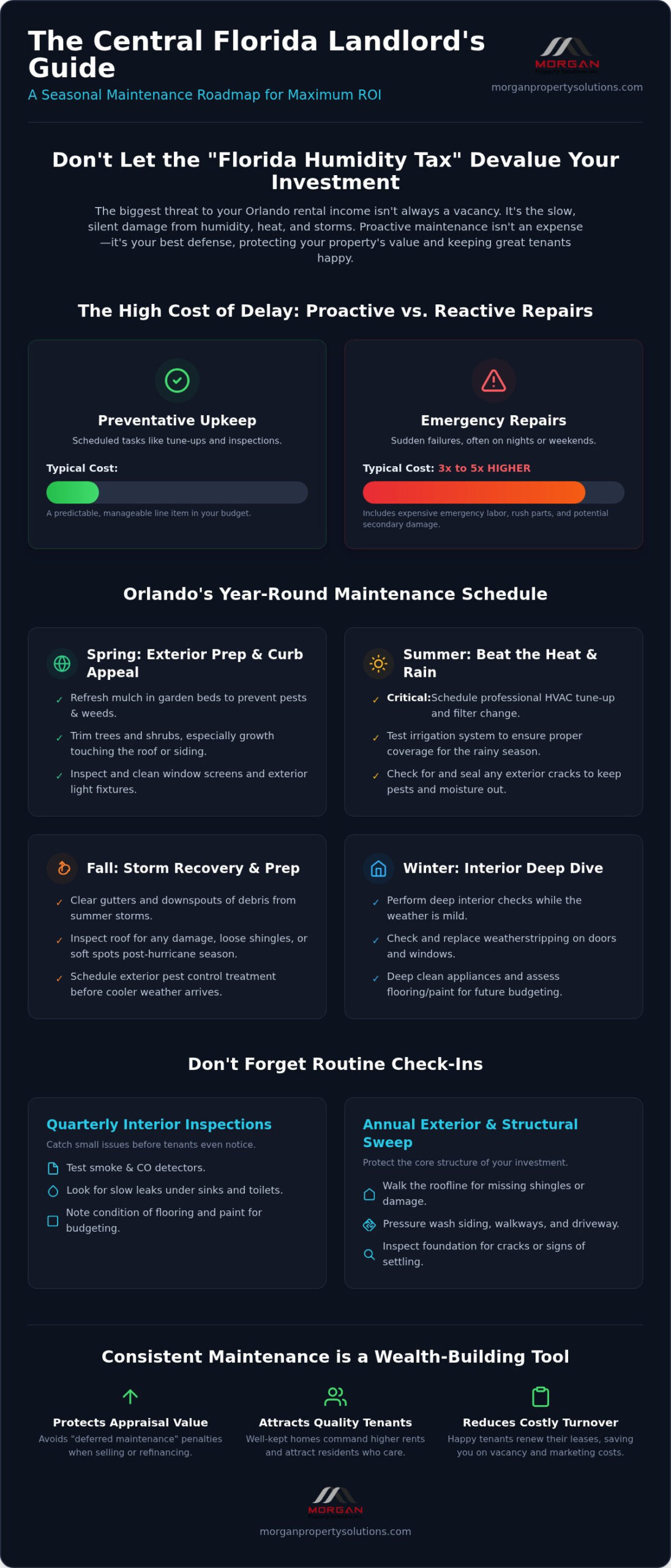
Waiting for a system to fail before acting is a recipe for financial headaches. Industry professionals often see a 3x to 5x cost multiplier for emergency repairs compared to scheduled upkeep. An HVAC tune-up is a minor line item, but a total system failure on a sweltering Saturday afternoon in July can cost thousands in parts and emergency labor fees. There’s also a psychological benefit to consider. Tenants feel respected when they see you’re looking out for their comfort. Our management services help automate this entire process, using a reliable vendor network to handle the small things before they become big problems.
Preserving Curb Appeal and Market Value
In our competitive Central Florida market, the exterior of your rental is your most powerful marketing tool. Whether you’re looking for a new resident or preparing for a future sale, first impressions carry a lot of weight. Regular upkeep, such as pressure washing and roof inspections, prevents minor issues from becoming major structural liabilities. For Florida investors, preventative maintenance is a wealth-building tool that keeps your property’s value trending upward while keeping your tenants happy and settled.
The Ultimate Seasonal Property Maintenance Checklist
Maintaining a rental in Central Florida requires a specific rhythm. Our weather doesn’t follow the traditional four seasons, so your property maintenance schedule shouldn’t either. Instead of worrying about snow, we’re managing high humidity, intense UV rays, and sudden tropical downpours. Staying organized is the best way to keep these environmental factors from damaging your investment. You can find excellent general tips in an official Seasonal Property Maintenance Checklist, but local landlords need to focus on Orlando-specific challenges.
In the Spring, your focus should shift to the exterior. It’s time to refresh mulch, which acts as a barrier against pests, and inspect your landscaping for any winter growth that might be touching the structure. As we head into Summer, your HVAC system becomes the priority. This is the most overworked component of any Florida home. You should also test your irrigation system to ensure it’s ready for the rainy season without wasting water. When Fall arrives, clear your gutters of any debris left behind by summer storms. Finally, Winter is the perfect time for deep interior checks while the weather is dry and manageable.
Quarterly Interior Inspections
We recommend stepping inside the home at least every three months. This isn’t just about checking on the tenant; it’s about safety and prevention. Test every smoke and carbon monoxide detector to ensure they meet safety codes. Look closely under every sink and around the base of toilets. Small, slow drips often go unreported by tenants but can cause thousands of dollars in subfloor damage. While you’re there, take note of the flooring and paint. This helps you budget for future turnovers long before the lease actually ends. If you’re feeling overwhelmed by these visits, our Orlando property management team can handle these detailed inspections for you.
Annual Exterior and Structural Checks
Once a year, usually right after hurricane season ends in November, perform a full structural sweep. Walk the roofline to look for missing shingles or soft spots. Florida’s sun and rain are also a breeding ground for algae. A professional pressure washing of the siding and walkways prevents slippery surfaces and keeps the home looking fresh. Don’t forget to check your fences and gates. A leaning fence or a broken latch isn’t just an eyesore; it’s a significant liability if a pet escapes or an unauthorized person enters the yard. Keeping these elements in top shape ensures your property remains a safe, attractive place to live.
Managing Florida-Specific Maintenance Challenges
Orlando’s climate is undeniably beautiful, but it’s also incredibly brutal on building materials. Effective property maintenance in Central Florida requires a deep understanding of how relentless heat and high humidity interact with your rental. Unlike properties in the north that get a reprieve during winter, our homes face environmental stressors year-round. This means standard wear and tear happens much faster, making a reactive approach far more expensive than staying ahead of the curve. You’re effectively fighting a constant battle against the elements to keep your investment profitable.
Your HVAC system is the most critical component of a Florida rental. Monthly filter changes are non-negotiable because they prevent the system from “choking” on dust and pet dander. When a unit struggles to breathe, its efficiency drops and its components wear out prematurely. Additionally, you must ensure the condensate drain line is cleared regularly. In our humid air, these lines frequently clog with algae, causing water to back up and flood the interior of the home. This often leads to mold growth before a tenant even realizes there’s a leak.
Hurricane season officially begins on June 1st, and your preparation should be finished well before that date. Trimming heavy branches away from the roofline prevents wind-blown damage and keeps squirrels or rats from jumping onto the structure. Beyond the wind, you have to consider the ground beneath the home. Subterranean termites are a constant threat in our sandy soil. Carrying a professional termite bond is a vital part of property maintenance that protects your equity from silent, structural destruction that insurance often won’t cover.
HVAC Longevity in the Sunshine State
The local climate puts nearly double the strain on a standard AC unit compared to the national average. Without intervention, a unit that should last 15 years might fail in seven because it’s running 18 or more hours a day. We’ve found that a simple $150 tune-up can save you from a $6,000 full system replacement. It’s much easier to schedule a technician for a routine check-up than to deal with an emergency call-out when your tenant’s home reaches 90 degrees inside on a holiday weekend.
Pest Management and Moisture Control
Controlling moisture is the first step in controlling pests. Ensure that mulch is kept several inches away from the foundation to prevent wood-destroying organisms from finding an easy path into the walls. You should also inspect window seals and door sweeps during every turnover to keep the humid air outside where it belongs. This simple check reduces the load on the AC and keeps bugs out. For reliable local vendor recommendations and additional tips, explore our landlord resources.
DIY Maintenance vs. Professional Property Management
Many landlords start their journey with a toolbox and a “can-do” attitude. While this works for changing a lightbulb or tightening a cabinet hinge, larger property maintenance tasks in Central Florida often require a more specialized touch. The true cost of doing it yourself isn’t just the price of the parts at the local hardware store. You have to account for the hours you spend driving to the property, the missed time at your day job, and the frustration of a project that takes twice as long as expected. Your time has a specific dollar value, and spending your entire Saturday managing a repair is essentially a hidden tax on your investment.
There’s also the critical issue of liability. In Florida, certain plumbing and electrical repairs must be performed by licensed professionals to meet building codes. If you attempt a DIY electrical fix that later causes a fire, or a plumbing repair that results in a flood, your insurance company might deny the claim because the work wasn’t done by a certified technician. Professional property managers use a network of pre-vetted, licensed, and insured vendors. This ensures the job is done right the first time and provides a legal shield that protects your assets.
A professional eye also catches things an owner might miss. During routine visits, a manager can identify “tenant-caused” damage versus normal wear and tear. Catching a small hole in the drywall or a pet-related floor stain early allows you to address the issue before it escalates into a massive renovation project during the next turnover. This proactive oversight is a key part of maintaining your property’s long-term market value.
The Landlord Time-Value Equation
Think about the coordination required for a single repair. You have to take the initial call from the tenant, find a reputable contractor, schedule a time that works for everyone, and often visit the site to verify the work. This process can easily eat up five to ten hours of your week. The “stress tax” of handling a 2:00 AM emergency call about a broken AC unit is a burden many owners don’t want to carry. Morgan Property Solutions Inc. acts as a reliable buffer, managing every coordination detail so you can focus on your life instead of your plumbing.
Access to Preferred Vendor Pricing
Individual property owners usually pay “retail” rates for emergency repairs. Because professional management firms handle hundreds of properties, they leverage bulk volume to get better rates and priority scheduling from local contractors. These crews are more efficient and arrive with the right tools and materials, which is often cheaper than an owner buying specialized equipment for a one-time fix. You also gain 24/7 emergency coverage, ensuring your property is protected even when you’re on vacation or asleep. If you’re ready to trade your toolbox for peace of mind, our Orlando property management services are designed to make your investment truly passive.
How Morgan Property Solutions Inc. Simplifies Your Maintenance
Taking care of a rental shouldn’t feel like a second full-time job. At Morgan Property Solutions Inc., we’ve spent 20+ years of combined experience refining a system that takes the weight of property maintenance off your shoulders. Our process starts with rigorous move-in and move-out inspections. These aren’t just quick walkthroughs; they’re detailed assessments designed to document every corner of your home. This level of detail is essential for protecting your security deposit and ensuring that any tenant-caused damage is identified and resolved immediately.
Transparency is at the heart of everything we do. You’ll never have to wonder where your money is going or what repairs are being performed. Through our secure online portal, you have instant access to transparent financial reporting for all maintenance expenses. Whether it’s a minor plumbing fix or a major HVAC tune-up, the documentation is right there at your fingertips. We also provide 24/7 emergency support for your tenants. This means you can rest easy knowing that if a pipe bursts at 2:00 AM, our team is already on the case, and you won’t be the one answering the phone.
A Partnership Built on Trust and Expertise
Our deep roots in Central Florida give us a unique advantage. We know exactly how the local climate affects roofs, foundations, and cooling systems. We can often spot potential issues during our routine inspections before they turn into costly disasters. We even provide proactive seasonal reminders and preventative scheduling to ensure your property stays ahead of the Orlando weather. Funding repairs is also simple and stress-free. Our online payment system allows for seamless funding, so work can begin without delay. If you’re curious about how we can tailor our approach to your specific portfolio, we invite you to reach out for a conversation about your property’s needs.
Protecting Your Investment While You Sleep
The ultimate goal of professional management is to provide you with true peace of mind. You’ve worked hard to acquire your investment; now it’s time to let that investment work for you. By trusting us with the day-to-day oversight, you’re choosing a steady ally who is committed to your long-term success. We handle the scheduling, the vendor vetting, and the late-night emergencies. For more insights on how to optimize your rental business, feel free to browse our residential property management guide. Let us handle the headaches while you enjoy the returns on your Central Florida investment.
Secure Your Investment with Confidence
Taking a proactive approach to your Central Florida rental is the most effective way to avoid the hidden “humidity tax” and ensure your long-term success. By following a seasonal rhythm, you don’t just fix problems; you prevent them from ever starting. This keeps your operating costs low and your tenants happy in their homes. Remember that consistent property maintenance isn’t just about the building; it’s about protecting the wealth you’ve worked so hard to build.
You don’t have to manage this journey alone. Our team provides the reliable oversight you need through detailed move-in and move-out inspections and access to a network of trusted, insured local vendors. With 24/7 emergency maintenance support, you can finally stop worrying about midnight phone calls and focus on your broader financial goals. We’re here to be your steady ally in the Orlando market, simplifying complex tasks into manageable steps.
Take the stress out of maintenance-see how our Orlando property management services help. We look forward to helping you grow your portfolio with peace of mind.
Frequently Asked Questions
How often should I inspect my rental property for maintenance issues?
You should aim to inspect your rental property at least once every three to four months. Regular quarterly visits allow you to catch small leaks or lease violations before they grow into expensive problems. Many professional property managers include these detailed inspections as a standard part of their service. This rhythm ensures the home stays in good condition and helps you maintain a positive relationship with your residents.
Who is responsible for air filter changes, the landlord or the tenant?
In most cases, the tenant is responsible for changing the air filter every month, provided this requirement is clearly stated in your lease agreement. Because of the intense Central Florida heat, your HVAC system works much harder than units in other regions. We often suggest providing a stack of filters to the tenant during move-in. This simple gesture encourages them to keep up with this vital part of property maintenance.
What maintenance tasks are considered emergencies in Florida?
Emergencies are typically issues that threaten the tenant’s health, safety, or the property’s structural integrity. In Orlando, a complete loss of air conditioning during the summer is often classified as an emergency due to extreme temperatures. Other examples include burst pipes, total electrical failure, or broken locks that compromise security. Having a 24/7 maintenance support system ensures these critical problems are addressed immediately, regardless of when they happen.
Is pest control a landlord or tenant responsibility under Florida law?
Under Florida Statutes, landlords of multi-family units are generally responsible for exterminating pests like rats, mice, and roaches. For single-family homes, the responsibility can be negotiated and should be clearly defined in the lease. Given our local climate, we highly recommend that landlords maintain a professional pest control contract. This proactive step prevents infestations from damaging your investment or causing friction with your tenants.
How much should I set aside annually for property maintenance costs?
Most industry experts suggest budgeting between 1% and 3% of your home’s total value each year for repairs and property maintenance. For a typical $500,000 home in Central Florida, this means setting aside $5,000 to $15,000 annually. Keep in mind that older homes or those with pools and large landscapes may require a higher percentage. Saving consistently helps you manage unexpected expenses without disrupting your monthly cash flow.
Can I deduct property maintenance expenses from my Florida rental taxes?
Yes, you can generally deduct the cost of ordinary and necessary repairs from your rental income on your federal tax return. This includes things like fixing leaks, painting, or routine HVAC servicing. Since Florida has no state income tax, these deductions primarily benefit your federal filings. Using an online portal for transparent financial reporting makes it much easier to track these expenses and provide accurate documentation to your accountant at year-end.
What happens if a tenant refuses to allow access for routine maintenance?
Florida law allows landlords to enter a rental property to perform necessary repairs, provided they give at least 24 hours’ notice. If a tenant refuses access after receiving proper notice, they may be in violation of their lease. In these situations, it’s best to communicate calmly and explain that the visit is for their benefit and safety. Professional managers are experienced in navigating these delicate conversations while following all legal requirements.
Do I need a separate termite bond for my Orlando rental property?
While not legally required, a subterranean termite bond is essential for protecting your Central Florida investment. Standard homeowners insurance rarely covers termite damage, which can be devastatingly expensive in our sandy soil. A bond provides you with regular professional inspections and a guarantee for treatment if an infestation occurs. It’s a small annual cost that offers significant peace of mind against one of Florida’s most persistent silent threats.

Article by
Oliver Overton-Morgan
Oliver Overton-Morgan is a full-time Real Estate Broker since 2003, with years of experience helping thousands of people purchase and sell real estate throughout Central Florida. He holds a Graduate Realtor Institute designation, LCAM, and has held licenses in good standing as a Florida Mortgage Broker and a Notary Public. Oliver immigrated to central Florida in 2001, and within 5 years Oliver built a successful Real Estate brokerage in central Florida, where he recruited over 75 Sales Associates with 25+ million in sales production.