
Last July, a tenant in Winter Park arrived home to find their apartment at eighty-five degrees because the air conditioning had quit. Instead of getting a quick repair, they spent three days wondering if they had any legal grounds to demand a fix or if they were simply stuck in the heat. It’s a frustrating situation that many residents face, and the uncertainty often leads to unnecessary anxiety about your home and your security deposit. We believe you should never have to guess about your safety or your legal protections.
Understanding your Florida tenant rights is the most effective way to protect yourself and ensure you’re treated fairly under the law. In this 2026 guide, we’ll break down the latest updates to rental statutes, from deposit return timelines to privacy standards. You’ll also see how working with a professional firm like Morgan Property Solutions Inc. ensures that these regulations are followed strictly, giving you the safe, habitable home you deserve in the Orlando area. Let’s look at how these laws work for you.
Key Takeaways
- Learn the core principles of Chapter 83 and why peaceful possession is a fundamental part of your Florida tenant rights in 2026.
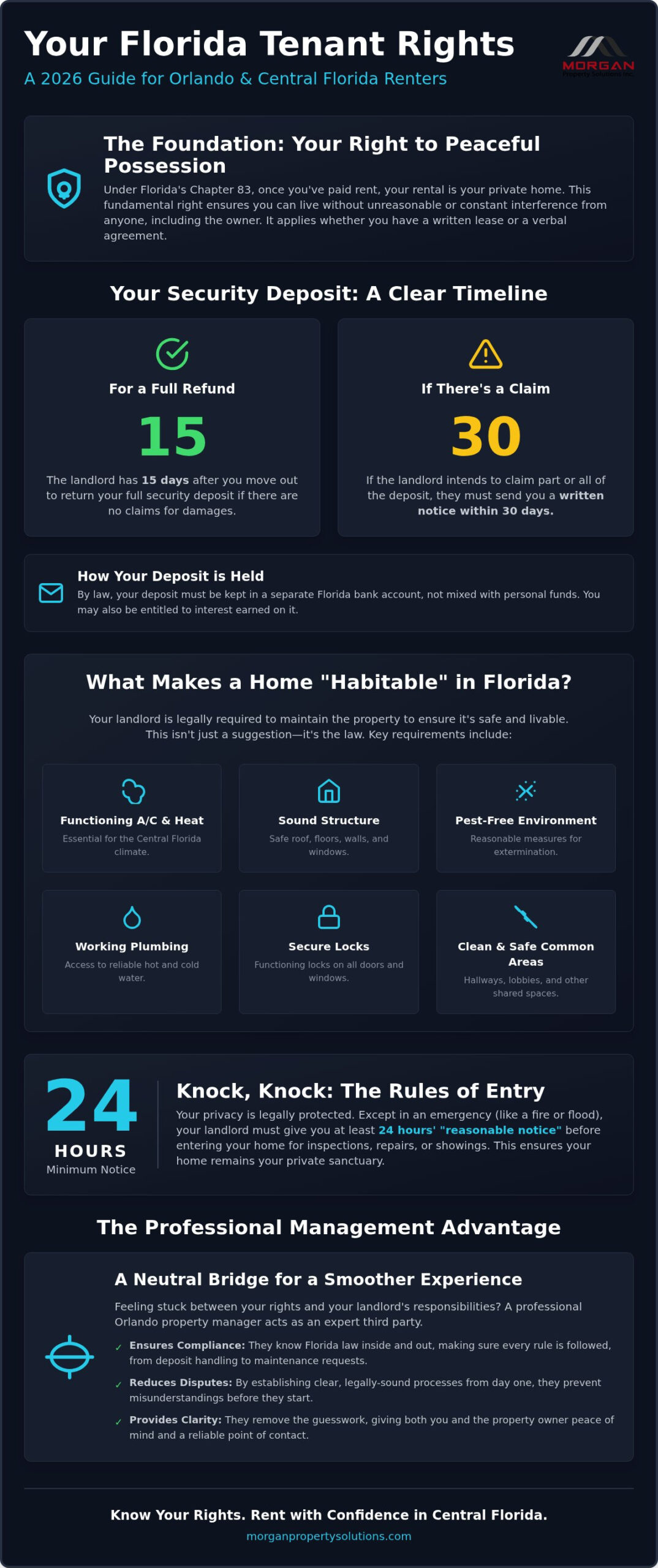
- Understand the strict legal timelines for security deposit returns, including the 15-day window for full refunds and the 30-day notice period for claims.
- Identify the specific habitability standards every Central Florida home must meet, covering everything from structural integrity to reliable pest control.
- Know exactly when a landlord can enter your space and why receiving at least 24 hours of notice is the professional standard for inspections.
- Discover how working with a professional Orlando property manager can act as a neutral bridge to resolve disputes and ensure all state laws are followed.
What Are Florida Tenant Rights? The Basics for 2026
The Florida Residential Landlord Tenant Act, or Chapter 83, isn’t just a dry list of rules; it’s the essential framework that keeps the rental market functioning fairly. While some laws favor owners and others protect residents, the primary goal is to establish a clear, predictable path for the entire duration of your stay. Knowing your Florida tenant rights helps you navigate this relationship with confidence, ensuring you aren’t taken advantage of when issues arise. This statute covers everything from how your application is handled to the specific way your lease must be terminated.
One of the most powerful concepts in this act is peaceful possession. Essentially, once you’ve paid your rent and moved in, the law treats the unit as your private domain. The owner retains the legal title, but you hold the exclusive right to live there without constant or unreasonable interference. These Landlord-tenant law principles apply to every resident in the state. It doesn’t matter if you have a formal twenty-page lease or a simple handshake agreement; your rights are protected by Florida statute the moment you establish residency. While a written lease is always the safer choice to prevent future disputes, an oral agreement still grants you the same core legal protections under Chapter 83.
Why These Laws Matter in Central Florida
In highly active markets like Orlando and Winter Park, the speed of the real estate cycle can sometimes lead to skipped steps or misunderstood terms. Whether you’re looking at a modern townhome in Lake Nona or a quiet suburban house in Clermont, these state-wide standards are your primary safeguard. Professional firms like Morgan Property Solutions Inc. prioritize these regulations because they simplify the management process for everyone. By following the law to the letter, we remove the guesswork and ensure that both the resident and the property owner are protected from day one. This level of professional oversight ensures that local market fluctuations don’t compromise your legal standing as a resident.
The Human Element: Your Rights as a Resident
A tenant is an individual who deserves a safe, sanitary, and respected living environment. We believe that when everyone understands the rules, the psychological friction of renting, that feeling of being at someone else’s mercy, completely disappears. Clear communication and a shared understanding of the law turn a potentially stressful transaction into a successful partnership. Having a firm grasp of your Florida tenant rights reduces the anxiety of the unknown. By knowing the basics, you move from a place of uncertainty to a position of strength, allowing you to focus on making your rental a true home.
Security Deposits and Lease Agreements: Starting on the Right Foot
Starting a new rental in Central Florida is exciting, but the paperwork can feel heavy. Your Florida tenant rights begin the moment you pay that security deposit. Per the Florida Landlord/Tenant Law, landlords must hold your funds in a Florida-based bank account. They aren’t allowed to mix your money with their personal funds. If they choose an interest-bearing account, you’re even entitled to 75% of the annualized interest or 5% simple interest per year. It’s your money, and the law treats it that way.
When you eventually move out, the law sets a strict schedule for getting your money back. If there are no damages, the landlord has 15 days to return the full amount. If they intend to make a claim for repairs, they must notify you in writing within 30 days. This prevents your funds from being held indefinitely without a valid reason. It’s a clear process designed to keep things fair for both you and the owner.
Protecting yourself starts on day one with a thorough walk-through. Grab your phone and take photos or video of every corner, including the inside of cabinets and the condition of the flooring. This documentation is your best defense against unfair claims later. Before you even fall in love with a place, we recommend checking the screening criteria to ensure it’s the right fit for your situation. Knowing these standards upfront removes the guesswork from the application process.
If you ever feel unsure about the terms of a lease, reaching out to an Orlando property manager can provide the clarity you need to move forward with peace of mind.
Understanding Your Rental Agreement
Orlando leases often include specific clauses about lawn care or pool maintenance that are unique to our climate. It’s vital to know the difference between a non-refundable fee, like a pet fee, and a refundable deposit. One is a cost of doing business; the other is a safeguard for the property owner that you should get back. Read every line. If a clause seems odd, ask for a clear explanation before you pick up the pen.
Deposit-Free Options and Modern Renting
We know that coming up with several thousand dollars for a deposit is a hurdle. That’s why deposit-free renting has become such a popular choice in Central Florida. These programs replace the big up-front payment with a small monthly fee, making it much easier to get into your new home. Best of all, you don’t lose any of your legal rights by choosing this path. It’s a modern way to simplify your move while keeping your cash in your pocket.
Maintenance and Habitability: Your Right to a Safe Home
Living in Central Florida means your home must be equipped to handle our unique environment. Under Florida tenant rights, habitability goes beyond just having a roof over your head. A property is legally considered fit to live in only if it provides essential services like working plumbing, access to hot water, and a structurally sound exterior that keeps out the elements. While we often think of heat as the primary concern, Florida law actually requires a functional heat source for the cooler months. Additionally, landlords are generally responsible for maintaining common areas and ensuring the property is free from pests like rodents or wood-destroying organisms.
Maintenance is a shared responsibility that works best when both parties stay proactive. As a resident, you have a duty to keep your unit in a clean and sanitary condition, disposing of garbage properly and using all facilities and appliances reasonably. To bridge the gap between noticing a problem and getting it fixed, professional firms utilize online portals. These systems allow you to submit a request the moment you spot an issue, such as a leaky pipe or a failing water heater. By using these digital tools, you create an instant record of the request, which helps ensure that your Florida tenant rights are upheld through prompt, documented action.
The 7-Day Notice for Repairs
Under Florida law, a tenant must provide a written 7-day notice to the landlord if essential repairs are not being made. This notice is a formal legal step that informs the owner they are in non-compliance with the lease or state statutes. It is vital to understand that you cannot simply stop paying rent because a repair is delayed. Withholding rent without following this specific 7-day notice procedure can put you at risk of eviction. Instead, focus on building a paper trail. Keep copies of all portal submissions and formal letters, as this documentation is your strongest protection if the issue remains unresolved.
Common Maintenance Issues in Central Florida
In the Orlando area, our intense weather patterns often lead to specific maintenance challenges. Roofing and drainage systems face heavy stress during the summer storm season, and a small leak can quickly become a major habitability issue if ignored. While we previously mentioned the frustration of a hot apartment, it is important to know that a failed cooling system in our climate is often treated as a high priority for health and safety. Morgan Property Solutions Inc. addresses these urgent needs through 24/7 emergency maintenance support. Having a steady ally available at any hour ensures that structural or systemic failures are managed quickly, keeping your home safe and comfortable year-round.
Privacy and Possession: When Can a Landlord Enter?
Your home is your private sanctuary, and your lease should reflect that. One of the most common points of friction between residents and owners involves the right of entry. Under Florida tenant rights, you have the right to “peaceful possession” of your rental. This means that while the landlord owns the building, you have a legal right to enjoy the space without unreasonable interference. Balancing the owner’s need to maintain the property with your right to privacy is a key part of Florida law.
Florida law requires “reasonable notice” before a landlord can enter your home for repairs or inspections. The statutory minimum for this notice is 12 hours. However, in the Central Florida market, providing at least 24 hours of notice is considered the professional standard. We believe this extra time is essential for you to prepare and feel comfortable with someone entering your living space. The only exception to this rule is a genuine emergency. If there is a fire, a major flood, or another urgent threat to the structure, the landlord can enter immediately to protect the property.
It is vital to understand that the right of access is not a tool for harassment. A landlord cannot use frequent or unannounced visits to pressure you or make your living situation uncomfortable. If you feel like your privacy is being ignored, it is important to act quickly to resolve the situation. If you want to ensure your next rental is managed by experts who respect these boundaries, consider looking into our Orlando property management services.
Steps to Take if Your Privacy is Violated
If you find yourself in a situation where your privacy is not being respected, follow these steps to regain control of your living environment:
- Step 1: Review your lease agreement for specific entry clauses to see if any additional notice periods were agreed upon.
- Step 2: Communicate your concerns in writing to the landlord or property manager so there is a clear record of your objection.
- Step 3: Document any instances of unauthorized entry, including dates, times, and any photos or witness statements if available.
- Step 4: Consult professional landlord resources or seek legal aid if the issue persists despite your written requests.
The Role of Professionalism in Inspections
Professional management firms prioritize your peace of mind by scheduling inspections well in advance. We know that your life is busy, and we aim to minimize any disruption to your daily routine. By setting clear expectations and maintaining respectful boundaries, we foster long-term tenant satisfaction. Clear communication about why an entry is necessary, such as a routine AC filter change or a safety check, builds a foundation of trust. When everyone knows the rules and follows them, the rental experience becomes much more positive for both the resident and the manager.
Navigating Disputes and the Value of Expert Management
Disputes can feel like a heavy weight, but they don’t have to lead to a courtroom. Most issues in Central Florida rentals stem from simple miscommunications or a lack of clarity. We always encourage an informal chat or a written request through the portal before things escalate. This is where a third-party property manager becomes your best ally. They act as a neutral bridge, ensuring that Florida tenant rights are respected while keeping the conversation professional and focused on solutions. You deserve a home where you feel heard, and professional oversight is the best way to maintain that balance.
There is a unique peace of mind that comes with knowing your home is managed by experts. Instead of worrying about how a private owner might react to a repair request, you can rely on a system built for consistency. This professional approach removes the anxiety of the unknown and replaces it with a predictable, respectful relationship. If you are looking for more ways to protect your interests, we invite you to explore our library of real estate articles for deeper insights into the local market.
Why Renting from a Professional Firm is Different
Renting from a professional firm changes the entire dynamic of your residency. You aren’t dealing with a private owner’s personal emotions or “personality clashes” that often complicate private rentals. Instead, you get a team that applies the law consistently and fairly. You also gain access to streamlined systems that make life easier. Whether you are submitting a maintenance request, making a payment, or registering a pet via PetScreening, the steps are manageable and clear. With over 20 years of combined local expertise, we focus on removing the friction from your rental experience.
Ending the Lease: Your Rights at Move-Out
When it is time to move on to your next adventure, knowing the rules keeps your transition smooth. Most leases in the Orlando area require a 30 to 60-day notice for non-renewal. Missing this window can lead to automatic renewals or unexpected fees. You should also be aware of the “abandonment” trap. If you leave the property without giving proper legal notice, you might still be responsible for rent and could lose your deposit protections. To ensure a successful move, always provide your notice in writing and schedule a final walk-through to document the home’s condition. These simple steps protect your Florida tenant rights and help you start your next chapter with a clean slate.
Take Control of Your Rental Experience
Knowing your Florida tenant rights is the first step toward a peaceful and secure home life. We’ve explored how legal timelines for security deposits protect your money and why clear communication about maintenance is essential for a habitable home. Whether you’re starting a lease in Lake Nona or moving across Winter Park, these laws provide the foundation for fair treatment. You deserve a living space where your privacy is respected and your concerns are heard.
At Morgan Property Solutions, we’ve spent over 20 years simplifying the rental process for residents across the Orlando area. As A+ rated property management experts, we believe that professional oversight and transparent systems remove the stress from your daily life. You don’t have to navigate the complexities of rental law alone when you have a steady ally by your side. Looking for a professionally managed rental in Orlando? Explore our available homes today! We’re here to help you find a safe, respected place to call home.
Frequently Asked Questions
Can a landlord enter my apartment without notice in Florida?
No, they generally can’t enter without notice unless it’s a genuine emergency like a fire or major flood. Florida law requires at least 12 hours of notice for repairs, although most professional Orlando property managers provide 24 hours out of respect for your privacy. They must also enter at a reasonable time. If they’re entering without a valid reason or proper notice, it’s a violation of your Florida tenant rights.
How long does a landlord have to return a security deposit in Florida?
Your landlord has exactly 15 days to return your full deposit if they aren’t making any claims against it. If they do intend to keep part of the money for damages, they must send you a written notice by certified mail within 30 days. If they miss these deadlines, they generally forfeit their right to keep any of the deposit. Always make sure to provide your forwarding address in writing when you move out.
Can I withhold rent in Florida if the A/C is broken?
You should never simply stop paying rent, as this can lead to an immediate eviction filing. While Florida law requires landlords to keep the property habitable, A/C isn’t always legally classified as an essential service like water or heat unless specified in your lease. If repairs aren’t made, you must provide a formal 7-day written notice before you can legally withhold rent. We recommend speaking with a legal professional before taking this step.
What happens if there is no written lease agreement in Florida?
You are still protected by the Florida Residential Landlord Tenant Act even without a written contract. In these cases, the tenancy is usually considered at-will or month-to-month. As of January 1, 2024, landlords must provide at least 30 days of notice to terminate a month-to-month agreement. While oral leases are legal, they’re much harder to prove in court. This is why professional firms always insist on clear, written documentation for everyone’s protection.
Can a landlord evict you without going to court in Florida?
No, self-help evictions are strictly illegal in Florida. A landlord cannot change your locks, shut off your utilities, or remove your belongings to force you out. They must follow a specific legal process that starts with a notice. For non-payment of rent, the notice period was increased to 5 days in July 2026. Only a sheriff with a court-ordered writ of possession can physically remove a tenant from the property.
Is renter’s insurance required by Florida law?
While Florida state law doesn’t mandate renter’s insurance, almost all professional lease agreements in Orlando and Winter Park do. It’s a very affordable way to protect your personal belongings from fire, theft, or water damage, which the landlord’s insurance won’t cover. Many policies also provide liability protection if someone is injured inside your home. It’s a small monthly cost that provides a huge amount of peace of mind for residents.
What should I do if my landlord is harassing me?
Start by documenting every instance of harassment, including dates, times, and what happened. You should send a formal letter to the landlord or property manager asking them to stop the behavior. If the harassment involves unauthorized entry or shutting off utilities, these are serious violations of Florida tenant rights. If the situation doesn’t improve after your written request, you may need to contact local law enforcement or seek guidance from a legal aid organization.
Are there specific tenant rights for military members in Florida?
Yes, active-duty military members have special protections under both federal and Florida law. If you receive permanent change of station orders or are deployed for more than 35 days, you can legally terminate your lease early without penalty. You must provide a written notice along with a copy of your official orders. These protections ensure that our service members aren’t unfairly penalized for their commitment to serving our country while living in Central Florida.

Article by
Oliver Overton-Morgan
Oliver Overton-Morgan is a full-time Real Estate Broker since 2003, with years of experience helping thousands of people purchase and sell real estate throughout Central Florida. He holds a Graduate Realtor Institute designation, LCAM, and has held licenses in good standing as a Florida Mortgage Broker and a Notary Public. Oliver immigrated to central Florida in 2001, and within 5 years Oliver built a successful Real Estate brokerage in central Florida, where he recruited over 75 Sales Associates with 25+ million in sales production.