
What if a single missed email about a leaky faucet could legally freeze your entire month’s rental income? It’s a scenario that keeps many property owners in Orlando awake at night, especially when you’re trying to balance your own life with the demands of a rental property. Mastering florida landlord tenant law for repairs can feel like walking a tightrope, and the fear of legal retaliation or a tenant withholding rent because of a simple misunderstanding is a heavy burden to carry.
We understand that you want to provide a safe home while protecting your financial future. In this guide, we’ll help you navigate Florida’s strict repair timelines and habitability standards with a practical, stress-free approach. You’ll gain a clear understanding of the critical 7-day notice period and learn how to distinguish between a minor inconvenience and a true maintenance emergency. We’ll also share a streamlined process for handling requests that keeps you in compliance and keeps your tenants happy, ensuring your Central Florida rental remains a profitable, low-stress asset.
Key Takeaways
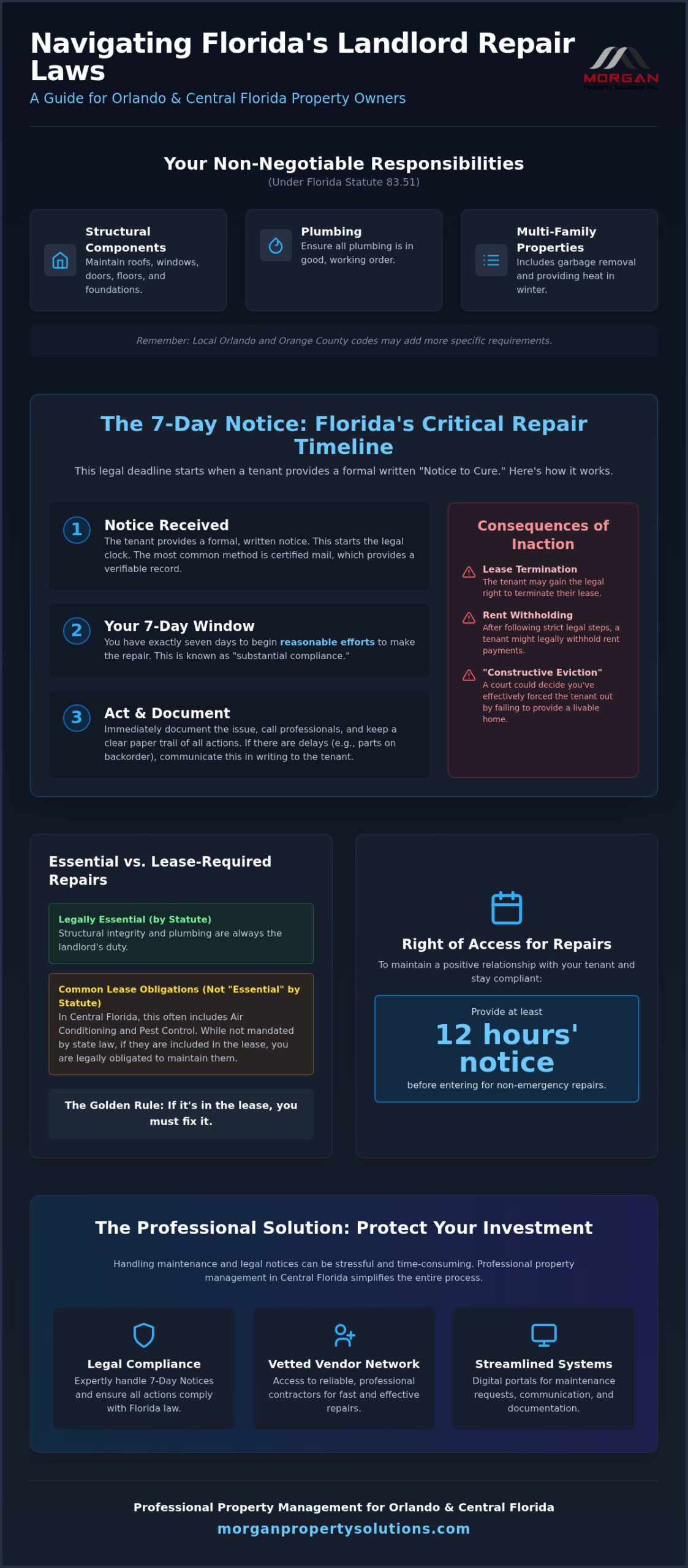
- Understand your non-negotiable duties to maintain structural elements and plumbing as required by Florida Statutes Chapter 83.
- Learn why the 7-day notice is the most critical timeline in florida landlord tenant law for repairs and how to respond before it impacts your cash flow.
- Debunk the “repair and deduct” myth and discover the strict legal steps a tenant must take before they can legally withhold rent.
- Master the right of access by providing at least 12 hours of notice for non-emergency repairs to maintain a positive relationship with your tenants.
- Discover how professional property management in Central Florida uses vetted vendor networks and digital portals to simplify maintenance and protect your investment.
Understanding the Florida Landlord’s Duty to Maintain
Owning a rental in Central Florida is a smart investment, but it comes with a specific set of legal responsibilities. You aren’t just providing a roof; you’re providing a home that meets strict legal standards. Understanding landlord-tenant law is the first step in protecting your property and your peace of mind. If you’re wondering how florida landlord tenant law for repairs affects your daily operations, it starts with your fundamental duty to keep the property in a condition that is fit for people to live in.
Florida Statute 83.51: Your Legal Rulebook
Florida law lays out exactly what you must maintain by default. The “Warranty of Habitability” is the minimum standard for a safe, livable rental unit. As a landlord, you’re responsible for the structural components like the roof, windows, doors, floors, and foundations. You also have to ensure the plumbing is in good working order. If you own a duplex or multi-family property, your list of duties grows to include things like garbage removal and providing heat during the winter months. Single-family home owners can sometimes negotiate these specific tasks in the lease, but you can never waive your duty to keep the structure sound and the plumbing functional.
Local codes in Orlando and Orange County often add another layer of complexity to these state-level rules. Local inspectors look for specific standards that might be more detailed than what you’ll find in the state statutes. For instance, they might have specific requirements for window screens, exterior lighting, or even the condition of your driveway. Keeping up with these local nuances is vital to avoid surprise fines or code enforcement liens that can complicate your property ownership.
Essential vs. Non-Essential Repairs
It’s important to distinguish between what the law requires and what simply makes a tenant happy. In Florida, air conditioning isn’t actually classified as an “essential service” under state law, though it’s hard to imagine an Orlando rental without it. If your lease says you provide AC, then you’re legally obligated to fix it. Pest control is another regional concern. For single-family rentals, you can often pass this duty to the tenant, but in multi-family buildings, the landlord is usually on the hook for extermination.
Handling these distinctions correctly prevents legal headaches and keeps your maintenance costs predictable. Navigating florida landlord tenant law for repairs is much simpler when you have a clear maintenance plan and a trusted team behind you. For more detailed insights into managing your property effectively and staying compliant with these rules, take a look at our landlord resources. Distinguishing between a broken dishwasher and a broken water heater is key to prioritizing your maintenance budget and keeping your investment secure.
The 7-Day Notice: Florida’s Critical Repair Timeline
If you’ve ever received a certified letter from a tenant, you know that sinking feeling in your stomach. It’s often a “Notice to Cure,” a formal demand under the Florida Residential Landlord and Tenant Act. This document starts a high-stakes clock. According to florida landlord tenant law for repairs, once you’ve been properly served with this written notice, you have exactly seven days to address the issue. This isn’t just a suggestion; it’s a legal deadline that can determine whether your tenant stays or your rental income stops.
Calculating the 7-day window depends heavily on how the notice was sent. If the tenant hands it to you personally, the clock starts right then. If they use certified mail, the timeline typically begins once the notice is delivered. Missing this deadline by even a day can give a tenant the legal right to terminate their lease or seek other remedies. Ignoring the clock puts you at risk of “constructive eviction,” a situation where a court decides you’ve essentially forced the tenant out by failing to provide a livable home.
How to Respond to a 7-Day Notice
When that notice arrives, take a breath and act fast. First, document everything. Take photos of the current state of the property and call a repair professional immediately. If you’re dealing with a backordered part or an unreliable contractor, don’t stay silent. While florida landlord tenant law for repairs requires action, “substantial compliance” can protect you. This means showing that you’ve made every reasonable effort to fix the problem, even if a vendor delay is holding things up. Keeping a clear paper trail of your repair attempts is your best defense against lease termination.
The Legal Mechanics of Notice Delivery
Many landlords think they’re safe because they “didn’t know” about a leak or a broken window. However, having “actual knowledge” of a problem doesn’t always start the legal clock; the formal written notice is what counts. For Orlando landlords, certified mail is the gold standard for these communications because it provides a verifiable record for the court.
Handling these legal hurdles alone is exhausting and leaves room for error. A professional Orlando property management team can step in as your steady ally, managing these notices and ensuring every repair is documented in an online portal. If you want to see how we simplify these complex steps, check out our landlord resources for more expert tips.
Tenant Remedies: Rent Withholding and the ‘Repair and Deduct’ Myth
In many parts of the country, tenants have a broad right to fix a broken appliance and simply subtract the bill from their next rent check. If you’re managing property in Orlando, it’s vital to know that this isn’t the case here. Florida law is quite specific, and the “repair and deduct” practice is a common myth that can lead to significant legal trouble for both parties. Under florida landlord tenant law for repairs, a tenant who unilaterally decides to withhold a portion of the rent for a DIY fix is often technically in violation of their lease.
For a tenant to legally withhold rent, they must strictly follow the 7-day notice process we discussed earlier. Even then, they don’t have the right to just keep the money in their pocket without consequence. If the dispute reaches a courtroom, the law typically requires the tenant to prove the property has become “untenantable” or that the landlord has failed in their fundamental duties. You can find more detail on these specific standards in The Florida Bar’s guide to landlord-tenant rights, which outlines how the state balances these competing interests. When a property is so poorly maintained that it’s no longer fit for living, it may fall under “constructive eviction,” but this is a high legal bar to clear.
Why ‘Repair and Deduct’ Is a Risky Move for Tenants
Landlords in Central Florida generally have the upper hand regarding unauthorized deductions. If a tenant sends you a check for $200 less because they hired their own handyman, you usually have the right to treat that as non-payment of rent. This often leads to unnecessary friction and potential eviction filings. We always recommend addressing these situations with calm, professional communication. Referring your tenant to your lease agreement or our Landlord Resources can help clarify expectations and prevent a minor repair from turning into a major legal battle.
The Court Registry: Where the Rent Goes During a Dispute
If a repair dispute escalates to an eviction proceeding, the tenant doesn’t get a free ride. Florida law requires tenants to deposit the disputed rent into a court registry while the case is pending. This ensures the funds are available once a judge makes a final ruling. It protects your eventual payment while the legal process plays out. Managing these financial tensions is where an experienced property manager truly shines. We act as a professional buffer, ensuring that all florida landlord tenant law for repairs protocols are followed so you don’t have to face the court system alone. Our goal is to resolve maintenance issues through our vetted vendor network long before they reach this level of conflict.
Right of Access: Entering the Property for Repairs
Entering a tenant’s home is often the most sensitive part of property ownership. You have a valuable investment to protect; however, your tenant has a legal right to privacy and “quiet enjoyment” of their space. Finding the right balance is much easier when you stick to the specific protocols laid out in florida landlord tenant law for repairs. Generally, you can’t just show up with a toolbox and expect to be let in. You must provide proper notice and respect the tenant’s schedule to stay on the right side of the law.
Florida law defines “reasonable time” for entry as the window between 8:00 AM and 8:00 PM. This means you shouldn’t be sending contractors over at sunrise or late on a Sunday evening unless it’s a true emergency. Emergencies are the only time you can bypass the notice requirement. If a pipe bursts and is flooding the living room or there is a clear fire hazard, you have the right to enter immediately to prevent further damage to the structure. In any other scenario, failing to follow florida landlord tenant law for repairs can be seen as harassment, which can lead to legal penalties or a breakdown in the landlord-tenant relationship.
Notice Best Practices for Orlando Landlords
Florida’s 24-hour notice rule is the standard for non-emergency maintenance access. In fast-growing communities like Lake Nona or historic areas like Winter Park, we recommend using digital portals to timestamp your notice of entry. This creates a clear record that protects you if a tenant later claims they weren’t informed. Whether you’re performing a routine HVAC check to combat the Central Florida humidity or fixing a leaky faucet, having a documented history of your communication is vital. It’s about distilling a complex scheduling process into a manageable, professional step.
Dealing with the Uncooperative Tenant
What happens if a tenant simply refuses to let your contractor in? It’s a frustrating hurdle that can delay critical fixes and potentially lead to more expensive damage down the road. You should never force entry or try to “self-help” your way into the unit except in a true emergency. If a tenant blocks access for a required repair, they are likely in breach of their lease agreement. This is where professional guidance becomes invaluable. We handle these scheduling headaches every day, acting as a steady ally to resolve the psychological friction that often comes with maintenance requests.
If you’re ready to stop worrying about scheduling conflicts and start enjoying a more streamlined investment, our Orlando property management team is here to help.
How Professional Management Simplifies Maintenance & Compliance
Managing a rental property shouldn’t feel like a second full-time job. While understanding florida landlord tenant law for repairs is essential, executing those duties perfectly every time is where most owners struggle. The psychological friction of answering a tenant’s midnight call or arguing with an unreliable contractor can take a toll on your well-being. Professional property management acts as your steady ally, distilling these complex legal requirements into a simple, hands-off process that protects your investment.
One of the biggest advantages we provide is access to a vetted vendor network built over 20 years of experience in Central Florida. You don’t have to guess if a plumber will show up or if an electrician’s work meets local Orlando codes. We’ve already done the screening for you. This ensures that every repair is handled by a professional who understands the quality standards required to keep your property in top shape. By removing personal confrontation from the equation, we keep the landlord-tenant relationship professional and focused on the facts.
Legal sites often explain the law, but they rarely show you how to build a defense. Our system focuses on creating a bulletproof paper trail for every single maintenance request. In the event of a legal dispute or a 7-day notice, having digital documentation is your best protection. Our detailed inspection reports and online portals capture every communication, photo, and invoice, ensuring you have a complete history of your compliance with florida landlord tenant law for repairs.
The Morgan Property Solutions Inc. Maintenance System
Our Orlando Property Management Services are designed around transparency and ease of use. Through our online portal, you can track every maintenance request from the moment it’s submitted to the second it’s marked complete. This real-time visibility gives you peace of mind without requiring you to manage the details yourself. Plus, our 24/7 emergency maintenance coordination means that true emergencies are handled instantly, preventing small leaks from turning into massive structural repairs while you sleep.
Compliance as a Service
Staying compliant with Florida’s strict 2026 standards is a moving target, but it’s one we monitor daily. We handle the proactive inspections that catch minor issues before they ever become legal notices from a tenant. This proactive approach doesn’t just lower your legal risk; it also maximizes your ROI by extending the life of your property’s systems. When you’re ready to stop worrying about maintenance and start enjoying your returns, we’re here to help. Protect your investment with Morgan Property Solutions Inc. and experience the difference that professional care makes.
Secure Your Rental Investment with Proactive Care
Mastering the nuances of florida landlord tenant law for repairs is more than just a legal necessity; it’s the foundation of a successful investment strategy. By respecting the 7-day notice timeline and maintaining clear communication regarding property access, you protect yourself from legal disputes and costly vacancies. Remember that while “repair and deduct” isn’t a statutory right in Florida, your commitment to the warranty of habitability is non-negotiable for every property you own.
Managing these responsibilities doesn’t have to be a source of constant anxiety. With over 20 years of local Central Florida expertise, Morgan Property Solutions Inc. provides the steady guidance you need to stay compliant while maximizing your returns. Our team ensures detailed digital paper trails for every fix and offers 24/7 emergency maintenance coordination to keep your tenants happy and your assets safe. Stop Worrying About Repairs – Let Our Orlando Experts Manage Your Property. You’ve worked hard to build your portfolio; let us help you enjoy the rewards of ownership with total confidence.
Frequently Asked Questions
How long does a landlord have to make a repair in Florida?
Florida landlords typically have seven days to address a problem once they receive a formal written notice from the tenant. This timeline is a cornerstone of florida landlord tenant law for repairs, specifically outlined in the statutes to ensure properties remain habitable. If the issue isn’t resolved within that window, the tenant may have legal grounds to take further action. Our team in Orlando manages these timelines strictly to keep owners in full compliance.
Can a Florida tenant withhold rent for a broken AC?
Air conditioning isn’t technically an “essential service” under state law, but if your lease agreement includes it, you are obligated to keep it in good working order. A tenant cannot simply stop paying rent the day the unit breaks. They must provide a formal 7-day notice first. Even then, withholding rent is a complex legal process that often requires a court’s involvement to avoid an eviction filing for non-payment.
Is ‘repair and deduct’ legal in Florida in 2026?
No, Florida does not recognize a statutory “repair and deduct” right for tenants. If a tenant hires a contractor to fix a dishwasher in Lake Nona and subtracts that cost from their rent, they are likely in breach of their lease. This is a common point of confusion that leads to friction. We recommend that Orlando owners clearly state maintenance procedures in the lease to prevent these unauthorized deductions and protect their monthly cash flow.
What is considered an emergency repair in Florida?
Emergency repairs are those that threaten the safety of the tenant or the integrity of the building. Examples include burst pipes causing flooding, major electrical hazards, or a broken front door lock that compromises security. In these cases, florida landlord tenant law for repairs allows you to enter the property without the standard 24-hour notice. We coordinate 24/7 emergency responses for our clients in Winter Park and Clermont to mitigate damage immediately.
Does a landlord have to provide a stove or refrigerator in Florida?
Florida Statute 83.51 doesn’t specifically require landlords to provide a stove or a refrigerator. However, these appliances are standard in almost all Central Florida residential rentals. If they are provided at the start of the lease, the landlord is generally responsible for their upkeep. If you choose not to provide them, it must be clearly stated in the lease agreement to avoid misunderstandings and potential maintenance disputes later on.
How much notice must a landlord give before entering for repairs?
You must provide at least 24 hours of notice before entering a tenant’s home for any non-emergency maintenance. The law also requires that this entry occurs during “reasonable hours,” which is defined as 8:00 AM to 8:00 PM. Whether you’re sending a vetted vendor to Lake Nona or performing a walkthrough in Windermere, documenting this notice through a digital portal is a professional best practice that creates a clear and reliable paper trail.
What can a tenant do if the landlord fails to make essential repairs?
If a landlord fails to address essential repairs after the 7-day notice period, a tenant has a few legal paths. They might choose to terminate the lease and move out, or they may attempt to withhold rent. However, they are legally required to deposit that rent into a court registry if a lawsuit begins. Navigating these situations alone is stressful, which is why many owners in Oviedo and Apopka rely on our professional management services.
Can a landlord be sued for not making repairs in Florida?
Yes, a landlord can face a lawsuit if they neglect their duty to maintain the property. A tenant might sue for damages, such as the loss of use of a portion of the home, or seek a court order to force the repairs. In extreme cases, a judge might award the tenant three months’ rent or actual damages. Staying proactive with regular inspections is the best way to avoid the courtroom and keep your investment profitable.

Article by
Oliver Overton-Morgan
Oliver Overton-Morgan is a full-time Real Estate Broker since 2003, with years of experience helping thousands of people purchase and sell real estate throughout Central Florida. He holds a Graduate Realtor Institute designation, LCAM, and has held licenses in good standing as a Florida Mortgage Broker and a Notary Public. Oliver immigrated to central Florida in 2001, and within 5 years Oliver built a successful Real Estate brokerage in central Florida, where he recruited over 75 Sales Associates with 25+ million in sales production.