
Skipping a lock change might seem like a quick way to trim rental property turnover costs Orlando property owners face, but treating door hardware as an afterthought is a serious gamble. Rekeying isn’t just another turnover expense to dread. It’s core risk management that actively protects your property, incoming residents, and long-term asset value.
Managing transitions across Central Florida is often a tough balancing act, and it’s frustrating to watch turnover maintenance eat away at your rental yields. You’re likely wondering whether to hire a local locksmith, swap out deadbolts yourself, or invest in digital keyless systems, while worrying about liability if an old key remains unaccounted for.
You don’t have to guess your way through vendor pricing or legal requirements. In this guide, you’ll discover the realistic expenses of rekeying, your obligations under Florida landlord standards, and practical strategies to keep maintenance spending predictable. We’ll compare DIY hardware against professional vendor coordination and establish a repeatable protocol for smooth future turnovers.
Key Takeaways
- Learn the mechanical difference between rekeying pins and replacing entire deadbolt sets, helping you avoid unnecessary hardware expenses.
- Understand Florida landlord obligations regarding lock safety and how securing entryways protects you from premises liability.
- Evaluate the practical pros and cons of traditional deadbolts, digital keypads, and smart locks for managing rental property turnover costs Orlando owners encounter.
- Follow an organized turnover timeline that begins four weeks prior to move-out, complete with physical key audits and walkthrough inspections.
- Discover how partnering with an Orlando property manager streamlines vendor dispatch and keeps turnover maintenance predictable.
Understanding the Cost to Rekey Locks Between Tenants in Orlando
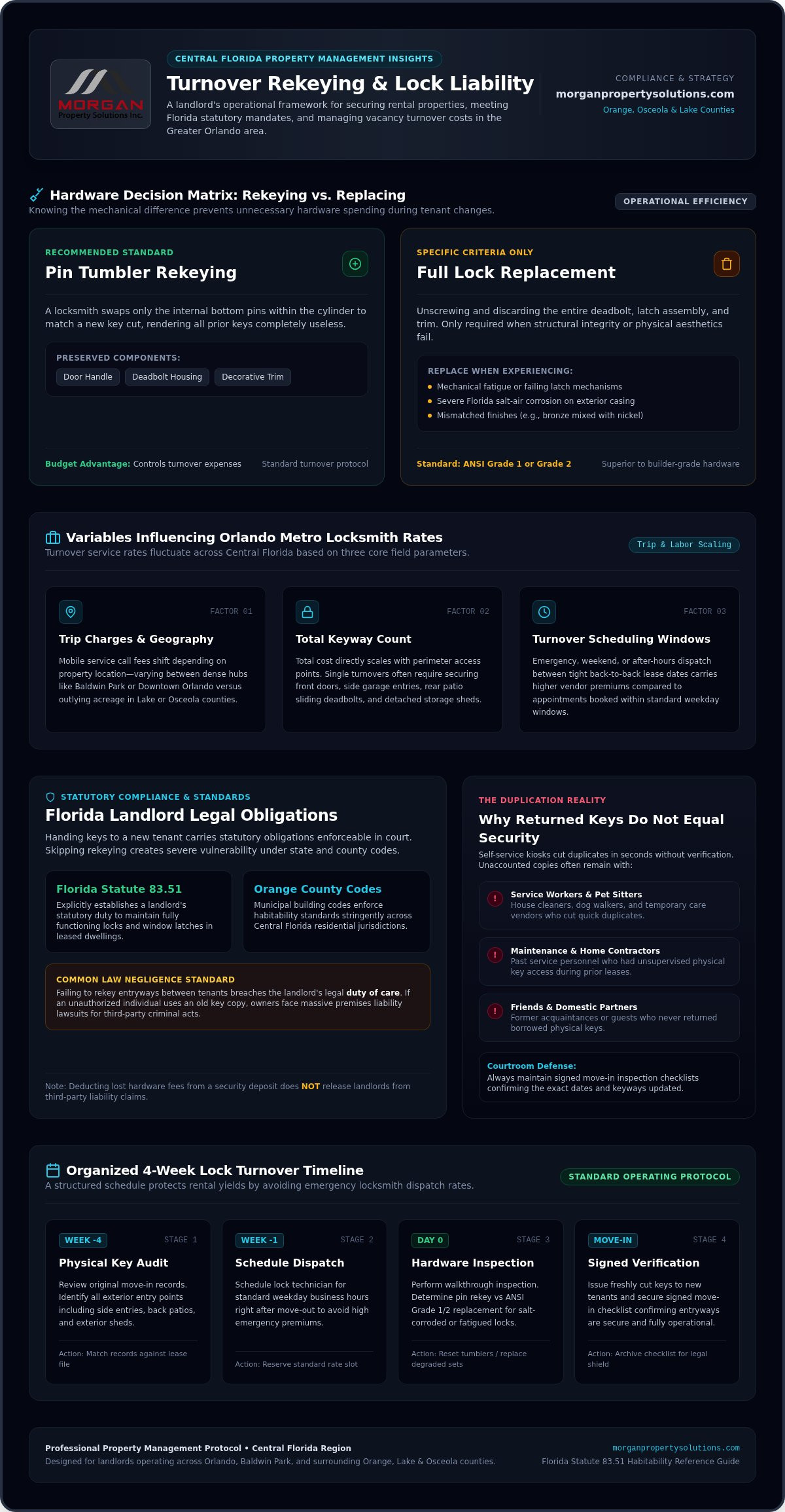
When preparing a home for a new resident, securing the perimeter is non-negotiable. Rekeying means an experienced technician alters the internal tumblers of the existing lock cylinder so previous keys cannot turn the plug. It lets you keep the handle, deadbolt housing, and decorative trim intact. Full replacement, by contrast, involves unscrewing and discarding the entire deadbolt and latch assembly. Knowing which route to take keeps your overall rental property turnover costs in Orlando under control.
Rekeying vs. Replacing: What Landlords Need to Know
Most exterior residential doors use a traditional pin tumbler lock mechanism. During turnover, a locksmith simply swaps the lower bottom pins to match a fresh cut key. You should only replace the full assembly when the hardware shows mechanical fatigue, severe salt-air corrosion, or mismatched bronze and nickel finishes. For replacements, choosing ANSI Grade 1 or Grade 2 deadbolts ensures superior resistance against forced entry compared to flimsy builder-grade locks.
Key Factors Influencing Locksmith Rates in Central Florida
Locksmith expenses fluctuate across the Orlando metro area depending on several practical variables:
- Trip charges: Mobile service call fees vary between dense neighborhoods like Baldwin Park or Downtown Orlando and outlying communities in Lake or Osceola counties.
- Total keyway count: Pricing scales with the number of exterior entry points, including front doors, side garage entries, rear patio deadbolts, and detached storage sheds.
- Turnover scheduling: Booking emergency or after-hours lock technicians between tight, back-to-back lease dates carries higher premiums than scheduling during standard weekday business windows.
Planning ahead makes all the difference. Balancing cylinder pin resets against full hardware replacements prevents budget creep and keeps rental property turnover costs Orlando owners experience predictable throughout every vacancy transition.
Florida Legal Requirements and Landlord Liability for Rental Locks
Handing over keys to an incoming resident carries legal responsibility that goes far beyond simple courtesy. Under Florida law, property owners must maintain functioning locks to ensure leased dwellings remain safe and habitable. Skipping this step during lease changes creates huge liabilities. If a prior resident, contractor, or unauthorized acquaintance uses an old copy to enter the home, you could face severe premises liability claims for negligence.
Florida Statutes and the Duty to Provide Secure Dwellings
Florida Statute 83.51 explicitly outlines a landlord’s statutory duty to maintain working locks and window latches. Municipal building codes across Orange County enforce these minimum habitability standards stringently. While the statute mandates functional hardware, common law negligence standards establish that failing to rekey when tenant possession changes is a breach of your duty of care. For an in-depth breakdown of these statutory duties, review our helpful guides in the Florida landlord tenant law collection.
The Hidden Financial Danger of Unauthorized Key Duplication
Even if an outgoing tenant returns every key issued at move-in, physical key recovery offers zero guarantee of security. Consider who else held those keys during the lease:
- Pet sitters, dog walkers, and house cleaners who made quick duplicate copies.
- Maintenance contractors or home service personnel who had unsupervised property access.
- Friends, family members, or former domestic partners who never returned borrowed sets.
Hardware store self-service kiosks cut standard keys in seconds without asking questions. When landlords research how much it costs to rekey against potential personal injury lawsuits, the math is undeniable. Retaining a small portion of a security deposit for lost hardware doesn’t shield you from third-party liability if someone uses an unreturned key to commit a crime inside your rental property.
Thorough documentation protects you if a dispute ever reaches an Orange County courtroom. Always keep signed move-in inspection checklists confirming the dates new keys were issued. If you prefer to have experienced professionals oversee property security and streamline your rental property turnover costs Orlando owners often handle alone, partnering with an experienced Orlando property management team ensures every transition strictly satisfies Florida habitability requirements.
Evaluating Lock Options: Traditional, Keyless, and Smart Locks
Every entryway hardware choice comes with a direct trade-off between upfront investment and recurring maintenance labor. Choosing the right lock configuration plays a major role in curbing rental property turnover costs Orlando landlords face year after year. Balancing initial hardware prices against long-term operational convenience helps you build an efficient turnover routine.
Traditional Rekeyable Locks: Kwikset SmartKey vs. Standard Cylinders
Standard pin-tumbler deadbolts offer proven physical durability and bump-key resistance, but they require professional servicing or manual bench disassembly during vacancy transitions. By contrast, Kwikset SmartKey deadbolts feature a patented sidebar mechanism that allows owners to rekey the cylinder in seconds using a small reset tool. While convenient for quick DIY updates, these specialty mechanisms contain intricate moving parts that can wear down under high-traffic use faster than heavy-duty commercial cylinders.
Keyless and Smart Lock Upgrades for Central Florida Rentals
Digital keypad deadbolts and smart locks remove physical brass keys from the turnover equation altogether. Instead of scheduling lock services between moves, you simply clear the keypad memory and program new entry codes. These systems streamline self-guided showings for prospective tenants and make it easy to issue temporary access codes for turnover vendors. Central Florida weather presents distinct challenges for electronics, however. Intense summer heat, high humidity, and afternoon lightning surges take a toll on battery life and circuit boards. Establishing a preventative battery replacement schedule ensures continuous compliance with Florida landlord-tenant law regarding reliable lock maintenance.
Selecting the Right System for Your Investment Strategy
Your hardware choice should match your asset type and resident demographic:
- Single-family homes vs. multi-unit portfolios: Individual rental homes benefit from simple keyless keypads to cut vendor trips, while larger multi-unit assets often run best on master-keyed mechanical systems.
- Tenant demographic preferences: Tech-focused professionals renting townhomes in Lake Nona frequently prioritize app-controlled keyless access, whereas renters in classic Winter Park or Windermere properties often prefer traditional high-grade architectural deadbolts.
- Master key flexibility: Installing cylinders compatible with a single master key allows routine property inspections without forcing you to carry dozens of separate key rings.
Aligning door hardware with your long-term management strategy protects your property value and keeps recurring rental property turnover costs Orlando investors handle entirely predictable.
Step-by-Step Turnover Lock Rekeying Checklist for Orlando Landlords
Managing turnover logistics requires clear timing so your property never sits unlocked or exposed. Creating a structured protocol about four weeks before a lease ends keeps you ahead of schedule and prevents last-minute scrambles. When you organize each transition step by step, you eliminate security blind spots while keeping rental property turnover costs Orlando owners encounter manageable and predictable.
Move-Out Walkthrough and Access Collection Protocol
The formal move-out inspection serves as your first line of defense. Take these vital steps while walking the property with the vacating resident:
- Audit every access device: Collect all primary keys, extra deadbolt duplicates, exterior gate clickers, mailbox keys, and garage door remotes noted on the original move-in inventory.
- Inspect physical strike plates: Check that jamb strike plates are securely fastened with three-inch screws reaching the structural wall studs, not loose or stripped.
- Check door alignment: Inspect whether weather-swollen Florida wood frames cause latches to bind or prevent deadbolts from extending fully into the door pocket.
Document any damaged handlesets or unreturned items immediately on your move-out condition report. For checklists and documentation templates, browse our practical landlord resources to prepare for tenant transition day.
Coordinating Locksmiths, Vendors, and Contractor Access
Once the resident moves out, rekey the property or switch the perimeter deadbolts within 24 hours. Securing the home immediately protects vacant appliances and finishes while painters, cleaners, and flooring crews get to work.
Avoid handing new master sets to independent repair crews. Instead, mount a temporary digital lockbox or assign unique contractor access codes to track entry throughout the make-ready phase. Once turn repairs are finished, perform your final cylinder rekey or code wipe before the incoming resident arrives. Test every latch bolt from both sides of the door to confirm smooth operation without binding against the strike plate.
When move-in morning arrives, hand over freshly cut, verified keys or send encrypted keypad codes directly to your new residents. Ready to take the friction out of lease transitions? Connect with our team for hands-on Orlando property management to streamline every vendor inspection, turnover repair, and lock change seamlessly.
How Professional Property Management Eliminates Turnover Hassles
Self-managing a rental across Central Florida often feels like an exhausting dispatch job. Chasing down locksmith quotes, driving across town to hand off physical keys, and juggling repair schedules steals valuable hours from your week. These administrative delays don’t just drain your energy; they extend vacancy periods and inflate rental property turnover costs Orlando landlords work hard to minimize. Professional management replaces that friction with structured, proven operational workflows.
Streamlined Vendor Networks and Cost Efficiencies
Independent owners who contact locksmiths on short notice often face steep retail emergency fees. Professional management companies maintain established trade relationships with licensed, insured locksmiths and hardware technicians across Orange, Seminole, Lake, and Osceola counties. Because of consistent job volume, these vetted partners provide reliable scheduling and fair, predictable rates without unexpected charges. Working with an experienced Orlando property management team keeps turn maintenance dependable while ensuring every technician stepping onto your property carries verified general liability insurance.
Comprehensive Turnover Management from Inspection to Placement
Hardware updates represent just one part of a successful lease transition. An experienced manager integrates lock security into a complete turnover protocol designed to protect your investment:
- Detailed inspections: Conducting video-documented move-out reviews to capture hardware wear and property condition before turn repairs begin.
- Synchronized vendor dispatch: Scheduling paint touch-ups, deep cleaning, and rekeying simultaneously to compress vacancy downtime.
- Chain-of-custody tracking: Documenting every key handover and digital code reset to maintain a clear security record for incoming residents.
- Prompt tenant onboarding: Coordinating swift move-in walk-throughs so new tenants receive access credentials without delay.
Choosing full-service residential property management turns unpredictable turnover stress into steady, passive returns. Instead of scrambling to replace deadbolts or chasing missing keys, you gain peace of mind knowing your property is safe, fully compliant, and ready for qualified residents. It’s the most reliable way to stabilize rental property turnover costs Orlando real estate investors navigate year after year.
Take Control of Your Turnover Strategy Today
Rekeying between residents is more than just another maintenance chore; it is an essential safeguard for your asset, your incoming tenants, and your legal compliance under Florida law. By selecting the right hardware, conducting disciplined move-out key audits, and avoiding reactive contractor scheduling, you keep your property secure while protecting your bottom line.
Managing rental property turnover costs Orlando landlords navigate doesn’t have to mean constant friction or late-night locksmith emergencies. With over 20 years of combined Central Florida real estate experience, our team coordinates trusted local vendor networks across Orange, Seminole, Lake, and Osceola counties. From detailed turnover inspections to transparent owner portal accounting, we handle every transition step so you don’t have to juggle maintenance alone. Connect with Morgan Property Solutions Inc. to simplify your turnover process and protect your investment. Here’s to smooth, stress-free turnovers and predictable passive returns for years to come.
Frequently Asked Questions
Is an Orlando landlord legally required to rekey locks between tenants?
While Florida Statute 83.51 requires landlords to provide functioning locks and keys, state law doesn’t explicitly mention the word “rekey” after every lease. However, local housing codes and common law negligence create a strict duty of care. Failing to reset cylinders leaves you vulnerable to massive premises liability claims if an unauthorized prior key holder enters. Rekeying between every resident is standard operating procedure across Central Florida.
Can landlords deduct the cost of rekeying locks from a tenant security deposit in Florida?
Generally, no. In Florida, rekeying is legally viewed as normal turnover maintenance and an ordinary cost of doing business. You cannot charge the outgoing resident unless they breached the lease by failing to return issued keys or damaging the locking mechanism. Factoring these predictable updates into your general rental property turnover costs Orlando budget ensures you remain compliant with Florida security deposit accounting rules.
How much does a locksmith charge to rekey a single residential deadbolt in Orlando?
Local mobile locksmiths in Central Florida typically charge between $20 and $60 per cylinder pin reset, accompanied by a standard service call fee ranging from $30 to $150. Total pricing depends heavily on travel distance to suburbs like Clermont or Winter Garden, after-hours dispatch requirements, and hardware grade. Bundling several locks across your property during a scheduled weekday visit always lowers your per-cylinder rate.
Is it better to rekey existing deadbolts or replace the entire lockset?
Rekeying is usually the better financial move. It neutralizes old keys by resetting internal tumblers while preserving sound handlesets and exterior trim, costing significantly less than full replacement. You only need a complete lockset replacement if the hardware is mechanically compromised, physically damaged, severely corroded by Central Florida moisture, or mismatched across entry doors. Preserving functional deadbolts keeps ongoing turnover maintenance expenses under control.
Can a landlord rekey locks themselves using hardware store kits?
Yes, DIY rekeying kits are readily available at local home improvement stores, but they carry distinct risks. Disassembling pin tumblers requires patience, precision, and the correct plug follower tools. Dropping top pins or misaligning springs can permanently seize the cylinder, forcing an emergency hardware replacement. If you prefer handling locks yourself, installing Kwikset SmartKey hardware or digital keypads is far simpler and prevents accidental mechanical lockouts.
Are smart locks a practical choice for Central Florida rental properties?
Yes, especially if you manage single-family rentals or townhomes in tech-forward hubs like Lake Nona or Baldwin Park. Digital deadbolts let you clear old access codes instantly without buying new keys, which simplifies rental property turnover costs Orlando investors track. Just remember that Central Florida’s intense humidity and summer heat can drain batteries rapidly. Establish a strict six-month alkaline battery replacement schedule to ensure smooth operation.
What should a landlord do if a departing tenant refuses to return their keys?
Never confront the tenant or attempt an illegal lockout. Document the missing keys immediately on the move-out inspection report and rekey or replace the deadbolts within 24 hours. Under Florida lease agreements, you can typically deduct the actual hardware and rekeying expense directly from their security deposit for unreturned items. Prompt action protects incoming tenants while securing your Orange or Seminole County property against unauthorized access.

Article by
Oliver Overton-Morgan
Oliver Overton-Morgan is a full-time Real Estate Broker since 2003, with years of experience helping thousands of people purchase and sell real estate throughout Central Florida. He holds a Graduate Realtor Institute designation, LCAM, and has held licenses in good standing as a Florida Mortgage Broker and a Notary Public. Oliver immigrated to central Florida in 2001, and within 5 years Oliver built a successful Real Estate brokerage in central Florida, where he recruited over 75 Sales Associates with 25+ million in sales production.