
An unauthorized pet can raise real concerns about lease terms, property damage, and other residents’ comfort. But a rushed response can make a manageable issue harder to resolve. If you’re searching for how to handle unauthorized pets in a rental florida, start with the lease and the facts, not an assumption about why the animal is there.
It’s reasonable to want a clear, consistent way to enforce rental rules. At the same time, an animal may be part of a disability-related accommodation request, which needs to be considered differently from an unauthorized pet. This guide explains how to review the lease, document what you’ve observed, communicate calmly with the tenant, and check the appropriate Florida notice process. You’ll also learn what to keep in mind when an assistance-animal request comes up and when property management support may help keep tenant communication and records organized. For owners in Orlando and Central Florida, a step-by-step approach can make the next move clearer while helping protect fair treatment for everyone involved.
Key Takeaways
- Before responding, compare the situation with the lease, signed addenda, and any written pet approvals.
- To understand how to handle unauthorized pets in a rental florida, first distinguish an unapproved pet from an assistance-animal accommodation request.
- Use a steady process: review records, speak with the tenant, document the response, and decide on next steps based on the facts.
- Check current requirements before serving a formal notice, since the correct process can depend on the circumstances and applicable law.
- For Orlando and Central Florida owners, professional property management can help keep tenant communication and property records organized.
How to Handle an Unauthorized Pet in a Florida Rental: Start With the Lease
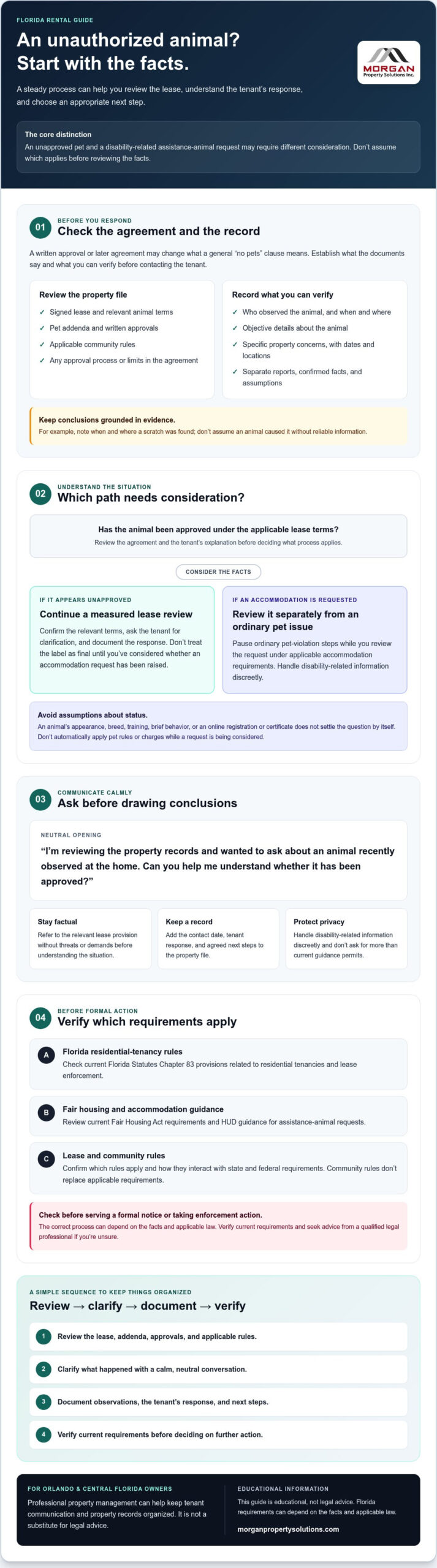
Before confronting a tenant or asking them to remove an animal, pause and check the lease and the facts. The animal may have been approved in writing, or the records may not tell the whole story. This first step is central to how to handle unauthorized pets in a rental florida: establish what the agreement says and what you can verify before deciding how to respond.
Review the signed lease, any pet addenda, written approvals, and relevant community rules. Check the specific terms that apply to animals, including any approval process or limits. A general “no pets” clause may not answer every question if a later written agreement changed the arrangement. Keep these documents together in the property file so you can refer to the same record throughout the discussion.
What should a landlord check before contacting a tenant?
Separate firsthand information from assumptions. Confirm who observed the animal, when and where it was seen, and what they actually noticed. Record objective details, such as the animal’s general description and dates of observation. If a neighbor reports noise or damage, note it as a report, not a verified fact, until you can confirm it.
Keep any documented property concerns specific. For example, record the date a scratch was noticed and where it appeared, rather than assuming an animal caused it. Avoid conclusions about breed, behavior, or responsibility unless you have reliable information to support them.
- Gather the lease, addenda, approvals, and applicable community rules.
- Note the observation date, source, and animal details you can verify.
- Keep complaints, confirmed facts, and assumptions clearly separate.
How can a first conversation stay constructive?
Use a neutral opening that invites clarification: “I’m reviewing the property records and wanted to ask about an animal recently observed at the home. Can you help me understand whether it has been approved?” If appropriate, refer to the relevant lease provision without making threats or demanding immediate removal before you understand the situation.
An animal may also be connected to a disability-related accommodation request, which should not be treated as an ordinary pet matter. The federal Fair Housing Act is relevant to housing accommodations, so review current requirements before deciding how to proceed.
After the conversation, add the contact date, the tenant’s response, and any agreed next steps to the property file. A clear record helps keep communication consistent if questions come up later. This guide is educational, not legal advice. Florida requirements can depend on the facts and applicable law, so verify them before serving a formal notice or taking enforcement action.
Florida Rental Pet Rules: Distinguish an Unauthorized Pet From an Accommodation
An unauthorized pet is an animal that hasn’t been approved under the lease terms that apply to the rental. But don’t treat that label as the final answer until you’ve considered whether the tenant is requesting an assistance-animal accommodation. The animal’s appearance, a brief explanation, or a document found online doesn’t establish its status by itself. Review the situation carefully to determine which process applies before taking further steps.
How does an assistance-animal request change the response?
If a tenant says an animal is connected to a disability-related need, pause ordinary pet-violation steps while you review the request under applicable accommodation requirements. Assistance animals are not handled as ordinary pets, so don’t automatically apply pet rules or charges while the request is being considered. Handle any disability-related information discreetly, and don’t ask for more than current guidance permits.
Keep the review focused on the request and the information you’re permitted to consider. Don’t assume an animal qualifies or doesn’t qualify based on its breed, training, or behavior during a brief encounter. Likewise, an online registration or certificate shouldn’t be treated as conclusive on its own. For practical direction, consult HUD guidance on assistance animals and verify how current requirements apply to the facts.
Which Florida and federal rules should landlords verify?
Before deciding whether a lease violation exists or what action is appropriate, check current Florida Statutes Chapter 83 provisions that relate to residential tenancies and lease enforcement. Also review current Fair Housing Act requirements and HUD guidance for assistance-animal requests. Rules and guidance can change, and the right response may depend on the specific lease and circumstances.
Community rules may also affect the property, but don’t assume they replace or override applicable state or federal requirements. Confirm which rules apply and how they interact with the lease before communicating a final decision. If you’re unsure, seek advice from a qualified legal professional. Property management support can help owners in Orlando and Central Florida keep tenant communication and records organized, but it isn’t a substitute for legal advice. Learn more about Orlando property management if you’re considering professional support.
Keeping these questions separate makes how to handle unauthorized pets in a rental florida clearer: first determine whether you’re dealing with an unapproved pet, an accommodation request, or a situation that needs more information. Then confirm the applicable requirements before choosing the next step.
How to Handle Unauthorized Pets Without Escalation
A steady response gives you time to understand what’s happening before deciding whether formal action is needed. Review your records, contact the tenant, consider their explanation, document the exchange, and choose next steps based on the facts. That sequence can keep how to handle unauthorized pets in a rental florida focused on consistent lease administration rather than a rushed confrontation.
Apply the same lease terms to comparable situations, but don’t assume every animal-related concern is the same. An accommodation request calls for an individual review. A confirmed property concern, such as documented damage, should be recorded separately from an unverified complaint about noise or safety. Keeping these issues distinct helps you avoid treating an allegation as proof or using a pet-policy concern to stand in for a separate issue.
What should a written notice or follow-up include?
Keep written communication factual and specific. Identify the lease provision you’re referring to, describe what was observed, and explain what clarification or response you’re requesting. Avoid language that assumes the tenant is responsible for damage, or sets a legal deadline you haven’t verified.
Save a copy of the message or notice, records showing how it was delivered, the tenant’s response, and any related documentation. A complete file makes it easier to understand what was communicated and when.
When should a landlord seek legal guidance?
Get advice from a qualified Florida attorney before termination, eviction action, disputed charges, or other formal enforcement. Prompt guidance is also sensible if accommodation status is unclear, safety concerns are serious, or lease documents conflict. Don’t use self-help measures such as changing locks, removing an animal, or taking possession outside a lawful process.
For broader context, review Florida landlord resources alongside Florida’s official landlord-tenant statutes. Confirm the current requirements and how they apply to your situation before serving formal documents. This article is educational, not legal advice.
A Florida Landlord’s Step-by-Step Plan for Resolving an Unauthorized-Pet Issue
A simple process can help you move from an initial concern to a clear, documented outcome without rushing to formal enforcement. For owners wondering how to handle unauthorized pets in a rental florida, use the steps below as a practical starting point. The right response still depends on the lease, the tenant’s explanation, and applicable requirements.
- Review the records. Check the current lease, pet addenda, written approvals, and any relevant community rules.
- Confirm what happened. Note who observed the animal, when, and which details are firsthand rather than assumed.
- Contact the tenant. Ask for clarification in neutral language and refer to the relevant lease term without jumping to conclusions.
- Review any accommodation request. If the tenant raises a disability-related need, consider it through the applicable accommodation process instead of treating it as an ordinary pet issue.
- Document the outcome. Save the communication, response, relevant observations, and next steps in the property file.
Formal notices and deadlines depend on the circumstances and applicable law. Verify current requirements before serving anything, and get qualified legal guidance if you’re unsure which process applies. This checklist is a way to organize your response, not a substitute for legal advice.
What records should an owner keep throughout the process?
Keep the lease, addenda, written approvals, dated observations, tenant messages, and any notices together in a consistent property-file system. Record what was observed and by whom, and preserve copies of relevant communications. Store sensitive accommodation materials separately, with access limited to people who need them. A clear record helps you explain what information informed your decisions and how the issue was resolved.
How can owners reduce repeat pet-policy problems?
Make pet rules, approval steps, and reporting expectations clear during leasing and renewal. Apply screening and documentation practices consistently, while keeping assistance-animal requests separate from ordinary pet procedures. Owners in Orlando and across Central Florida may also consider professional property management if keeping up with tenant communication and records is difficult. Morgan Property Solutions Inc. provides residential property management in the region, with an online owner portal, detailed inspections, and financial reporting. Explore the related landlord resources for additional rental guidance.
If consistent follow-through is becoming hard to manage, learn about residential property management support for Orlando and Central Florida rental owners.
When Central Florida Property Management Can Help With Pet-Policy Enforcement
Managing a rental yourself gives you direct control, but it also means you’re responsible for tracking tenant messages, inspections, approvals, and follow-up. Software can help organize reminders or files, though it won’t make decisions or communicate with tenants for you. Professional property management adds hands-on support with routine rental responsibilities. The right fit depends on how much time you have, how close you are to the property, and how comfortable you feel managing tenant conversations.
That support can make the steps involved in how to handle unauthorized pets in a rental florida easier to keep organized. Inspections may help maintain a record of property conditions, while organized files and consistent communication can help owners follow an issue from the initial question through resolution. These practices support routine management, but they can’t guarantee a particular outcome in a pet dispute.
What can professional property management take off an owner’s plate?
Morgan Property Solutions Inc. provides residential property management in Orlando and Central Florida. Its management services include an online owner portal, online payments, detailed inspections, and financial reporting to help reduce the administrative work of managing a rental. Owners looking for local support can review Orlando property management services to understand the company’s offering.
The company also serves owners in Orlando, Winter Park, Lake Nona, Clermont, Oveido, Windermere, Winter Garden, Apopka, Wedgefield, and Hunters Creek. A property manager isn’t a lawyer. If a situation raises a complex question about an accommodation request, lease enforcement, or formal legal action, consult a qualified attorney. Management support can help with rental operations and organized communication, but it doesn’t replace legal counsel.
How can an owner decide whether to get management support?
Consider how often you’re available to respond to tenant questions, whether you live near the rental, and how reliably you can maintain records and follow up. If these tasks are already difficult to keep up with, or you’d prefer support with ongoing rental responsibilities, it may be worth exploring professional residential property management as an option.
There’s no single approach that suits every owner. Self-management may work well if you have the time and a dependable recordkeeping routine. Software can support organization, while a management company may offer more direct help with tenant communication and property oversight. Orlando-area owners who want to discuss their rental needs can review their situation with Morgan Property Solutions Inc. and see whether professional management may be a practical fit.
Take a Calm, Consistent Approach to Pet Concerns
Handling an animal concern starts with the lease and verified facts. Keep communication neutral, document each step, and distinguish an unapproved pet from a disability-related accommodation request. Before serving a formal notice or taking enforcement action, confirm the current requirements for the specific situation.
If keeping up with tenant communication and rental records feels difficult, professional management may help make those responsibilities more manageable. Morgan Property Solutions Inc. provides residential property management in Central Florida, supported by more than 20 years of combined experience. Services include an online owner portal, online payments, detailed inspections, and financial reporting.
Explore residential property management support in Central Florida and consider what fits your rental and your needs. Contact Morgan Property Solutions Inc. to discuss whether its property management services could support your rental responsibilities.
Frequently Asked Questions
Can a landlord evict a tenant for an unauthorized pet in Florida?
An unauthorized pet may be grounds for lease enforcement, but a landlord can’t simply remove the tenant or change the locks. Florida’s process generally calls for a 7-Day Notice to Cure for a curable violation, giving the tenant time to address it or vacate. Whether that notice applies depends on the lease and circumstances. Confirm current requirements and get legal advice before serving notice or starting an eviction case.
How should a Florida landlord notify a tenant about an unauthorized pet?
Start with a calm written message that identifies the relevant lease term, describes what you observed, and asks the tenant to clarify or respond. Keep a copy and record when and how it was delivered. If you plan to take formal action, verify the correct notice and deadline for the situation under current Florida law. Don’t treat an informal message as a substitute for a legally required notice.
Does a Florida landlord have to allow an emotional support animal?
A landlord may need to provide a reasonable accommodation for an emotional support animal when the request meets applicable fair housing requirements. It shouldn’t be treated as an ordinary pet request or denied simply because the lease restricts pets. The facts matter, and permitted questions or documentation depend on the circumstances. Review current Fair Housing Act and Florida requirements before deciding, especially if the request is disputed or unclear.
Can a landlord charge a pet fee for an assistance animal in Florida?
Generally, a landlord can’t charge pet fees, pet rent, or a pet deposit for an assistance animal approved as a disability-related accommodation. These charges apply to pets, not qualifying assistance animals. Don’t apply a pet charge automatically when a tenant makes an accommodation request. Review the request under current fair housing requirements and seek qualified guidance if you’re unsure how they apply to the situation.
What evidence should a landlord keep about an unauthorized pet?
Keep the signed lease, pet addenda, written approvals, dated observations, tenant communications, and copies of any notices. Note who observed the animal and what they personally saw. Keep verified facts separate from neighbor reports or assumptions, and document any specific property concern with dates and details. Store disability-related accommodation information separately and limit access. A consistent property file can help explain how you reached a decision.
Can a landlord enter a rental to confirm whether a tenant has a pet?
Don’t enter a rental simply to check for an animal without first confirming that the entry is permitted. Review the lease and current Florida requirements for landlord access, including any applicable notice, purpose, or consent rules. If there’s a concern, ask the tenant for clarification and arrange access through the appropriate process. Avoid entering without permission or a lawful basis, and seek legal guidance if the rules are unclear.
What should a landlord do if an unauthorized pet causes damage?
Document the damage promptly with dated notes and clear photos, and keep relevant inspection records and tenant communications. Don’t assume the animal caused the damage until the facts support that conclusion. Notify the tenant in neutral terms and review the lease and applicable Florida requirements before seeking payment or making a deposit claim. For owners in Orlando, Winter Park, Lake Nona, Clermont, Oviedo, and nearby Central Florida communities, consistent records can help keep the response organized.

Article by
Oliver Overton-Morgan
Oliver Overton-Morgan is a full-time Real Estate Broker since 2003, with years of experience helping thousands of people purchase and sell real estate throughout Central Florida. He holds a Graduate Realtor Institute designation, LCAM, and has held licenses in good standing as a Florida Mortgage Broker and a Notary Public. Oliver immigrated to central Florida in 2001, and within 5 years Oliver built a successful Real Estate brokerage in central Florida, where he recruited over 75 Sales Associates with 25+ million in sales production.