
Could a cosigner help you qualify for a Florida rental, and what responsibility might that person take on? The cosigner requirements for florida rental lease applications can vary by landlord and property, so there isn’t one universal qualification checklist. Before asking someone to support your application, get clear on what the property requires and what the cosigner would be agreeing to.
A cosigner may add financial support to an application, but the written lease or a separate agreement determines the responsibilities they accept. Before anyone signs, review what documents may be requested, how the person’s role is described, and what the agreement says could happen if rent or other charges go unpaid.
This guide explains why a landlord may request a cosigner, what to review before signing, and how to prepare a complete, accurate application. Morgan Property Solutions Inc. manages residential rentals in Central Florida, including in Orlando, Winter Park, Lake Nona, Clermont, Oveido, Windermere, Winter Garden, Apopka, Wedgefield, and Hunters Creek. Its process includes a full application for each adult applicant and leases written by Florida eviction attorneys. Knowing what to expect can help renters and potential cosigners approach the process with greater confidence.
Key Takeaways
- Cosigner standards are set by individual landlords and may differ between properties, so read the screening criteria for the rental you’re applying to.
- For cosigner requirements for florida rental lease applications, be prepared to discuss what identity, income, or screening information the property requests.
- Cosigner and guarantor can be used differently in rental documents. Compare who signs and where the obligations are written before anyone agrees.
- Help a potential cosigner prepare by discussing consent, gathering requested paperwork, and reviewing the lease terms together.
- A complete application and clear lease documents make it easier to understand what each person is agreeing to.
Why might a Florida landlord ask for a cosigner?
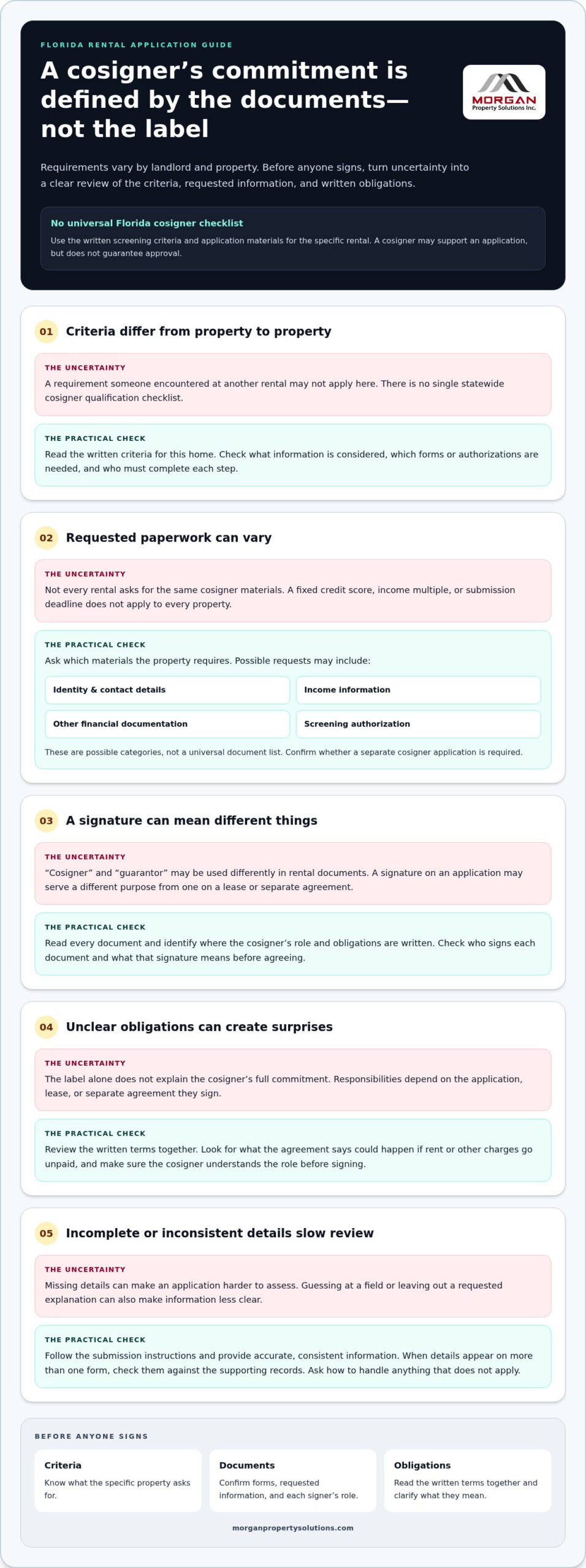
A cosigner can provide financial support for a rental application, but having one does not guarantee approval or create the same arrangement at every property. A rental cosigner is someone who agrees in writing to support a renter’s obligations under the documents they sign. Their exact responsibility depends on the application, lease, or separate agreement. The label alone does not explain the full commitment.
For renters, the key questions are what the landlord’s screening criteria require and what the cosigner would be agreeing to. The cosigner requirements for florida rental lease applications can vary by property and landlord. Review the written criteria for the specific home rather than relying on someone else’s experience with a different rental.
What does a cosigner do on a rental application?
A cosigner may support an applicant who does not meet a landlord’s stated criteria on their own. The landlord may review the cosigner’s application information as part of the screening process, but adding a cosigner does not guarantee approval. The decision may depend on the full application and the property’s criteria.
Before signing, the cosigner should read every document and identify where their obligations are described. A signature on an application may serve a different purpose from a signature on a lease or separate agreement. The property’s screening criteria and the documents themselves can help clarify which information is considered and what the signature means.
Why might a renter need additional application support?
A landlord may have limited information to assess, such as little rental history or income that is difficult to document. These circumstances do not automatically mean an applicant will be denied. A cosigner may provide additional information for the landlord to consider under the property’s process.
For example, someone renting for the first time may not have prior landlord references. Another applicant may have recently changed jobs and need to provide records that clearly show current income. The landlord decides what information is relevant under the stated criteria. There is no universal Florida income or credit threshold for cosigners.
Landlords may also consider whether the application is complete and whether the information can be verified. Missing details can make an application harder to assess, so provide requested documents accurately and follow the submission instructions. If a cosigner is being considered, discuss the request early and make sure that person understands they may need to complete application steps too.
As you compare homes, consider the application process alongside location, rent, and lease terms. Morgan Property Solutions Inc. processes a full application for each adult applicant as part of its Orlando property management work. A clear application process helps renters understand what information is being reviewed, while the written documents show what each signer agrees to.
What requirements might a Florida rental cosigner need to meet?
There is no single statewide checklist that every rental cosigner must satisfy. Common screening considerations are landlord-set practices, not a mandatory Florida qualification standard. A landlord or property manager may use written criteria to assess a cosigner, and the details can differ between properties. Get the application instructions for the specific home instead of assuming that a requirement you heard about elsewhere applies.
The Florida Senate’s Florida Landlord-Tenant Law resource provides the statutory framework for residential tenancies. Details about cosigner screening, however, should be understood from the property’s application materials and the documents the cosigner is asked to sign.
What information may a cosigner be asked to provide?
Depending on the property’s process, a cosigner may be asked for identifying and contact details, income information, or other financial documentation. The landlord may also request authorization for screening. These are possible application categories, not a universal list of required documents. No particular credit score, income multiple, or submission deadline applies to every rental.
Before starting an application, find out which materials and authorization forms are needed, how to submit them, and whether the cosigner completes a separate application. Keep all information accurate and consistent. For example, if income details appear on both the renter’s and cosigner’s forms, check that the figures match the supporting records. Don’t guess at a field or omit a requested explanation. Follow the application instructions if something does not apply.
How do screening criteria shape cosigner eligibility?
Read the written criteria as the standards for that property, not as rules for every Florida rental. Criteria may describe how applications are reviewed, which information is considered, or what authorizations are needed. If the cosigner process is unclear, get clarification about which application materials and forms apply before submitting anything. That helps both people prepare the right information without relying on assumptions.
Morgan Property Solutions Inc. processes a full application for each adult applicant and screens tenants in a process intended to comply with Fair Housing laws. Read the criteria for the specific property on their own terms. Do not assume they establish a separate cosigner threshold unless they say so.
In practice, the cosigner requirements for florida rental lease process is best approached as a document-and-criteria check: identify what the property asks for, confirm who must complete each form, and submit complete, truthful information. This makes the process clearer for the renter and potential cosigner and helps the landlord review the application consistently.
Clear applications are one part of organized rental management. Morgan Property Solutions Inc. manages residential properties in Central Florida. To learn more about its approach to rental homes and property oversight, visit Morgan Property Solutions Inc..
Cosigner vs. guarantor: what should renters compare?
People sometimes use “cosigner” and “guarantor” as if they mean the same thing. Rental documents may use the terms differently, and the arrangement can vary by landlord. Experian’s Cosigner vs. Guarantor overview describes common distinctions. For a particular lease, rely on the signed documents rather than a label or general description.
To compare the roles, identify who is signing, which documents they will sign, and where the agreement sets out their responsibilities. The paperwork may also explain whether the person has a right to occupy the home. Do not assume the title alone answers these questions.
| Point to compare | Cosigner | Guarantor |
|---|---|---|
| Role as commonly described | May support the rental application and sign lease documents | May promise financial backing under a separate agreement |
| Signing status | May sign the lease, depending on the documents | May sign a separate guaranty, depending on the arrangement |
| Where obligations appear | Lease or other signed application documents | Separate agreement or other signed documents |
This table describes common usage, not a fixed Florida legal distinction. The actual paperwork may use these terms differently or set out another arrangement.
Does a cosigner sign the lease?
There is no single signing setup for every Florida rental. A person described as a cosigner may be asked to sign the lease, an application, or another document. Another arrangement may use a separate agreement. Before anyone signs, list the documents the property requires and read the signature lines and attached terms. This helps clarify the person’s role before they commit.
What financial responsibility could the agreement create?
Read the clauses that explain which charges may be covered, how long responsibility lasts, and what happens after a default. Look closely at rent, fees, damage-related charges, renewals, and any process for release from the commitment. Do not assume a cosigner is responsible only for a particular roommate’s share unless the signed language clearly says so. For a specific legal interpretation, consult a qualified Florida attorney.
A cosigner should understand the full agreement, not just the renter’s explanation of it. If a renewal or extension is offered later, review the new documents rather than assuming the original commitment ends or continues automatically. Get unclear terms clarified in writing before signing. Questions about the legal meaning of a clause are best directed to an attorney.
For cosigner requirements for florida rental lease arrangements, focus on the signed wording: names, covered obligations, duration, and any release or renewal provisions. Morgan Property Solutions Inc. uses leases written by Florida eviction attorneys as part of its Central Florida property management process. Explore Morgan Property Solutions Inc.’s rental property management to learn more about its approach.
How can renters prepare a cosigner for a Florida lease application?
Coordinating before applying can make the process clearer for everyone. Review the property’s written instructions together, agree on how to handle sensitive information, and leave time to read the final documents carefully. Preparation can help prevent missing paperwork, but a cosigner does not guarantee approval or change the property’s stated screening criteria.
Use this sequence to get organized:
- Review the criteria. Read the property’s application materials and note what they say about cosigners, supporting documents, and screening authorization.
- Discuss consent. Make sure the potential cosigner understands the request and agrees to provide information or authorize screening before an application is submitted.
- Prepare the documents. Gather the materials the property requests, and check that both applications contain accurate, consistent details.
- Read before signing. Review the lease and any related agreement together, including the terms that explain the cosigner’s commitment.
Use the property’s materials to confirm application timing and submission instructions. If they do not explain when or how the cosigner should apply, clarify the process before sending personal information. Do not rely on another renter’s timeline; each property may have its own process.
What should the renter and cosigner discuss first?
Talk through the possible length and scope of the commitment using the actual application and lease language, not a verbal summary. Agree on which documents can be shared, how both people will keep application information accurate, and how they will communicate if the property requests follow-up during screening. If either person does not understand a contractual term, consider getting independent advice from a qualified Florida attorney before signing.
What should they review before signing?
Check that the documents identify the right parties and clearly state payment duties, the lease term, renewal language, and any release conditions. Compare the final lease with the application and the property’s written screening criteria. If a term differs from what the renter or cosigner expected, pause and request clarification in writing before signing. Florida’s landlord-tenant statutes offer broader state context, but they are not a substitute for advice about a particular agreement.
Morgan Property Solutions Inc. processes a full application for each adult applicant as part of its Central Florida rental process. Follow the specific property’s instructions to understand whether and how a potential cosigner completes an application. A complete submission supports an organized review, but it does not promise a particular outcome.
Careful preparation can make the cosigner requirements for florida rental lease process easier to follow, especially when both people understand the documents before signing. For information about professional property management in the area, explore Morgan Property Solutions Inc.’s Central Florida property management.
What should renters do next when a Florida lease requires a cosigner?
Once a property says a cosigner is needed, focus on the next practical steps: understand the application process, provide the requested information, and keep a copy of the final paperwork. Take time to review each document. Careful reading helps the renter and cosigner understand what has been submitted and what still needs attention.
Before sending an application, confirm the timing and submission instructions in the property materials. Then work through this checklist:
- Match the application to the instructions. Check that each requested form is complete and that the renter and cosigner have provided consistent, accurate information.
- Keep a record. Save copies of submitted applications, supporting documents, and written communication about the process.
- Review the final lease. Make sure the document is complete, the names and dates are correct, and the terms reflect what the parties understood before signing.
- Save the signed version. Keep a copy of the final lease and any related agreements where everyone can find them later.
These steps help keep the process organized, but they do not guarantee approval or determine how quickly a property will respond. The landlord or property manager reviews the application under the applicable screening process.
When can a renter proceed with the application?
Proceed when the renter and cosigner understand which documents are requested, how to submit them, and which forms require authorization. If an instruction is unclear, resolve the question before sharing sensitive information. Each person should check their details for errors and keep copies of what they submit. When the final lease is ready, review it before signing and retain the completed copy.
How can professional leasing support reduce uncertainty?
Clear application steps and consistent screening help renters understand what information is being reviewed, although they cannot promise a particular outcome. Morgan Property Solutions Inc.’s Central Florida residential property management process includes full applications for adult applicants and tenant screening intended to comply with Fair Housing laws. Its leases are written by Florida eviction attorneys, giving renters a clear document to review before signing.
For renters, the main takeaway is simple: use the property’s written instructions, keep your records, and make sure everyone understands the final documents. That preparation can make the cosigner requirements for florida rental lease process easier to follow without assuming a cosigner changes the property’s screening standards.
If you’re exploring rentals or property management in Central Florida, learn more about Central Florida rental and property services from Morgan Property Solutions Inc.
Move forward with a clear plan
Before taking the next step, have an open conversation with the person supporting your application. Set expectations about sharing documents, responding to property requests, and keeping one another informed. A calm, practical discussion can help protect your relationship and keep the rental process organized.
The cosigner requirements for florida rental lease applications may vary, so focus on the specific property’s instructions and the written terms in front of you. If anything is unclear, pause before signing and seek appropriate guidance. Do not guess your way through the paperwork.
Morgan Property Solutions Inc. serves renters and property owners across Central Florida. Explore rental and property management services in Central Florida to learn more about its residential leasing and property management. With careful preparation and clear communication, you and your cosigner can take the next step with greater confidence.
Frequently Asked Questions
Is a cosigner required to rent a home in Florida?
No. Florida renters are not universally required to provide a cosigner. A landlord may request additional support if an application does not meet that property’s stated screening criteria, but practices vary. For example, an Orlando renter should rely on the instructions for the specific home, not assume another Central Florida property follows the same process. Having a cosigner also does not guarantee approval.
Can a cosigner live in the rental property?
Possibly, but do not assume that signing as a cosigner also makes someone an approved resident. The lease and application should identify who is allowed to live in the home and who is signing in another capacity. If the cosigner hopes to move in, make that clear before the documents are prepared. The property may need to review that person as an adult applicant or occupant.
What does a cosigner need to qualify for a Florida rental?
There is no single statewide qualification threshold for rental cosigners. A property may set its own criteria and request information to assess the application, such as proof of income or authorization for screening. The person may need to provide details through the property’s application process. Before applying, find out which materials are requested and make sure documents clearly support the information provided.
Does a cosigner have to sign the Florida rental lease?
Not always. The required signatures depend on the documents and arrangement used for that rental. A cosigner might be asked to sign the lease, an application, or a separate agreement. Check the signature lines and attached documents before signing so everyone knows which paperwork creates a commitment. If the person’s role is not clear from the documents, request clarification in writing.
What happens if the tenant does not pay rent?
The consequences for a cosigner depend on the signed documents and applicable law. The agreement may explain whether the cosigner has responsibility for unpaid rent or other charges and how the landlord may respond to a default. Do not rely on a verbal summary to understand possible exposure. Review the relevant terms, keep records of rent payments and notices, and seek advice from a qualified Florida attorney if needed.
Can a renter use a cosigner if they have limited rental history?
Yes, a renter can ask whether the property will consider a cosigner, but acceptance is not guaranteed. Limited rental history may mean fewer landlord references are available, so explain your housing history accurately. For example, someone who previously lived with family can state that clearly rather than present it as a prior lease. Follow the property’s instructions for any additional supporting information.
Can a cosigner be released from a Florida lease later?
Possibly, but do not assume a cosigner is released automatically when the tenant pays rent on time, moves out, or reaches the end of the initial lease term. Check the agreement for its duration, renewal terms, and any release process. If the documents do not explain how release works, get written clarification before signing. A qualified Florida attorney can help interpret unclear contractual language.

Article by
Oliver Overton-Morgan
Oliver Overton-Morgan is a full-time Real Estate Broker since 2003, with years of experience helping thousands of people purchase and sell real estate throughout Central Florida. He holds a Graduate Realtor Institute designation, LCAM, and has held licenses in good standing as a Florida Mortgage Broker and a Notary Public. Oliver immigrated to central Florida in 2001, and within 5 years Oliver built a successful Real Estate brokerage in central Florida, where he recruited over 75 Sales Associates with 25+ million in sales production.