Managing landlord stress over tenant damages starts with distinguishing damage beyond normal wear and tear from the minor deterioration of responsible everyday use. The lease and a clear record of the property’s condition can help establish responsibility and identify needed repairs, giving you a steadier basis for deciding what to do next.
Finding damage can be frustrating, especially when you’re unsure when it occurred or how to discuss it with the tenant. A measured process makes the situation easier to handle and can keep a disagreement from becoming more stressful than necessary.
This guide explains how to identify tenant-caused damage, clarify responsibilities, and document the property with inventories, photos, videos, and inspection notes. You’ll also find practical ways to discuss repairs, organize records, and reduce the worry that can accompany a damage dispute.
Key Takeaways
- Use the lease and a signed move-in condition record to help clarify responsibility when damage is found.
- Separate tenant-caused damage from normal wear and tear before deciding how to address repair costs.
- Set clear expectations through tenant screening, lease terms, and practical instructions for reporting property issues.
- Capture damage with dated photos, videos, and detailed notes so the condition and repair needs are easier to explain.
- Keep communication and repair records organized to make disputes more manageable and support calmer decisions.
1. Tenancy agreements and property condition inventories
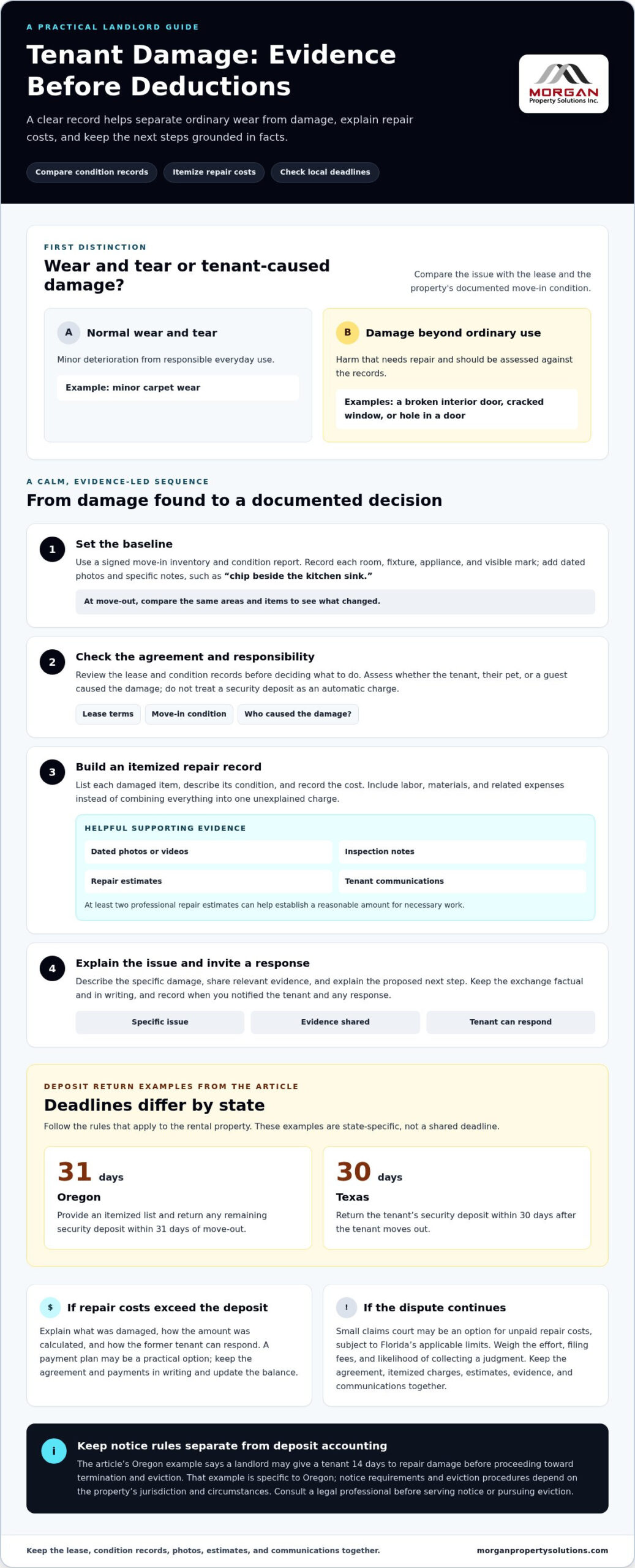
A clear rental agreement gives you a reference point when damage appears. Spell out the tenant’s responsibility for damage beyond normal wear and tear, and distinguish it from routine deterioration caused by responsible use. A broken interior door, for example, differs from minor carpet wear. Before taking action, compare the issue with the agreement and the property’s documented condition.
Create a property inventory and condition report before the tenancy begins. Record each room, fixture, appliance, and visible mark, then have both parties sign the document. Add dated photos and specific notes, such as “chip beside the kitchen sink.” At move-out, compare the same areas and items. This evidence shows what changed and supports a fair discussion about repairs.
Consider insurance separately from the security deposit. Renters’ insurance may include liability coverage for property damage, while rental property insurance may cover certain unexpected damage, such as floods, fires, or vandalism. Neither policy automatically settles responsibility. Keep the lease, inventory, photos, and repair records together, then review the relevant policy when damage occurs.
Oregon Legislative Assembly information states that an Oregon landlord may give a tenant 14 days to repair damage before proceeding toward termination and eviction. That example is specific to Oregon. Notice requirements and eviction procedures depend on the property’s jurisdiction and the circumstances, so don’t assume the same timeline applies elsewhere.
For ongoing damage, keep a written record of what happened, when you notified the tenant, and any response. Depending on local law and the damage’s severity, a landlord may need to serve a formal notice to cure or quit or an unconditional quit notice. Consult a legal professional before serving notice or pursuing eviction, since a procedural mistake can complicate the next step.
If repair costs remain unpaid, small claims court may be an option. First organize the signed agreement, damage evidence, repair estimates, and tenant communications. Weigh the time, effort, filing fees, and likelihood of collecting a judgment before filing. An itemized record makes the claim easier to explain, and the evidence should support each repair charge.
Selling the rental property is a separate investment decision, not a substitute for handling a damage dispute. Consider the property’s repair needs, ongoing management demands, and how ownership fits your plans. Repeated damage concerns, for example, may prompt you to review whether you want to keep managing the property. Keep that decision separate from any tenant notice or claim.
A written process makes the next step clearer: compare condition records, review the agreement, document communications, and assess repair options. These steps reduce guesswork while preserving evidence, supporting calmer decisions when damage creates pressure to act quickly.
2. What is tenant-caused damage?
Tenant-caused damage is harm beyond normal wear and tear, such as a cracked window or a hole in a door. A security deposit may cover eligible repair costs, but it doesn’t justify an automatic charge. Compare the damage with the property’s condition records, then assess whether the tenant, their pet, or a guest caused it. Keep ordinary deterioration separate from damage that needs repair.
To discuss damage without escalating conflict, describe the specific issue, share relevant evidence, and explain the proposed next step. Invite the tenant to respond and, where appropriate, arrange repairs. Keep the exchange factual and in writing.
Before making a deduction, itemize each damaged item, describe its condition, and record the repair cost. Include labor, materials, and related expenses, rather than rounding the damage into one unexplained charge. At least two professional repair estimates can help establish a reasonable amount for necessary work. Keep the estimates with the photos, inspection notes, and messages that support the charge.
Deadlines for returning deposits vary by state. According to the Oregon Legislative Assembly, Oregon landlords must provide an itemized list and return any remaining security deposit within 31 days of move-out. According to the Texas Legislature, Texas landlords must return a tenant’s security deposit within 30 days after the tenant moves out. Follow the rules that apply to the rental property, and send the itemization and remaining funds within the required period.
If documented repair costs exceed the deposit, tell the former tenant what was damaged, how you calculated the amount, and how they can respond. A payment plan may offer a practical way to resolve the balance without immediate legal action. Keep any agreement and payments in writing, and update the balance as payments arrive. Clear records help prevent misunderstandings about what remains owed.
If the tenant doesn’t respond or pay, a landlord can consider pursuing repair costs through small claims court, subject to Florida’s applicable limits. Before filing, weigh the effort, filing fees, and likelihood of collecting a judgment. Keep the signed rental agreement, itemized charges, estimates, damage evidence, and communications together. Consult a legal professional before filing so the claim and supporting documents are prepared carefully.
A thorough, consistent process makes disputes easier to assess. Start with evidence, explain each deduction, give the tenant a chance to respond, and meet the applicable return deadline. For more practical guidance, browse these landlord resources as you organize your rental records.
3. What are tenants responsible for?
Tenant responsibility starts with the rental agreement and the property’s condition at move-in. Tenants are generally responsible for damage they, their pets, or their guests cause, rather than ordinary deterioration from responsible use. A scratched wall, broken appliance door, and pet-damaged screen each need a separate assessment. Match each concern to the lease terms and available records before deciding what action is appropriate.
To reduce damage, combine clear lease terms with regular inspections and preventive maintenance. Explain how tenants should report leaks, appliance problems, and bathroom moisture, and respond promptly to reported issues. During inspections, look for signs such as water stains or damaged caulk, then record any maintenance needed. Give tenants practical appliance-care and mold-prevention instructions, along with an easy way to report problems.
A lease should set expectations in plain language before a tenant signs. Describe care requirements, reporting procedures, rules for pets and guests, and how to raise maintenance concerns. For example, specify that a leaking sink should be reported promptly, before water damages a cabinet. Clear written expectations make later conversations more focused and help both parties understand their responsibilities.
Screening helps landlords assess whether an applicant is prepared to meet the rental agreement. Review credit and rental history, verify employment and income, and conduct background checks consistently. A former landlord’s account of property care may provide useful context, while employment information can help assess the applicant’s ability to meet rent obligations. Use the same written criteria for every applicant and base decisions on relevant information.
Fairness matters throughout screening. The Fair Housing Act prohibits discrimination based on race, color, religion, sex, disability, familial status, or national origin. Apply the same screening steps and standards to every applicant, and don’t use a protected characteristic to make a rental decision. Keep application records and document the criteria used so the process remains consistent if questions arise.
Eviction is not a substitute for clear expectations or careful documentation. If property care becomes a concern, first identify the specific conduct, review the lease, and communicate the needed change formally and calmly. For example, a written notice can describe a recurring maintenance issue and explain how to report it going forward. Any formal notice or further action must follow the rules that apply to the property’s location.
Consistent screening, readable lease terms, and preventive upkeep work together. Screening helps assess an applicant, the agreement sets expectations, and inspections and prompt maintenance address developing problems. This practical sequence gives tenants clear guidance and landlords an orderly way to respond when concerns arise.
4. Documenting damage with photos, videos, and inspection records
After discovering damage, photograph and record it before repairs change the scene. Note the room, date, visible condition, and any immediate maintenance needed. Then notify the tenant in writing with a factual description, such as “water staining below the bathroom sink.” This creates a clear record without assigning blame before you review the evidence.
Use clear, timestamped photos and videos to show both close detail and the surrounding area. For a cracked bathroom tile, capture the crack, nearby tiles, and the room’s wider condition. Take images from multiple angles to show the damage’s location and extent. Avoid filters or edits that could alter its appearance, and keep the original files alongside any copies.
Pair each image with a brief written note. Record where the damage is, what it looks like, when you noticed it, and whether it appears to be worsening. “Bedroom closet door, lower hinge pulled from frame” is more useful than “door damaged.” If a leak or electrical concern needs attention, record what you observed and the maintenance steps taken.
Inspection records put new damage in context. Compare the current condition with the move-in inventory or an earlier inspection, focusing on the same fixture or surface. A dated move-in photo of an intact cabinet can help distinguish later damage from an existing mark. Keep the comparison factual: describe what each record shows rather than guessing how or when the damage happened.
Keep documentation organized so you can find each record quickly. Use a folder for the rental property, then label files by date and location, such as “October 22, kitchen, cabinet.” Store inspection notes, photos, videos, maintenance requests, and written tenant communications together. A simple timeline can show when the issue appeared, when you notified the tenant, and what happened next.
Good records also support a fair conversation. Share the relevant image or inspection note and invite the tenant to explain what happened. For example, ask when they first noticed a ceiling stain and whether they reported it earlier. Save their response with the related photos. Clear, neutral documentation keeps the discussion focused on the damage rather than assumptions.
Before closing the file, add records of completed work, such as a dated invoice or a note describing the repair. Keep before-and-after images together when they show the change. This final step provides a detailed history of the issue, response, and property condition after repair, making future reviews easier and more consistent.
5. Managing the stress of tenant damage
A damage report can make a landlord feel pressure to solve everything at once. Separate the immediate property issue from the question of responsibility. For example, address an active leak first, then review the tenant’s report and repair records. A short written action plan keeps urgent maintenance separate from a later dispute. Managing landlord stress over tenant damages starts with deciding what needs attention now and what can wait.
Set a clear sequence for each incident: acknowledge the report, assess the condition, arrange necessary repairs, and record the outcome. If a tenant reports a damaged window, note when the message arrived, what needs attention, and who will follow up. A consistent sequence reduces repeated decisions and gives both parties a clear path toward resolution.
Use a neutral notice focused on observable facts. Describe the issue, the action needed, and the next communication step without accusing the tenant before reviewing the evidence. For example, write, “The kitchen cabinet has water damage; please share when you first noticed the leak.” Keep replies with the same record. This approach invites useful information and keeps the discussion centered on the property.
Separate what you know from what you still need to assess. A cracked tile is observable; who caused it may require comparison with earlier inspection records. Record the evidence, the tenant’s account, and any repair advice as distinct details. This keeps frustration from turning an assumption into a conclusion and helps you make decisions based on responsibility rather than emotion.
Reduce the mental load by setting a regular time to review property issues instead of revisiting messages throughout the day. Keep one incident log with the report, notice, repair steps, and pending decisions. If a maintenance professional is needed, record the appointment and work completed. A single, current record makes it easier to see what’s resolved and what still needs attention.
One difficult incident doesn’t define the whole rental relationship. A property management routine can include prompt maintenance, regular inspections, and clear reporting steps, helping concerns surface before they grow. The aim isn’t to prevent every problem; it’s to respond consistently and keep the next step clear. If a dispute continues, pause, review the written record, and choose a factual response. Managing landlord stress over tenant damages becomes more manageable when decisions follow a consistent process.
Make a simple decision list: what needs immediate repair, what evidence is available, who must be contacted, and what can wait. A broken exterior lock, for example, calls for prompt attention, while a disagreement about a scuff can be reviewed against condition records. This keeps urgent responsibilities clear without making every open question feel equally pressing.
For help creating a steadier process for rental concerns, explore support for your property management needs.
Morgan Property Solutions: Residential Property Management
Morgan Property Solutions Inc. provides residential property management for rental owners who want a more organized approach to property concerns. If damage reports, maintenance coordination, and tenant communication are adding pressure, professional management can bring these responsibilities into a clearer process. It may suit owners seeking support with day-to-day oversight of a residential rental.
For owners preparing to rent a home, Morgan Property Solutions Inc. provides tenant placement and leasing services to support finding a tenant and establishing a rental agreement. This service gives owners a more structured approach to their rental responsibilities and helps keep communication organized.
Contact Morgan Property Solutions Inc. to discuss residential property management for your rental.
Make your next property decision with confidence
Managing landlord stress over tenant damages can start with deciding how you want property ownership to fit into your plans. You might continue managing a rental with professional support, adjust your investment strategy, or consider a future sale. The right next step depends on your goals and the role you want in day-to-day property decisions.
Morgan Property Solutions Inc. provides residential property management for owners seeking help with rental responsibilities. If your plans shift toward selling or buying a property, the company also offers seller and buyer representation. These services support different stages of property ownership, so you can consider the path that fits your situation.
When you’re ready to discuss what comes next, connect with Morgan Property Solutions Inc. A clear conversation can help you explore your options and move forward with greater peace of mind.
Frequently Asked Questions
What is tenant-caused damage?
Tenant-caused damage is harm to a rental property linked to a tenant, their pet, or their guest, rather than ordinary use. A pet tearing a window screen is one example. To assess responsibility, compare the issue with the move-in condition and consider when it appeared. A tenant’s prompt report about a worsening problem can also help clarify how the damage developed.
Is being a landlord stressful?
Yes, it can be stressful, especially when a repair, tenant communication, and financial decision arise together. Regain focus by separating urgent safety or maintenance concerns from questions about responsibility. For example, address a broken exterior lock first, then review the records and discuss repair costs. A clear order of operations makes each decision more manageable.
Can you charge tenants for repairs?
You can generally seek payment for repair costs tied to tenant-caused damage beyond normal wear and tear, subject to the lease and applicable state rules. A charge should relate to necessary work, not an upgrade to the property. For example, document the cost to repair a damaged door rather than charging for a more expensive replacement without a clear reason. Keep the calculation and supporting records available.
Legal Considerations: When to Seek Professional Assistance?
Seek legal advice before serving formal notice, filing a lawsuit, or pursuing eviction over property damage. A legal professional can assess the lease, evidence, notice requirements, and local procedure together. This is especially useful when a tenant disputes responsibility, damage continues after notice, or you’re unsure which remedy applies. Organize communications, repair records, and the signed agreement for that discussion.
What are tenants responsible for?
Tenants are generally responsible for damage they cause, including damage caused by their pets or guests, as well as obligations stated in the lease. For example, a tenant may need to report a malfunctioning appliance promptly rather than keep using it in a way that worsens the problem. A landlord should distinguish tenant conduct from maintenance issues and assess each situation using the agreement and available evidence.
What counts as normal wear and tear?
Normal wear and tear is minor deterioration from regular, responsible use of a home. Faded paint or light carpet wear can develop over time without misuse. A large stain or broken fixture may need closer review. Compare the item’s condition at move-in and move-out, and consider the nature of the change before treating it as damage.
What rights do landlords enjoy?
Landlords can rely on the rental agreement, collect rent as agreed, maintain their property, and seek remedies permitted by applicable law when a tenant breaches the agreement. Those rights don’t remove tenant protections or a landlord’s procedural obligations. Entry, notices, deposit deductions, and eviction steps, for example, follow rules that can vary by location. Apply the requirements for the property’s location.
How can landlords stay calm and manage stress after tenants cause property damage?
Pause before responding, then note the immediate repair need and the next decision separately. For example, after finding a damaged cabinet in a Central Florida rental, arrange necessary maintenance before debating who pays. Set a time to review the evidence and send a measured message. This keeps the issue moving without letting repeated calls or messages dictate every decision throughout the day.

Article by
Oliver Overton-Morgan
Oliver Overton-Morgan is a full-time Real Estate Broker since 2003, with years of experience helping thousands of people purchase and sell real estate throughout Central Florida. He holds a Graduate Realtor Institute designation, LCAM, and has held licenses in good standing as a Florida Mortgage Broker and a Notary Public. Oliver immigrated to central Florida in 2001, and within 5 years Oliver built a successful Real Estate brokerage in central Florida, where he recruited over 75 Sales Associates with 25+ million in sales production.