What if the biggest DIY landlord regret isn’t managing a rental yourself, but waiting too long to correct a preventable mistake? Avoiding the most common regrets of DIY landlords starts with steady habits: screen applicants consistently, set rent with the local market in mind, and keep clear records of decisions and communication.
Managing a rental yourself gives you a hands-on role in your investment, but it also means keeping up with tenant needs, maintenance, and lease terms. Hiring a property manager doesn’t mean giving up every decision. Clear expectations help you decide which responsibilities to handle and which to delegate.
This guide explains practical ways to evaluate applicants’ credit, income, and rental references, price a home competitively in Central Florida, and respond appropriately to lease violations. You’ll also learn how to weigh professional property management against your time, priorities, and investment goals.
Key Takeaways
- Use consistent screening criteria to assess applicants’ income, credit, rental history, and references.
- Set rent by comparing similar local properties and weighing location, condition, and amenities.
- Put expectations in a written lease and respond to violations consistently while following the applicable local process.
- Consider whether you have the time and resources to manage tenant communication, maintenance, and ongoing responsibilities.
- Professional property management can take on day-to-day rental responsibilities while you remain involved in investment decisions.
1. Tenant screening
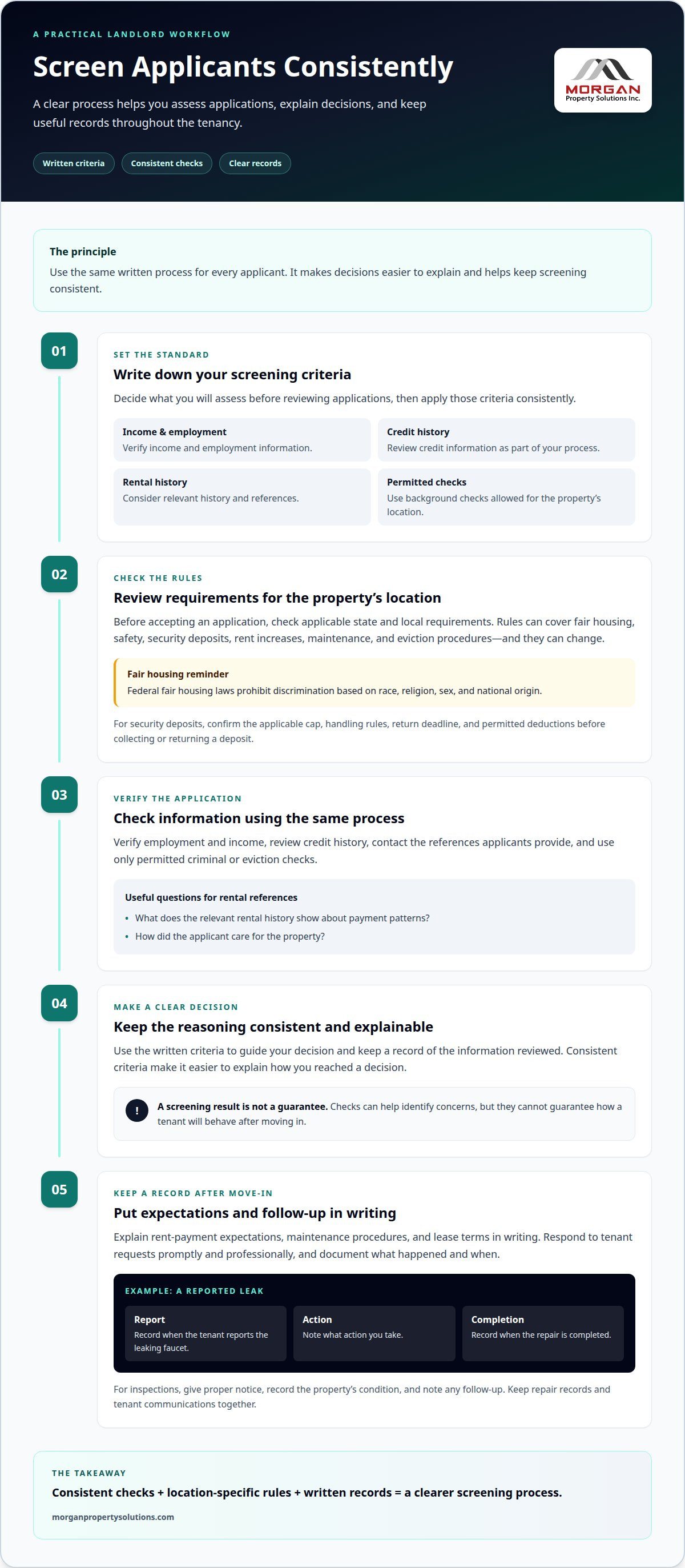
A consistent screening process helps you assess whether an applicant is likely to pay rent, care for the property, and follow the lease. Apply the same written criteria to each applicant, such as verified income, rental history, and permitted background checks. Federal fair housing laws prohibit discrimination based on race, religion, sex, and national origin. Clear, consistently applied criteria make screening fairer and decisions easier to explain.
Before accepting an application, learn the landlord-tenant rules that apply to the property’s location. State and local requirements can cover fair housing, safety, security deposits, rent increases, maintenance, and eviction procedures. These rules can change, so include a regular review of applicable requirements among your landlord responsibilities. Security deposit limits, deadlines, and return rules vary by state and may also depend on local requirements. Confirm the applicable cap, handling rules, return deadline, and permitted deductions before collecting or returning a deposit.
How can landlords reduce liability risks and stay compliant with safety and habitability rules? Follow local requirements, address maintenance concerns promptly, and document repairs and tenant communications. Arrange inspections with proper notice, record the property’s condition, and note any follow-up. These records provide a clearer history if questions arise about a reported issue or the property’s condition.
Screening can include employment and income verification, credit history, rental references, and permitted criminal or eviction checks. Contact the references applicants provide and ask about relevant rental history, such as payment patterns and care of the property. Use the same process and criteria for every applicant. Screening can help identify concerns, but it cannot guarantee how a tenant will behave after moving in. Morgan Property Solutions’ tenant screening criteria page explains the types of checks used in its screening process.
Keep communication clear from the first application. Explain rent-payment expectations, maintenance procedures, and lease terms in writing, then respond to tenant requests promptly and professionally. For example, record when a tenant reports a leaking faucet, what action you take, and when the repair is completed. Written records can prevent misunderstandings and show how concerns were handled.
Landlord insurance may cover rental-property damage, liability claims, and lost rent, depending on the policy. Review whether coverage applies to rental activity and consider the risks the property faces. Premiums vary with the property, location, selected coverage, and policy terms, so there is no single cost for every rental. Compare coverage details with the risks you want to address instead of choosing a policy by price alone.
Good screening is one part of avoiding the most common regrets of DIY landlords. Pair consistent applicant checks with reviews of local rules, documented inspections, and responsive communication. These practical steps support informed decisions before a tenant moves in and provide a useful record throughout the tenancy.
2. Does hiring a property manager mean giving up control of my investment?
No. Hiring a property manager changes who handles day-to-day tasks, not who owns the rental or sets investment priorities. Before work begins, define the responsibilities you want handled, the decisions you want to retain, and how you’d like to receive updates. For example, you might approve major repairs while assigning routine tenant communication and maintenance coordination to a manager.
Consider professional property management when tenant requests, maintenance coordination, leasing, or regular inspections compete with your other responsibilities. The right fit depends on the time you can consistently give the rental, your comfort with urgent decisions, and the property’s needs. An owner who lives elsewhere may also value a local point of contact to coordinate maintenance and monitor the home’s condition.
How much time and money does self-managing a rental property typically require? There isn’t one typical amount. Time and expenses depend on the property’s condition, tenant requests, vacancies, and repair needs. Track the hours spent on communication, inspections, maintenance, and leasing alongside rental income and expenses. This record helps you weigh the workload against the cost of professional management.
Plan for routine upkeep as well as unexpected costs. Set aside rental income for maintenance and emergency repairs, and include vacancy costs in your financial plan. A vacancy reserve equal to three months of expenses can help prepare for periods without rent. Keep it separate from routine spending so a repair or empty unit doesn’t disrupt other property expenses.
Regular inspections help owners catch concerns before small issues grow. Schedule visits at reasonable intervals, give proper notice, and document the property’s condition and any follow-up. Preventive checks can include heating and cooling systems, plumbing for leaks, and the roof and exterior for damage. Keep inspection reports, repair records, and tenant requests together to maintain a clear history of each issue.
What tax deductions and recordkeeping practices should rental property owners know? Track rental income and expenses, and keep records of lease agreements, payments, repairs, inspections, and property-related costs. These documents support tax preparation and help you understand the tax implications of rental ownership. Organize records by property and date, and keep receipts with the related expense entry. A tax professional can assess which expenses qualify under applicable tax rules.
Professional property management can also provide financial reports and statements that support recordkeeping. If you’re weighing hands-on management against added support, explore Orlando property management as one way to understand the responsibilities involved. Clear reporting and agreed decision-making help owners stay informed while delegating daily tasks.
3. Addressing lease violations and evictions
A clear written lease gives both parties a shared reference when questions or disputes arise. Set out rent terms, security deposits, maintenance responsibilities, pet and guest rules, property changes, and termination procedures. Include late-payment policies and consequences where applicable. Lease terms should reflect the requirements for the rental’s location. Clear wording helps avoid common mistakes, such as relying on a verbal promise or trying to enforce a rule the agreement doesn’t contain.
When a tenant appears to violate the lease, identify the specific term and document the facts. For example, note the date of a missed payment or save communications about an unauthorized property change. Then contact the tenant in writing, describe the concern, and keep a copy. Addressing an issue promptly and professionally clarifies expectations and can support a constructive landlord-tenant relationship.
Don’t treat every violation as grounds for immediate eviction. Landlord-tenant laws and required procedures vary by state and municipality, including rules about notices and eviction filings. For a Central Florida rental, learn which state and local requirements apply before acting. Keep copies of the lease, payment history, notices, and related correspondence. Repeated late or missed payments may require formal steps, but the proper response depends on the agreement and applicable procedures.
Lease terms should fit the property and comply with applicable housing laws. A real estate attorney can draft or review an agreement, explain how local requirements affect its wording, and help assess notices or eviction procedures. Legal review can be especially useful when a lease includes detailed provisions for rent, deposits, repairs, pets, guests, or termination. For example, ask an attorney to review whether the written agreement clearly explains each party’s responsibilities and the process for addressing a violation.
Keep communication and records organized throughout the process. Save the signed agreement, payment records, repair requests, inspection reports, and written notices together. If a tenant disputes a charge or lease term, dated documentation can clarify what happened and what steps followed. It can also help track expenses related to repairs or a dispute. A consistent process won’t prevent every disagreement, but it helps you respond based on the lease and rules that apply to your Central Florida property.
4. Setting rent based on market conditions
Choose a rent that reflects comparable rentals, not just the amount you hope to earn. For an Orlando rental, compare current listings in the surrounding neighborhood with similar locations, size, condition, and amenities. A renovated home with updated appliances may compete differently from a similar-sized property that needs repairs. Use several relevant examples instead of relying on one unusually high listing.
Look closely at each comparison. Note its asking rent, features, condition, and how recently it appeared. A property across town may be in a different housing market, even with the same bedroom count. Exclude listings that differ substantially, such as a furnished unit compared with an unfurnished home. This keeps the comparison useful and helps explain why your proposed rent fits the property.
Then weigh market demand alongside your costs and income goals. Setting rent above comparable homes can make the rental harder to lease and extend vacancy. Pricing too low can mean lost income over the tenancy. Rent that attracts interest quickly isn’t automatically the best choice; consider whether it covers expenses while remaining competitive with nearby options.
Don’t treat advertised prices as guaranteed payments. Listings show what owners are asking, not necessarily what a tenant will agree to pay. Compare multiple active rentals and monitor changes in availability. If similar homes remain listed while others disappear, that may offer insight into local demand, but don’t draw a conclusion from one listing alone.
Review the rent when preparing for a new lease or renewal, and account for changes in the property and nearby housing options. New amenities, repairs, or shifts in competing listings can affect its position. Before changing rent for an existing tenant, review the lease and applicable local rules. A consistent review process helps prevent costly pricing mistakes and grounds decisions in current conditions.
Keep rent-setting separate from tenant screening. A strong applicant doesn’t make an above-market price more competitive, and lower rent doesn’t replace careful applicant review. Consider each decision on its own merits: use comparable listings to set the price, then apply consistent screening criteria to evaluate applicants. This helps you avoid focusing too narrowly on filling a vacancy at any cost.
For example, if similar nearby homes offer comparable space and condition but your listing receives little interest, reassess the price and presentation. Confirm that your comparisons still reflect current listings, then consider whether rent or property condition needs attention. If local events or new housing supply affect demand, review the evidence before adjusting. Revisit your reasoning when market conditions or the property’s features change.
5. Credit, income, and landlord-reference screening
A sound screening decision comes from reviewing several parts of an application, not relying on one score. Review credit information, verify income and employment, and contact previous landlords. Together, these steps help you assess whether an applicant’s history fits the rental’s written criteria. They may also reveal details to clarify before deciding.
Read a credit report as context, not a complete picture. Look for patterns relevant to rental payments, such as unpaid accounts or repeated delinquencies, and consider the rest of the application. A credit issue may have an explanation, while a strong score alone doesn’t show how someone will care for a property. Apply the same standards consistently, and don’t treat one data point as an automatic yes or no.
For income verification, compare the information provided with reliable supporting documents and employment details. Consider whether the income appears stable enough to meet the rent and other stated obligations. If an application has a gap or conflicting figures, ask for clarification using the same process you use for other applicants. A documented method helps reduce inconsistent decisions and unnecessary disputes.
References can provide useful background. Contact the prior landlords listed by the applicant and ask focused questions about payment history, lease compliance, property care, and communication. For example, ask whether rent was paid as agreed and whether the home was returned in acceptable condition. Record the responses, including the date and the name of the person contacted. If a reference can’t provide details, consider that limitation alongside the other evidence rather than guessing.
Screening should follow written criteria and applicable fair housing requirements. Federal fair housing laws prohibit discrimination based on race, religion, sex, and national origin. Use consistent questions, verification steps, and decision standards for every applicant. Avoid assumptions based on personal impressions or details unrelated to the rental agreement. A repeatable process makes decisions easier to explain and helps prevent arbitrary screening.
Background and eviction checks can provide additional information when conducted as permitted. Review relevant records carefully, confirm that information belongs to the applicant, and consider it alongside credit, income, and references. A record alone may not explain its context or relevance. Screening can identify potential concerns, but it can’t predict every future payment, dispute, or instance of property damage.
Keep a clear record of the application, documents reviewed, reference notes, and the reason for your decision. Organized files can lower stress if an applicant asks how the decision was made. They also help you apply the same process next time. For support with rental decisions and property ownership, contact Morgan Property Solutions Inc.
Morgan Property Solutions Inc.
Morgan Property Solutions Inc. helps rental owners with tenant placement, leasing, and ongoing property responsibilities. If screening, maintenance coordination, rent decisions, and tenant communication take more time than you can manage, professional support can make those tasks more manageable. You can stay involved in investment decisions while getting help with the work that fits your needs.
Whether you’re preparing to lease a home or reconsidering how you manage an existing rental, the next step is a conversation about your priorities and the responsibilities you want help with. Contact Morgan Property Solutions Inc. to discuss your property needs.
Choose the level of support that fits your next move
Your rental needs may change as your priorities, available time, or investment plans shift. A practical way to avoid the most common regrets of DIY landlords is to reassess what you want to manage personally and where professional support could help. You can keep handling daily tasks, delegate selected responsibilities, or consider a different direction for the property.
Morgan Property Solutions Inc. offers Residential Property Management, Real Estate Seller Representation, and Real Estate Buyer Representation. These services can help owners who want support managing a rental or are considering buying or selling property. The right next step depends on your goals and the role you want the property to play in your plans.
When you’re ready to talk through your options, contact Morgan Property Solutions Inc. A clear plan can make your next property decision feel more manageable.
Frequently Asked Questions
Does hiring a property manager mean giving up control of my investment?
No. You remain the owner and decide which responsibilities a manager handles and which stay with you. For example, you might delegate tenant communication but retain approval over major property decisions. Before management begins, agree on how updates, approvals, and financial reporting will work. This lets you stay informed without handling every operational detail of a rental in Orlando or elsewhere in Central Florida.
How often should I inspect my rental if there are no reported problems?
Consider scheduling routine inspections annually or semi-annually, while following applicable notice requirements and the lease. A quiet tenant doesn’t rule out gradual problems, such as a slow plumbing leak or exterior wear. Use each visit to document the home’s condition and note any follow-up. The property’s age, condition, maintenance history, and local requirements can help shape a sensible schedule.
Which landlord responsibilities are usually worth outsourcing first?
Start with tasks that are time-sensitive, recurring, or difficult to coordinate from a distance. For an owner outside Central Florida, that might mean arranging showings, coordinating repairs, or responding to tenant concerns. You can delegate one responsibility or broader day-to-day management. Decide where delays or missed follow-ups cause the most strain, then clarify reporting and approval expectations before handing over a task.
What are the most common regrets of DIY landlords?
Avoiding the most common regrets of DIY landlords often means recognizing workload and risk before they disrupt ownership. Owners may underestimate the coordination a vacancy, repair, or tenant dispute requires. Another common pitfall is treating a rental as a passive investment without a clear process for tracking expenses and decisions. For example, a repair discussed only by phone is harder to reconstruct later than one documented in a dated written record.
How should landlords screen tenants legally and consistently?
Use written screening criteria and apply the same steps to every applicant. Review relevant information, including income, credit history, rental references, and permitted background records. Keep notes explaining how each application was assessed against your stated criteria. Consistency helps reduce subjective decisions and makes the process easier to explain.
What federal, state, and local landlord-tenant laws must DIY landlords follow?
Landlords must follow the federal fair housing protections that apply, along with state and local rules governing rental housing. Depending on the property’s location, requirements may address deposits, habitability, maintenance, rent increases, safety, and eviction procedures. A rental in Orlando may be subject to rules at multiple levels. Identify requirements for the property’s jurisdiction and keep track of changes that affect your lease or operating practices.
What are the steps for handling late rent, lease violations, and evictions legally?
Start by reviewing the lease and documenting the missed payment or specific violation. Communicate the issue in writing, then follow the notice requirements and deadlines that apply in the property’s jurisdiction. Keep copies of notices, payment records, and tenant communications. If the matter moves toward eviction, use the required local court process rather than trying to remove a tenant yourself. Procedures differ by location, so the correct sequence depends on applicable law.
When is hiring a property manager better than self-managing, and what are typical fees?
Professional management may suit owners who lack time for ongoing tenant communication, leasing, maintenance coordination, or property oversight. Fees depend on the services and agreement. Management charges may be a percentage of rent collected, with separate leasing or renewal charges possible. There is no single fee for every rental. Compare the responsibilities included and how charges are calculated before choosing a management arrangement.

Article by
Oliver Overton-Morgan
Oliver Overton-Morgan is a full-time Real Estate Broker since 2003, with years of experience helping thousands of people purchase and sell real estate throughout Central Florida. He holds a Graduate Realtor Institute designation, LCAM, and has held licenses in good standing as a Florida Mortgage Broker and a Notary Public. Oliver immigrated to central Florida in 2001, and within 5 years Oliver built a successful Real Estate brokerage in central Florida, where he recruited over 75 Sales Associates with 25+ million in sales production.