A vacant month can cut into expected rental income. Hiring a property manager in Orlando may make sense when leasing, maintenance, tenant communication, or the time required to manage a rental becomes difficult to handle on your own.
If you’re weighing when to hire a property manager in Orlando, the decision depends on more than the monthly fee. You’ll also want to consider how local rental conditions affect vacancy, what services are included, and how much time and control you’re willing to trade for help.
This guide explains how to assess management services, when professional support may suit your rental, and what property management can involve for homes in Orlando and nearby communities. Use these factors to decide whether management fits your property and priorities.
Key Takeaways
- Weigh management fees against the time, vacancy risk, and day-to-day work involved in running an Orlando rental.
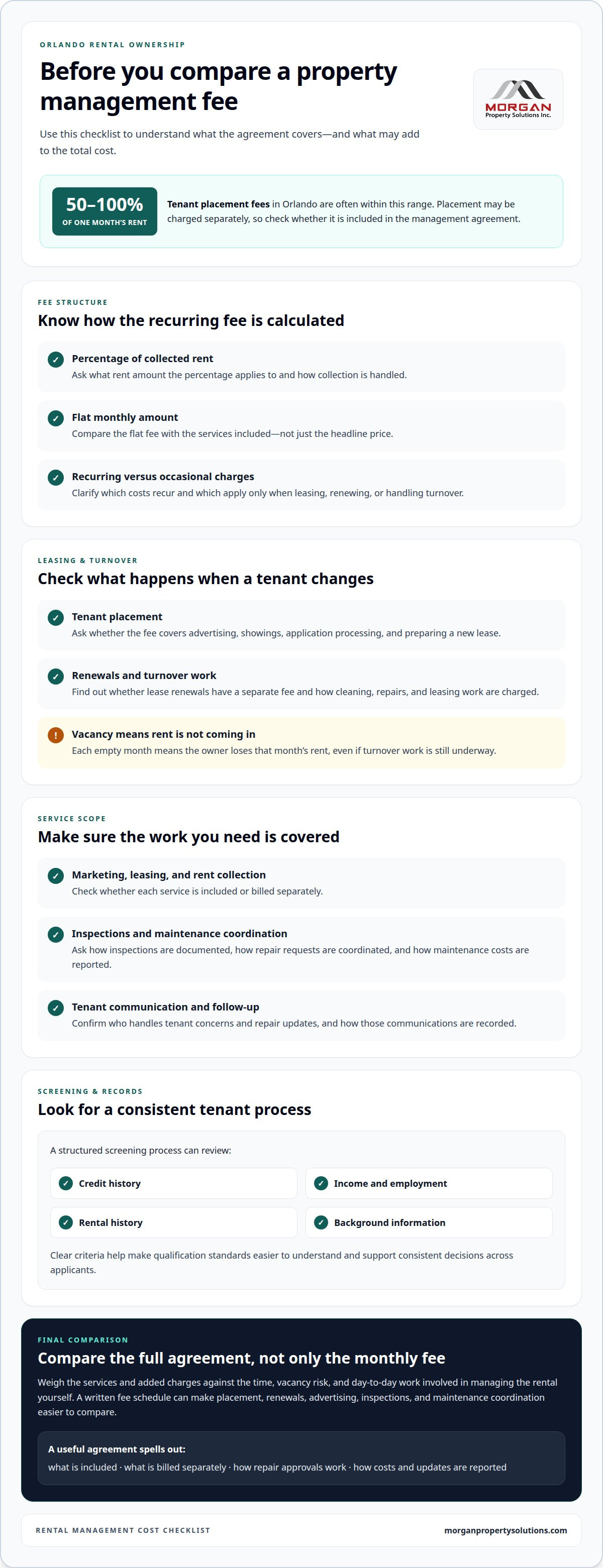
- Look beyond the monthly fee: tenant placement, lease renewals, inspections, and maintenance can affect the total cost.
- Professional screening and preventative maintenance can help address tenant and repair concerns before they grow.
- Local rental pricing and vacancy trends matter when deciding how to keep a property competitive.
- Professional management may be a better fit when tenant communication, maintenance, or leasing has become difficult to manage alone.
1. What does it cost to hire a property manager?
Self-managing a rental can mean handling rent collection, tenant communication, leasing, and maintenance yourself. Each task takes time, and staying on top of records and follow-up can become harder as responsibilities grow. Weigh the work involved against the services offered before deciding whether professional management is right for you.
Management fees may use a percentage of collected rent or a flat monthly amount. Other charges may apply when a tenant moves out or a new lease begins. A management quote depends on the property, services, and fee structure, and is provided after a quote request. Ask what the agreement includes, such as marketing, leasing, rent collection, and maintenance coordination.
Tenant placement is a separate cost in some management agreements. It may cover advertising, showings, application processing, and preparing a new lease. Vacancy can create an additional financial effect: each empty month means the owner loses that month’s rent. For example, an Orlando rental sitting empty between tenants earns no rent during that period, even if turnover work continues.
Screening quality can affect both tenant experience and turnover costs. A consistent process reviews credit history, verifies income and employment, checks rental history, and considers background information. These steps help assess whether an applicant appears able to meet lease obligations. Clear criteria also support consistent decisions across applicants. A structured tenant screening process helps make qualification standards easier to understand.
Difficult tenant experiences can involve late rent, complaints, lease concerns, or unresolved repair requests. Each situation requires clear records and timely communication. A property manager can coordinate tenant communication and maintenance, while applying the lease process consistently. This may help prevent small concerns from becoming reasons for disputes or an early move-out.
Tenant retention matters because turnover can involve advertising, leasing work, cleaning, and repairs. A lease renewal may have its own fee, so owners should understand how renewal services are charged. Compare the full agreement, not only its recurring management fee. Consider whether renewal coordination, tenant communication, and repair follow-up are included or billed separately.
Before management begins, clarify which costs are recurring and which arise only during leasing or turnover. A written fee schedule can show how placement, renewals, advertising, inspections, and maintenance coordination affect the total. That breakdown makes it easier to judge whether the time saved and more organized tenant processes justify professional help.
Orlando rental property owners may incur advertising and leasing fees when a tenant moves out. Professional property managers use structured screening systems intended to reduce tenant-related risks before a lease is signed. Orlando tenant placement fees are often 50 to 100 percent of one month’s rent.
2. Is Hiring a Property Manager Worth It?
Maintenance can make professional management worthwhile when repairs interrupt your schedule or reach tenants late. A manager coordinates requests, follows up with a vendor, and keeps the owner informed. This organized process matters when a small leak, broken appliance, or cooling problem needs attention before it worsens.
Regular inspections can help owners keep track of a property’s condition and identify maintenance needs. Ask how inspections are documented and how the findings are shared. Morgan Property Solutions provides detailed photo inspection reports, giving owners a record of the property’s observed condition.
Maintenance coordination can simplify the process of responding to a reported problem. A property manager can direct requests, arrange access, and follow up on the work. Morgan Property Solutions coordinates maintenance around the clock, including routine requests and emergencies, and keeps property owners informed.
When reviewing a management agreement, understand how repair approvals work and how maintenance expenses are reported. The terms should make clear how the manager communicates about work and costs.
Good communication makes repair decisions easier. The manager should explain the reported issue, outline the proposed work, and share the expense when owner approval is required. Ask how repair updates and costs are recorded so you can follow maintenance activity and identify recurring concerns.
Emergency response is another part of the value calculation. A documented process helps tenants report urgent problems and helps the manager direct them to the right vendor. It also gives the owner a clearer view of what happened and which work followed. Timely maintenance can protect the property and reduce frustration that might otherwise affect a renewal.
Management may be worthwhile if coordinating repairs competes with work, travel, or other properties. It may be less useful for an owner who prefers direct control and already has reliable vendors and a responsive maintenance routine. The best answer depends on the time saved, repair oversight, communication quality, and added charges. A defined property management approach can clarify how those responsibilities are handled.
Maintenance also intersects with tenant concerns and, in some cases, eviction proceedings. Promptly documenting repair requests and responses creates a useful record of communication. Professional coordination cannot prevent every dispute, but consistent follow-through helps keep property issues organized alongside leasing and tenant matters.
3. Knowledge of Orlando rental market conditions
Rental conditions can vary across Orlando and surrounding communities, including Winter Park, Lake Nona, Clermont, Oviedo, Windermere, Winter Garden, Apopka, Wedgefield, and Hunters Creek. When setting a rental strategy, consider the property’s location, condition, and likely tenant demand rather than relying on a general assumption about the market.
A useful rental analysis considers more than nearby asking rents. It weighs the property’s features, location, condition, expected repair needs, and the likely tenant pool. Pricing should reflect those details, then adjust as market feedback comes in. Monitoring vacancy and rent collection helps owners see whether the current strategy supports the property’s performance.
Marketing also influences vacancy. Clear listing details, appealing photographs, prompt inquiry responses, and convenient showings help prospective tenants assess a rental. A property management company can coordinate these steps and update the strategy if interest is limited. If a tenant leaves, cleaning, repairs, and listing preparation can affect how soon the next lease begins.
Florida landlords also have compliance responsibilities. Rental owners must follow security deposit regulations, proper notice procedures, habitability standards, Fair Housing laws, and eviction timelines. In Florida, a person collecting rent, listing a property, or negotiating leases for compensation must hold an active real estate sales associate or broker license. Property owners may manage their own rentals without meeting that licensing requirement.
Review a management contract for its services, charges, maintenance approval process, reporting, and termination terms. It should explain how leasing, tenant communication, repairs, and financial statements are handled. Contracts commonly require 30–90 days’ notice for early termination, so the notice period and exit process deserve attention. Landlord resources can help owners understand the practical questions that arise during rental management.
Rental potential matters when deciding whether to keep, improve, or sell a property. A manager can assess how condition, location, pricing, vacancy, and repair needs shape rental performance. That assessment helps distinguish a property with a pricing issue from one needing work before marketing. For owners considering a sale, rental performance and expected expenses can inform the timing of that decision.
As a portfolio grows, coordinating leases, tenant questions, repairs, and records across several homes becomes more demanding. A consistent process helps track each rental property’s status and recurring needs. When evaluating when to hire a property manager in Orlando, consider whether market monitoring and compliance tasks are taking time away from broader investment decisions.
4. Property management benefits and costs
Hiring a manager means delegating some rental tasks. The right service scope depends on what you want handled. An owner seeking help with marketing, leasing, rent collection, inspections, financial reporting, and maintenance coordination may need a different level of support from someone who wants help with only a few tasks.
When comparing management options, focus on the services and responsibilities in the written agreement. Check how the company handles marketing, leasing, online payments, inspections, financial reporting, and maintenance requests. A clear description of the service helps you decide whether it matches the way you want to manage your property.
First-year expenses can differ from later years because the initial leasing cycle may involve setup, marketing, and tenant placement. A rental that already has a tenant may have different immediate needs from a vacant property requiring advertising and showings. Renewal work, inspections, maintenance coordination, and vacancy can also affect the total. Build an estimate by listing recurring charges first, then adding each service likely to arise.
For a useful comparison, separate predictable management charges from occasional costs. The agreement should explain how repair approvals work, which leasing tasks carry separate charges, and how owner distributions appear in financial statements. For example, if a repair occurs during a vacancy, the owner may face both the repair expense and lost rental income. Keeping those categories distinct makes the property’s net performance easier to understand.
Management can also bring operational value that a fee comparison misses. A property manager can coordinate tenant communication, track maintenance requests, organize lease renewals, and provide monthly financial statements. Those records help property owners follow collected rent, fees, maintenance expenses, leasing costs, and distributions. For an owner with several homes, consistent reporting can make it easier to spot rising expenses or recurring repair needs.
There is a trade-off. Hiring a manager reduces direct control over routine decisions, so owners should understand approval limits and reporting procedures. An owner who prefers to select every vendor and respond personally may value self-management more. Someone balancing work, travel, or multiple properties may instead value delegated coordination and clearer records.
To assess whether management supports successful rental performance, compare the agreement’s full cost with the work it removes and the risks it helps organize. Consider vacancy, turnover, recurring repairs, and the time required to manage each property. A simple annual review of rental income growth and operating expenses can show whether the arrangement continues to fit the property and the owner’s priorities.
5. Management services for Orlando-area landlords
Professional management connects the moving parts of a rental, from marketing through ongoing tenancy. The Institute of Real Estate Management lists advertising availability, discussing management agreements, negotiating leases, showing properties, and collecting rent as possible activities. For an Orlando landlord, those tasks form a practical sequence: prepare the listing, arrange showings, complete leasing, then manage rent and tenant communication.
That sequence continues after a lease begins. A property manager can collect rent, respond to tenant complaints, coordinate repair problems, and manage renewals. For example, when a tenant reports a repair, the manager can record the request, coordinate the work, and update the owner. Keeping that history together makes it easier to follow what happened and what action was taken.
Owner reporting is another useful service. Monthly financial statements should show rent collected, management fees, maintenance expenses, leasing costs, and owner distributions. These details help a landlord connect rental income with property expenses instead of relying on a rent deposit alone. A clear statement can also show whether repeated repairs or leasing costs are changing the property’s performance.
Turnover brings several services together. After a tenant moves out, cleaning and repairs may be needed before marketing resumes. The manager can coordinate preparation, advertise availability, arrange showings, and handle lease negotiations. Those steps help keep the transition organized, while the owner sees which work and expenses relate to the new tenancy.
Management can also begin during an active lease. A property manager can take over tenant communication, maintenance coordination, and renewal planning without waiting for the current tenant to leave. That can help an owner who is relocating, managing other real estate, or finding the day-to-day workload difficult. The agreement should define responsibilities and how either party gives notice before a change.
As a portfolio grows, consistent records and processes become more important. Owners are advised to be cautious if one assigned manager handles well over 100 rental units, since the manager’s workload can affect attention and communication. Ask how requests, financial reporting, leasing activity, and repair history are tracked across properties. The aim is not simply to outsource tasks, but to keep decisions and follow-through visible.
In Florida, professional management is most useful when leasing, tenant communication, reporting, and maintenance coordination need a steady process. If those responsibilities are taking attention away from your investment goals, explore Orlando property management as a way to organize the work.
Morgan Property Solutions: Orlando Property Manager
Morgan Property Solutions Inc. helps Orlando rental owners manage residential properties through its property management services. Turn to an Orlando property manager when leasing, tenant communication, maintenance coordination, or financial reporting becomes difficult to handle alongside other commitments. Professional support can also help owners who want a more organized process for managing a rental.
If your plans for the property change, Morgan Property Solutions also offers real estate buyer and seller representation. Whether you want to keep renting, buy another home, or prepare to sell, the next step depends on your plans and the support you need.
Contact Morgan Property Solutions Inc. to discuss your Orlando property management needs.
Choose the next step for your rental
Deciding when to hire a property manager in Orlando is a chance to consider what you want from the property. You might want to keep renting while delegating day-to-day responsibilities, or explore buying or selling. Let your plans guide the decision instead of assuming management is right for every owner.
Morgan Property Solutions Inc. offers Residential Property Management, Real Estate Buyer Representation, and Real Estate Seller Representation. Whether you plan to continue renting or are considering a change, discuss your goals and the service that fits.
Contact Morgan Property Solutions Inc. today to talk through your next step. A clear plan can help you move forward with confidence and make decisions that suit your property goals.
Frequently Asked Questions
Is Hiring a Property Manager Worth It?
Professional management may suit you if rental tasks are difficult to balance with work, travel, or other properties. For an owner living outside Orlando, a management service can provide an organized process for tenant communication, property updates, and maintenance. Consider the specific tasks you want handled, rather than assuming management will increase rental income.
What does it cost to hire a property manager?
Management costs depend on the property and the services included. The total may involve ongoing management, leasing or tenant placement, renewals, inspections, and maintenance-related charges. Ask for a written breakdown that separates recurring fees from charges that apply only when a service is needed. The price depends on the case and is given after a quote request; property type, service scope, and leasing needs affect the cost.
When should Orlando landlords hire a property manager?
Consider hiring one when property tasks regularly compete with work or personal commitments, or when you’re preparing to move away from Orlando. It may also make sense before adding another rental, so you can establish a workable process as your responsibilities grow. The best time to decide is before an urgent issue forces a change. Think about which tasks you want handled and how much direct involvement you prefer.
What services do Orlando property management companies provide?
Services can include leasing, rent collection, tenant communication, maintenance coordination, inspections, and financial reporting. Morgan Property Solutions Inc.’s property management service includes an online portal, online payments, detailed inspections, and financial reporting. For example, owners can use organized property information to understand activity without relying on scattered messages or records. Service scope varies by agreement, so the written terms should explain which tasks are included.
Is it better to self-manage or hire a property manager in Orlando?
Self-management may suit owners who want direct control and can consistently handle tenant needs, records, and property decisions. Professional management may be a better fit if you live elsewhere, have limited time, or prefer a dedicated process for rental operations. Consider a typical month, including tenant communication and unexpected decisions. The right choice depends on how much involvement you want and whether managing the property fits your schedule.
How do I choose a reputable property management company in Orlando?
Look for clear service terms, consistent owner reporting, and a defined process for tenant communication and property decisions. In Florida, owners can use the Department of Business and Professional Regulation’s license search to review a manager’s license status. Also consider whether the company’s stated services match your needs, such as residential management or leasing support. A clear agreement should explain responsibilities, charges, reporting, and how management can end.

Article by
Oliver Overton-Morgan
Oliver Overton-Morgan is a full-time Real Estate Broker since 2003, with years of experience helping thousands of people purchase and sell real estate throughout Central Florida. He holds a Graduate Realtor Institute designation, LCAM, and has held licenses in good standing as a Florida Mortgage Broker and a Notary Public. Oliver immigrated to central Florida in 2001, and within 5 years Oliver built a successful Real Estate brokerage in central Florida, where he recruited over 75 Sales Associates with 25+ million in sales production.