Professional rental listing help involves more than taking photos. For Florida landlords, rental listing options can include professional photography, advertising across online platforms, clear listing terms, and attention to local requirements. Morgan Property Solutions Inc. syndicates rental listings to “hundreds of top sites,” helping owners reach prospective renters.
It’s reasonable to want a listing that presents your property well and attracts suitable renters without adding to your workload. Professional listing and tenant placement support can cover marketing, screening, and showings, while accurate property information helps set clear expectations. In Orlando and Central Florida communities such as Winter Park, Lake Nona, Clermont, Oviedo, Windermere, Winter Garden, Apopka, Wedgefield, and Hunters Creek, local property details and requirements also shape the process.
Key Takeaways
- Compare self-management with professional support by considering the time and coordination involved in marketing and tenant placement.
- Understand how advertising across multiple online platforms can broaden a rental’s visibility.
- Learn how clear photos and property descriptions help prospective renters assess whether a home suits their needs.
- See which rental terms and property details should be clearly represented in listing remarks.
- Understand why HOA rules, mortgage requirements, and local rental regulations matter before a property is advertised.
Can a property manager really fill my Florida rental faster than I can on my own?
A property manager can coordinate pricing, advertising, inquiries, showings, and screening in one workflow. Whether you manage independently or hire help, the property type, local demand, and preparation all shape the process.
Self-Management and Professional Management
Self-management means the owner handles each leasing task; professional management assigns those tasks to a property manager. The difference matters when responding to inquiries, scheduling showings, screening applicants, and communicating with tenants takes more time than you can give.
An owner might manage a single-family home and handle each showing personally. A manager can organize inquiry responses and showings while following a consistent process for applicants. With professional management, support can also continue after a tenant moves in, including coordination of maintenance requests.
Pricing with Comparable Properties and Local Demand
Comparable properties are similar rentals used to assess a home’s asking rent. A manager can consider nearby listings, neighborhood demand, and the property’s condition to help position the rental appropriately.
For example, an Orlando townhouse with updated interiors may not compare closely with an older apartment nearby. A manager can account for differences in property type, features, and condition instead of relying on one listing. Reviewing local comparisons can help position a rental and guide adjustments if prospective renters show little interest.
Property type affects how a home is presented and who may be interested. A single-family house can emphasize yard space and storage; a condominium may highlight shared amenities and building details. For a townhome, the description can clarify its layout and included features. Accurate details help renters assess whether the property fits before requesting a showing.
A property manager can screen applicants using income verification, employment checks, rental-history reviews, and background screenings. Consistent written criteria and documented decisions help keep the process organized and support compliance with applicable tenant-screening requirements. A clear rental screening criteria process also helps applicants understand what information is considered.
To help protect a Florida rental listing from scams, owners and managers can verify authorization to advertise, keep listing details consistent, and use a clear process for handling inquiries. Matching the advertised rent and property details across channels, for example, makes discrepancies easier to spot before a showing or application proceeds.
After move-in, maintenance coordination and prompt communication help preserve the property and support tenant relationships. A manager can track repair requests, arrange inspections, and record follow-up. Florida landlords must give at least 24 hours’ reasonable notice before a rental-property inspection, so scheduling and notice belong in the management workflow.
Advertising a rental across multiple online platforms with professional help
Professional advertising coordinates where a rental appears and keeps its details consistent. For an Orlando property, platform selection and timely follow-up can help renters discover the listing and understand its terms.
Rental Listing Platforms and Distribution
Distribution means publishing a rental listing across multiple platforms so prospective renters can find it in different places. This broader visibility matters because renters may use several sites during one home search.
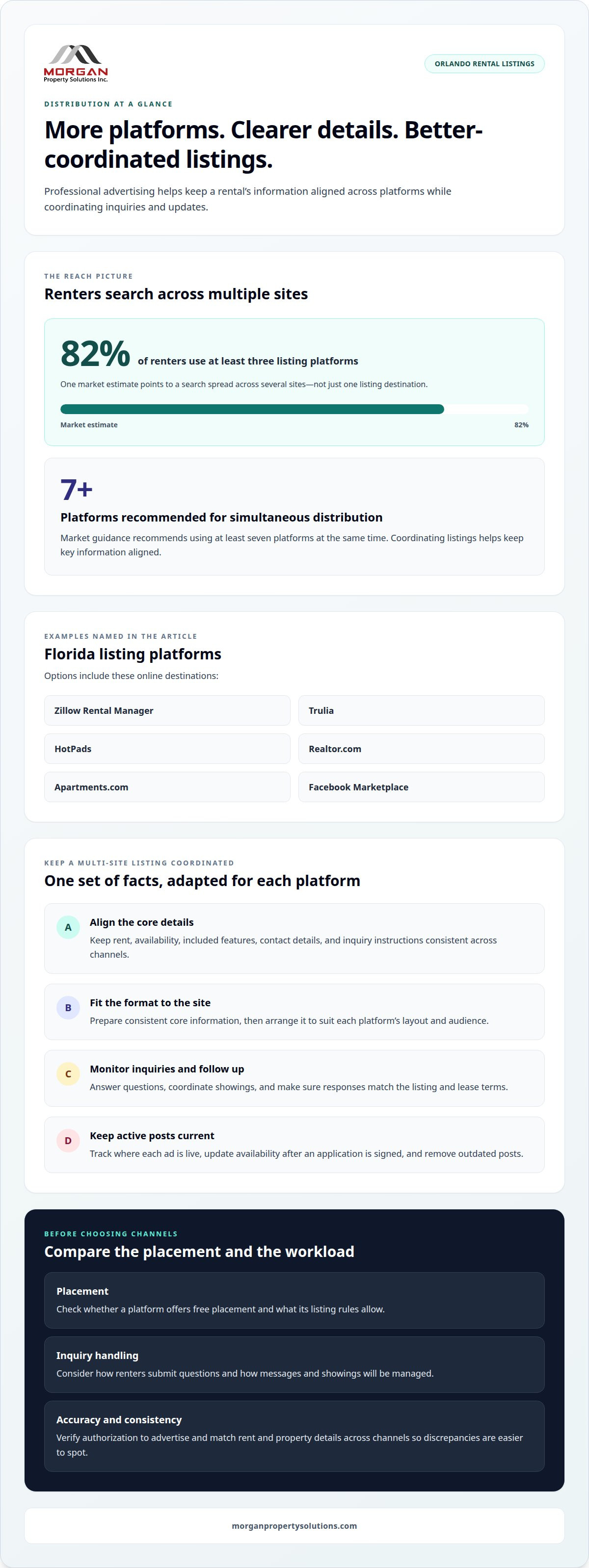
One market estimate says 82% of renters use at least three listing platforms. Florida options include Zillow Rental Manager, Trulia, HotPads, Realtor.com, Apartments.com, and Facebook Marketplace. Market guidance recommends using at least seven platforms simultaneously. A property manager can coordinate placements and keep key information aligned. These rental listing options for Florida landlords can help extend a listing’s reach across different renter audiences.
Free Rental Listing Options
Free rental listing options are platform placements that let an owner advertise without a listing charge. Features and placement rules vary, so compare the channels before deciding where to distribute a property.
Facebook Marketplace is one channel to consider alongside Zillow Rental Manager and Apartments.com. Compare whether platforms offer free placement, how renters submit inquiries, and whether their formats suit the property details. This helps shape rental listing options for Florida landlords around the property’s audience and advertising needs.
Distribution involves more than copying identical text everywhere. A property manager can prepare consistent core details, then adapt how they appear on each platform. For example, a Winter Park apartment listing can keep its rent, availability, and included features aligned while arranging information to suit each site’s format.
Accurate contact details and a clear inquiry route help renters move from finding a listing to arranging a showing. A manager can monitor messages, answer property questions, and coordinate follow-up. If a renter asks whether a deposit is required or which utilities are included, the response should match the listing and lease terms.
Platform distribution also requires ongoing coordination. A manager can track where each advertisement is active, update availability after an application is signed, and remove outdated posts. That helps prevent renters from seeing conflicting details about rent, move-in timing, or property features.
Free placement can help control advertising expenses, but reach and inquiry handling also matter. A manager weighs platform audience, listing format, and the work involved in keeping each post current. For landlords considering Orlando property management, coordinated advertising can be part of a clear plan for responding to renters and arranging showings.
Creating rental listings with professional photos and detailed descriptions
Professional photos and detailed remarks give renters a useful first look before they request a showing. For an Orlando rental, an organized listing can explain the home’s layout, included features, and setting. Among rental listing options for Florida landlords, clear visuals and accurate writing help prospective renters assess whether a property fits their needs.
A photographer can capture the property in a sequence that makes its layout easier to understand. Images might move from the entrance through the living area, kitchen, bedrooms, bathrooms, and outdoor space. Showing how a covered patio connects to the living room, for example, gives renters more context than a close-up image alone.
Photos should reflect the home’s actual condition and features. Images showing room proportions, natural light, storage, and included appliances help viewers form realistic expectations. If a bedroom is unfurnished or the kitchen is compact, an accurate view can help prevent surprises during a showing. Clear photos also distinguish the property’s features from furnishings that will not remain.
The written description adds context that an image cannot provide. For a Winter Park home, remarks could explain the bedroom layout, parking arrangements, laundry setup, and included appliances. They might also describe nearby amenities or commuting convenience. Specific details give renters more useful information than general claims such as “great location.”
Listing details should stay consistent wherever the property is advertised. Rent, availability, included features, and showing arrangements need to match current leasing information. If a dishwasher appears in a photo but isn’t included, say so in the remarks. This simple clarification helps align expectations from online viewing through an in-person visit.
A property manager can organize details about rooms, amenities, restrictions, and move-in arrangements before preparing remarks. For example, the description can clarify whether laundry is inside the home or shared with other residents. Rental listing options for Florida landlords work best when photos and written details answer practical questions without overstating the property.
The listing should also align with the written lease agreement. Compare advertised features and terms with the documents used during leasing. If the listing says an appliance is included, the agreement should reflect that understanding. Matching the advertisement with the lease helps reduce misunderstandings before a tenant signs.
For a Central Florida rental, professional presentation means showing the property honestly and explaining useful details. Photos and accurate remarks provide a practical preview, help renters decide whether to inquire, and support a clear leasing conversation.
How a property manager prepares rental terms and listing remarks
Rental terms set expectations for an advertised home, while listing remarks give renters a concise preview. A property manager can keep the two aligned so the advertisement describes the rental clearly and the lease records its actual terms.
The written lease should specify rental terms, maintenance responsibilities, pet policies, late fees, and occupancy rules. Listing remarks can summarize key points without replacing the lease. For example, a listing might say pets are subject to the lease policy, while the agreement explains the applicable conditions.
Clear writing also distinguishes a property feature from a tenant responsibility. If an Orlando home includes lawn care, the remarks should describe what’s included. The lease can then set out maintenance responsibilities during the tenancy. This helps prevent a renter from assuming every exterior task is covered.
Security-deposit terms deserve careful attention. A Florida landlord who does not intend to return any part of a security deposit must provide written notice explaining why within 30 days after the tenant leaves the dwelling. If the landlord does not intend to claim any part, the deposit must be returned within 15 days after the tenant vacates. Clear records of the property’s condition can help document the move-in and move-out process.
Some landlords may offer a tenant the option of paying a fee instead of a traditional security deposit. The listing can describe that option accurately, while the written agreement explains the arrangement and applicable terms. This deposit-free option should not be confused with a security deposit or described as one in listing remarks.
Florida’s flood disclosure requirement also affects certain lease terms. Beginning October 1, 2025, landlords must provide prospective tenants with a flood disclosure at or before signing a residential rental agreement for a term of one year or longer. The disclosure must state whether the landlord knows the property was previously damaged by flooding, whether flood-related insurance claims were filed, and whether federal assistance for flood damage was received.
Accurate remarks are especially useful for these details. A manager can keep the advertisement focused on property features and lease expectations, then address required disclosures in the appropriate written documents. If a home has a known history of flooding, the listing should not obscure that information or conflict with a required disclosure.
Before publication, a manager can compare the remarks against the proposed lease agreement. Rent, included features, pet policies, occupancy rules, and maintenance responsibilities should tell the same story. This final review helps the listing present the rental honestly and gives prospective tenants a clearer basis for deciding whether to apply.
Checking HOA, mortgage, and local rental requirements
Before advertising a Florida home, a property manager can review applicable association rules, mortgage terms, and local rental requirements. These checks help owners decide whether the planned rental arrangement fits the property’s restrictions.
HOA and Mortgage Rental Requirements
HOA and mortgage requirements are rules or terms that may affect how an owner rents a property. They matter because a listing should promise only an arrangement the owner is permitted to offer.
Review the association’s governing documents for rental limits, approval processes, or restrictions on lease terms. Mortgage documents may also contain conditions relevant to renting. For example, a condominium owner may need to account for an association’s application process before setting a move-in date. Identifying these details early helps keep listing remarks and proposed lease terms consistent.
Short-Term and Long-Term Rental Rules
Short-term and long-term rentals differ in their intended stay and may be subject to different local requirements. Owners should decide on the rental model before advertising and preparing agreements.
In Osceola County, short-term rental operators must obtain an Osceola County Short-Term Rental License and collect and remit a combined 13.5% in taxes. Long-term residential rentals follow a different framework, including Florida’s residential tenancy rules. A manager can identify the intended rental arrangement and organize the related requirements before publishing a listing.
For Orlando landlords, local requirements deserve attention alongside association and mortgage terms. Florida prohibits rent control and preempts local ordinances that attempt to cap rent prices. Reviewing applicable requirements helps distinguish statewide rules from property-specific restrictions, such as an HOA’s rental process.
Florida rental advertising should present the property and its terms accurately, using neutral, property-focused language. Remarks can describe the home’s layout, accessibility features, and occupancy terms rather than expressing a preference for a particular kind of renter. Consistent criteria for handling inquiries and applications also support a fair, organized process.
These checks matter after a lease begins, too. Florida landlords must follow state rules for notices, security deposits, and tenant rights. If a tenancy ends or an eviction becomes necessary, statutory procedures apply; a listing or lease term does not replace those steps. Clear records of the agreement and communications help keep responsibilities organized.
A property manager can bring the checks together before publication: review relevant HOA documents, consider mortgage terms, identify the rental model, and align the listing with applicable local requirements. For owners seeking help coordinating property requirements and leasing, explore rental management support.
Morgan Property Solutions Inc.
Morgan Property Solutions Inc. helps Florida owners bring rental marketing and tenant placement together. For a property in Orlando or Central Florida, that can mean coordinating listing preparation, advertising, applicant screening, and leasing through one professional process. Residential Property Management can also help owners who want support beyond finding a tenant, while Tenant Placement and Leasing focuses on the leasing stage. This guidance can be useful when you’re weighing listing channels, clarifying rental terms, or organizing the steps from inquiry to signed lease. The right support depends on what you want handled and how involved you want to remain. Contact Morgan Property Solutions Inc. to discuss your rental listing needs.
Choose the Next Step for Your Rental
The right rental listing options for Florida landlords should fit how you want to manage your property, not just how it will be advertised. Decide what you want handled, where you want to stay involved, and what support would make leasing easier. That gives your next conversation a practical starting point.
Morgan Property Solutions supports owners through Residential Property Management, Real Estate Seller Representation, and Real Estate Buyer Representation. Whether you’re preparing a rental or considering a different real estate decision, the right service depends on your goals and the property’s role in them.
A clear plan can make the next stage feel more manageable. If you’re ready to talk through your rental needs and possible next steps, contact Morgan Property Solutions. You can move forward at a pace that feels right for you.
Frequently Asked Questions
Are professional photos included?
Professional photography helps present a rental’s rooms and features, giving prospective renters a clearer understanding of the layout before arranging a visit. Morgan Property Solutions’ Photo Inspection Reports also provide detailed property documentation with “hundreds of photos.” For a listing, images of the kitchen, living area, bedrooms, bathrooms, and outdoor spaces can give renters a fuller view than one exterior image.
How long should it take to rent a Florida property in 2026?
A well-priced, well-photographed Florida rental should take 21-35 days to rent in 2026. Timing depends on asking rent, property condition, neighborhood demand, and how quickly inquiries lead to showings and completed applications. In Orlando, comparing the property with similar nearby rentals helps inform the asking price. These factors give owners a practical basis for planning vacancy and the transition between tenants.
What websites can a property manager use to list a Florida rental?
A property manager can use Zillow Rental Manager, Trulia, HotPads, Realtor.com, Apartments.com, and Facebook Marketplace. Morgan Property Solutions also syndicates rental listings to “hundreds of top sites.” A manager can coordinate placement and keep rent, availability, and property features aligned across posts. For an Orlando rental, the manager can consider the property type and intended renters, then track incoming inquiries to see which channels are generating interest.
Which rental listing platforms can give Florida landlords the widest reach, and how can a property manager help choose?
Wider reach comes from distributing a listing across relevant platforms rather than relying on one site. Options include Zillow Rental Manager, Realtor.com, Apartments.com, and Facebook Marketplace. Consider channels based on rental type, location, and intended audience. For a Lake Nona condo, for example, the listing should reach renters looking for that type of home and area, not simply appear in as many places as possible.
What information and photos can a property manager include in a Florida rental listing?
A listing can describe the property’s layout, included appliances, parking, amenities, availability, and rental terms. A set of 15-25 photos can show key rooms and features, such as the kitchen, bedrooms, storage, and outdoor space. In Winter Park, a description might clarify whether laundry is inside the home or shared. Specific details help prospective renters assess the property before scheduling a showing.
Can a property manager check whether a Florida county or city requires rental registration or permits before advertising?
Yes. Before advertising, review applicable city and county requirements for the property’s location and intended rental use. In Central Florida, consider local rules alongside HOA restrictions and mortgage terms. Identify any registration or permit steps that may affect listing timing or terms, then account for them in the advertising plan. This helps avoid promoting an arrangement that conflicts with applicable restrictions.
How much does it cost to list a rental on Zillow, Apartments.com, Realtor.com, and other sites?
Some platforms offer free rental listing placements, but fees and placement rules vary by platform.

Article by
Oliver Overton-Morgan
Oliver Overton-Morgan is a full-time Real Estate Broker since 2003, with years of experience helping thousands of people purchase and sell real estate throughout Central Florida. He holds a Graduate Realtor Institute designation, LCAM, and has held licenses in good standing as a Florida Mortgage Broker and a Notary Public. Oliver immigrated to central Florida in 2001, and within 5 years Oliver built a successful Real Estate brokerage in central Florida, where he recruited over 75 Sales Associates with 25+ million in sales production.