
Your landlord says you need it, and with hurricane season on the horizon, you know you probably should have it. But what exactly is renters insurance? Is it just another monthly expense you’re being forced to pay, or does it offer real protection when you need it most? We understand that navigating the world of renters insurance Florida can feel overwhelming, especially with confusing terms like ‘liability’ and ‘personal property’. It’s easy to feel uncertain when you’re simply trying to protect your home and your belongings.
We’re here to help make it simple. Think of this guide as your trusted partner, designed to walk you through everything you need to know in clear, straightforward terms. We’ll break down exactly what a policy covers (and what it doesn’t) during a storm, clarify whether it’s a legal requirement or just your landlord’s rule, and give you the confidence to choose an affordable plan that provides genuine peace of mind. Let’s get started on protecting what matters most to you.
Key Takeaways
- Your lease agreement is the final word on insurance requirements, as most Florida landlords mandate a policy for all tenants.
- Learn how a standard renters insurance florida policy protects your belongings from hurricane wind damage, and what it *doesn’t* cover.
- A simple home inventory is the key to accurately estimating the value of your possessions and choosing the right coverage limits.
- Secure the best protection for your needs by comparing quotes from multiple insurance providers before making a final decision.
Is Renters Insurance Required in Florida? The Official Rules
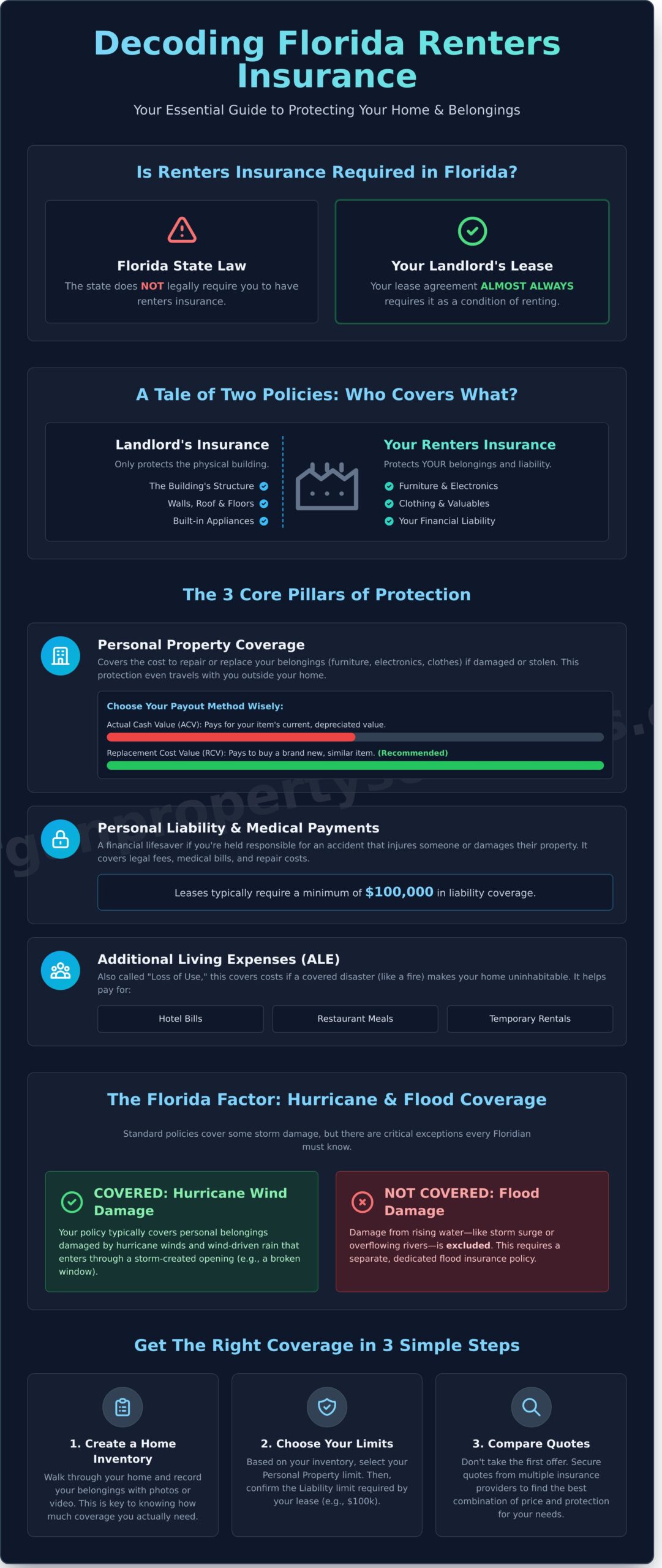
Let’s get straight to the point: the state of Florida does not have a law that mandates every renter must have insurance. However, this is only half the story. While there is no state-level requirement, your landlord or property management company can-and very often does-require you to carry a policy as a condition of your lease agreement.
This isn’t meant to be a burden; it’s a simple measure of protection for everyone involved. For landlords, it helps minimize their liability if an accident occurs in your unit. For you, the tenant, it provides a crucial financial safety net to recover your personal losses after an unexpected event like a fire, theft, or water damage. It’s a responsible part of renting that protects your financial well-being.
Understanding Your Lease Agreement
The requirement for renters insurance Florida tenants must meet will be clearly stated in your lease. Look for a section titled “Insurance” or an insurance addendum. This clause will specify the minimum amount of liability coverage required, which is typically $100,000. Fulfilling this is simple: once you have your policy, you just need to provide proof to your property manager, usually by emailing a copy of your policy’s declaration page. This is a standard step in our tenant screening criteria and helps ensure a smooth move-in process. If you’re a landlord looking to ensure your own lease is fully compliant and protective, our guide to the Florida residential lease agreement covers all the mandatory disclosures and clauses you need.
The Myth of Your Landlord’s Policy
One of the most common and costly misconceptions is believing your landlord’s insurance covers your belongings. It doesn’t. The property owner’s policy is designed to protect the building itself-the walls, roof, and floors. While this is the core purpose of a landlord’s policy, if you’re still wondering what renters insurance is, it’s a separate policy designed specifically to protect your personal assets.
Imagine a kitchen fire damages your unit. Your landlord’s insurance will pay to repair the drywall and cabinets. But who pays to replace your:
- Melted laptop and other electronics?
- Smoke-damaged couch and furniture?
- Ruined clothing and kitchenware?
Without your own renters insurance policy, that financial burden falls entirely on you. You would be responsible for replacing everything out-of-pocket, which can be a devastating expense.
What Does a Standard Florida Renters Policy Actually Cover?
Many renters believe their landlord’s insurance protects their belongings, but that’s a common and costly misconception. Your landlord’s policy only covers the building itself-not your personal items or your liability. A standard renters insurance policy, often called an HO-4 policy, is designed to fill that gap. We’re here to help you understand that this affordable coverage is built on three simple, powerful pillars of protection.
Personal Property Protection
This is the core of your policy and what most people think of first. It covers the cost to repair or replace your personal belongings if they are damaged or destroyed by a covered event, such as a fire, theft, or many types of water damage. A key detail to understand is the difference between:
- Actual Cash Value (ACV): This pays you for what your five-year-old laptop is worth today, including depreciation.
- Replacement Cost (RCV): This gives you the funds to buy a brand new, similar laptop. We almost always recommend RCV for better protection.
One of the best features of this coverage is that it travels with you. If your laptop is stolen from your car or your luggage is lost by an airline, your renters policy can help cover the loss.
Liability and Medical Payments
Accidents happen, and this coverage protects you from being held financially responsible. Imagine your dog nips a guest, or you accidentally start a kitchen fire that damages the apartment’s cabinets and walls. Personal liability coverage helps pay for the other person’s property damage, their medical bills, and even your legal fees if you are sued. This part of your renters insurance Florida policy is a financial lifesaver. Most policies also include a smaller, separate “Medical Payments to Others” coverage, which can pay for minor injuries to a guest on your property, regardless of who was at fault.
Additional Living Expenses (Loss of Use)
If a covered disaster like a fire or major pipe burst makes your rental home uninhabitable, where would you go? This coverage, also known as “Loss of Use,” steps in to help. It pays for reasonable expenses like hotel bills, temporary rentals, and even the extra cost of restaurant meals while you’re displaced. It ensures you have a safe place to stay without draining your savings during a stressful time.
Understanding these three components shows the immense value packed into a single, affordable plan. When you explore expert analysis on How Much Does Renters Insurance Cost?, you’ll see that this comprehensive protection is one of the most cost-effective ways to secure your financial well-being as a renter in Florida.
The Florida Factor: Coverage for Hurricanes, Floods, and Mold
Living in the Sunshine State comes with unique weather challenges that directly impact your insurance needs. While a standard policy provides excellent protection, it’s crucial to understand its specific limitations regarding Florida’s most common perils. Navigating the details of renters insurance in Florida means knowing exactly what is, and isn’t, covered when a storm rolls in.
Hurricane Coverage: What’s Included?
The good news is that a standard renters policy typically covers personal property damage caused by wind from a hurricane. For example, if high winds damage the roof and rain soaks your furniture, or a tree falls and destroys your electronics, your policy can help you recover. However, be aware of these key details:
- Wind-Driven Rain: Damage from rain that enters your home through an opening created by the storm (like a broken window or damaged roof) is usually covered.
- Hurricane Deductible: Many policies include a separate, higher “hurricane deductible.” Instead of a flat dollar amount, this is often a percentage of your total personal property coverage (e.g., 2% or 5%), which you must pay before your coverage kicks in.
- Be Prepared: Before storm season begins, take photos and videos of your belongings. This simple step creates a valuable inventory that can make the claims process much smoother.
While your policy covers belongings after damage, the building’s first line of defense involves robust windows and doors. This is the landlord’s responsibility, and for property owners in the Panhandle, resources like the Emerald Coast Window Authority help connect them with licensed specialists to properly secure a home against storms.
Flood Damage: The Critical Exclusion
This is the single most important distinction for Florida renters to understand: standard renters insurance does NOT cover damage from flooding. This includes water damage from storm surge, rising rivers, or overflowing lakes. Even a few inches of floodwater can destroy furniture, appliances, and cherished personal items.
To protect your belongings from flood damage, you must purchase a separate policy through the National Flood Insurance Program (NFIP) or a private flood insurer. For tenants in ground-floor apartments or low-lying areas, this additional coverage is not just a recommendation-it’s an essential safeguard for your financial well-being.
Finally, mold is another common concern. Most policies offer limited or no coverage for mold removal unless it is the direct result of a “covered peril,” such as water damage from a burst pipe or a roof leak caused by a storm. Gradual mold growth from high humidity is generally not covered.
How Much Renters Insurance Do You Need? A 3-Step Assessment
Once you understand what renters insurance covers, the next step is determining the right amount of protection for your unique situation. Choosing coverage limits can feel complicated, but we’re here to guide you through a simple, three-step process. This will help you secure a policy that truly protects your assets without overpaying.
Step 1: Calculate Your Personal Property Needs
The most important step is to estimate the value of your belongings. You might be surprised by how quickly things add up! The easiest way to do this is by creating a home inventory. Go room-by-room with a simple spreadsheet or a dedicated app and list your possessions, from large furniture to smaller items.
- Don’t forget the small stuff: Your wardrobe, kitchenware, books, and electronics can collectively be worth thousands of dollars.
- Use photos or video: A quick video walkthrough of each room can serve as excellent documentation in case you ever need to file a claim.
- Choose ‘Replacement Cost’ coverage: This is crucial. It ensures your policy will pay to replace a damaged item with a brand new one, not just its depreciated cash value.
Step 2 & 3: Choosing Liability and Special Endorsements
Your policy isn’t just about your things; it’s also about protecting your financial future. Liability coverage helps pay for legal and medical bills if you accidentally injure someone or damage their property. While many Florida landlords require a minimum of $100,000, we often recommend a limit of at least $300,000. The increase in your premium is typically very small, but the extra peace of mind is significant, especially if you have pets or entertain guests often.
Finally, consider any high-value possessions. A standard renters insurance Florida policy has coverage limits on specific categories like jewelry, fine art, or collectibles. To fully protect these, you’ll need a special add-on called a “rider” or “floater.” This specifically lists and insures your valuable items for their full appraised value. Property owners interested in setting appropriate insurance requirements for their tenants can find helpful information on our Landlord Resources page.
Finding Your Policy and Simplifying Your Rental Journey
Now that you understand the value of renters insurance, the next step is securing a policy that fits your needs and budget. This process doesn’t have to be complicated. With the right information and a clear approach, you can find affordable coverage that gives you peace of mind for your new Florida home.
How to Get a Quote and Compare Policies
Getting a quote for renters insurance Florida providers offer is fast and straightforward. Most insurance companies allow you to get a quote online in just a few minutes. To get an accurate price, you’ll typically need:
- The full address of your rental property.
- Your desired coverage amounts for personal property and liability.
- Your chosen deductible (the amount you pay before insurance kicks in).
- Information about any safety features, like smoke detectors or security systems.
We recommend getting quotes from at least three different providers to compare rates. A great way to save is by bundling your renters insurance with your auto policy. However, don’t just focus on the price. Look at customer reviews for their claims process and service quality. Once you choose a policy, remember to add your landlord or property management company as an “additional interested party.” This ensures they automatically receive proof of your coverage.
Making Renting in Florida Simple
Understanding your responsibilities, including renters insurance, is a key part of being a prepared and successful tenant. At Morgan Property Solutions Inc., we believe in making the entire rental journey as simple and stress-free as possible. We’re here to guide you every step of the way, from finding the perfect rental to helping you understand the details of your Florida residential lease agreement.
We also offer innovative solutions to help ease the financial side of moving. Options like our Deposit-Free Renting program are designed to reduce your upfront costs and make securing your new home easier. Our goal is to be your trusted partner, providing the support and expertise you need for a smooth transition. To learn more about how we simplify the rental process, you can explore our services at morganpropertysolutions.com.
Protect Your Florida Rental with Confidence
Navigating the world of renters insurance florida doesn’t have to be complicated. The key takeaway is that while not required by state law, this coverage is a non-negotiable for most landlords and a vital financial safety net for you. It protects your personal belongings from common risks and offers liability coverage, giving you essential peace of mind. By understanding what a standard policy covers, accounting for Florida-specific perils like hurricanes, and assessing your personal property value, you can confidently choose a plan that truly safeguards your home.
Building a complete financial safety net goes beyond just protecting your belongings. If you’ve previously been rated or declined for life insurance due to health conditions or a hazardous job, you can discover Special Risk Term to find affordable options.
Now that you know how to protect your future rental, the next step is finding it. As trusted experts in the Central Florida rental market with an A+ BBB Rating and over 20 years of combined experience, we’re here to simplify your search and guide you to the perfect property. We believe finding a home should be an exciting, stress-free journey.
Let us help you find the perfect rental home in Central Florida. We look forward to assisting you!
Frequently Asked Questions About Renters Insurance in Florida
How much is renters insurance in Florida per month on average?
On average, you can expect renters insurance in Florida to cost between $15 and $30 per month. Your exact premium will depend on factors like your specific location, the amount of coverage you select, and your personal claims history. This small monthly investment provides significant financial protection for your belongings and liability, making it a simple and affordable way to gain peace of mind in your rental home. It is a wise choice for any renter.
What is not covered by renters insurance in Florida?
Standard policies typically do not cover damage from floods, earthquakes, or sinkholes, which often require separate, specialized insurance in Florida. Coverage also usually excludes damage caused by pests like termites or bedbugs, as well as general wear and tear on your belongings. High-value items, such as expensive jewelry or fine art, may have coverage limits, so it is wise to discuss adding a special endorsement with your provider to ensure these items are fully protected.
Can my landlord force me to get renters insurance in Florida?
Yes, your landlord can legally require you to have renters insurance in Florida as a condition of your lease agreement. This is a common and practical requirement to ensure that both the tenant’s property and potential liability issues are covered, reducing financial risk for everyone involved. Always review your lease carefully before signing to understand all requirements. This clause helps protect you and the property owner in case of an unexpected accident.
Does renters insurance cover dog bites in Florida?
In most cases, the personal liability portion of your renters insurance policy will cover injuries or damages caused by your dog, including bites. This coverage can help with medical bills or legal fees if you are found responsible. However, be aware that some insurance companies have breed-specific restrictions and may exclude certain dogs they deem high-risk. It is crucial to be transparent with your insurance provider about your pets to ensure you have the proper coverage.
Is it worth getting renters insurance for a cheap apartment?
Absolutely. The cost of your rent does not reflect the value of your personal belongings. Consider the total cost to replace all your furniture, clothes, electronics, and kitchen supplies after a fire or theft-it adds up very quickly. Furthermore, the liability coverage included in a standard policy protects you from potentially massive legal and medical expenses if someone is injured in your home. It’s a small price for essential financial protection and peace of mind.
How quickly can I get a renters insurance policy?
Getting a renters insurance policy is a remarkably fast and simple process. In most situations, you can get quotes from multiple providers and purchase a policy entirely online in as little as 15 to 20 minutes. Your coverage can often begin the very same day, or you can schedule it to start on your move-in date. This makes it easy and stress-free to meet any lease requirements from your landlord without any delay.
Does renters insurance cover a broken TV or appliance?
Renters insurance covers your TV or appliances if they are damaged by a covered event, such as a fire, theft, or a power surge from a lightning strike. However, it typically does not cover equipment failure due to old age, mechanical breakdown, or accidental damage you cause yourself, like dropping your laptop. We recommend you always check the specific “covered perils” listed in your policy to understand exactly what situations are protected.
What happens to my renters insurance if I move?
Your renters insurance policy is portable and designed to move with you. You just need to contact your insurance provider before you move to update your address. Your premium may be adjusted up or down based on the risk factors of your new location, but your coverage will transfer seamlessly. This ensures you are protected from the moment you move into your new home, providing continuous peace of mind throughout your transition.

Article by
Oliver Overton-Morgan
Oliver Overton-Morgan is a full-time Real Estate Broker since 2003, with years of experience helping thousands of people purchase and sell real estate throughout Central Florida. He holds a Graduate Realtor Institute designation, LCAM, and has held licenses in good standing as a Florida Mortgage Broker and a Notary Public. Oliver immigrated to central Florida in 2001, and within 5 years Oliver built a successful Real Estate brokerage in central Florida, where he recruited over 75 Sales Associates with 25+ million in sales production.