
Last October, an Orlando property owner realized that a standard $185 filing fee was just the tip of the iceberg when their tenant stopped paying rent. You probably already feel the weight of this situation; it’s not just about the missing checks, but the growing anxiety over legal mistakes or an angry tenant damaging your home. We agree that the true cost of evicting a tenant in florida is often much higher than most landlords anticipate. It’s a frustrating experience that can quickly drain your reserves if you aren’t prepared for the hidden expenses that pop up along the way.
We’re here to help you navigate this process with confidence and clarity. In this guide, you’ll discover the total economic impact of a Florida eviction in 2026, ranging from court fees to the often overlooked costs of vacancy and property restoration. We’ll provide you with a clear budget and a realistic timeline so you know exactly what to expect. You will also learn our professional tips for better tenant screening to help you avoid these headaches in the future and keep your investment profitable.
Key Takeaways
- Get a clear breakdown of mandatory filing fees and paperwork so you can accurately budget for your specific Florida county.
- Understand why the true cost of evicting a tenant in florida often involves months of lost revenue and repair bills that stay hidden until the process is over.
- Learn the essential “Golden Rule” of Florida notices to help you legally speed up the timeline and get your rental back on the market faster.
- Discover how professional property management acts as a safety net, helping you avoid these stressful situations and protect your long-term investment.
The Reality of Eviction Costs in Florida for 2026
No landlord enters the rental business hoping to remove a tenant. It’s a stressful, expensive last resort that usually happens after weeks of missed calls and unkept promises. As we move through 2026, the cost of evicting a tenant in florida has become a significant concern for property owners who just want to protect their investments. We understand how overwhelming this feels. Our team at Morgan Property Solutions Inc. is here to help you every step of the way. You’ll generally face two types of expenses: direct legal fees like court filings and indirect economic losses like months of unpaid rent.
The current Florida rental climate is moving faster than ever. Efficiency isn’t just a goal; it’s a financial necessity. Understanding the eviction process is the first step toward regaining control of your property. While the total price tag can look high at first glance, having a solid plan makes the entire situation manageable. You don’t have to do this alone, and knowing what to expect will help you make the best decisions for your bottom line.
Why Florida Landlords are Seeing Higher Costs Lately
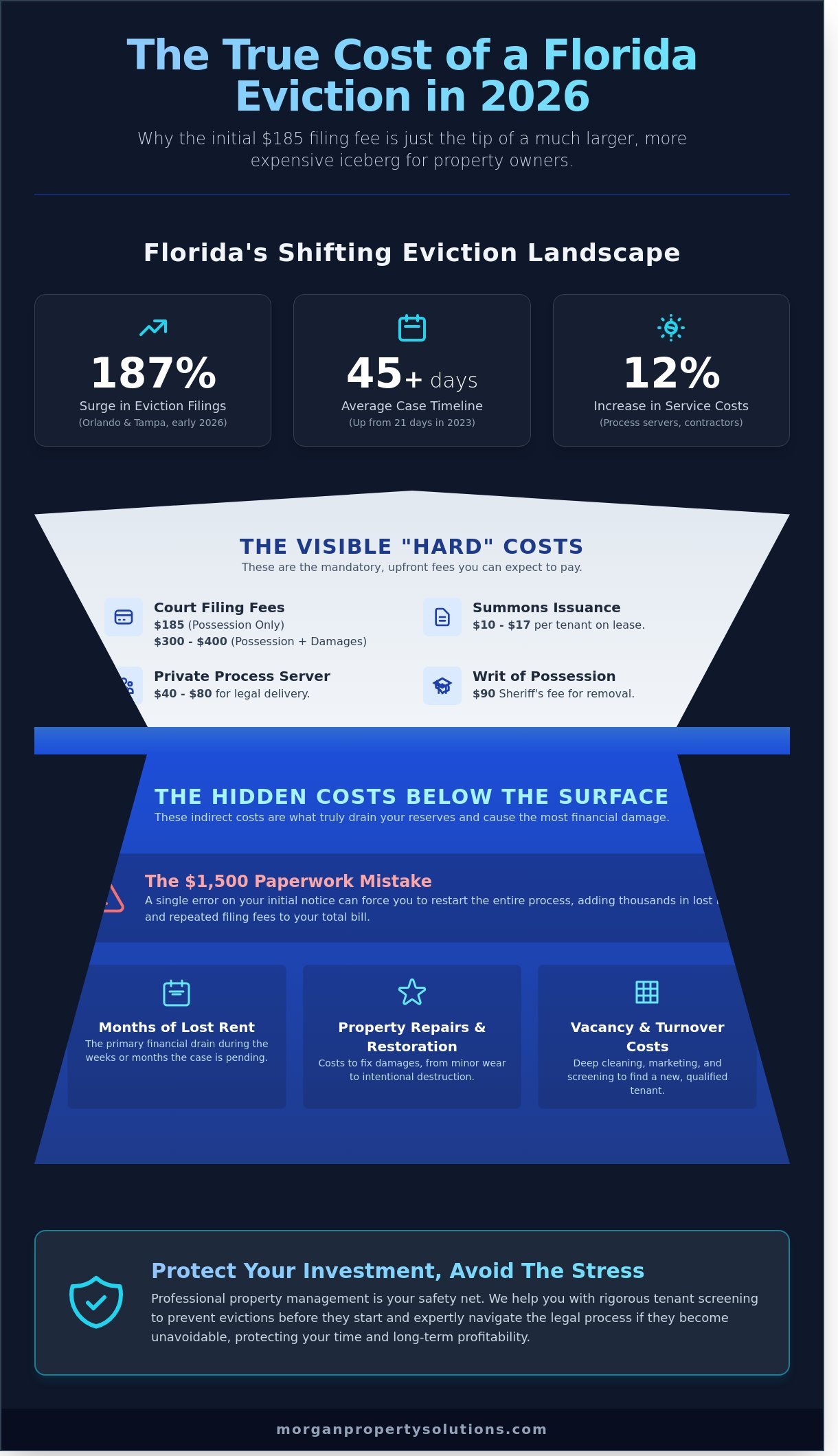
Recent data from the start of 2026 shows a 187% surge in eviction filings across major Florida hubs like Orlando and Tampa. This spike means court dockets are packed. A simple case that took 21 days in 2023 might now stretch to 45 days or more. Every extra day the tenant stays is money out of your pocket. Inflation has also hit professional services hard. Process servers and local contractors have raised their rates by an average of 12% since last year to keep up with labor costs. If you make a mistake on your initial notice, you have to start over. That single error can easily add $1,500 to your total bill in lost time and repeated filing fees.
The Different Types of Eviction Filings
The price you pay depends heavily on your specific goal for the property. Most landlords choose between two main paths:
- Possession Only: This focuses strictly on getting the tenant out so you can re-rent the unit. A “Possession Only” eviction is the fastest route to reclaiming your property.
- Possession plus Damages: This path asks the court to award you the money owed for back rent and physical property damage.
The complexity of the case changes the price tag significantly. A standard non-payment case is usually the most affordable because the evidence is clear. However, if you’re dealing with lease violations like unauthorized pets or criminal activity, you’ll likely pay more in legal fees to prove the case. In 2026, filing fees in many Florida counties hover around $185, with an additional $40 per tenant for summons service. We’ve spent over 20 years helping owners navigate these waters, and we know that speed is your best friend when trying to minimize the cost of evicting a tenant in florida. By staying organized and acting quickly, you can stop the financial drain and get a qualified tenant back into your home.
Breaking Down the “Hard” Costs: Filing Fees and Legal Paperwork
Evicting a tenant isn’t just an emotional drain; it’s a series of mandatory checks you’ll have to write before you even get a court date. Understanding the cost of evicting a tenant in florida starts with the paperwork you file at your local courthouse. These “hard” costs are non-negotiable and vary slightly depending on how many people live in the unit and which county holds the deed to your property.
Florida County Court Filing Fees
The first check you’ll write goes to the county clerk. For a standard possession-only eviction, the statewide base fee is $185. If you’re also trying to recover unpaid rent or damages that exceed $15,000, expect that fee to climb into the $300 to $400 range. You’ll also need to pay for the issuance of a summons for each tenant listed on the lease, which typically costs between $10 and $17 per person. You can find a detailed breakdown of these official court filing fees for eviction on the Lee County Clerk website, which serves as a great baseline for most of the state.
While the base statutory fees are consistent, local administrative surcharges can cause the total to shift. Filing in Orlando (Orange County) might feel slightly different than filing in Tampa (Hillsborough County) due to specific local technology fees or library surcharges. Another cost to watch for is the Registry of Court fee. If a tenant contests the eviction and is ordered to pay rent into the court registry while the case is pending, the clerk charges a 3% administrative fee to manage those funds. On a $2,000 monthly rent, that’s an extra $60 out of the pot every month.
Service of Process and Sheriff’s Fees
Once the clerk processes your paperwork, those documents must be legally delivered to the tenant. You can’t just tape them to the door yourself and call it a day. Hiring a private process server usually runs between $40 and $80. While it’s tempting to try and save money here, skipping formal service is a recipe for a dismissed case. Judges are very strict about proof of service; one small mistake can reset your entire timeline and double your cost of evicting a tenant in florida.
The final step in the physical process involves the Sheriff. If the judge rules in your favor and the tenant still refuses to leave, you’ll need a Writ of Possession. This is the legal “green light” for the Sheriff to physically remove the tenant and their belongings. In Florida, the statutory fee for the Sheriff to execute this writ is usually $90. This fee covers the officer’s time to come to the property and oversee the lockout, ensuring the transition happens peacefully and legally.
Attorney Fees: Flat Fee vs. Hourly
Finally, you’ll need to decide if you want to go it alone or hire a professional. For an uncontested eviction where the tenant doesn’t fight back, many Florida attorneys offer a flat fee ranging from $500 to $1,500. This often includes the filing fees and service costs mentioned above, making it a predictable expense. However, if the tenant hires their own lawyer and “contests” the eviction, those flat fees usually disappear. Hourly rates for litigation can quickly climb to $300 or $400 per hour, which is why most seasoned landlords try to settle things quickly.
If you’re feeling overwhelmed by the paperwork and the potential for rising legal bills, you aren’t alone. Many owners find that hiring a trusted property management partner is the best way to handle these headaches. We’ve spent over 20 years helping landlords navigate these exact hurdles, often including legal coordination as part of our core service to keep your investment stress-free.
The “Hidden” Economic Impact: What Happens Beyond the Courtroom
When you look at the total cost of evicting a tenant in florida, the legal fees are actually the smallest part of the bill. The real damage happens in the shadows of your bank statement. Most landlords focus on the filing fee, but they forget about the weeks of silence where no rent hits their account. It’s a compounding loss that can derail your entire investment strategy if you aren’t prepared. You’re not just paying for a court order. You’re paying for the time the property sits unusable and the resources it takes to get it back into a revenue-generating state.
The Cost of Vacancy and Lost Rental Income
In the 2026 Florida market, where average rents in cities like Orlando or Tampa hover around $2,100, a vacant day costs you roughly $70. If an eviction takes five weeks, you’re losing $2,450 in time alone. However, the math is usually worse. You likely missed a full month of rent before starting the legal process. By the time you get the keys back and clean the place, you’ve lost three full months of revenue. That’s $6,300 out of your pocket. While the Lee County Clerk of Court provides the roadmap for the legal steps, they can’t recover that lost time for you. This is why Morgan Property Solutions focuses on fast placement and proactive management to keep those gaps as small as possible.
Property Damages and Post-Eviction Repairs
Angry tenants rarely leave a property in “broom-clean” condition. We’ve seen everything from simple “trash-outs” that require a $500 hauling crew to nightmare scenarios like intentional damage. Some tenants have been known to pour concrete down drains or smash drywall out of spite. A professional cleaning crew for a standard three-bedroom home now costs between $350 and $600. Then you have the locksmith, who will charge $150 to $250 to rekey the entire house immediately after the lockout. A standard $2,000 security deposit disappears instantly when you’re facing these kinds of repairs. It’s almost never enough to cover the full extent of the damage left behind during an messy exit.
Re-Leasing and Marketing Expenses
Once the unit is empty and repaired, the clock starts again. You can’t just post a blurry cell phone photo and hope for the best. To attract a high-quality tenant who won’t put you back in this position, you need professional photography, which usually runs about $200. You also have to account for the time spent showing the property and vetting every applicant. Every day the unit sits empty while you’re checking references is another $70 lost. This is where having strict screening criteria becomes your best financial defense. It’s about finding someone who respects the lease and the property so you don’t have to repeat this expensive cycle. We want to help you find a reliable tenant who treats your investment like a home, not just a place to stay. Calculating the total cost of evicting a tenant in florida requires looking at these marketing hurdles as part of the overall investment loss.
Staying informed about best practices in property management is crucial for long-term success. While this guide focuses on Florida, many principles are universal. For instance, the Corpus Christi Real Estate Blog offers a wealth of information on topics from tenant relations to market analysis that can benefit landlords everywhere.
How to Legally Expedite the Process and Save Money
Speed is everything when you’re facing a non-paying tenant. Every day that passes without rent is a day your mortgage and taxes still need to be paid out of your own pocket. We’ve spent over 20 years helping landlords navigate these waters, and we’ve learned that the fastest way out is often the most methodical one. When you’re calculating the total cost of evicting a tenant in florida, time is your biggest enemy. If you rush and skip a legal step, you’ll likely find yourself back at the starting line, paying a second set of filing fees.
Serving the Correct Notice the First Time
Florida law is incredibly specific about how you start this process. For unpaid rent, you must provide a 3-Day Notice that excludes weekends and legal holidays. If the issue is a lease violation, like an unauthorized pet or property damage, you’ll need a 7-Day Notice instead. Many owners make the mistake of including late fees in the 3-Day Notice, but unless your lease specifically defines late fees as “additional rent,” a judge will likely dismiss your case. An incorrectly dated notice can add 30 days to your timeline. We always recommend double-checking the calendar and the math before you post anything on that front door.
Cash for Keys: A Strategic Alternative?
It often feels wrong to pay someone who owes you money, but looking at the numbers makes the choice clear. A standard contested eviction can easily cost you $3,000 between legal fees, court costs, and lost rent over several months. In contrast, offering a tenant $500 to sign a “Cash for Keys” agreement and move out by tomorrow afternoon can save you thousands. This agreement must be in writing and state that the funds are only released once the property is vacant, the keys are handed over, and the home is in broom-clean condition. This move protects your ROI by ending the vacancy 60 days sooner than the court system would. It’s a business decision, not a personal one.
Why “Self-Help” is a Financial Death Sentence
You might feel tempted to change the locks or shut off the water when a tenant refuses to leave, but this is a massive mistake. Florida Statute 83.67 strictly prohibits “self-help” evictions. If you take the law into your own hands, a tenant can sue you for three times the monthly rent or actual damages, whichever is higher. We’ve seen landlords lose their entire profit for the year because they let their emotions take the wheel for one afternoon. A professional approach is the only way to keep the cost of evicting a tenant in florida from spiraling out of control. Always stick to the legal path to ensure you don’t end up owing your tenant money in court.
When the challenges of being a landlord become overwhelming, some investors decide that selling the property is the best long-term financial decision. To understand what that process involves, you can explore Seller Representation and see how professionals handle property sales.
The stress that leads to such emotional decisions can affect the entire family. It’s important to have healthy coping mechanisms and support systems in place, especially for younger family members who may be sensitive to household tension. For landlords in Florida seeking to support their children or teens through these challenging times, Balanced Minds Psychology & Wellness provides specialized mental health and wellness services.
If you’re feeling overwhelmed by the legal requirements, let us handle the heavy lifting for you. Our team is ready to manage your property professionally and keep your investment on the right track.
Protecting Your Investment with Professional Property Management
Managing a rental property shouldn’t feel like a second job that keeps you up at night. Many owners start their journey with the “stress of the hunt,” constantly worrying if their next tenant will pay on time or treat the home with respect. Moving to a professionally managed property replaces that fear with genuine peace of mind. We view our services as an essential insurance policy for your asset. In neighborhoods like Orlando, Belle Isle, and Lake Nona, the cost of evicting a tenant in florida is often too high for a solo landlord to absorb without a safety net. Having a local partner means you aren’t just a landlord; you’re a business owner with a dedicated team.
Real estate is a simple path to wealth when you have the right partner by your side. You’ve worked hard to acquire your investment, and you deserve to see it grow without the constant threat of legal disputes. Our team brings over 20 years of experience to the table, ensuring that every decision is backed by local market data and proven strategies. We handle the difficult conversations and the late-night maintenance calls so you can focus on your life.
Why Rigorous Tenant Screening is Your Best Defense
Rigorous screening is your first and most effective line of defense. We don’t rely on a “gut feeling” or a friendly handshake when choosing who lives in your home. Instead, we use a data-driven process that includes pet screening and comprehensive credit checks to filter out high-risk profiles before they ever get a key. Morgan Property Solutions has maintained a stellar track record for decades by vetting applicants against strict criteria. This methodical approach identifies red flags that a standard background check might miss, ensuring we only place residents who have a documented history of financial responsibility.
This proactive, data-driven approach isn’t unique to Florida; successful real estate agencies across the country employ similar strategies to protect landlords. For a look at how this is handled in a different market, you can learn more.
The Value of “Eviction Protection” Programs
The actual cost of evicting a tenant in florida can easily climb past $5,000 when you factor in legal fees, filing costs, and lost rent. Our eviction protection programs change the math entirely by covering the legal expenses associated with an uncontested eviction. Paying a small, consistent monthly management fee is significantly cheaper than facing a single $7,000 legal disaster on your own. You can explore our landlord resources to see the various ways we shield your cash flow from unexpected disruptions. It is about predictable expenses versus unpredictable catastrophes.
Making Landlording Simple Again with Morgan
Our philosophy is built on one core idea: Making Real Estate Simple. We’ve spent more than 20 years refining our systems to ensure that owning a rental is a hands-off experience for you. With our A+ rating from the Better Business Bureau, you can trust that your property is in the hands of seasoned experts who care about your bottom line. It’s time to stop the stress of DIY management and start maximizing your monthly profits. Reach out to us today to see how we can transform your investment experience. We are here to help you every step of the way.
Secure Your Investment for 2026 and Beyond
Managing a rental in 2026 means looking past the surface level of legal paperwork. While court filing fees and process server costs are predictable, the true impact comes from lost rent and property damage that often follows a difficult move-out. We’ve seen how these hidden expenses can quickly turn a profitable year into a financial headache. The best way to protect your bottom line is to stop the problem before it starts. By using a comprehensive tenant screening process, you can find reliable renters and avoid the courtroom altogether. Understanding the total cost of evicting a tenant in florida is the first step toward building a more resilient real estate portfolio.
For some investors, building a resilient portfolio includes diversifying into international markets. Exploring luxury properties in a region like Spain’s Costa del Sol, for example, requires expert guidance from a specialized agency like King Estates to ensure a sound investment.
Staying educated on property management and investment strategies is also key. While focused on the Texas market, the Corpus Christi Real Estate Blog provides a wealth of information that can help landlords in any state build a more resilient portfolio.
With over 20 years of Central Florida experience and an A+ BBB Rating, we know how to navigate these challenges so you don’t have to. We’re here to guide you through the complexities of the market and keep your investment profitable and stress-free. It’s much easier to grow your wealth when you have a partner who handles the heavy lifting every step of the way.
It’s time to get back to enjoying your life while we take care of the details. You’ve worked hard for your property, and we’re ready to help you protect it.
Common Questions About Florida Evictions
Can a landlord evict a tenant without a lawyer in Florida?
You can file your own eviction if you hold the property title in your individual name. If an LLC or corporation owns the home, Florida law requires you to hire a licensed attorney for the court proceedings; for those in South Florida, you can check out Matthew Fornaro, P.A.. We’ve seen many owners try to go it alone, but a single typo can lead to a 20 day delay. It’s usually better to have a pro guide you through the paperwork.
How long does a typical eviction take in Florida in 2026?
You can expect a standard eviction to take between 28 and 50 days from the initial notice to the final lockout. While every county moves at its own pace, 2026 court schedules show that uncontested cases often wrap up in under a month. If a tenant decides to fight the case in court, the timeline can easily stretch to 75 days or even longer.
What is the filing fee for an eviction in Orange County, FL?
The base filing fee for a residential eviction in Orange County is $185 as of early 2026. You’ll also need to pay $10 for each summons issued by the clerk for every tenant listed on the lease. These costs are just one part of the total cost of evicting a tenant in Florida, so it’s smart to budget at least $500 for the entire legal process.
What happens if a tenant refuses to leave after the Writ of Possession is served?
The Sheriff will physically remove the tenant and their belongings if they stay past the 24 hour notice period. Once the deputy arrives, they’ll ensure the premises are vacant and stand by while you change the locks. This final step usually happens within 3 to 7 business days after the clerk issues the writ, finally giving you back full control of your investment property.
Is ‘Cash for Keys’ legal in Florida?
Yes, “Cash for Keys” is a perfectly legal and often faster way to regain control of your rental property. Many Florida landlords offer $500 to $1,000 to tenants who agree to move out peacefully by a set date. This strategy can save you 4 weeks of court battles and help you avoid the high cost of evicting a tenant in Florida through the traditional legal system.
Can I sue my tenant for unpaid rent after they are evicted?
You can definitely sue for back rent by including a second count in your eviction lawsuit or filing a separate small claims case. If the debt is under $8,000, small claims court is your best bet for a judgment. Keep in mind that winning a judgment is one thing, but collecting the actual cash from a former tenant can take 6 to 12 months of extra effort.
Does Florida law allow for ‘self-help’ evictions if the tenant hasn’t paid in months?
No, Florida Statutes Section 83.67 strictly prohibits landlords from taking the law into their own hands. You can’t change the locks, cut off the water, or remove the front door to force a tenant out. Doing so could land you in court facing a penalty equal to 3 months of rent or actual damages, whichever is higher, plus the tenant’s expensive attorney fees.
How much does a process server cost for an eviction notice?
Hiring a private process server typically costs between $45 and $95 per defendant in most Florida counties. While the Sheriff can serve papers for a flat $40 fee, private servers are often 2 or 3 days faster. Paying that extra $50 for speed is usually worth it when every day of vacancy is costing you money in lost rental income and mounting mortgage payments.

Article by
Oliver Overton-Morgan
Oliver Overton-Morgan is a full-time Real Estate Broker since 2003, with years of experience helping thousands of people purchase and sell real estate throughout Central Florida. He holds a Graduate Realtor Institute designation, LCAM, and has held licenses in good standing as a Florida Mortgage Broker and a Notary Public. Oliver immigrated to central Florida in 2001, and within 5 years Oliver built a successful Real Estate brokerage in central Florida, where he recruited over 75 Sales Associates with 25+ million in sales production.