
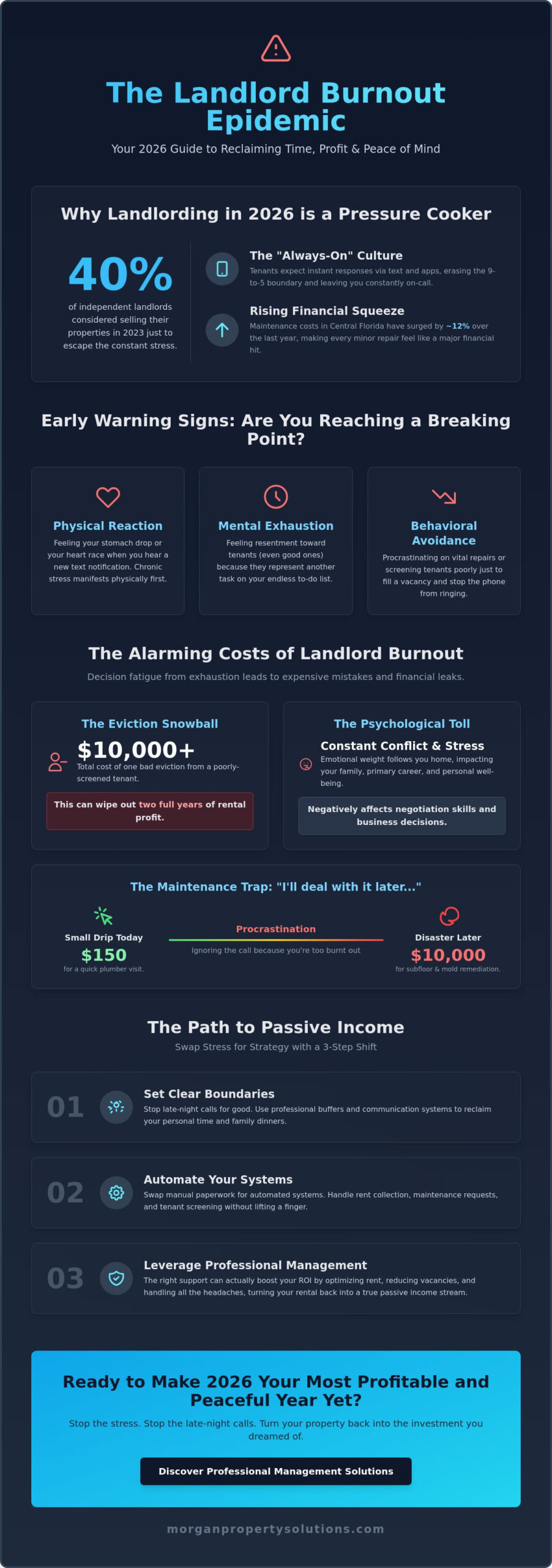
Imagine it is 2:14 a.m. on a rainy Tuesday in April. Your phone is buzzing on the nightstand with a frantic text about a leaky faucet, and suddenly, that passive income dream feels like a heavy burden. You aren’t alone in feeling this way. In 2023, industry surveys showed that nearly 40% of independent landlords considered selling their properties just to escape the constant stress of tenant demands and late-night emergencies. Learning how to avoid landlord burnout is essential if you want to keep your sanity and your investments. It is exhausting to feel like you’re always on call, especially when you are trying to enjoy dinner with your family or a quiet weekend away.
You deserve to feel appreciated for the hard work you put into your properties. We’re here to help you stop those middle-of-the-night interruptions and turn your rental back into a reliable source of income rather than a source of exhaustion. This guide provides a clear path to reclaiming your time while maintaining better relationships with your tenants. We will look at the specific management shifts, communication tools, and automation strategies you need to make 2026 your most peaceful and profitable year yet.
Key Takeaways
- Get a clear look at why managing property in 2026 feels more intense and how to spot the early warning signs that your business is reaching a breaking point.
- See how “decision fatigue” can lead to expensive mistakes and learn the real financial cost of trying to handle every single detail yourself.
- Reclaim your personal time by setting simple boundaries and using professional buffers that stop those late-night phone calls for good.
- Discover how to avoid landlord burnout by swapping manual paperwork for automated systems that handle rent collection and tenant screening for you.
- Learn the math behind professional management and how the right support can actually boost your ROI while turning your rental back into true passive income.
Why Being a Landlord in 2026 Feels Harder Than Ever
Landlord burnout isn’t just about feeling a bit tired after a long day of work. It is a serious business bottleneck that stops your rental portfolio from growing and sours your personal life. When you’re stuck in the weeds of daily operations, you lose the ability to see the big picture of your investments. In our Central Florida market, the pressure is especially high right now. While rental demand stayed strong through 2025, maintenance costs rose by roughly 12 percent over the last year. This financial squeeze makes every minor repair feel like a personal attack on your bank account.
For those who find the financial burden of maintenance unsustainable, selling to a cash-buying specialist like Peregrine REI can provide a quick exit, allowing you to walk away with cash in hand rather than another repair bill.
If you started as an “accidental landlord” because you inherited a home or moved and couldn’t sell, the emotional weight is even heavier. You didn’t necessarily choose this path, and you certainly didn’t sign up for midnight plumbing calls. Many owners find that the DIY approach works fine for one property. However, once you scale to three or more units, the manual workload becomes a full-time job. Learning how to avoid landlord burnout is the only way to keep your investment profitable while keeping your sanity intact. You can find many helpful tools for this transition in our landlord resources section.
The Signs You Are Reaching the Breaking Point
It helps to understand the clinical definition of what is burnout to realize you might already be there. It often starts with a physical reaction. Do you feel your stomach drop when you hear a new text notification? That’s a clear sign of chronic stress. Mentally, you might feel a strange resentment toward tenants who are actually paying on time, simply because they represent another task on your list. Behaviorally, you might find yourself procrastinating on vital repairs because you just can’t deal with the interaction. This avoidance eventually leads to higher costs and unhappy renters.
The “Always-On” Culture of Modern Renting
The traditional 9-to-5 boundary for landlords has vanished. In 2026, tenants expect “on-demand” service for everything. Instant messaging through various apps means people expect a reply in minutes. This “always-on” culture is exhausting for someone trying to manage properties on the side. Florida landlords feel this heat most during the peak summer months when A/C units struggle in 95-degree weather. Between high-usage seasons and the June to November hurricane window, there’s rarely a quiet moment. Knowing how to avoid landlord burnout means recognizing that you don’t have to be the one answering every ping at 2:00 AM.
The Hidden Costs of Landlord Burnout
Burnout isn’t just a feeling you get after a long week. It’s a silent drain on your bank account that usually starts with small, overlooked mistakes. When you’re exhausted, your brain naturally looks for the path of least resistance. This is called decision fatigue, and it’s a primary reason why learning how to avoid landlord burnout is so vital for your long term wealth. When you’re too tired to care about the details, the details start costing you money.
You might skip a detailed background check or ignore a red flag during a showing just to get a unit filled and stop the phone from ringing. Industry data shows that the total cost of a single eviction, including lost rent, legal fees, and property damage, often exceeds $10,000. One bad eviction can wipe out two full years of your rental profit in a single stroke.
Then there’s the maintenance trap. A dripping pipe under a kitchen sink costs maybe $150 for a plumber from Alberto Pro Plumbing to fix today. If you’re too burnt out to deal with the phone call, that leak can rot the subfloor and create a mold issue that costs $10,000 to remediate by next year. Being “too busy” to handle small repairs is one of the most expensive mistakes a property owner can make.
Financial Leakage from Poor Management
You might be leaving money on the table without even realizing it. Many tired landlords haven’t checked market rates in years because they dread the conversation about a rent increase. If Orlando rents rose by an average of 3% or 4% last year and you stayed flat, you’re essentially subsidizing your tenant’s housing. You also end up accepting subpar tenants just to stop the vacancy clock. This leads to higher turnover, and every time a tenant leaves, you’re looking at thousands in cleaning and repair costs. Effective management requires constant attention to these margins to keep your investment profitable.
The Psychological Toll of Conflict
Dealing with high-conflict tenants without a professional buffer is emotionally draining. It’s hard to stay objective when a tenant is calling your personal cell phone at 10:00 PM on a Tuesday. This emotional weight makes you a less effective negotiator. You also have to stay on top of ever-changing Florida landlord-tenant laws, which is a full time job in itself. When empathy burnout sets in, you might become too harsh or too lenient, both of which hurt your business and your reputation.
This stress doesn’t stay at the rental property. It follows you to your dinner table and your primary career. If you’re distracted by a tenant dispute during a big meeting at work, your professional performance suffers. If you’re looking for a way to breathe again, checking out some helpful landlord resources can give you the clarity you need to protect your peace of mind while protecting your assets.
Setting Boundaries: Reclaiming Your Weekends
Setting boundaries isn’t just a suggestion; it’s the only real way to protect your mental health. If you are constantly checking your phone for tenant texts, you’re never truly off the clock. Learning how to avoid landlord burnout starts with reclaiming your personal time. One of the best moves you can make is establishing strict “Office Hours.” Tell your tenants from day one that you only respond to non-emergencies between 9 a.m. and 6 p.m. on weekdays. If they contact you outside of those times, wait until the next business morning to reply. This simple habit teaches them that your time is valuable.
You also need a professional buffer. Don’t give out your personal cell number to every person who signs a lease. Use a dedicated line through an app or a separate business phone. This allows you to “silence” the business at night without missing calls from your family. Having a written Standard Operating Procedure (SOP) is another game changer. This is a simple manual that tells you exactly how to handle late rent or repair requests. It takes the guesswork out of your day and keeps things consistent. You can find more helpful tips on managing these tasks in our landlord resources section.
Communication Scripts That Save Your Sanity
Having a few pre-written responses ready to go can save you hours of stress. If a tenant texts you about a leaky faucet on a Saturday, don’t engage in a long back-and-forth. Send a quick, friendly message: “Hi there! Please submit this through the maintenance portal so we can get it scheduled first thing Monday morning.” This keeps everything documented and keeps your weekend clear. During the move-in process, explain that these protocols exist to ensure their repairs are handled efficiently. When it comes to late rent, keep it neutral. “Hi, I noticed rent hasn’t arrived yet. Just a reminder that the late fee applies after the 3rd of the month. Please let me know when to expect payment.” This avoids personal debates and keeps the focus on the lease agreement.
Defining “Emergency” vs. “Inconvenience”
You need to be very clear about what deserves a 2 a.m. phone call. We use the “Fire, Flood, or Blood” rule. If the building is on fire, the basement is underwater, or someone is physically hurt, they should call the authorities first and then call you. Everything else can wait until morning. A 2024 industry survey found that 42% of independent landlord stress comes from handling minor issues during off-hours. Don’t let a “weird noise” from the AC at 9 p.m. on a Saturday ruin your evening. Teach your tenants where the main water shut-off valve is and how to reset a circuit breaker. Empowering them to handle small things doesn’t just save you a trip; it makes them more responsible renters and helps you master how to avoid landlord burnout over the long haul.
Systems Over Sweat: Automating the Stress Away
Landlord burnout often stems from the “death by a thousand cuts” caused by repetitive manual tasks. If you’re still chasing paper checks or manually vetting every applicant, you’re working much harder than you need to. By 2026, the goal is to let technology handle the heavy lifting. This shift is a core strategy for how to avoid landlord burnout because it creates a buffer between you and the daily friction of property management.
The Power of Digital Rent Collection
The days of hearing “the check is in the mail” should be behind you. In 2026, digital payments are the expected standard. Setting up an online portal ensures you get paid faster, especially since 78% of tenants now prefer digital payment methods according to current industry trends. These systems act as a silent enforcer. You don’t have to call a tenant to ask for a late fee; the software applies it automatically at midnight on the due date. Most platforms link directly to your accounting software, so your books stay updated without you touching a calculator.
Streamlining Maintenance Requests
Maintenance is usually the biggest stressor for property owners. To stay sane, you need a system that requires tenants to upload photos or videos with every request. This simple step can save you a $100 trip fee just to find out a garbage disposal wasn’t plugged in. Using a central portal creates a digital paper trail for every repair, which is vital for legal protection and future property sales. Don’t forget preventive maintenance. Setting a recurring calendar alert for AC filter changes or gutter cleanings prevents emergency calls at 3:00 AM on a Sunday.
You shouldn’t be searching for a plumber while water is leaking through a ceiling. Build your “Vendor Rolodex” now with at least two pre-vetted pros for every trade. Having a reliable sparky or handyman on speed dial makes a crisis feel like a minor task. Similarly, you should automate the tenant screening process to remove personal bias and ensure every applicant meets your specific standards quickly.
Tax season shouldn’t be a nightmare in April. Use apps to snap photos of receipts throughout the year. This keeps your records organized and ready for your CPA at any moment. Organizing your expenses in real-time saves you roughly 20 hours of paperwork during tax season based on typical small business owner feedback. It’s about working smarter, not harder, to keep your investment profitable and your stress levels low.
If managing these systems feels like another full-time job, we’re here to help you get your time back. Explore our property management services to see how we handle the tech for you.
When to Trade the DIY Hat for True Passive Income
The math of management often surprises people. When you factor in the cost of your own labor, the “savings” of DIY management often disappear. Professional oversight usually pays for itself through better vendor rates, shorter vacancy periods, and higher tenant retention. It’s about moving away from being the person who fixes the sink and becoming the person who reviews the monthly financial statements, though some owners choose to exit the market entirely by selling to a firm like peregrinerei.com to secure a quick cash settlement.
What Professional Property Management Actually Changes
The most immediate benefit is the mental relief that comes with having a trusted partner to field those dreaded 2 a.m. emergency calls. Beyond just answering the phone, a professional team provides access to legal resources and lease agreements that are updated for the current Florida market. In competitive areas like Orlando, professional marketing can make a massive difference. Listings with high-quality photography and wide syndication often see a 20% increase in qualified leads, which helps reduce vacancy times and keeps your cash flow consistent.
Making the Move to Stress-Free Ownership
If you’re looking to offload the stress in Tampa or Miami, start by vetting potential managers on their local expertise. Ask about their specific process for tenant retention, as keeping a good tenant for an extra year is one of the easiest ways to boost your ROI. Once you hand over the keys, expect a 90-day transition period where the management team streamlines your records and establishes a new rhythm with your tenants.
Whether you are operating in Florida or looking for support in the Midwest, reputable companies like Van Treese Management demonstrate how professional management can protect both residential and commercial assets while freeing up the owner’s time.
Take Back Your Time and Your Peace of Mind
Managing property in 2026 doesn’t have to feel like a second full-time job that never ends. You can protect your weekends by setting firm boundaries and using automation to handle the small stuff. The most effective strategy for how to avoid landlord burnout is recognizing when you’ve done enough on your own. True passive income starts when you stop trading your personal time for tenant phone calls and middle-of-the-night maintenance emergencies.
At Morgan Property Solutions, we’ve spent over 20 years helping owners across Central Florida simplify their lives. With our A+ BBB rating, we focus on making real estate simple so you can focus on what actually matters to you. You’ll always stay in the loop with detailed financial reporting through our secure owner portal, but you won’t have to manage the daily stress yourself. We’re here to be your trusted partner every step of the way.
Ready to stop the stress? Get a free rental analysis and see how we can simplify your life.
You’ve worked hard to build your portfolio. Now it’s finally time to let that portfolio start working for you.
Frequently Asked Questions
How do I know if I am truly burned out or just having a bad week?
You can tell you’re burned out when the dread of checking your email lasts for more than 14 days straight. A bad week usually ends after a weekend of rest, but burnout feels like a heavy weight that stays even after a vacation. If you find yourself resenting every tenant request or ignoring maintenance calls, it’s a sign that your mental health needs a real change rather than just a day off.
Is it possible to manage 5+ properties without burning out as a DIY landlord?
Managing 5 or more units as a solo landlord is possible, but it often leads to a 60-hour work week. Most DIY owners find that once they hit the 4-property mark, the administrative burden of leases, repairs, and accounting becomes a full-time job. To learn how to avoid landlord burnout at this scale, you’ll need to automate your rent collection and have a reliable list of 3 go-to contractors.
What is the most time-consuming part of being a landlord that I should outsource first?
You should outsource maintenance coordination first because it’s the most unpredictable part of the job. Dealing with a burst pipe at 2:00 AM on a Sunday is a primary trigger for landlord fatigue. By hiring a service to handle these requests, you regain control over your personal time and eliminate the constant anxiety of waiting for the next emergency phone call that might ruin your dinner or sleep.
Can I legally stop taking phone calls from tenants after a certain hour in Florida?
You can absolutely stop taking non-emergency calls after hours, provided your lease agreement outlines a clear process for urgent repairs. Florida Statute 83.51 requires landlords to maintain the premises, but it doesn’t mandate 24/7 personal phone availability for routine questions. Setting a 5:00 PM cutoff for general inquiries helps create a healthy boundary that protects your evening peace while still meeting your legal obligations as a rental property owner.
How much does it typically cost to hire a property manager in Orlando?
Property management fees in Orlando typically range from 8% to 12% of the monthly rent collected. According to 2024 industry data from iPropertyManagement, many firms also charge a leasing fee equivalent to 50% or 100% of the first month’s rent. These costs are often tax-deductible, making them a practical investment for owners who want to reclaim their time and reduce daily stress without sacrificing the quality of their service.
What should I do if a tenant refuses to use a new digital communication system?
If a tenant refuses to use a new portal, check your lease agreement to see if digital communication is a requirement. You might offer a 30-day transition period where you walk them through the app in person to build their confidence. If they still resist, you can provide a paper alternative for now, but it’s often better to make digital use a mandatory clause in all new lease renewals to keep things simple.
Will hiring a property manager make my tenants unhappy?
Hiring a professional manager usually improves the tenant experience because it leads to faster response times. A 2023 study showed that tenants value prompt repairs over a direct relationship with the owner. When a dedicated team handles requests within 24 hours, renters feel more secure and valued. This professional approach actually leads to longer lease renewals and fewer vacancies, which is a win for both you and your residents.
What is the quickest way to reduce landlord stress right now?
The fastest way to lower your stress levels right now is to set up an automated rent collection system. Chasing checks accounts for roughly 40% of landlord-tenant friction according to industry surveys. By moving to an online platform, you eliminate the “check is in the mail” excuses and the awkwardness of knocking on doors. Taking this step is a great first move in learning how to avoid landlord burnout while keeping your cash flow consistent.

Article by
Oliver Overton-Morgan
Oliver Overton-Morgan is a full-time Real Estate Broker since 2003, with years of experience helping thousands of people purchase and sell real estate throughout Central Florida. He holds a Graduate Realtor Institute designation, LCAM, and has held licenses in good standing as a Florida Mortgage Broker and a Notary Public. Oliver immigrated to central Florida in 2001, and within 5 years Oliver built a successful Real Estate brokerage in central Florida, where he recruited over 75 Sales Associates with 25+ million in sales production.