
Imagine you’ve just inherited a home in Tampa or been offered a dream job in another state. Suddenly, you’re responsible for a property you didn’t plan to manage, and the anxiety of a double mortgage is starting to set in. It’s a lot to handle. You’re likely worried about finding a rogue tenant who might damage your investment or feeling lost in the maze of legal requirements. This accidental landlord guide florida is designed to take that weight off your shoulders and simplify the entire process.
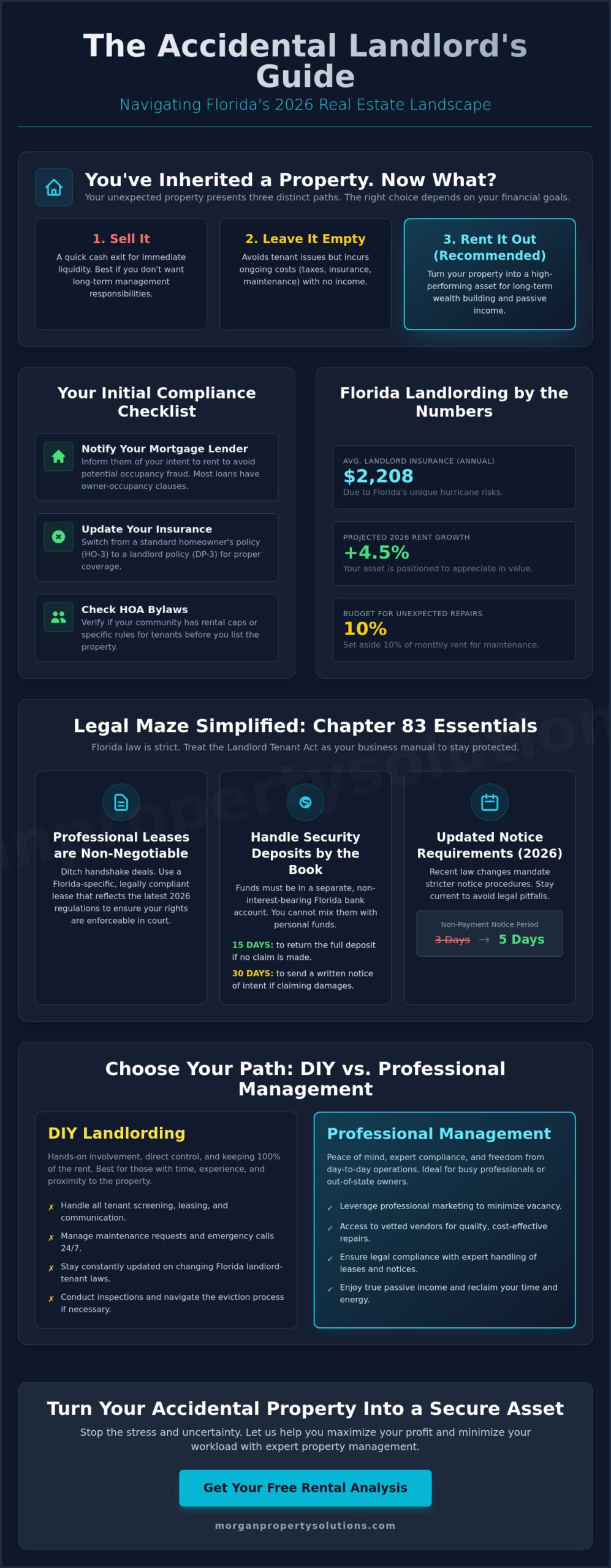
We know it feels overwhelming to stay on top of new 2026 regulations, like the July update that changed the non-payment notice period from three days to five days. You want your property to be a source of passive income, not a source of constant stress. In this guide, we’ll show you how to protect your investment and find reliable tenants quickly. From understanding why Florida landlord insurance now averages $2,208 per year to mastering electronic notice requirements, we’re here to help. Let’s turn your unexpected property into a secure, stress-free asset together.
Key Takeaways
- Start thinking like an investor by separating your emotional attachment to the home from its new role as a high-performing income asset.
- Get familiar with Chapter 83 of the Florida Statutes so you can ditch handshake deals for professional, legally compliant lease agreements.
- Our accidental landlord guide florida shows you how to run a Rental Market Analysis to find that perfect price point where you maximize profit and minimize vacancy.
- Establish clear boundaries with the “24-hour rule” for entry and professional communication standards to keep your relationship with tenants stress-free.
- Compare the hands-on work of DIY landlording with the peace of mind offered by professional property management to see which fits your lifestyle best.
You’re an Accidental Landlord: Now What? (The Owner-to-Investor Shift)
Becoming a landlord wasn’t exactly on your 2026 vision board, was it? Whether you inherited a family home in Orlando or had to relocate for work and couldn’t find a buyer, you’ve suddenly joined the ranks of thousands of others in the Sunshine State. In the context of the 2026 market, being an “accidental” landlord means you’re holding onto a property that was never intended to be a business. It’s emotional. You remember the holidays spent in that living room or the hard work you put into the landscaping. However, to succeed, you need to stop seeing it as “my house” and start seeing it as “the asset.”
This mindset shift is the hardest part of the journey. You’re transitioning from a homeowner to a business owner. It’s okay to feel stressed about rogue tenants or maintenance calls, but don’t overlook the potential. With statewide rent growth projected at 4.5% for 2026, your property is a powerful wealth-building tool. This accidental landlord guide florida will help you move past the anxiety and into a position of confidence. You basically have three choices: sell it, leave it empty, or rent it out. Since you’re here, you’re likely choosing the path of passive income, which is a smart move for your long-term financial health.
The “Rent vs. Sell” Decision Matrix
Before you list the property, you need to run the numbers. A simple handshake deal won’t cut it. Start by evaluating your cash flow. Will the monthly rent cover your mortgage, property taxes, and a 10% buffer for unexpected repairs? In high-demand areas like Lake Nona or downtown Orlando, rental demand remains strong despite the 10% statewide vacancy rate. Ask yourself if you want a quick cash exit or a retirement nest egg that grows over the next 20 years. If the math shows a profit after expenses, keeping the home as a rental is usually the better play for building equity.
Notifying the Right People
You can’t just hand over the keys and walk away. First, call your mortgage lender. Most standard loans require you to live in the home for at least a year. If you move out and rent it without telling them, you could technically be accused of occupancy fraud. Next, you must update your insurance. A standard homeowners policy (HO-3) won’t cover you if a tenant is living there. You’ll need a DP-3 landlord policy. In Florida, these premiums average about $2,208 per year due to hurricane risks, so budget accordingly. Finally, check your HOA bylaws. Many Central Florida communities have strict caps on how many homes can be rented at once. Getting familiar with Landlord-tenant law early on will help you stay compliant with these various entities. If you’re feeling stuck, you can find more help in our landlord resources section.
Florida Compliance 101: Legal and Financial Steps You Can’t Skip
You might have fallen into this role by chance, but the state of Florida doesn’t view landlording as a casual hobby. The legal framework is strict, and ignorance isn’t a valid defense if things go sideways. To keep your investment safe, you need to treat the Florida Residential Landlord Tenant Act as your new business manual. This set of laws, specifically Chapter 83, dictates everything from how you handle repairs to how you’ll eventually end a lease. This accidental landlord guide florida is here to help you stay on the right side of those rules without losing your mind.
One of the biggest mistakes new landlords make is relying on a handshake or a generic lease they found on a random website. As of 2026, Florida has moved toward much more standardized requirements. For example, any notice for non-payment of rent must now include an itemized breakdown of all charges and a link to the official Florida Courts website. If your lease doesn’t reflect these specific 2026 updates, you could find yourself unable to enforce your rights in court. We’ve put together some deeper insights in our landlord resources to help you understand these nuances. If you’re feeling a bit underwater with all these rules, checking out our Orlando property management services might be the breath of fresh air you need.
Security Deposits and Escrow Rules
Florida law is very specific about where you keep your tenant’s security deposit. You can’t just mix it with your personal savings. You must hold these funds in a separate, non-interest-bearing account in a Florida-based bank. Once a tenant moves out, you have exactly 15 days to return the deposit if you aren’t making a claim. If there is damage, you have 30 days to send a written notice of your intent to keep a portion of the money. Always take a high-quality move-in video. It’s your best defense if a tenant disputes a claim later on.
Taxes and Business Licensing
Don’t forget about the tax man. If you’re renting your property for less than six months, you’re responsible for Florida’s sales tax on short-term rentals. For long-term stays, you should look into the benefits of depreciation and 1031 exchanges to protect your profits. Also, check with your local municipality. Cities like Orlando and Tampa often require a local business tax receipt before you can legally rent out a home. Staying organized now prevents a massive headache when tax season rolls around in 2027.
Setting the Stage: Preparing Your Florida Home for Quality Tenants
Now that you’ve handled the legal basics, it’s time to get the property ready for the market. In 2026, the Florida rental market is normalizing. With a statewide vacancy rate near 10%, you aren’t just competing with other homeowners; you’re competing with brand-new apartment complexes offering move-in specials. To win, your home needs to stand out. This accidental landlord guide florida focuses on making your property the most attractive option on the block without overspending on unnecessary upgrades.
Your first move is a Rental Market Analysis (RMA). Don’t just look at what people are asking for on Zillow; look at what homes actually rented for in the last 90 days. As previously noted, while the statewide average is $2,517, local pockets vary wildly. Once you have a price, start depersonalizing. Take down the family photos and neutralize the paint colors. You want a potential tenant to walk in and see their own life in the space, not yours.
Florida-Specific Maintenance Checks
In Florida, maintenance isn’t just about aesthetics; it’s about survival. Your AC system is the heart of the home. Under Florida Landlord/Tenant Law, you’re responsible for maintaining a habitable environment. If the AC dies in the middle of July, it’s a legal emergency. Get it serviced before the first tenant moves in. We also recommend preventative pest control contracts. It’s much cheaper to pay for a quarterly spray than it is to treat a full-blown termite or roach infestation later. If the home has a pool or a large lawn, include those services in the rent. It ensures the property is actually being cared for and keeps your curb appeal high.
The Art of Tenant Screening
Finding a tenant is easy, but finding a reliable tenant takes work. You should never skip the “Big Three”: a credit score check, a criminal background search, and verifiable income that is at least three times the monthly rent. We use a strict set of screening criteria to ensure we’re placing people who will respect the property. Always call the previous landlord for a reference. A current landlord might lie to get a bad tenant out, but a previous one will usually give you the honest truth about how they treated the home.
The Business of Landlording: Handling Maintenance and Tenant Relations
You also need to respect the legal limits of your access. Florida law is very clear about the “24-Hour Rule.” Unless it’s a true emergency like a burst pipe or a fire, you must give your tenant at least 24 hours of notice before entering the home for repairs or inspections. Keeping a “rolodex” of trusted Florida contractors is essential here. You don’t want to be scrambling for a plumber when a water heater fails. Having a go-to HVAC technician and electrician ensures that repairs are handled quickly and correctly. For more advice on keeping these relationships professional, you can browse our real estate articles.
Handling Maintenance Without Losing Your Mind
Dealing with “Difficult” Situations
Even with the best screening, things can get tricky. If rent is late, you must follow the law precisely. As of July 2026, the notice period for non-payment of rent in Florida has been extended to 5 days. You can’t just change the locks; you have to issue the official notice and follow the timeline. If you encounter unauthorized pets or extra guests, stay calm and stick to the lease language. Being firm but fair is the best way to resolve conflicts without violating Fair Housing laws. If managing these daily details feels like a second full-time job, our property management experts can handle the heavy lifting for you.
DIY vs. Professional Management: Choosing the Path to Passive Income
You’ve reached the point in this accidental landlord guide florida where you have to make a choice. Do you want to be a hands-on landlord or a passive investor? The self-managed route gives you total control over every decision, but it also means you’re the one getting the call when a water heater bursts at 3:00 AM. For many, the goal of keeping a property is to build long-term wealth, not to create a second full-time job. Professional management is a fee-based service, but it offers the freedom to live your life while your asset grows in the background.
Many new owners try the DIY approach to save on costs, but the hidden expenses can add up quickly. Vacancy is often the biggest profit-killer. If a professional team can find a qualified tenant two or three weeks faster than you can, they’ve essentially paid for their own services for the year. Beyond the time saved, there’s the matter of legal protection. We talked earlier about the strict 2026 updates to Florida’s Chapter 83. A single mistake on a security deposit claim or an eviction notice can lead to thousands of dollars in legal fees and lost rent. Professionals also have established relationships with vendors, which means you don’t pay “emergency” rates for standard repairs.
When is it Time to Hire a Pro?
There are a few clear signs that you should stop trying to do it all yourself. If you live more than 45 minutes away from your rental, responding to maintenance issues or showing the property becomes a massive logistical burden. You should also consider your own stress levels. If you’re avoiding your phone because you’re worried about a tenant’s text, it’s time to hand over the keys to a partner. This is especially true if you plan to grow your portfolio. Managing one home is a task; managing three or four without professional systems is a recipe for burnout.
The Morgan Property Solutions Inc. Advantage
We’ve spent over 20 years helping owners in Central Florida turn their properties into high-performing assets. Our team holds an A+ rating with the Better Business Bureau, and we’re committed to making real estate simple for everyone we work with. We take the pressure off by handling the entire process, from our rigorous tenant placement to 24/7 maintenance coordination. By choosing our Orlando property management services, you’re choosing a partner who treats your home with the same care you do. You might have become a landlord by accident, but with the right support, you can be a very successful one.
Your Path to Stress-Free Property Ownership
Transitioning from a homeowner to an investor is a major milestone, and you’ve already taken the most important step by getting informed. By mastering the 2026 legal updates and setting up a proactive maintenance plan, you’re protecting your investment and your peace of mind. This accidental landlord guide florida has shown you that while your new role might have been unexpected, the long-term financial rewards in Central Florida are very real. You now understand how to handle everything from the new 5-day notice period to the complexities of security deposit escrow accounts.
If you’re ready to step back from the daily grind and enjoy true passive income, we’re here to help. With our A+ BBB rating and over 20 years of Central Florida experience, we provide the expert guidance you need. We handle everything from comprehensive tenant screening to 24/7 maintenance emergencies so you don’t have to. Let us take the “accidental” out of landlording—explore our Orlando property management services today. You’ve built a valuable asset, and we’re excited to help you make it thrive.
Frequently Asked Questions
Do I need a special license to be a landlord in Florida?
Florida doesn’t require a statewide landlord license, but you must check with your specific city. For instance, cities like Orlando or Tampa often require a local business tax receipt before you can legally collect rent. This accidental landlord guide florida recommends calling your county’s tax collector office first. It’s a simple step that prevents local fines and keeps your business compliant from day one.
Can I use my current homeowners insurance for a rental property?
You cannot use a standard homeowners policy for a rental property. You need a specific DP-3 landlord policy to protect yourself from liability and property damage. In Florida, these policies average about $2,208 per year as of 2026. This cost is roughly 23% higher than the national average due to our unique hurricane risks. It’s a necessary expense to protect your equity and peace of mind.
What is the most common mistake accidental landlords make in Florida?
The biggest mistake is failing to separate security deposits into a Florida-based, non-interest-bearing account. Many owners also use outdated lease templates. Under 2026 regulations, failing to use standardized forms for notices can make it impossible to enforce your rights in court. Treating this as a casual hobby instead of a business is where most people get into financial and legal trouble.
How much can I realistically charge for rent in Orlando or Tampa?
Your rental rate depends heavily on your specific neighborhood and property condition. As of May 2026, the average rent in Tampa is $2,827 per month, while Orlando averages $2,064. We always suggest running a professional market analysis rather than guessing. This helps you find the sweet spot between high profit and the 10% statewide vacancy rate seen in the first half of this year.
Does Florida law require me to have a written lease?
While oral leases are technically legal for stays under a year, they’re a massive risk in 2026. You need a written agreement to legally use electronic notices or to follow the standardized eviction forms required by Florida courts. A written lease is your only real protection if you need to make a claim against a security deposit within the required 30-day window after a tenant moves out.
How do I handle a tenant who isn’t paying rent?
You must start with an official 5-day notice for non-payment of rent. As of July 2026, the notice period was extended from three days to five. This notice has to include an itemized list of charges and a link to the Florida Courts website. If they don’t pay within those five days, you can then file for eviction through the electronic e-Filing Portal to regain control of your property.
Is it better to rent my Florida home long-term or as an Airbnb?
Long-term rentals generally provide more passive income with lower turnover costs. Short-term rentals like Airbnbs face heavy sales taxes and strict local regulations that can change overnight. Plus, long-term tenants often take better care of the home. For most people using an accidental landlord guide florida, the stability of a 12-month lease is the more reliable and far less stressful path to success.
What happens if I want to sell the house while a tenant is living there?
The lease generally stays with the property, meaning the new owner must honor the existing tenant’s contract. You can sell the home, but the tenant has the right to stay until their lease expires unless you have a specific termination-on-sale clause. Communication is key here. Many owners find success by offering “cash for keys” agreements if the tenant agrees to vacate the property early for a relocation fee.

Article by
Oliver Overton-Morgan
Oliver Overton-Morgan is a full-time Real Estate Broker since 2003, with years of experience helping thousands of people purchase and sell real estate throughout Central Florida. He holds a Graduate Realtor Institute designation, LCAM, and has held licenses in good standing as a Florida Mortgage Broker and a Notary Public. Oliver immigrated to central Florida in 2001, and within 5 years Oliver built a successful Real Estate brokerage in central Florida, where he recruited over 75 Sales Associates with 25+ million in sales production.