
Imagine you’ve finally found the perfect home in Lake Nona, but then a thirty page legal document lands in your inbox and your stomach drops. You want to move forward, but understanding a florida real estate contract feels like you’re trying to read a different language. It’s completely normal to feel some anxiety about your earnest money deposit or those “AS IS” clauses that seem to favor the seller. Most people worry they might be missing a hidden deadline that could cost them thousands of dollars.
We believe that signing for a home should be an exciting milestone, not a source of stress. You deserve to feel confident and protected as you head toward your closing date. We’re going to break down the complex legal jargon into simple, actionable steps based on the latest 2026 contract updates. We will walk you through the “Big Three” essentials: time, money, and contingencies. This guide gives you the clarity you need to sign with total confidence and ensures a smooth path to your new front door in Orlando.
Key Takeaways
- Learn why the FR/Bar “AS IS” contract is the standard rulebook for your home purchase and how it defines your rights from day one.
- Master the “Big Three” clauses, price, escrow, and financing, to ensure you’re understanding a florida real estate contract like a seasoned pro before signing.
- Discover how to use inspection and financing contingencies as safety nets to protect your deposit if things don’t go as planned.
- Find out what sellers are legally required to tell you about the property’s condition so you aren’t surprised by hidden defects later.
- Get a clear picture of what happens on closing day and the specific roles your agent and title company play in getting you the keys.
Why the Florida Real Estate Contract is More Than Just Paperwork
Think of the contract as the “rulebook” for your home-buying journey in Central Florida. It is the script everyone follows from the moment you make an offer until you finally get the keys in your hand. While it might look like a mountain of dry legal text, understanding a florida real estate contract is actually your best defense against surprises. It sets clear expectations so neither side is left guessing about who pays for what or when things need to happen.
Most transactions in our area use the “AS IS” Residential Contract for Sale and Purchase. This is often called the FR/Bar contract because it was developed by Florida Realtors and The Florida Bar. It is designed to be a fair starting point, but it is definitely more than just a formality. Getting a handle on these terms early helps you avoid “buyer’s remorse” and protects your hard-earned money from being tied up in a bad deal. It creates a balanced playing field where everyone knows their rights.
The “AS IS” vs. Standard Contract: What’s the Real Difference?
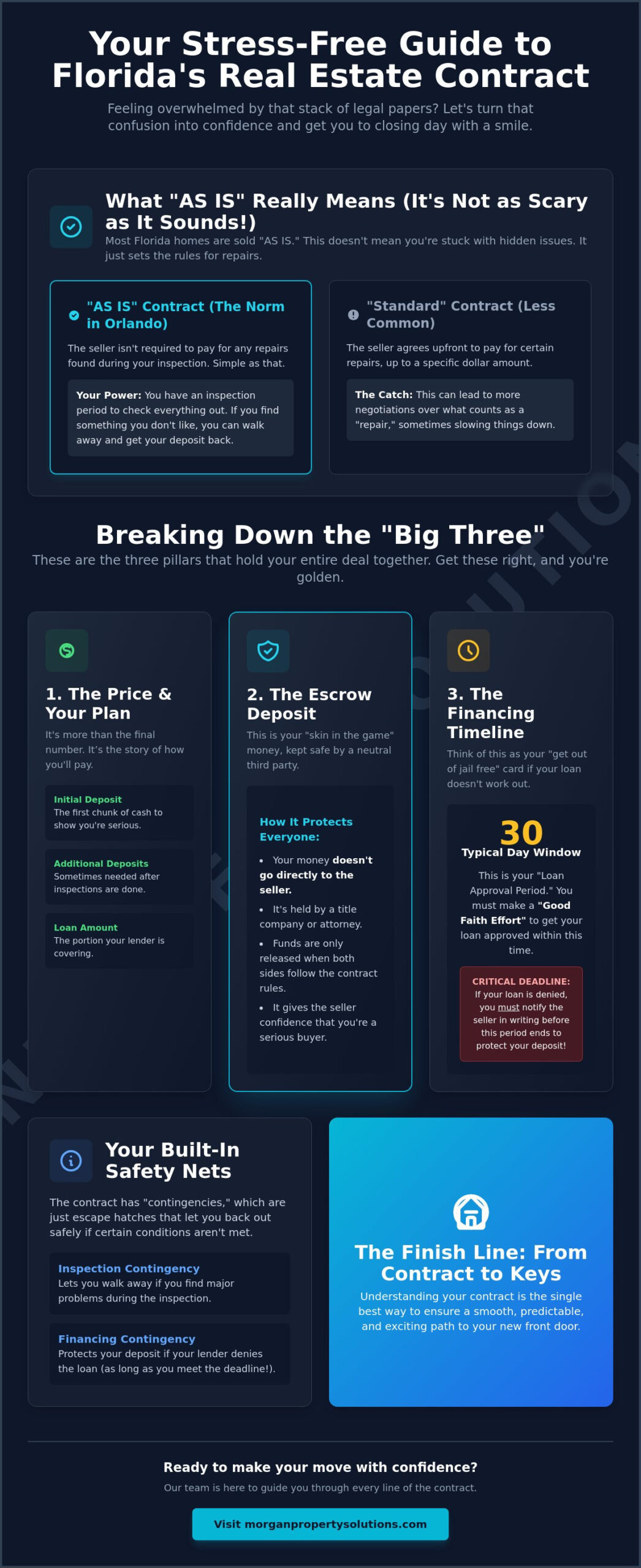
People often hear “AS IS” and worry they are buying a house with hidden nightmares. That isn’t quite right. An “AS IS” contract simply means the seller isn’t obligated to pay for repairs found during your inspection. You still have the right to inspect the property and walk away if you don’t like what you find. In a “Standard” contract, the seller is usually on the hook for a specific dollar amount or percentage of repairs. In the current Orlando market, the “AS IS” clause is the most common path for almost every residential sale.
Who Actually Writes These Contracts?
You aren’t just signing a random piece of paper. These templates are carefully crafted to meet the legal requirements specified by contract law and are updated frequently to stay current with Florida’s changing regulations. While the forms themselves are standard, the “blanks” are where the real magic happens. This is where you decide on the purchase price, the closing date, and how much time you have to get a loan. These specifics are where the risk lives if you aren’t paying attention.
Remember that you have the power to negotiate these terms before you sign. You aren’t stuck with whatever the seller sends over. It is a collaborative process, and having an experienced partner to guide you makes the whole thing feel much less intimidating. If you want to dive deeper into how these agreements protect you, you can explore more real estate articles to see how these contracts play out in real Central Florida scenarios. Taking the time for understanding a florida real estate contract now ensures you won’t have any regrets when you reach the closing table.
Breaking Down the “Big Three” Clauses: Price, Escrow, and Financing
When you start the process of understanding a florida real estate contract, you’ll quickly see that the agreement isn’t just about the final price of the house. It’s actually a carefully balanced structure involving three main pillars: price, escrow, and financing. These elements work together to ensure that both you and the seller are protected. In a fast-moving market like Lake Nona or Orlando, getting these details right is the difference between a successful closing and a stressful cancellation.
The purchase price is the headline, but it’s rarely just one lump sum. The contract breaks this number down into your initial deposit, any additional deposits, and the loan amount you plan to borrow. Seeing these numbers clearly helps you visualize exactly how much cash you need to bring to the table on closing day. It also shows the seller that you have a solid plan to fund the purchase.
The Escrow Deposit: Keeping Your Money Safe
Your escrow deposit, or earnest money, is your way of showing the seller you’re serious. It’s often called “skin in the game.” If you back out for a reason not allowed by the contract, you could lose this money. However, this cash doesn’t go straight to the seller’s pocket. It is held safely by a neutral third party, usually a title company or an attorney. The way these agreements are handled is rooted in Florida Statutes on recording real estate contracts, which provide the legal framework for how your deal is formalized.
Using a reputable escrow agent is vital because they act as a referee, making sure funds only move when the contract’s conditions are met. For investors looking at Central Florida properties, checking out our landlord resources can help you understand how to manage these initial costs as part of your broader investment strategy.
The Financing Period: The Clock is Ticking
If the bank decides they can’t give you the loan, you must provide written notice to the seller before the deadline hits. If you miss that window, your deposit could be at risk even if you can’t get the money. Truly understanding a florida real estate contract means respecting these deadlines. Many buyers find that working with expert buyer representation is the best way to keep this timeline on track and protect their investment.
The “Safety Net” Clauses: Understanding Contingencies and Deadlines
When you are deep in the process of understanding a florida real estate contract, you will see the word “contingencies” pop up constantly. Don’t let the legal language intimidate you. These clauses are actually your best friends. Think of them as safety nets that allow you to walk away from a deal with your deposit intact if specific conditions aren’t met. Without these protections, you could be forced to buy a home even if the bank denies your loan or the roof is falling in.
One phrase you must take literally is “Time is of the Essence.” In Florida real estate, deadlines are not suggestions. If the contract says you have until 5:00 PM on a Friday to provide a document, 5:01 PM is too late. There is no “Florida time” or relaxed grace period here. Missing a date by even a few minutes can cause a default, which puts your earnest money deposit at serious risk. We help our clients track every date on the calendar so nothing ever slips through the cracks.
The Inspection Period: Your Most Important 10-15 Days
The inspection period is your primary window of protection. While the standard FR/Bar contract defaults to 15 days, many sellers in the competitive Orlando market will try to negotiate this down to 7 or 10 days. In an “AS IS” contract, you can cancel for any reason at all during this time. You don’t even have to find a major defect; if you simply change your mind, you can exit. Given our local humidity and the risk of wood-destroying organisms, you should never skip a professional inspection. For those buying an investment property, this window is also the perfect time to review your screening criteria to ensure the home is a good fit for future tenants.
The Appraisal Gap: A 2026 Reality
In 2026, we are seeing a lot of “Appraisal Gaps” in high-demand neighborhoods like Hunters Creek and Oviedo. This happens when the bank’s appraiser decides the home is worth less than the price you agreed to pay. If your contract has an appraisal contingency, you can usually renegotiate the price with the seller or walk away. However, in hot markets, you might need to negotiate how much of that gap you are willing to cover in cash. Morgan Property Solutions regularly helps buyers navigate these tough conversations to make sure they don’t overpay while still securing the home they want.
Disclosures and Title: What the Seller Must Tell You
In Florida, honesty isn’t just a best practice; it’s the law. A major part of understanding a florida real estate contract involves knowing the Johnson v. Davis rule. This landmark legal case established that sellers must disclose any known facts that materially affect the property’s value and aren’t easily seen by the buyer. You shouldn’t have to guess if the foundation is cracked or if the electrical panel is a fire hazard. Even if you are signing an “AS IS” agreement, the seller is legally forbidden from hiding significant issues from you.
Title insurance is another critical layer of protection. It ensures that the person selling the home actually has the legal right to do so. It also protects you from “zombie” liens or old debts that might be attached to the property from decades ago. Without clear title, you don’t truly own your home. We also see a lot of “permit problems” in Orlando. If a previous owner added a sunroom or updated the plumbing without a permit, you could be responsible for the fines or even forced to tear the work down later. Checking the local building department records is a step you can’t afford to skip.
Material Defects: The Things You Can’t See
Common examples of material defects in our state include past sinkhole activity, recurring roof leaks, or hidden mold. A seller might try to tell you that the “AS IS” clause means they don’t have to say anything, but that is simply not true. Your first line of defense is the “Seller’s Property Disclosure” form. This document is where the seller puts their knowledge in writing. If they leave something out that they clearly knew about, they could be held liable even after the sale closes. It’s a vital tool for peace of mind.
HOA and CDD Fees: The “Hidden” Contract Terms
If you are looking at homes in newer areas like Lake Nona or Saint Cloud, you will likely encounter CDD fees. A Community Development District (CDD) fee is a way for developers to pass on the costs of infrastructure like roads and utilities to the homeowners. These are usually added to your property tax bill and can last for 20 or 30 years. You also need to look closely at HOA rules. Some communities have strict bans on where you can park a work truck or how many pets you can own. You have a right to cancel the contract if the HOA documents reveal rules that just don’t work for your lifestyle.
If you feel overwhelmed by the fine print, you aren’t alone. Having a professional on your side makes all the difference. If you want a partner to help you spot these red flags before they become your problem, reach out for expert buyer representation to protect your interests throughout the entire process.
Making the Closing Process Stress-Free in Central Florida
You’ve made it through the inspections, the appraisal, and the financing hurdles. Now, the final stack of paperwork is all that stands between you and your new home. Closing day is essentially the execution of everything you’ve learned while understanding a florida real estate contract. It’s the moment when the title company confirms that the seller has a clear title to give, and the bank releases the funds to pay for it. While it feels like a lot of signatures, it’s really just the legal confirmation of the deal you negotiated weeks ago.
The Final Walkthrough: Your Last Look
Before you head to the title company, you get one last chance to walk through the property. This isn’t just a quick peek; it’s a strategic check. You want to confirm that any agreed-upon repairs were completed and that no new damage occurred during the seller’s move-out. Check the “attached” items. If the contract specified that the high-end washer and dryer were staying, make sure they haven’t been swapped for cheaper models. If the house isn’t in the condition the contract promised, you have the right to delay the closing or ask for a financial credit to fix the issues. Don’t sign those final papers until you’re satisfied.
Beyond the Signature: Your Central Florida Real Estate Ally
Step Into Your New Home with Total Confidence
You have now taken the first big step toward mastering the home buying process. By focusing on the “Big Three” and respecting every contract deadline, you’ve turned a scary legal document into a clear roadmap for your success. Understanding a florida real estate contract isn’t a solo mission. It is about knowing which levers to pull to protect your deposit and your future financial health. You now have the tools to spot red flags and use contingencies as the safety nets they are meant to be.
At Morgan Property Solutions, we bring over 20 years of Central Florida expertise to your side. We have earned our A+ rating by taking a human-first approach to complex real estate sales and property management. We don’t just see a stack of papers; we see your next big chapter. Whether you are buying a first home in Orlando or an investment property in Lake Nona, we provide the steady, dependable guidance you deserve. Let Morgan Property Solutions guide you home; contact us today! We look forward to helping you navigate your journey with total clarity and warmth.
Frequently Asked Questions
Can I back out of a Florida real estate contract after signing?
You can back out of the deal, but your ability to keep your deposit depends on the specific safety net clauses you’ve included. If you are within your inspection window or your bank denies your financing, you can typically walk away without penalty. However, backing out for no legal reason outside of these contingency windows usually means forfeiting your earnest money to the seller.
What is the “Time is of the Essence” clause in Florida?
This clause means that every deadline in your contract is a hard cutoff with no room for error. If you miss a date for a deposit or an inspection by even a few minutes, you are technically in default. Unlike some other states where grace periods are common, Florida law treats these dates as absolute. It makes understanding a florida real estate contract vital so you don’t accidentally lose your rights.
Do I need a lawyer to review my Florida real estate contract?
What happens if I miss a deadline in the contract?
Missing a deadline puts you in technical default, which gives the seller the legal right to cancel the contract and potentially keep your deposit. While some sellers might be willing to sign an extension, they aren’t obligated to do so. This is why we emphasize tracking every date on a calendar the moment your offer is accepted. Staying ahead of these dates is the only way to keep your closing on track.
What is an earnest money deposit, and can I lose it?
An earnest money deposit is the cash you put upfront to show the seller you are a serious buyer. This money is held in a neutral escrow account by a title company or attorney, not by the seller directly. You only risk losing it if you fail to meet your contractual obligations, such as walking away after your inspection period has already expired. If you follow the contract rules, the money is applied to your purchase price at closing.
How long is the typical inspection period in Florida?
The standard Florida contract defaults to a 15 day inspection period, but this is one of the most commonly negotiated terms. In competitive areas like Orlando, sellers often push for a shorter window of 7 to 10 days to keep the process moving quickly. You should always ensure you have enough time to get a professional inspector out to the property and receive their full report before this clock runs out.
What are the mandatory disclosures for sellers in Florida?
Sellers are legally required to disclose any known issues that materially affect the home’s value and aren’t readily observable to a buyer. This includes things like past sinkhole activity, structural issues, or environmental hazards. Understanding a florida real estate contract means knowing that an “AS IS” clause doesn’t give a seller permission to hide these critical details. Using a formal disclosure form is the best way to ensure these facts are documented.
Can I change the contract terms after both parties have signed?
You can change the terms after everyone has signed, but it requires a formal written document called an addendum. Both the buyer and the seller must agree to and sign these changes for them to be legally binding. Whether you are extending the closing date or adjusting the purchase price after an inspection, verbal agreements won’t hold up. Everything must be in writing to protect both sides of the transaction.

Article by
Oliver Overton-Morgan
Oliver Overton-Morgan is a full-time Real Estate Broker since 2003, with years of experience helping thousands of people purchase and sell real estate throughout Central Florida. He holds a Graduate Realtor Institute designation, LCAM, and has held licenses in good standing as a Florida Mortgage Broker and a Notary Public. Oliver immigrated to central Florida in 2001, and within 5 years Oliver built a successful Real Estate brokerage in central Florida, where he recruited over 75 Sales Associates with 25+ million in sales production.