
What if a single forgotten ceiling fan remote or an un-reset smart thermostat could actually delay your home closing at the very last minute? It sounds like a small detail, but the final days of a sale are often when the most stress creeps in. You’ve likely spent weeks packing boxes and signing paperwork, yet that nagging fear remains that you might have missed something vital on your moving out checklist for sellers. We know you want a clean break and a smooth transition without any legal or financial surprises at the closing table.
This guide is designed to remove that friction and give you total confidence as you prepare to hand over the keys. We’ve distilled the complex process of vacating a property into manageable steps, from handling utility transfers to navigating the latest Florida flood disclosure requirements. We will also cover the digital side of moving, like clearing your personal data from smart devices and setting up USPS mail forwarding. By following these steps, you can ensure a successful final walkthrough and a happy buyer, leaving you free to focus entirely on your next chapter.
Key Takeaways
- Learn how to time your utility transfers and mail forwarding to keep the home functional for the walkthrough while avoiding extra bills.
- Clarify the “broom-clean” standard and fixture rules so you know exactly what needs to stay and how clean the property must be.
- Use our moving out checklist for sellers to safeguard your home against Florida’s humidity and pests during the transition period.
- Master the final walkthrough by organizing keys, remotes, and records to ensure the buyer’s first day is as seamless as your last.
- Prepare for closing day with a clear plan for your final documents and the items you’ll need to bring to the table.
Mastering the Logistics: Utilities, Mail, and Essential Records
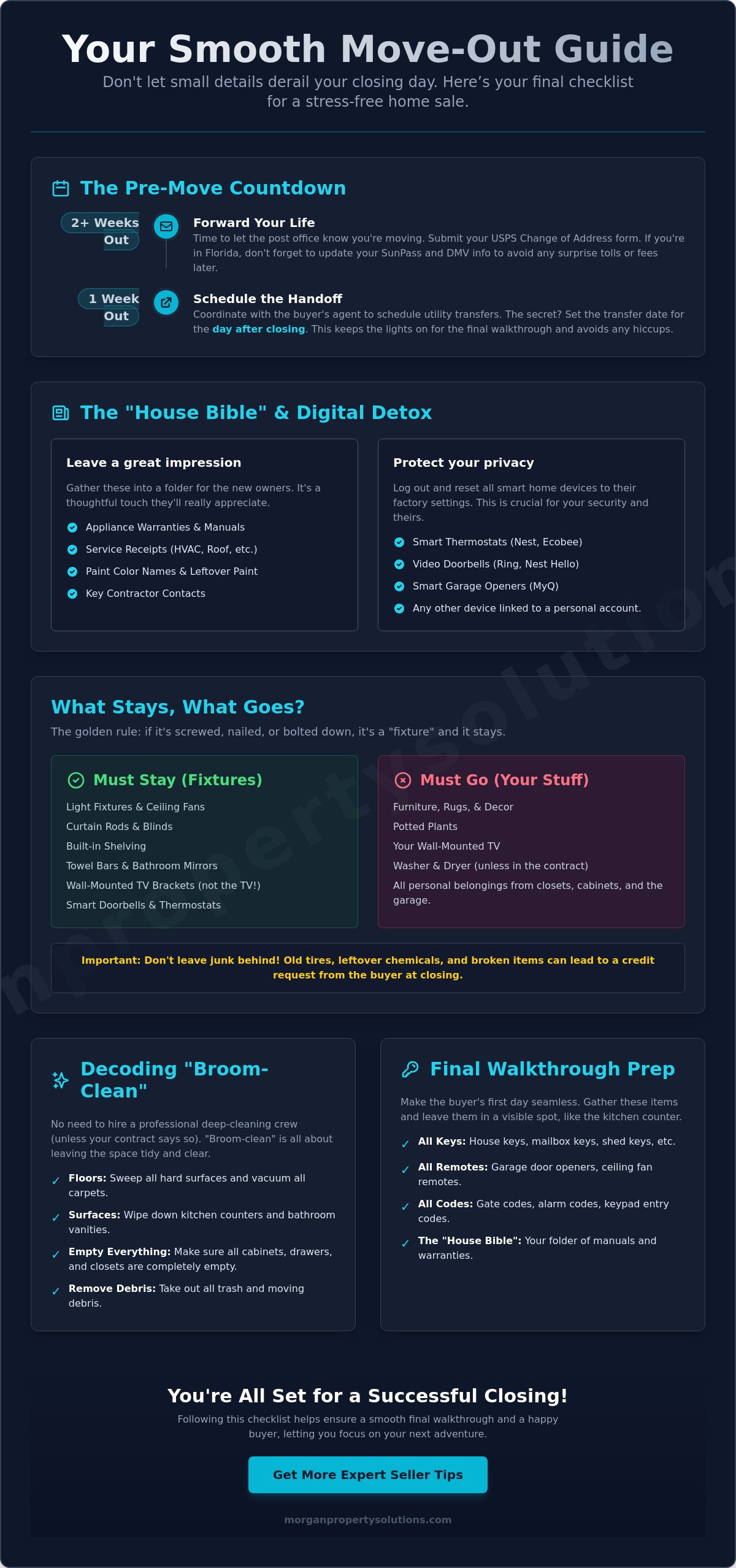
Moving out involves a lot of heavy lifting, but the mental load of managing logistics can be just as taxing. Whether you are hiring a professional team like bfhappymovers.com or coordinating a local move yourself, a comprehensive moving out checklist for sellers should always prioritize the “invisible” connections that keep a house running. One of the most common mistakes is cutting off the power or water too early. You should schedule your utility transfers for the day after your official closing. This ensures the lights stay on for the final walkthrough and prevents any last-minute friction with the buyer. It’s much easier to hand over a house that is fully functional and comfortable.
Beyond the pipes and wires, you need to manage your digital and physical paper trail. Submit your USPS Change of Address at least two weeks before your move date to prevent important documents from landing in the new owner’s hands. Since we are in Florida, don’t forget to update your address with SunPass and the DMV. Forgetting to update your SunPass can lead to unexpected toll violations or account freezes long after you’ve handed over the keys. These small administrative tasks are the ones that often cause the most headache if ignored.
The Utility Transition Strategy
It’s best to coordinate directly with the buyer or their agent on the exact date for water and electric transfers. This handoff should be seamless to avoid any service interruptions. Also, check with your internet provider about your equipment. Some modems and routers are tied to your account and must be returned, while others might be part of the home’s infrastructure. In Central Florida, you should also verify that there are no outstanding utility liens on the property that could complicate the title transfer.
Digital and Physical Document Handover
Think of the next owner as a friend you’re helping out. Using a moving out checklist for sellers to track your documents ensures nothing gets lost in the shuffle. Gathering all physical warranties, manuals, and service receipts into a “House Bible” folder is a professional touch that buyers truly appreciate. Include things like paint color names and contractor contacts for the roof or AC. If you have smart home devices like Nest thermostats, Ring doorbells, or MyQ garage openers, ensure these accounts are fully reset to factory settings. This protects your privacy and allows the new owner to set up their own security without hurdles.
Managing these details is a vital part of the final step in executing a real estate transaction. It ensures that when you walk away, you’re doing so with a clean slate and no lingering obligations. If you aren’t actually selling but are instead transitioning your property into an investment, you can find specialized guidance through these landlord resources. Taking the time to organize these records now prevents frantic phone calls and protects your reputation as a responsible homeowner.
Preparing the Property: What Stays, What Goes, and the “Broom-Clean” Standard
Once the last box is loaded onto the truck, the house often looks different than you remember. This is the moment when the “broom-clean” standard, a common term in real estate contracts, actually matters. Many sellers worry they need to hire a professional crew for a deep scrub, but that usually isn’t the case. In most instances, broom-clean simply means you’ve swept the floors, vacuumed the carpets, wiped down the countertops, and completely emptied the cabinets. It’s about removing your presence so the buyer can envision theirs. Adding a thorough final sweep to your moving out checklist for sellers ensures you don’t leave behind any dust bunnies that could sour the mood during the final walkthrough.
The most important rule to remember during this phase is the “attached” rule. If an item is screwed, nailed, or bolted to the walls or ceiling, it is legally considered a fixture and must stay with the property. This includes everything from curtain rods and towel bars to hardwired light fixtures and shelving. If you have a sentimental chandelier you plan to take, it should have been replaced or excluded in the contract long before this stage. Before you start patching every tiny nail hole in the drywall, check with your Realtor. Some buyers prefer to see where the studs are, while others expect a smooth surface; your contract will likely dictate the expectation.
The Fixture Trap: Avoiding Closing Delays
Common points of contention often involve TV mounts, smart doorbells, and window treatments. If you remove a wall-mounted TV, the bracket usually stays unless specified otherwise. Taking the bracket leaves behind holes that you are then responsible for repairing. Similarly, if you promised to leave the washer and dryer, make sure they are empty and wiped down. While it is helpful to leave a few matching floor tiles or small cans of touch-up paint in the garage, don’t use the move as an excuse to leave “junk.” Old tires, half-empty chemical bottles, or broken furniture are liabilities that can lead to a credit request at the closing table.
Cleaning for the Final Walkthrough
To win the buyer over one last time, focus your energy on the “Big Three”: the kitchen, the primary bathroom, and the entryway. These are the areas where buyers spend the most time during a final walk-through checklist review. A quick wipe-out of the refrigerator and oven goes a long way toward showing the home was well-maintained. We often look to Orlando property management standards as a great benchmark for a high-quality handover. A clean, neutral space suggests a home that was cared for, which builds trust right before the papers are signed. If you’re feeling overwhelmed by the transition, reaching out to the experts at Morgan Property Solutions can help clarify your next steps as a seller or future investor.
The Florida Handover: Protecting Your Home from Heat and Pests
Selling a home in the Sunshine State means your moving out checklist for sellers needs to account for the relentless humidity and heat. An empty house in Florida is a playground for mold if the air isn’t moving. Many sellers make the mistake of turning the AC off to save on the final bill, but in Orlando, this is a recipe for a mold disaster that could jeopardize your closing. Keep your thermostat set to a “Safe Zone” of 78°F. This setting is efficient enough to keep costs low while ensuring the air remains dry and the property stays protected.
Beyond the temperature, you need to be vigilant about pests. Do one last sweep for “Florida roommates” like ants or roaches before you lock up for the final time. Ensure all windows and doors are sealed tight; even a small breach can let in moisture and bugs. If your property includes a pool, don’t let the maintenance slide in the final days. Check the water levels and verify the timer is functioning. A green pool is a major red flag during a walkthrough and could lead to last-minute credit demands at the closing table.
Managing the HVAC System
Change the AC filter one last time before you leave. It ensures the system runs at peak efficiency during the buyer’s final inspection. If your irrigation system has quirks or a specific timer schedule, leave a brief note for the new owners. These small acts of guidance prevent the lawn from browning and keep the home’s vital systems running smoothly during the transition.
Outdoor Maintenance and Curb Appeal
Don’t let the exterior fall into disrepair while the house sits empty. If there is a week or more between your move-out and the closing date, mow the lawn one last time. Clear away any branches or debris left behind by recent Florida storms or heavy winds. By including these exterior tasks on your moving out checklist for sellers, you maintain the home’s value right up to the moment you hand over the keys. Finally, test the garage door and gather all remotes to leave on the kitchen counter.
Winning the Final Walkthrough: The Little Things Buyers Notice
The final walkthrough is the buyer’s last chance to inspect the home before the deal is done. You want them to feel completely confident that they are making the right choice. A critical part of your moving out checklist for sellers is the final “Sweep and Peak.” This isn’t just a quick glance. You need to open every closet door, check the very back of the kitchen drawers, and peek into the attic or crawlspace one last time. It’s surprisingly common for a single box or a forgotten winter coat to be left behind in the chaotic rush of moving day.
Once the house is totally empty, collect every single key. This means the front and back doors, the mailbox, and any gate keys. If you live in a community with shared amenities, like those in Lake Nona or Winter Garden, don’t forget the pool fobs. Label each key clearly and leave them in a neat pile on the kitchen counter alongside all garage remotes. By keeping a detailed moving out checklist for sellers, you ensure these small gestures of organization aren’t forgotten. It sends a powerful message that you were a responsible owner who maintained the home until the very end.
The “Key” to Success
Before you lock up for the final time, walk through and test every lightbulb. A burnt-out bulb might seem like a non-issue to you, but to a nervous buyer, it can look like a potential electrical problem. Taking five minutes to swap out a bulb can prevent a stressful and unnecessary conversation during the walkthrough. If you’re looking for more guidance on the nuances of a sale, you can browse through these real estate articles for expert advice on the entire process.
Documenting the Condition
To protect your financial interest, take timestamped photos of every room once it’s completely empty. This provides undeniable proof of the home’s condition at the moment you moved out. Photograph the flooring specifically to prevent any claims that your movers caused damage during the exit. It’s also a smart move to take a quick video of the appliances running, like the dishwasher or the stove, to show they were fully functional when you left. Store these files in a cloud folder until the closing is officially recorded. For professional support in managing your property transition, visit Morgan Property Solutions to see how we can assist you.
Crossing the Finish Line: Closing Day and Beyond
Closing day is finally here. You have followed your moving out checklist for sellers to the letter, and the house is ready for its new owners. Before you head out, confirm the exact time and location of the meeting with your title company or attorney. These details can sometimes shift at the last minute, so a quick phone call in the morning provides peace of mind. As you leave for the final time, double-check that every door is securely locked and the alarm system is activated. You want to walk away knowing the property is safe until the buyer arrives. Keep a “Moving Essentials” bag within reach that contains your photo ID, any remaining keys, and your closing documents. This prevents the frustration of digging through packed boxes when you’re at the closing table.
The Day of Closing
Beyond the physical keys, make sure your financial logistics are in order. Verify that the title company has your correct wiring instructions for the sale proceeds. This is a critical step to ensure your funds are transferred safely and quickly after the documents are recorded. It’s also helpful to keep a digital or physical folder of your final utility bills and the move-out photos we discussed in the previous sections. While you’ve done the hard work of vacating, these records are your final layer of protection. Once the papers are signed, the house is officially out of your hands, and you can focus entirely on your new destination.
Partnering for Your Next Chapter
Leaving a long-time family home can be an emotional transition. It’s the end of one story and the beginning of another, whether you are staying in Central Florida or moving far beyond the Orlando area. While Balanced Minds Psychology & Wellness can help children and teens navigate the mental health challenges of relocating, at Morgan Property Solutions, we specialize in helping sellers navigate these complex life changes with ease. Our team provides expert Real Estate Seller Representation designed to maximize your returns and minimize your stress. We focus on procedural ease so you don’t have to worry about the fine print.
With over 20 years of experience serving this community, we bring a level of expertise that only comes from decades in the field. You can read more about our mission and our seasoned team on our about page. Whether you need help with your next sale or are looking for professional Orlando property management for an investment property, we are ready to serve as your steady ally. Reach out to us to ensure every chapter of your real estate journey is a success.
Step Into Your Next Chapter with Confidence
Handing over the keys is more than just a physical move; it’s the final legal and emotional transition of your home sale. By following this moving out checklist for sellers, you’ve successfully managed the invisible details that often cause last-minute stress. You’ve timed your utilities perfectly, clarified the “broom-clean” standard, and protected your property from the Orlando heat. These small, methodical steps ensure your final walkthrough is a celebration rather than a source of anxiety.
At Morgan Property Solutions, we believe every transition should be smooth and rewarding. As a top-rated Orlando property management firm with over 20 years of Central Florida real estate expertise, we provide comprehensive support from the initial valuation all the way to the closing table. Whether you’re selling your primary residence or looking for a partner to manage your investments, we’re here to guide you. Let Morgan Property Solutions simplify your next move—contact us today! We look forward to helping you achieve a clean break and a successful new beginning.
Frequently Asked Questions
Do I have to clean my house before the buyer moves in?
Yes, you generally need to meet the “broom-clean” standard as outlined in your sales contract. This involves removing all personal belongings, sweeping the floors, and wiping down the countertops. While a professional deep clean isn’t usually a legal requirement unless specified, leaving the home tidy ensures a smooth walkthrough and prevents the buyer from requesting cleaning credits at the last minute.
What happens if I forget something in the house after closing?
Once the closing is officially recorded, the property and any items left inside legally belong to the buyer. You don’t have the right to re-enter the home without the new owner’s permission. If you realize you’ve left something behind, contact your real estate agent immediately. They can reach out to the buyer’s agent to see if a retrieval can be arranged as a courtesy.
Should I leave the utilities on until the day I move out?
You should keep all utilities active until at least one day after the official closing date. This ensures the buyer has lights, water, and climate control during their final inspection. Cutting off service too early can lead to a dark or uncomfortably hot house, which might make a buyer nervous and potentially delay the final step of your moving out checklist for sellers.
Can I take the smart doorbell or Nest thermostat with me?
You can only take these devices if you specifically excluded them in your sales contract and replaced them with standard versions before the walkthrough. Generally, anything screwed into the wall or hardwired is considered a fixture and must stay. If taking these items is part of your personal moving out checklist for sellers, ensure the swap is done early to avoid legal disputes at the table.
Is the seller responsible for repairs found during the final walkthrough?
What is considered “broom-clean” in a real estate contract?
Broom-clean means the home is free of all trash, debris, and personal property. You should sweep the hard surfaces, vacuum the carpets, and ensure the cabinets and drawers are completely empty. It doesn’t mean the house has to be spotless or scrubbed from top to bottom. The goal is to provide a blank slate so the buyer can begin their own move without cleaning up your mess.
How do I handle mail that still comes to my old address?
The best way to manage your mail is to set up official forwarding through the USPS at least two weeks before your move. For permanent moves, standard mail forwarding is free for the first 12 months. This window gives you plenty of time to manually update your address with your bank, employer, and any subscription services so nothing important gets lost in the transition.

Article by
Oliver Overton-Morgan
Oliver Overton-Morgan is a full-time Real Estate Broker since 2003, with years of experience helping thousands of people purchase and sell real estate throughout Central Florida. He holds a Graduate Realtor Institute designation, LCAM, and has held licenses in good standing as a Florida Mortgage Broker and a Notary Public. Oliver immigrated to central Florida in 2001, and within 5 years Oliver built a successful Real Estate brokerage in central Florida, where he recruited over 75 Sales Associates with 25+ million in sales production.