
What if your current tenant wasn’t a hurdle to your home sale, but actually the key to securing a higher offer? Most landlords worry that selling a house with tenants in Florida will lead to retaliation, messy showings, or legal disputes over security deposits. It’s completely normal to feel anxious about balancing a major financial move with someone else’s home life. You’ve worked hard for your investment, and you want a smooth closing that respects both the law and your bottom line.
This 2026 guide helps you navigate the process without the stress, ensuring you stay compliant with Florida’s 30 day notice requirements and the latest electronic notice laws. We’ll show you how to manage security deposit transfers correctly and use strategies like “cash for keys” to keep your tenant cooperative. You’ll learn how to leverage your property’s occupancy as an asset to attract the right buyers while protecting yourself from common legal pitfalls. Let’s look at how you can transition from landlord to successful seller with total confidence.
Key Takeaways
- Understand how Florida’s “lease runs with the land” rule works so you can set clear expectations for potential buyers from day one.
- Master the art of selling a house with tenants in florida by using a “Notice of Intent to Sell” to prevent panic and ensure your tenants stay cooperative.
- Navigate the complexities of security deposit transfers and estoppel certificates to avoid common closing delays or legal headaches.
- Learn how to tailor your marketing strategy to attract the right audience, whether you’re targeting turnkey investors or traditional homebuyers.
- Discover how having a professional buffer can help you manage 24 hour notice requirements for showings without damaging your relationship with the tenant.
Is it Legal to Sell a Tenant-Occupied House in Florida?
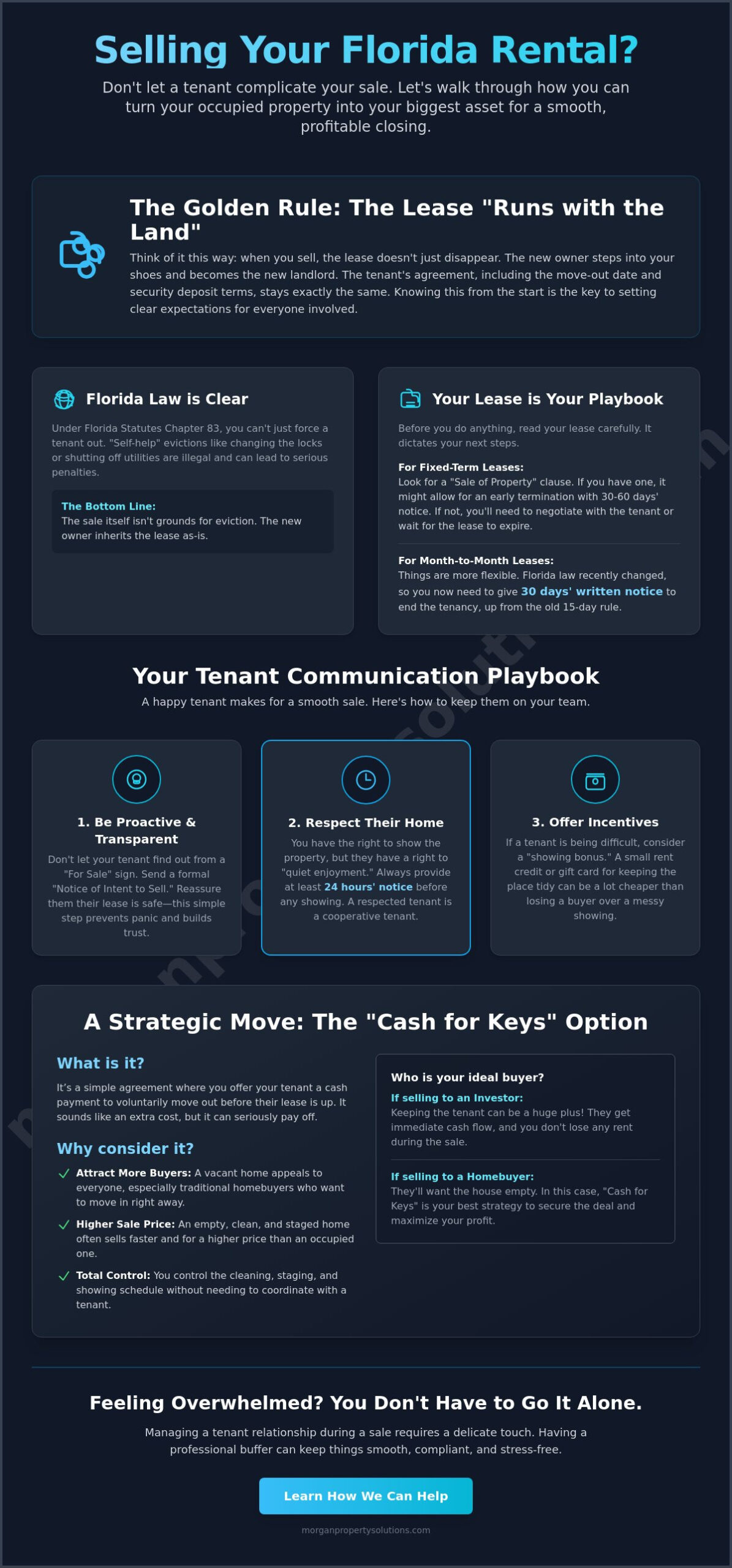
Yes, you can absolutely sell your property whenever you choose. Florida law is clear about your right to transfer ownership, but there’s a catch that many landlords overlook. In the Sunshine State, the lease “runs with the land.” This means that when you’re selling a house with tenants in florida, the contract you signed with your renter doesn’t just vanish at the closing table. The new buyer essentially steps into your shoes, becoming the new landlord and inheriting all the responsibilities you currently hold.
This concept is rooted in broader Landlord-tenant law, which protects residents from being suddenly displaced just because a building changes hands. Under Florida’s “Termination Doctrine,” the mere act of selling the home isn’t legal grounds for an automatic eviction. Unless your lease specifically says otherwise, the tenant has the right to stay until the very last day of their agreement. Being transparent with your tenant from the start isn’t just polite; it’s your best defense against potential delays or legal friction during the sale process.
The Florida Residential Landlord and Tenant Act
Chapter 83, Part II of the Florida Statutes is the primary rulebook for these situations. It strictly prohibits “self-help” evictions. You can’t change the locks, cut off utilities, or remove a tenant’s belongings just because you found a buyer who wants the place empty. If you try to force them out without a legal basis, you could face heavy penalties in court. In legal terms, the buyer is known as a “Successor in Interest,” which means they legally take over the lease exactly as it was written, including the obligation to return the security deposit at the end of the term.
Lease Review: The “Sale of Property” Clause
Before you plant the “For Sale” sign, sit down and read through your lease agreement carefully. Some contracts include a “Sale of Property” clause that allows for early termination if the home is sold, usually requiring 30 to 60 days of notice. If you have a month-to-month agreement, things are a bit simpler. As of 2023, Florida law requires a 30-day written notice to terminate a month-to-month tenancy, which is a significant increase from the old 15-day requirement. If you’re unsure about your specific lease language, checking out our landlord resources can help you understand the standard terms used in Central Florida. For fixed-term leases without a sale clause, you’ll likely need to wait for the lease to expire or negotiate a voluntary move-out with the tenant.
Managing the Tenant Relationship During the Listing
Communicating your plans early is the best way to prevent a tenant from becoming a roadblock. Imagine finding out your home is for sale because a stranger is taking photos of your front door. That’s a recipe for a defensive tenant. Instead, send a formal “Notice of Intent to Sell.” This letter should explain that while the property is hitting the market, their lease remains valid and their rights are protected. When you’re selling a house with tenants in florida, being the first to break the news keeps you in control of the narrative.
You have to balance your right to sell with their right to “quiet enjoyment.” According to the Florida Residential Landlord and Tenant Act, landlords must provide reasonable notice before entering the dwelling. In most cases, this means giving at least 24 hours of lead time before a showing. Sticking to this schedule isn’t just a legal requirement; it’s a way to build trust. If a tenant feels respected, they’re far more likely to keep the home clean and be out of the house when buyers arrive.
If a tenant is being difficult, try offering a “showing bonus.” This could be a small rent credit or a gift card for every week the house is kept in “show-ready” condition. It’s often cheaper to be generous than to lose a potential buyer because of a messy living room or a grumpy occupant. If the logistics of coordination feel like too much to handle, our team at Orlando property management can act as the professional buffer you need to keep things moving smoothly.
The Cash for Keys Strategy
Sometimes, the best way to maximize your ROI is to have the house vacant before it hits the market. This is especially true in high-demand areas like Winter Park where traditional buyers want to move in quickly. A “Cash for Keys” agreement involves paying the tenant a set amount to sign an Early Lease Termination Agreement and move out by a specific date. It sounds expensive, but a vacant, staged home often fetches a higher price and sells faster than one with a lingering tenant. This is a common strategy when selling a house with tenants in florida to buyers who aren’t looking for an investment property.
Showings and Photography Etiquette
Photography is a sensitive subject. Tenants may worry about their personal belongings or family photos appearing online. To avoid conflict, ask the tenant to put away valuables and personal items before the photographer arrives. You can also use virtual staging for empty spaces or to replace cluttered furniture in the listing photos. This respects their privacy while still showing the home’s potential. Setting a specific “showing window,” such as Tuesdays and Thursdays from 4:00 PM to 6:00 PM, can also help the tenant plan their life around your sale.
The Paperwork: Deposits, Estoppels, and Disclosures
Once you’ve managed the tenant relationship and listed the property, the technical side of the transaction begins. This is where many landlords feel the most pressure. Paperwork for selling a house with tenants in florida involves more than just a standard sales contract. You’re transferring a legal relationship and a financial obligation to a new party. Getting the details right now prevents expensive disputes after you’ve already handed over the keys.
Transparency is your biggest asset here. You must provide the buyer with a clear rent roll and a complete history of the tenant’s payment performance. If there have been late payments or ongoing maintenance issues, disclose them upfront. Buyers, especially investors, are looking for predictable income. Providing a well-organized file shows you’re a professional and helps build the trust needed to reach the closing table. It’s about proving that the asset you’re selling is as stable as you claim it is.
Handling the Security Deposit Transfer
Florida Statute § 83.49(7) dictates exactly how you must handle security deposits during a sale. You’re required to transfer the entire deposit amount, including any interest it has earned, to the new owner. At closing, this usually appears as a credit from the seller to the buyer on the settlement statement. Don’t just hand over the cash and walk away. You need a written receipt from the buyer acknowledging they’ve received the funds and are now responsible for them. The final closing statement must clearly show the prorated rent and the full deposit transfer to ensure there is no “rebuttable presumption” that you kept the money.
The Role of the Estoppel Certificate
An estoppel certificate is essentially a snapshot of the current lease terms, signed by the tenant. It confirms the rent amount, the security deposit total, and whether any verbal agreements exist that aren’t in the written lease. This document is vital because it prevents “he said, she said” arguments later on. If a tenant claims they’re owed a rent credit for a repair you never made, the estoppel certificate clears that up before the buyer takes over. Most Orlando property management firms won’t even consider a tenant-occupied purchase without one. It’s a simple step that provides massive peace of mind for everyone involved in the transaction.
Strategic Selling: Investors vs. Traditional Buyers
On the other hand, traditional “end-user” buyers are looking for a place to live. This is more common in established communities like Lake Nona. For these buyers, a tenant can feel like a hurdle rather than a benefit. They’re thinking about moving trucks and school start dates, not cap rates. If your buyer is using an FHA or VA loan, they’re legally required to move in within 60 days of closing. This means your closing date and the lease expiration must line up perfectly, or you’ll need to negotiate an early move-out.
If you’re unsure which path will net you the most money, our team offers professional Real Estate Seller Representation to help you weigh your options and find the perfect buyer.
The Turnkey Advantage for Investors
For an investor, buying a tenant-occupied property is like buying a business that’s already profitable. You can make your listing stand out by providing a “Lease Summary” that highlights the financial health of the rental. Mentioning that the tenant was vetted using strict screening criteria gives the buyer confidence that they won’t inherit a problem. When a property has a history of professional management, it carries a “turnkey” premium because the new owner doesn’t have to spend time or money finding a new resident.
Navigating the End-User Sale
Selling to someone who plans to live in the home requires much more coordination. You’ll need to be very clear about the lease expiration date in your listing. Many landlords find success by timing their market entry about 90 days before the lease ends. This allows for a 30-day marketing period and a 60-day closing window, which perfectly satisfies the occupancy requirements for most mortgage lenders. You can check out our latest real estate articles for more tips on timing the Central Florida market to match your specific goals. If the tenant has a fixed-term lease that lasts another six months, you may need to focus exclusively on investor buyers or consider a “cash for keys” offer to clear the way for an end-user.
Why a Professional Ally Makes the Difference
Selling a house with tenants in florida isn’t just about finding a buyer; it’s about managing a transition that involves people’s lives and your financial future. This is where a professional partner becomes more than just a luxury. When you work with an agent who understands the daily grind of property management, you’re getting someone who knows how to keep a tenant calm while keeping a buyer interested. At Morgan Property Solutions Inc., we’ve spent decades learning exactly how to navigate these specific waters without letting the deal sink.
We act as a vital buffer between your investment and the resident. It’s much easier for a tenant to hear about a showing schedule or a photography session from a neutral third party than from their landlord directly. This distance removes the emotional friction that often leads to sabotage or uncooperative behavior. By maintaining a professional and respectful boundary, we ensure the tenant feels heard while keeping your sale on track. It’s a delicate balance, but it’s one we’ve mastered over years of service in Central Florida.
20 Years of Central Florida Expertise
Our team brings over 20 years of experience to the table, specifically in areas like Windermere, Clermont, and Winter Garden. We’ve seen how local market shifts and specific neighborhood rules can impact a sale. For example, navigating the HOA requirements in a gated community while coordinating with a tenant requires a level of detail that most standard real estate agents simply don’t have. Morgan Property Solutions Inc. handles all that heavy lifting, from the initial paperwork to the final closing statement, ensuring nothing falls through the cracks. We’re committed to protecting your reputation as a landlord while maximizing the profit you’ve worked so hard to build.
Next Steps for a Smooth Sale
The first step toward a successful closing is knowing exactly where you stand. We recommend starting with a professional rental analysis to see how your property stacks up against current market trends. This data is invaluable when you’re marketing to investors who are focused on the bottom line. As we move into 2026, the Florida market continues to evolve, and having a steady ally by your side makes all the difference. Reach out to Morgan Property Solutions Inc. today for a no-pressure conversation about your property. We’ll review your current situation and help you map out a path that’s efficient, legal, and stress-free.
Take the Stress Out of Your Property Transition
You now have the tools to handle the unique complexities of your sale, from understanding Florida’s 30-day notice rules to mastering the “cash for keys” strategy. We’ve covered how to protect your security deposit liability and how to market your home to the right buyer pool in Orlando or Lake Nona. Selling a house with tenants in florida is ultimately about balancing legal requirements with human relationships. When you treat the process as a partnership rather than a conflict, you set yourself up for a much higher return on your investment.
With our A+ rated local expertise and specialized focus on tenant-occupied transitions, we make the process simple. You don’t have to navigate these legal and financial hurdles alone. We’re here to be your steady ally from the first listing photo to the final signature at the closing table. Let’s make your 2026 real estate goals a reality with a plan that protects your interests and your reputation.
Let us handle the details of your tenant-occupied sale. Contact Morgan Property Solutions Inc. today.
Frequently Asked Questions
Do I have to give my tenant a notice before showing the house in Florida?
Yes, you’re legally required to provide at least 24 hours of notice before entering the property for a showing. Florida law mandates this “reasonable notice” to protect the tenant’s privacy and right to quiet enjoyment. It’s always best to provide this notice in writing, whether through email or text, to ensure there’s a clear record of your communication and to maintain a professional relationship during the sale.
Can a tenant refuse to leave after I sell the house?
A tenant can remain in the home if they have a valid fixed-term lease, as the agreement stays in effect after the sale. The new owner becomes the landlord and must honor every term of the existing contract until it naturally expires. Unless your lease includes a specific clause that allows for termination upon sale, you can’t force a tenant to move out just because the title has changed hands.
What happens to the security deposit when a rental property is sold?
The security deposit must be transferred in full to the new owner at the time of closing. Florida law requires you to account for these funds on the settlement statement, usually as a credit to the buyer. You should also obtain a written acknowledgment from the buyer that they’ve received the funds. This protects you from future claims if the tenant disputes the deposit return after you’ve sold the property.
Can I evict a tenant in Florida just because I want to sell the house?
No, the desire to sell a property isn’t a legal ground for eviction in Florida. You must have a specific reason, such as non-payment of rent or a lease violation, to start an eviction process. If the tenant is following all the rules, they have the right to stay until their lease ends. Attempting a “self-help” eviction by changing locks or cutting utilities can lead to serious legal penalties and lawsuits.
What is a Cash for Keys agreement and is it legal in Florida?
A Cash for Keys agreement is a perfectly legal, voluntary arrangement where a landlord pays a tenant a set amount to vacate the property early. This is a popular strategy when selling a house with tenants in florida to buyers who want the home vacant at closing. It’s often cheaper and faster than waiting for a lease to expire, especially if a vacant home allows you to secure a much higher purchase price.
Does the new owner have to keep my current tenant?
Yes, the new owner is legally obligated to keep the current tenant until the lease agreement expires. They cannot change the rent, alter the security deposit terms, or add new rules until they sign a new lease with the resident. This is why providing an estoppel certificate is so important. It ensures the buyer knows exactly what they’re stepping into and prevents the tenant from claiming different terms after the closing.
What if my tenant sabotages the sale by making the house look bad?
If a tenant is intentionally making the house look unappealing, your first step should be a calm, professional conversation. Most leases require tenants to maintain the property in a clean and sanitary condition. You can remind them of these obligations in writing if necessary. However, offering a “showing bonus” or a small rent credit for a clean house is usually more effective than threats and helps keep the relationship positive during the listing.
How much notice does a landlord have to give a tenant to move out in Florida if the house sells?
For a month-to-month tenancy, you must provide at least 30 days of written notice to terminate the agreement. This is a statewide requirement that increased from 15 days back in 2023. If the tenant has a fixed-term lease, you generally can’t give them notice to move out until the lease is nearing its end. Always check your local city or county ordinances, as some areas in Florida may require even longer notice periods.

Article by
Oliver Overton-Morgan
Oliver Overton-Morgan is a full-time Real Estate Broker since 2003, with years of experience helping thousands of people purchase and sell real estate throughout Central Florida. He holds a Graduate Realtor Institute designation, LCAM, and has held licenses in good standing as a Florida Mortgage Broker and a Notary Public. Oliver immigrated to central Florida in 2001, and within 5 years Oliver built a successful Real Estate brokerage in central Florida, where he recruited over 75 Sales Associates with 25+ million in sales production.