
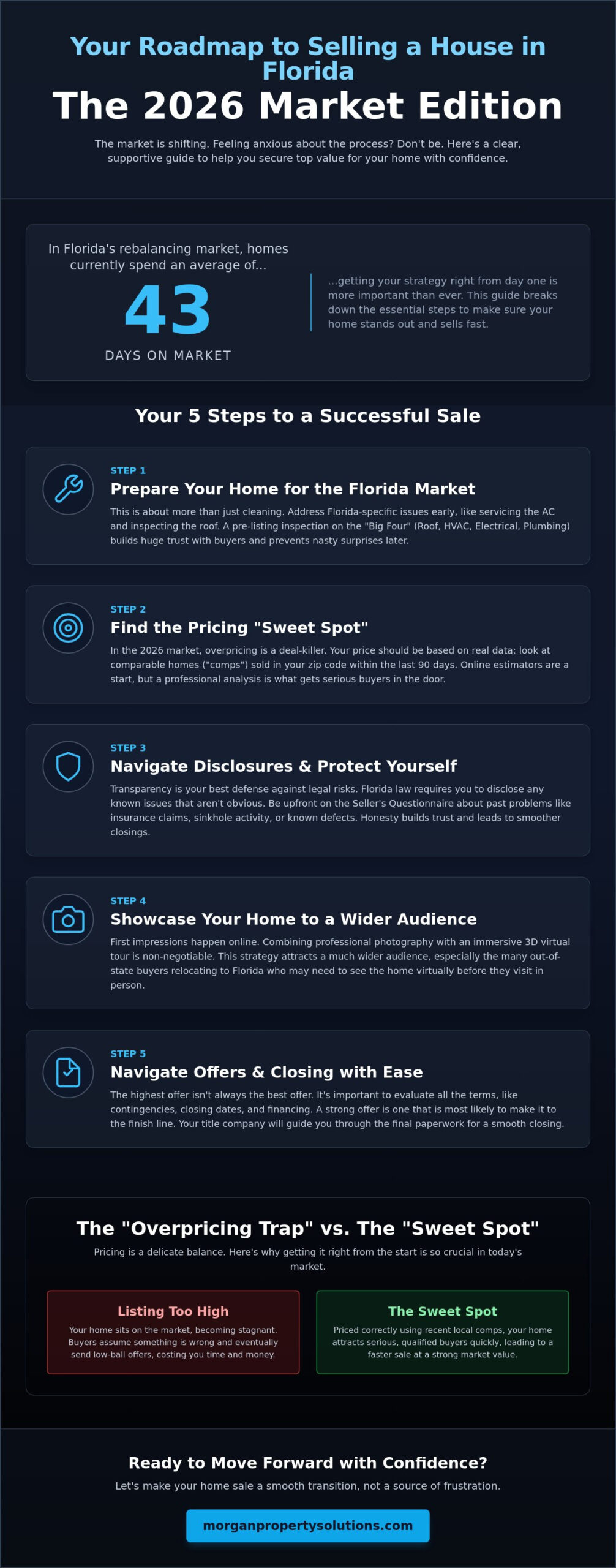
What if the secret to a fast sale in Florida isn’t just a fresh coat of paint, but understanding how a rebalancing market changes your strategy? With homes currently spending an average of 43 days on the market, getting the steps to selling a house in florida right is more important than ever. You might feel a bit anxious about hidden repair costs or the stress of managing showings while you’re still living in the home. That’s a completely normal concern, especially with Florida’s specific disclosure requirements and the updated flood rules that took effect in late 2025.
We believe this process should be a smooth transition rather than a source of frustration. You can successfully manage the 2026 market to secure top value while minimizing your legal risks. This article provides a clear, supportive roadmap designed to help you move forward with confidence. We’ll walk through everything from initial preparation to the final handshake at closing, ensuring you have a reliable partner every step of the way.
Key Takeaways
- Address Florida-specific maintenance early, like AC servicing and roof inspections, to prevent hidden repair costs from stalling your sale.
- Learn the essential steps to selling a house in florida by analyzing local “comps” from the last 90 days to find a price that attracts serious buyers.
- Protect yourself from legal risks by being transparent on the Seller’s Property Questionnaire regarding past issues like sinkhole activity or insurance claims.
- Reach a wider audience, including out-of-state relocators, by combining professional photography with immersive 3D virtual tours.
- Navigate the closing process with ease by evaluating offer terms instead of just the sticker price and understanding the role of your title company.
Preparing Your Home for the Florida Market
Preparing your home is the first of many crucial steps to selling a house in florida. It’s about more than just cleaning. It’s about creating a space where a buyer can actually see their future. Start with a deep declutter. If you haven’t used an item in a year, pack it or donate it. This is especially true for closets and garages. Florida buyers always scrutinize these areas for storage potential. A crowded closet makes the whole house feel small.
In our climate, the heat and humidity take a toll. Don’t wait for a buyer’s inspector to tell you the AC is struggling. Get a professional service done now. Check your roof for loose shingles or soft spots. Florida’s heavy rains will find every leak eventually. You should also gather your paperwork early. Having your previous survey and HOA bylaws ready prevents delays when it’s time to sign the real estate contract later in the process.
First impressions matter. Curb appeal in 2026 isn’t just about a mowed lawn. Think tropical-friendly landscaping that’s low maintenance. Fresh mulch and trimmed palms make a massive difference. If your exterior paint looks faded from the sun, a quick pressure wash from a professional team like Warrens Power Washing can restore its brightness without the cost of a full repaint.
The Pre-Listing Inspection Advantage
Many sellers worry that an inspection will just find more problems. That’s actually the point. Finding a deal-breaker now, before you’re under contract, prevents a price drop or a collapsed deal during escrow. Focus on the “Big Four”: Roof, Electrical, Plumbing, and HVAC. These systems determine if a home is even insurable in Florida. A clean report from a licensed inspector is a powerful marketing tool. It builds immediate trust with potential buyers.
Staging for the Central Florida Lifestyle
Buyers want the “Florida life.” This means your outdoor spaces, like lanais and pool decks, should look like an extension of the living room. Clean the screen enclosure and stage the patio furniture. Inside, pull back the curtains. Use that sunshine to create an open, airy feel. If you’re a landlord, selling a rented property requires a delicate touch. You’ll need to coordinate with your tenants early. We often suggest offering a small incentive to keep the home show-ready. For more guidance on managing this transition, checking out specialized landlord resources can help you balance your investment goals with tenant rights.
Pricing Strategy: Finding the Sweet Spot in 2026
Setting the right price is one of the most critical steps to selling a house in florida. In 2026, the market is undergoing a healthy rebalancing. We aren’t seeing the wild bidding wars of the past, but demand remains steady with homes spending about 43 days on the market. To find your “sweet spot,” you need to look at comparable sales (comps) from the last 90 days in your specific zip code. Looking at a home sold six months ago is a mistake; it might as well be ancient history in today’s climate.
Local nuances matter more than ever. If you’re in high-growth areas like Lake Nona or Winter Garden, your pricing strategy will look different than in a more established neighborhood. These pockets often maintain higher demand due to new infrastructure and medical city expansions. However, you must still avoid the “Overpricing Trap.” Listing too high causes your home to sit. Stagnant listings often lead to low-ball offers because buyers assume something is wrong with the property.
The Comparative Market Analysis (CMA)
A Comparative Market Analysis (CMA) is your best friend here. While online valuation tools are convenient, they lack the human touch. They don’t know you just installed high-efficiency solar panels or a chef’s kitchen with quartz countertops. A CMA looks at these upgrades and compares them to active competition. Understanding the Florida Statutes on property conveyance helps you see the legal framework behind these transfers. This ensures your valuation aligns with what can actually be documented and sold in a legal sense.
Don’t confuse your tax-assessed value with fair market value. The county appraiser’s office uses a formula for taxes that often lags behind what a real buyer will pay. Your goal is to find what a willing buyer and a willing seller agree upon in the current market. This is the only number that truly matters when you are moving through the steps to selling a house in florida.
Timing Your Sale for Maximum Impact
Timing is everything. In Central Florida, we see seasonal peaks when families want to move before the new school year starts. By mid-2026, interest rate trends have stabilized, which has brought a new wave of urgency to the market. You need to decide if you want to price for multiple offers or a steady, qualified buyer. If you’re managing an investment property, you might want to consult with an Orlando Property Manager to see how current rental yields might influence an investor’s purchase price. Getting the price right from day one is the best way to ensure a smooth, stress-free closing.
Navigating Florida Seller Disclosures and Legalities
In the list of steps to selling a house in florida, transparency is your best defense. Florida law requires you to disclose any known material defects that aren’t easily seen by a buyer. This is usually handled through the Florida Seller’s Property Questionnaire. Don’t view this as a list of reasons for a buyer to walk away. Instead, think of it as a way to build trust and protect yourself from future legal issues. By being upfront, you prevent the deal from falling apart later when an inspector finds something you already knew about.
Be completely honest about past issues. If you’ve had sinkhole activity on the property or filed significant insurance claims, put it on paper. Even if you are using an “as-is” contract, you aren’t off the hook for disclosure. An “as-is” clause means you won’t pay for repairs, but it doesn’t give you permission to hide a leaky roof or a cracked foundation. Understanding the Florida Statutes on Real Estate Contracts is helpful for seeing how these agreements are recorded and acknowledged in our state.
Common Disclosure Pitfalls to Avoid
Water damage is a major concern for buyers in 2026. If you’ve had mold remediation, provide the certificates showing the work was done professionally. If your home was built before 1978, you must provide a lead-based paint disclosure. One of the most common mistakes is staying silent about unpermitted work. If you added a deck or finished a garage without a permit, it’s better to admit it now. Buyers will likely find out during their title search or inspection anyway, and finding out late in the game destroys their confidence in the rest of the house.
Organizing Your Paperwork
A well-organized “Seller Binder” makes the process feel much more manageable. Include warranties for appliances, manuals for the smart home system, and at least a year of utility history. You should also ensure your HOA or CDD (Community Development District) disclosures are current. Buyers need to know exactly what those monthly or annual fees cover and if there are any pending assessments. If you are currently renting out the property, selling requires even more coordination. We recommend looking through these landlord resources to ensure you’re handling tenant notifications and security deposit transfers correctly. Keeping your property taxes and any existing liens clearly documented will prevent last-minute headaches at the closing table.
Marketing and Managing the Showing Process
Marketing your home in 2026 requires a high-tech approach mixed with local charm. Since many buyers are moving from out of state, your online presence is often their first and only tour. Investing in professional photography and 3D virtual tours isn’t just a luxury; it’s one of the essential steps to selling a house in florida. These tools allow a buyer in New York or Chicago to walk through your hallway from their laptop before they ever book a flight. It filters out the “looky-loos” and ensures that people visiting in person are truly serious.
Once your digital assets are ready, we leverage the Multiple Listing Service (MLS). This ensures your property appears on every major real estate portal, reaching the widest possible network of buyer agents. To add a personal touch, we create “Welcome Home” flyers. If you’re in Winter Park or Clermont, these flyers highlight the best local coffee shops, parks, and hidden gems that only a local would know. This helps buyers fall in love with the neighborhood, not just the house.
Attracting the Right Central Florida Buyer
The demographic of people moving to Orlando has shifted toward remote workers who value home office space and fast internet. Our marketing highlights proximity to major employment hubs like the downtown core or the Lake Nona Medical City, while also focusing on top-rated school districts. We use targeted social media ads to reach people in high-migration states who are already browsing Florida listings. By showing your home to people specifically looking to relocate, we increase the quality of every lead we generate.
Handling Showings with Ease
Managing the showing process can feel overwhelming, but a centralized app makes it much simpler. You can approve or decline tours with a single tap, which helps you maintain your sanity while still living in the home. You can even set “blackout times” for dinner or school runs to protect your family’s privacy. When a last-minute tour is requested, use a 15-minute “Quick Clean” checklist: clear the counters, open the blinds, and hide the laundry. Gathering feedback from every tour is vital. It tells us if the pricing is hitting the mark or if there’s a specific feature buyers aren’t loving. If you want a partner to handle these details and secure a top-market sale, our team provides expert Real Estate Seller Representation to guide you through the noise.
Negotiating Offers and the Path to Closing
You’ve made it to the final stretch. Receiving an offer is an exciting milestone, but it’s important to look past the “sticker price” at the top of the page. In the final steps to selling a house in florida, the terms of the contract are just as vital as the dollar amount. A high offer with shaky financing or a long list of contingencies can often be less desirable than a slightly lower cash offer that promises a quick, guaranteed closing. You want a deal that actually makes it to the finish line without unnecessary drama.
Once you’ve accepted an offer, you enter the home inspection period. This is usually the most stressful part of the process for sellers. A professional inspector will likely find a few issues, even in a well-maintained home. Don’t panic. You can often negotiate repair credits instead of doing the work yourself, which keeps the timeline on track. Your title company or real estate attorney will then step in to handle the title search and ensure the property is cleared of any liens before the keys change hands.
Reviewing the Terms of the Contract
When comparing offers, pay close attention to the inspection period length. A shorter window, like seven to ten days, keeps the momentum moving. You should also weigh the pros and cons of cash versus traditional financing. Cash deals remove the risk of a low appraisal stalling the sale. If you need extra time to move into your next home, don’t be afraid to negotiate a post-closing occupancy date. Most buyers are willing to be flexible if it means securing the house they want.
The Closing Day Experience
About three days before you sign the final papers, you’ll receive a Closing Disclosure (CD). Review this carefully for accuracy on fees, taxes, and any credits you agreed to during negotiations. About 24 hours before closing, the buyer will perform a final walkthrough. They are simply checking to ensure the home is in the same condition as when they made the offer and that all agreed-upon repairs are complete.
On the big day, make sure you bring your government-issued ID, all sets of keys, and any garage door openers. It’s a moment of accomplishment as you officially transition the property to its new owner. We take pride in how our team simplifies the real estate process, providing the steady guidance you need to navigate these final steps to selling a house in florida with total confidence. From the first showing to the final handshake, having an experienced ally makes all the difference in achieving a smooth, successful sale.
Your Next Chapter Starts with a Successful Sale
Selling your home in 2026 doesn’t have to be a source of constant stress. By focusing on early maintenance, setting a realistic price based on recent neighborhood data, and remaining transparent with your disclosures, you’ve already done the heavy lifting. Following these essential steps to selling a house in florida ensures that when you finally reach the closing table, you’re doing so with total peace of mind and a clear path forward.
You don’t have to navigate this complex transition alone. With over 20 years of Central Florida real estate experience and high industry ratings for client satisfaction, our team provides the steady guidance you deserve. We bring detailed neighborhood expertise to every transaction, from the unique growth in Lake Nona to the historic charm of Winter Park. We’re committed to making your sale as smooth and rewarding as possible.
Ready to see what your home is worth in the current market? Get a Professional Home Valuation for Your Orlando Property today. Let’s work together to turn your real estate goals into a reality. We are here to support you and ensure you move forward with confidence.
Frequently Asked Questions
How long does it typically take to sell a house in Florida in 2026?
Homes in Florida currently spend an average of 43 days on the market before going under contract. This timeline can fluctuate depending on your specific city; for example, Jacksonville is seeing closer to 50 days while Lee County is averaging 89 days. Once you have a signed contract, the closing process typically adds another 30 to 45 days. Your pricing strategy and home condition are the biggest factors in how quickly you complete the steps to selling a house in florida.
Do I need a real estate attorney to sell my house in Florida?
You aren’t legally required to hire an attorney to sell your home in Florida, though it is a common choice for many sellers. Most people work with a title company to handle the closing and title insurance. However, an attorney can be very helpful if you’re dealing with complex issues like probate, unpermitted work, or specific legal disputes. Having a professional review your real estate contract provides an extra layer of protection during the transaction.
What are the typical closing costs for a seller in Florida?
Seller closing costs in Florida typically range from 6% to 10% of the final sale price. This total includes the real estate agent commissions, title insurance, and the statewide documentary stamp tax. This tax is currently $0.70 per $100 of the sale price. If your home sells for the median price of $425,000, you should expect to pay between $25,500 and $42,500 at the closing table. Knowing these numbers early helps you calculate your actual net proceeds.
Can I sell my house in Florida if it currently has a tenant?
Yes, you can sell a property with a tenant in place, but you must respect the terms of the existing lease agreement. You’ll need to provide proper notice for showings and decide if the buyer will take over the lease or if the tenant will move out before closing. Clear communication makes the process much smoother for everyone involved. If you’re managing an investment, consulting an Orlando Property Manager can help ensure you’re following all local rental laws.
What is the best month to list a home for sale in Central Florida?
The best time to list in Central Florida is generally between March and June. During these months, families are often looking to move and settle in before the new school year begins in August. Listing during this window often leads to more foot traffic and potentially stronger offers. However, because our weather is warm year-round and people are constantly relocating to the state, there isn’t really a bad time to begin the steps to selling a house in florida.
Do I have to fix everything found in a home inspection?
You aren’t required to fix every minor issue found during an inspection, especially if you’re selling “as-is.” Your main focus should be on the “Big Four” systems: the roof, electrical, plumbing, and HVAC. These are the items that can prevent a buyer from getting insurance or a mortgage. For smaller repairs, you can often negotiate a credit at closing rather than doing the physical work yourself. This keeps the sale moving forward without extra stress.
What happens if my home appraises for less than the offer price?
If the appraisal comes in low, it creates a gap that needs to be addressed before the lender will approve the buyer’s loan. You generally have three options: the buyer can pay the difference in cash, you can lower the sale price, or both parties can meet in the middle. If no agreement is reached, the buyer usually has the right to walk away. This is why pricing your home accurately from the very beginning is so important.
Is it worth doing major renovations before selling in Orlando?

Article by
Oliver Overton-Morgan
Oliver Overton-Morgan is a full-time Real Estate Broker since 2003, with years of experience helping thousands of people purchase and sell real estate throughout Central Florida. He holds a Graduate Realtor Institute designation, LCAM, and has held licenses in good standing as a Florida Mortgage Broker and a Notary Public. Oliver immigrated to central Florida in 2001, and within 5 years Oliver built a successful Real Estate brokerage in central Florida, where he recruited over 75 Sales Associates with 25+ million in sales production.