Did you know that while Orlando rents have dipped by 5% this year, your car insurance premiums likely cost double the national average? It’s a confusing time to map out your future in the City Beautiful. You’re likely feeling the weight of rising utility bills and the “Florida Factor” of insurance premiums even as housing prices begin to stabilize. Calculating the true living expenses in Orlando Florida requires looking past the sunshine to the actual line items on a 2026 balance sheet.
We understand that moving or staying put feels like a high-stakes financial puzzle right now. This guide provides a realistic, boots-on-the-ground look at what it actually costs to live, work, and play here today. We’ll break down the monthly math for rent versus homeownership using current median prices of $400,000. You’ll also learn which neighborhoods fit your specific price point and get expert advice on managing housing costs. Whether you’re budgeting for $315 in monthly utilities or navigating the $247 monthly cost of car insurance, we’re here to help you move forward with confidence.
Key Takeaways
- Understand the 2026 housing market shift where median home prices have stabilized at $400,000, offering buyers more negotiating power than in previous years.
- Learn how to navigate the “Florida Factor” by balancing the significant benefit of no state income tax against the reality of rising insurance premiums.
- Get a clear breakdown of monthly living expenses in Orlando Florida, including average utility costs and grocery trends, to build a realistic 2026 budget.
- Discover how professional property management can help owners reduce hidden maintenance costs and maximize rental returns in the current Central Florida market.
- Explore the true cost of the Orlando lifestyle, from fine dining in Winter Park to the best “free fun” options at local springs and parks.
The 2026 Economic Landscape: Is Orlando Still Affordable?
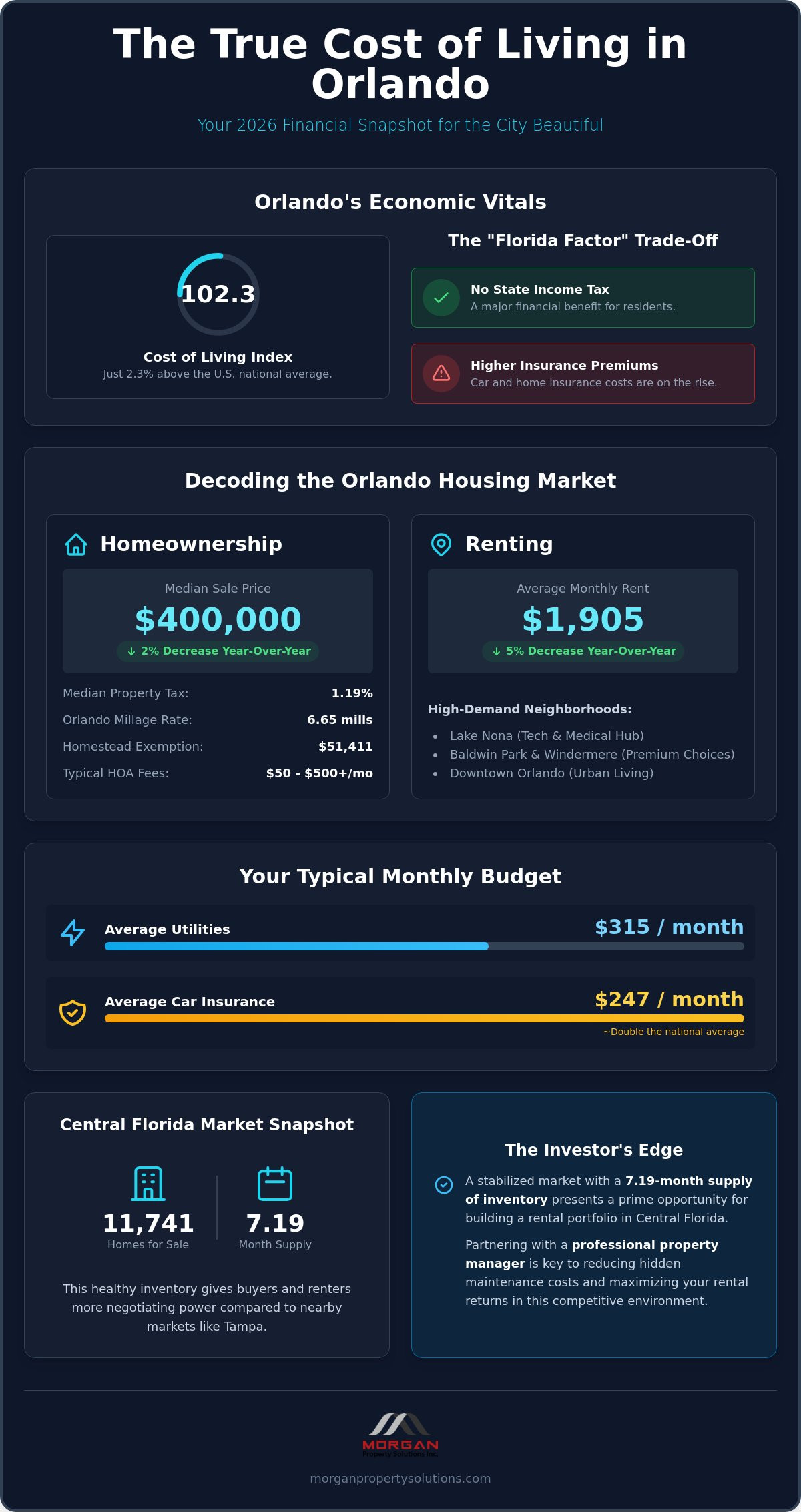
Understanding the financial climate is the first step toward a successful move or a budget reset. In 2026, Orlando’s cost of living index sits at 102.3, placing it roughly 2.3% above the national average. While this is a slight increase from years past, the market has finally entered a period of stabilization following the rapid inflation of the early 2020s. We now see a more balanced environment where buyers and renters have more negotiating power. This shift is essential for anyone calculating their living expenses in Orlando Florida, as it allows for more predictable long-term planning without the fear of sudden, massive price spikes.
Many residents talk about the concept of “Sunshine Pay.” This refers to the trade-off where local wages might not always keep pace with high-growth tech hubs like San Jose or Austin, but the lifestyle benefits of Central Florida compensate for the gap. To understand the broader context, exploring Orlando’s economic background helps reveal how tourism and a growing medical sector drive these trends. Despite rising costs in specific sectors like car insurance and utilities, the city remains a viable option for those seeking a high quality of life. In 2026, Orlando offers a balanced economic profile that is nearly on par with the national average while providing superior lifestyle amenities and no state income tax.
Orlando vs. Tampa: A Central Florida Comparison
Choosing between Orlando and Tampa often comes down to inventory and lifestyle preferences. As of early 2026, Orlando maintains a healthy inventory of 11,741 homes, representing a 7.19-month supply. This gives Orlando a slight edge over Tampa for those who prioritize variety and negotiation room during their search. While Tampa offers proximity to the Gulf beaches, Orlando provides unparalleled access to world-class entertainment and a more centralized hub for inland recreation. For those evaluating the market for investment or relocation, our team at Orlando Property Management provides the data-driven insights needed to navigate these two competitive markets.
The Impact of Remote Work on Orlando Prices
Remote work has fundamentally reshaped local pricing, particularly in high-demand pockets like Lake Nona. The migration of tech professionals to the “Medical City” area has driven up service costs and demand for luxury amenities in the suburbs. Meanwhile, areas like Winter Park and Downtown have seen a surge in professional co-working spaces to accommodate this flexible workforce. This trend has narrowed the price gap between suburban and downtown living. Professionals now value home office space and neighborhood walkability just as much as a short commute. This shift is a key factor in the overall living expenses in Orlando Florida for modern workers who aren’t tied to a traditional office desk.
Housing and Real Estate: Navigating the Largest Monthly Expense
Housing accounts for the largest portion of living expenses in Orlando Florida. As of July 2026, the median sale price for a home stands at $400,000. This is a 2% decrease from the previous year, signaling a more balanced market for buyers. Renters, meanwhile, face an average monthly cost of $1,905. This reflects a 5% decrease year-over-year, providing some relief for those who prefer the flexibility of a lease. While these base prices are essential, you must also account for the median property tax rate of 1.19%. In the city itself, the millage rate of 6.65 mills applies, though the 2026 homestead exemption has increased to $51,411 due to Amendment 5, helping primary residents lower their tax burden.
Homeowners Association (HOA) fees are a critical and often overlooked part of a local budget. These fees vary wildly. You might pay $50 a month in an established suburb or over $500 in a luxury gated community. When deciding between renting and buying, consider your long-term goals. If you plan to stay in Central Florida for at least five years, buying often makes financial sense. This is especially true when considering Florida’s 2026 economic outlook, which points toward sustained growth and business migration. Renting remains a smart choice for those who want to test out different neighborhoods before committing to a mortgage.
Renting in Orlando: From Downtown to Lake Nona
Renting offers a way to experience Orlando’s diverse personality without a long-term commitment. Areas like Baldwin Park and Windermere remain premium choices with high demand. Lake Nona continues to attract tech and medical professionals who value modern amenities. Before you start your search, it’s helpful to review our tenant screening criteria to understand the requirements for a successful application. If you’re moving with a pet, using Pet Screening services can help you present a professional profile to potential landlords and simplify the approval process.
Investing in Orlando Rental Properties
Orlando remains a powerhouse for real estate investors. With a 7.19-month supply of inventory, the market currently favors those looking to build a portfolio. Successful owners often rely on professional residential property management to handle the complexities of tenant relations and maintenance. This approach maximizes rental yields and reduces the “hidden” costs associated with DIY management. If you’re exploring the potential of a local investment, our team provides the expert Orlando property management and representation you need to navigate this evolving market with confidence.
Daily Essentials: Groceries, Utilities, and the Cost of Getting Around
Once your housing is secured, managing your daily living expenses in Orlando Florida requires a strategic look at transportation and utility consumption. Most residents find that a car is a necessity due to the city’s sprawling layout. As of July 17, 2026, gas prices averaged $3.974 per gallon for regular fuel. Commuters must also factor in the “I-4 traffic” time-cost. While the SunRail provides a reliable north-south connection and LYNX buses cover major arteries, they often don’t provide the door-to-door convenience required for many professional roles. This makes car ownership, including the local average insurance cost of $247 per month, a non-negotiable budget item for most households.
Utilities present another variable that requires careful planning. The average Orlando household spends approximately $315 per month on combined services, including electricity, water, and internet. Your electric bill, which averages $151, will fluctuate significantly based on the season. During the peak summer months, air conditioning systems work overtime to combat the Florida humidity. We often see bills spike in July and August, while the mild winters provide a welcome financial reprieve. Understanding whether your home is serviced by OUC or Duke Energy is helpful, as rates and efficiency programs vary between these two primary providers.
Feeding the Family: Grocery Budgets in 2026
Grocery shopping in Central Florida offers a range of price points. Publix remains the local favorite for quality and service, though savvy shoppers often supplement their pantry at Aldi or Walmart to lower costs. For fresh, local produce, the Winter Park Saturday Market and other neighborhood farmers markets offer competitive prices on seasonal items. In 2026, an Orlando family of four should budget approximately $250 per week for groceries to maintain a balanced diet while shopping at a mix of local retailers.
Managing the Florida Heat: Utility Strategies
To keep monthly overhead low, focus on energy efficiency. Simple steps like using programmable thermostats or installing blackout curtains can significantly reduce air conditioning strain. Water and trash collection fees are usually bundled by the municipality, such as the City of Orlando or Winter Park, and typically remain stable throughout the year. For renters, choosing a property with modern appliances and updated insulation is one of the most effective ways to manage the “Summer Spike” in utility costs. If you are looking for more ways to optimize your home’s performance, our landlord resources offer insights into maintaining efficient rental properties.
The Florida Factor: Tax Benefits, Insurance Realities, and Hidden Costs
Living in Central Florida presents a unique financial duality. While you benefit from significant tax advantages, you must also navigate some of the most volatile insurance and transportation costs in the country. Understanding these variables is essential for anyone tracking their total living expenses in Orlando Florida. The lack of state income tax is a primary draw, allowing residents to keep a larger portion of their paycheck. For a household earning the area median income, this can result in thousands of dollars in annual savings compared to high-tax states. It’s a powerful incentive that helps balance other rising costs in the 2026 economy.
The Tax Trade-off
Florida funds its infrastructure and services through sales and property taxes rather than income tax. The state sales tax is 6%, but with local surtaxes, you’ll likely pay closer to 8% on most purchases in the Orlando area. Homeowners find relief through the Florida Homestead Exemption, which has increased to $51,411 for 2026. This exemption provides a significant buffer by lowering the taxable value of your primary residence. For investors and owners looking to stay compliant while maximizing their returns, our landlord resources provide the tax and legal guidance necessary to navigate these local regulations effectively.
Insurance: The 2026 Reality Check
Insurance has become the most unpredictable line item in an Orlando budget. Due to weather-related risks, homeowners and flood insurance premiums have seen steady increases. Even if your property isn’t in a high-risk flood zone, we recommend budgeting for a supplemental policy to ensure full protection. Car insurance is another significant factor. The average cost for a six-month policy in Orlando is $1,479, which is nearly double the national average. To lower these costs, many residents invest in wind mitigation inspections for their homes, which can trigger significant credits on homeowners policies.
Beyond the major bills, hidden costs like toll roads and parking can impact your monthly bottom line. Orlando’s highway system relies heavily on tolls. Using an E-PASS or SunPass is practically mandatory for efficient travel on the 408, 417, and 528 expressways. If you’re a frequent visitor to the tourism hubs, remember that theme park parking now often starts at $30 per visit. On a positive note, healthcare remains highly accessible. The medical corridors in Lake Nona and Downtown offer world-class facilities, ensuring that quality care is always within reach. If you’re planning to buy or rent in these high-growth areas, our team at Orlando property management can help you find a home that fits your financial goals.
Living the Orlando Lifestyle: Entertainment and Quality of Life
One of the greatest benefits of managing living expenses in Orlando Florida is the incredible variety of entertainment that doesn’t always require a theme park ticket. While our city is world-famous for its attractions, the local quality of life is built on a foundation of natural beauty and community spaces. You can spend a Saturday morning at Lake Eola Park for the cost of a coffee, or drive a short distance to explore the natural springs. State parks like Blue Spring or Wekiwa Springs offer a refreshing escape for under $10 per vehicle. These “free fun” options provide a vital balance to the more commercial aspects of Central Florida living.
If you enjoy professional sports, the energy in Downtown Orlando is unmatched. Between the Orlando Magic at the Kia Center and the Orlando City SC “Lions” at Inter&Co Stadium, there’s a game for every season. For those who do want the full tourist experience, being a resident is a major advantage. While single-day tickets for Disney World and Universal Orlando start at $119 in 2026, locals rarely pay these gate prices. The “Resident Discount” culture is strong here. Tiered annual passes and seasonal Florida resident specials allow you to enjoy the parks at a fraction of the cost paid by out-of-state visitors.
Orlando’s Culinary and Nightlife Scene
Dining out is a significant part of the local culture, and costs vary by neighborhood. In the vibrant Mills 50 district, a casual meal for two at a trendy Vietnamese or street-taco spot typically costs around $50. If you head to Park Avenue in Winter Park for fine dining, expect that bill to reach $150 or more. Beyond daily dining, residents often budget for major annual events. Halloween Horror Nights and the Epcot International Food & Wine Festival are local staples. We recommend setting aside a specific “lifestyle fund” of $200 to $400 per month to fully enjoy these unique Central Florida experiences without stressing your primary budget.
Final Verdict: Moving to Orlando with Confidence
Is the Orlando lifestyle worth the price tag in 2026? When you combine the housing costs we’ve analyzed with the lack of state income tax, Orlando remains a highly competitive choice. A comfortable life here for a family of four generally requires a monthly budget of $5,500 to $7,500, depending on your housing choices and entertainment habits. While insurance and utility spikes are real factors, the stabilization of the housing market makes this an excellent time to plan your move.
At Morgan Property Solutions Inc., we’ve spent over 20 years helping people navigate these transitions with ease. We believe that finding the right home is the first step toward financial peace of mind in a new city. If you’re ready to take that step, we invite you to browse our current homes for rent in Orlando FL. Our team is here to provide the steady guidance and local expertise you need to call the City Beautiful your home.
Ready to Call the City Beautiful Home?
Navigating the 2026 market requires a clear eye on the details. You now have a realistic view of the current housing costs and the “Florida Factor” that shapes local budgets. Understanding the living expenses in Orlando Florida allows you to move beyond the uncertainty and start planning for your future with precision. While insurance premiums and utility shifts require attention, the overall economic stabilization provides a dependable foundation for residents and investors alike. We believe that with the right preparation, the lifestyle benefits of Central Florida far outweigh the complexities of the move.
Our team is here to guide you through every phase of this transition. We bring 20+ years of Central Florida real estate expertise to the table, specializing in professional tenant placement and lease management. We focus on removing the friction from the real estate process so you can focus on enjoying the sunshine. Let Morgan Property Solutions Inc. simplify your Orlando move or investment today! We look forward to providing the steady guidance and local expertise you need to call the City Beautiful your home.
Frequently Asked Questions
Is Orlando cheaper than Tampa in 2026?
Orlando currently offers a more balanced real estate market than Tampa. With over 11,000 homes in inventory and a 7.19-month supply, buyers in Orlando often have more negotiating power. While coastal proximity makes Tampa attractive, Orlando’s central location and housing variety often result in more manageable entry points for homeowners.
What is a comfortable salary to live in Orlando, Florida?
A comfortable annual salary in Orlando generally ranges between $85,000 and $100,000 for a family of four. This range accounts for the average monthly rent of $1,905 and the various living expenses in Orlando Florida like groceries and transportation. Individuals or couples can live comfortably on less, especially if they don’t choose premium downtown or Lake Nona corridors.
How much are average utility bills in Orlando?
The average monthly utility bill in Orlando is approximately $315. This total typically covers your electricity, water, gas, and internet services. You should expect your electric bill to account for about $151 of that total, though this number often climbs during the peak summer months when air conditioning usage is at its highest.
Does Orlando have high property taxes?
Orlando’s property taxes are considered moderate compared to other major U.S. metros. The median property tax rate is 1.19%, and the city’s millage rate sits at 6.65 mills. Fortunately, the 2026 homestead exemption has increased to $51,411, which provides substantial relief for those using their Orlando property as a primary residence.
Is a car necessary for living in Orlando?
A car is almost a necessity for most residents living in Orlando. While the SunRail and LYNX bus systems provide some coverage, the city’s sprawling layout makes commuting and daily errands difficult without a personal vehicle. You’ll also need to budget for the local average car insurance cost of $247 per month.
Are groceries more expensive in Florida?
Groceries in Orlando are roughly 2% to 3% more expensive than the national average. While Florida produces a significant amount of its own produce, the logistics of the tourism-heavy economy can impact shelf prices. Shopping at discount retailers like Aldi or utilizing local farmers markets can help keep your weekly food spend within a reasonable range.
What are the hidden costs of moving to Orlando?
The most common hidden costs include toll road fees and car insurance premiums. Orlando’s highway system uses a heavy toll structure, making an E-PASS or SunPass account essential for daily travel. Additionally, you should account for “lifestyle” hidden costs, such as the $30 parking fees common at major theme parks and local entertainment hubs.
How much should I budget for home insurance in Central Florida?
Home insurance is one of the most volatile parts of your budget, and you should plan for premiums that are higher than the national average. Factors like the age of your roof and your home’s proximity to water will heavily influence your rate. We recommend obtaining a wind mitigation inspection to help lower these living expenses in Orlando Florida through available policy credits.

Article by
Oliver Overton-Morgan
Oliver Overton-Morgan is a full-time Real Estate Broker since 2003, with years of experience helping thousands of people purchase and sell real estate throughout Central Florida. He holds a Graduate Realtor Institute designation, LCAM, and has held licenses in good standing as a Florida Mortgage Broker and a Notary Public. Oliver immigrated to central Florida in 2001, and within 5 years Oliver built a successful Real Estate brokerage in central Florida, where he recruited over 75 Sales Associates with 25+ million in sales production.