
What does the property management contract termination clause Florida owners sign actually allow? Start with the signed agreement, not an assumed statewide notice period. A clear exit plan can help you avoid missed deadlines, unexpected charges, and a rushed handoff.
If you’re unsure how much notice to give, what fees may still be owed, or who will transfer tenant and financial records, you’re not alone. Ending a professional management relationship involves more than sending a quick message. The management agreement sets out its own process, separate from the rules and terms that apply to a tenant’s lease.
This guide explains how to read the termination language, identify details that may affect timing and costs, and organize a smoother transition for your property, tenants, and accounts. For owners in Orlando and Central Florida, a written review of the agreement and open responsibilities can make a management change more manageable. This is general information, not legal advice.
Key Takeaways
- The property management contract termination clause in Florida sets out the written process for ending the owner-manager relationship. Read it separately from the tenant’s lease.
- Locate the terms covering how notice must be given, when termination takes effect, and what responsibilities remain.
- Review cancellation fees, earned charges, and handoff duties as separate parts of the agreement, rather than assuming one term answers them all.
- Before giving notice, make a written list of open items and who will handle tenant, property, and financial records during the transition.
- If a contract term is unclear, consider having a Florida attorney interpret the agreement before deciding on next steps.
What a Florida Property Management Contract Termination Clause Actually Covers
A property management contract termination clause in Florida is the part of an owner’s written agreement that explains how the owner-manager relationship may be ended and what steps or responsibilities may apply. It isn’t a universal set of rules. The signed agreement, any written amendments, and applicable law all matter. A general example can help you identify what to review, but it can’t determine the legal effect of your own contract.
Start with the right document. A management agreement governs the relationship between the property owner and the manager. A tenant’s residential lease governs a separate relationship. The property management contract termination clause Florida owners review concerns the first relationship, not automatically the second.
How a management agreement differs from a tenant lease
Ending an arrangement with a manager doesn’t, by itself, explain what happens to a tenant’s lease. An owner might end a manager’s role while a tenant still has a lease for the property. Review the management agreement and the lease separately: one document doesn’t automatically answer questions about the other.
This distinction helps clarify the work involved in a transition. The management change may require assigning responsibility for ongoing communications and records, while the tenant’s lease remains a separate document governing the landlord-tenant arrangement. The specific effect depends on the relevant documents and circumstances.
Why the written termination language matters
The clause may address how notice must be delivered, when termination takes effect, which responsibilities continue, and how transition details are handled. Some agreements may also describe an option to end the relationship without alleging a breach, sometimes called a termination for convenience clause. That general concept doesn’t establish what any particular Florida management agreement allows.
Find the signed agreement and any written amendments before drawing conclusions. Read the termination wording alongside related sections that may explain fees, services, or responsibilities during the transition. Don’t rely on an oral explanation or a generic online example instead of the language in your agreement.
For owners considering a change in local management, Orlando property management is a useful place to learn about professional support in the area. For a contract-specific interpretation, consider asking a Florida attorney. This overview is general information, not legal advice.
Which Terms to Find in a Florida Property Management Termination Clause
Once you’ve found the signed agreement, read the termination section alongside any related provisions it points to. The property management contract termination clause Florida owners review may cover notice, timing, costs, and what remains to be handled after the relationship ends. Don’t fill gaps with assumptions, oral statements, or sample language from another contract. If wording is unclear or two sections seem to conflict, flag the issue before acting.
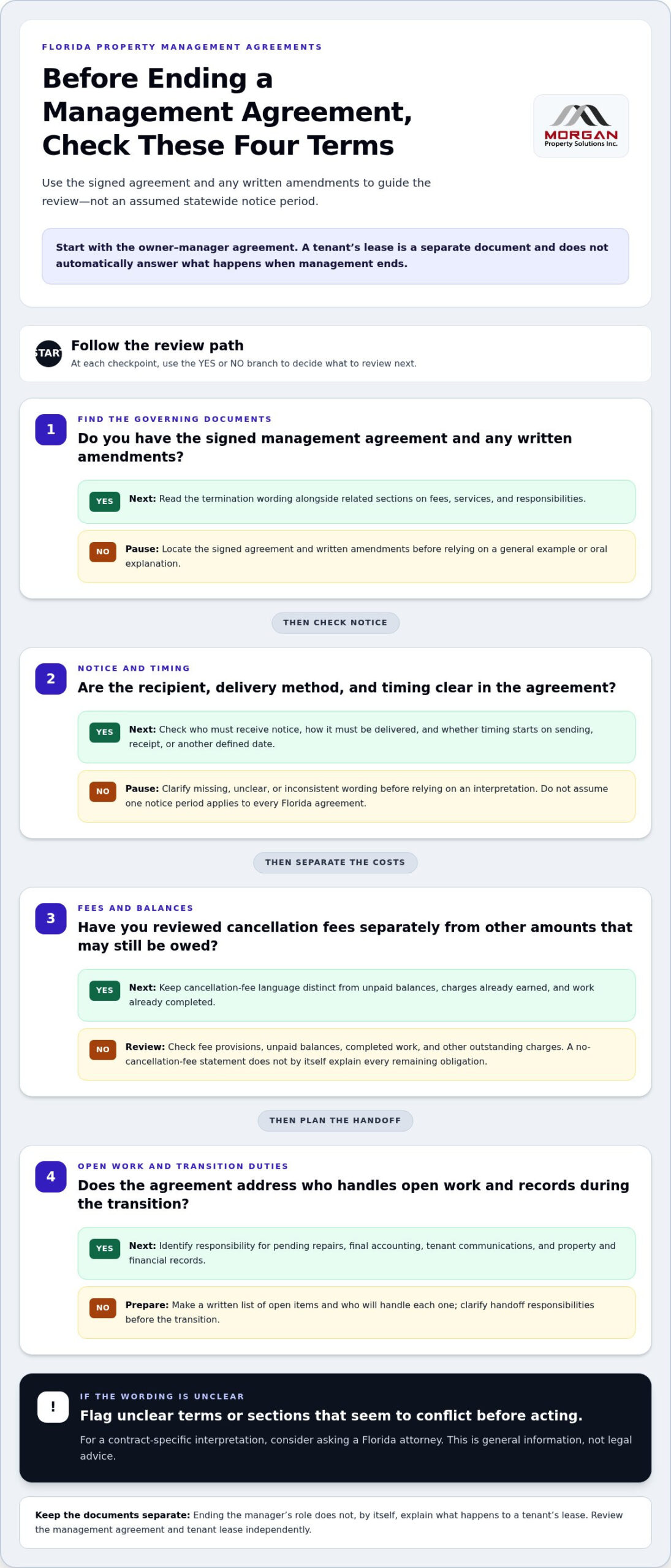
Use this quick guide to focus your review:
Notice method: Find the clause or notice section. Who must receive notice, and does the agreement specify how it must be delivered?
Timing: Look for the stated notice period and the event that starts it. Is timing based on sending, receipt, or another defined date?
Fees and balances: Review termination-related fee language and any provisions about amounts already earned or still owed. What charges might remain outstanding?
Continuing responsibilities: Check sections on open work, pending repairs, final accounting, records, or other transition tasks. Who is responsible for each item?
Notice, timing, and required delivery method
Find the exact words about notice before deciding when to send it. The agreement may identify a recipient, delivery address, or method, and it may define when notice takes effect. Read those details together. There is no single notice period to assume applies to every Florida management agreement, so don’t substitute a general online example for the language in your signed contract.
Check for written amendments, too. An amendment may change a term in the original document. If the delivery method or timing is missing, unclear, or inconsistent across sections, pause and get the language clarified before relying on an interpretation.
Fees, open work, and responsibilities after termination
Separate cancellation fees from other possible obligations. Look for provisions about unpaid balances, work already completed, pending repairs, and the final accounting. A no-cancellation-fee policy, if applicable to your agreement, doesn’t by itself resolve every outstanding charge or explain the required termination process. Morgan Property Solutions’ Landlords Handbook describes a no-cancellation-fee policy; the agreement still governs the termination process and any other outstanding responsibilities.
Write down open items and the contract language connected to each one. If you’re exploring professional management in Orlando, learn more about Orlando property management as you consider your next step. For advice on what a specific clause means legally, consult a Florida attorney.
Termination Clause or Cancellation Fee: Compare the Terms Before You Decide
A no-cancellation-fee statement can sound like a complete exit plan, but it answers only one question: whether a particular cancellation fee is stated. It doesn’t explain how to give notice, when the agreement ends, what charges may already be owed, or how property-related work and records will be handed over. Review those points separately before making a decision.
For the property management contract termination clause Florida owners are assessing, keep four topics distinct:
- Procedure: What does the agreement say about giving notice and its effective date?
- Stated fees: Does it describe a cancellation or termination fee?
- Earned charges: Are there balances for services or work already completed?
- Handoff: What does the agreement say about open tasks, records, or final accounting?
What a no-cancellation-fee statement does and doesn’t explain
Morgan Property Solutions’ Landlords Handbook describes a no-cancellation-fee policy. That is a fee-policy point, not permission to end an agreement immediately or skip its written process. The agreement still determines how notice must be given, when termination takes effect, and what happens to other outstanding charges or transition responsibilities.
For example, an agreement might have no separate cancellation fee yet still describe how notice must be delivered or how outstanding work is handled. Read the relevant terms together rather than focusing on a single headline promise.
How to compare agreements without relying on headline promises
Put the signed agreement beside any fee summary or service description. Check whether the summary matches the contract’s written language on procedure, charges, and handoff. If the documents use different wording, flag the difference rather than assuming one automatically replaces the other. There isn’t one standard Florida management contract whose terms can be presumed to apply to every owner.
Keep the broader legal context in perspective, too. Florida landlord-tenant rules concern the landlord-tenant relationship, while a management agreement concerns the owner-manager relationship. Morgan Property Solutions’ Florida landlord resources offer related reading, but they don’t interpret an individual management contract. If a specific term remains unclear, consider asking a Florida attorney for contract-specific guidance.
Once you’ve separated the process, fees, and handoff questions, you can make a more informed plan. If you’re considering professional management in Orlando, explore property management support as one possible next step.
How to Plan a Property Management Handoff in Orlando, Florida
A well-organized handoff can help keep property operations clear while management changes. Treat it as a planning process, not a checklist of steps that Florida law requires in every situation. Start with the agreement, then identify open work, records, and communication needs so responsibilities don’t get lost between outgoing and incoming management.
Prepare records, accounts, and property information
First, review the agreement for directions about documents, final accounting, keys, access devices, and other transition details. Then create a written list of items to gather and who will handle each one. Depending on the property and records available, that list might include:
- Owner statements, payment histories, and other relevant account records
- Inspection reports and notes about the property’s condition
- Maintenance history, open repair requests, and vendor information already on file
- Tenant contact details and copies of applicable lease documents
- Keys, access devices, and property instructions
Keep the list practical. Mark what’s complete, what’s outstanding, and where each item is stored. The agreement may address how documents, funds, or access items are handled, so don’t assume a specific transfer method or timeline without checking its wording.
Coordinate tenant communication and ongoing property needs
Next, map out what tenants may need to know, such as who will handle management questions and where to direct payments. Coordinate the timing and wording of any communication with the people responsible for the transition. Keep the tenant’s lease and obligations distinct from the change in the owner-manager relationship. A management change alone doesn’t tell you what a tenant’s lease requires.
Review open maintenance requests and other property needs so responsibility is clear during the changeover. For pending repairs, note their status, related records, and the next action expected. This can reduce crossed messages and help maintain continuity for tenants and owners.
For broader context on professional residential management, explore these landlord and property management resources. Then use the property management contract termination clause Florida owners have signed to confirm the process and responsibilities that apply to their own agreement.
Planning a management transition in Central Florida? Explore Orlando property management services and learn how professional support can fit into your next steps.
Choose Your Next Step: Clarify the Agreement or Review Orlando Management Options
You don’t need to solve every transition question at once. Start with the signed management agreement, mark any terms that are unclear, and use the written process to plan what happens next. The property management contract termination clause Florida owners review can guide that plan, but a Florida attorney is the right person to interpret how specific wording may apply to an individual situation.
When an agreement needs closer review
Pause before acting if the agreement contains conflicting dates, vague notice instructions, unclear fee language, or unanswered questions about open work and the handoff. Keep a copy of the signed agreement, any written amendments, and relevant emails or letters together. A simple list of questions can help you focus a conversation with a Florida attorney without jumping to conclusions about what a term means or how it may be treated.
Once the language is clear, map the practical next steps: who needs to receive notice, which responsibilities remain, and what information should be organized for the transition. This is a planning framework, not a legal conclusion about your rights or obligations.
What owners can expect from a professional management relationship
A professional management relationship works best when responsibilities and communication are clearly documented. Morgan Property Solutions’ Landlords Handbook describes full-service management, an online portal and financial services for landlords, along with maintenance coordination. Clear records and defined processes can help owners stay informed and make day-to-day property matters easier to follow.
If you’re considering management support in Orlando, explore Orlando property management services. Reviewing the agreement first, getting unclear terms addressed, and then choosing a path forward can make the next step feel more manageable.
Make Your Next Property Management Step with Confidence
A steady exit plan starts with the signed agreement. Review its notice process, timing, fees, and handoff terms separately, then organize the records and open items needed for a smooth transition. The property management contract termination clause Florida owners rely on is the one in their own agreement, not a generic example or assumption about a statewide default.
Morgan Property Solutions’ Landlords Handbook describes attorney-written leases updated for current Florida landlord-tenant law and a no-cancellation-fee policy. The agreement still determines the termination process and any other applicable responsibilities.
For owners in Orlando, Winter Park, Lake Nona, Clermont, Oviedo, Windermere, Winter Garden, Apopka, Wedgefield, and Hunters Creek, Morgan Property Solutions offers residential property management support across Central Florida. Explore Orlando property management services to discuss professional management for your property.
Frequently Asked Questions
What is a property management contract termination clause in Florida?
It’s the section of a written management agreement that explains how the owner-manager relationship can end and what steps or responsibilities may apply. A property management contract termination clause Florida owners review may address notice, timing, fees, and transition details. The management agreement is separate from a tenant’s lease, so ending management doesn’t by itself explain what happens to that lease. The signed agreement and applicable law matter.
Can I terminate a property management agreement in Florida at any time?
Not necessarily. The agreement’s wording determines whether and how an owner may end the relationship, including any notice process, timing, or conditions. Don’t assume you can terminate immediately or that a standard Florida notice period applies to every management contract. Locate your signed agreement and amendments first. If the terms are unclear or you need advice about your specific rights, consider having a Florida attorney review them.
Does a no-cancellation-fee policy mean I can end management immediately?
No. A no-cancellation-fee statement addresses a fee, not necessarily the procedure for ending the agreement. Morgan Property Solutions’ Landlords Handbook describes a no-cancellation-fee policy, but the agreement still governs notice, timing, unpaid balances, and handoff responsibilities. A fee policy alone doesn’t mean an owner can skip the contract’s written process.
What should I check before giving notice to a property manager?
Review the signed agreement and any written amendments. Look for how notice must be delivered, who should receive it, when it takes effect, and whether fee or transition terms apply. Also note open repairs, unpaid balances, final accounting, and record-transfer details. If dates conflict or key terms are vague, preserve the documents and relevant written communications, then consider asking a Florida attorney to interpret the agreement before you act.
Does ending a property management contract end the tenant’s lease?
No, ending the management agreement doesn’t automatically explain or end a tenant’s lease. These are separate documents governing different relationships: the management agreement concerns the owner and manager, while the lease concerns the landlord and tenant. For example, a tenant may still have a lease while the owner changes who manages the property. Review the lease and management agreement separately, and get legal advice if their interaction is unclear.
What records should be transferred when property management ends?
Organize records that help maintain continuity, such as tenant and lease information, owner statements, payment records, inspection reports, maintenance history, open repair details, and relevant access information. Check the agreement for directions about documents, keys, access devices, and final accounting. Owners in Orlando, Winter Park, Lake Nona, Clermont, Oviedo, Windermere, Winter Garden, Apopka, Wedgefield, and Hunters Creek can use a written handoff list to track items and responsible parties.

Article by
Oliver Overton-Morgan
Oliver Overton-Morgan is a full-time Real Estate Broker since 2003, with years of experience helping thousands of people purchase and sell real estate throughout Central Florida. He holds a Graduate Realtor Institute designation, LCAM, and has held licenses in good standing as a Florida Mortgage Broker and a Notary Public. Oliver immigrated to central Florida in 2001, and within 5 years Oliver built a successful Real Estate brokerage in central Florida, where he recruited over 75 Sales Associates with 25+ million in sales production.