
Can a landlord keep part of a Florida security deposit to cover painting? Sometimes, but a fresh coat of paint alone doesn’t make the charge fair. Security deposit deductions for painting Florida rentals should be based on documented damage beyond ordinary wear, not routine turnover or fading from everyday use.
It’s understandable to feel uncertain when the line between a minor scuff and tenant-caused damage isn’t obvious. The condition at move-in, the length of the tenancy, the paint’s age, and clear photos can all help clarify what happened. A charge that isn’t well supported may be difficult to defend if a tenant disputes it.
This guide explains when a painting deduction may be reasonable, how to compare move-in and move-out records, and why a full repaint may not be an appropriate charge. It also covers Florida’s security-deposit notice and return rules under Section 83.49, including deadlines to keep in mind. Consistent inspections and organized records help landlords and tenants assess the paint fairly and reduce the chance of a dispute.
Key Takeaways
- Routine repainting alone doesn’t establish a valid deduction. The key question is whether the tenant caused damage beyond ordinary use.
- Compare move-in and move-out photos, inspection reports, and correspondence to understand the paint’s condition and any changes.
- Assess the repair fairly by considering the paint’s age and the location and severity of the damage.
- Security deposit deductions for painting florida claims involve both evidence supporting the charge and separate notice procedures.
- Consistent property inspections and organized deposit records can help Central Florida landlords and tenants address disputes with greater clarity.
Can a Florida Landlord Deduct Painting from a Security Deposit?
Yes, a Florida landlord may have grounds to claim a painting expense when the work addresses documented tenant-caused damage beyond ordinary use. But repainting alone doesn’t establish a valid deduction. Refreshing a unit between residents is often part of routine turnover, which is different from repairing damage linked to a tenant’s actions.
The key questions are what caused the condition and whether the proposed work reasonably relates to it. A new coat applied because walls have faded over time is different from painting needed to address a large, documented mark. The lease, move-in and move-out condition records, itemized claim, and current Florida law all matter. No single photo or example decides every case.
What makes painting different from other move-out charges?
Paint changes with time and ordinary occupancy. Sunlight, daily use, and furniture near a wall can affect its appearance, so a landlord may plan to repaint during turnover even when a resident hasn’t caused damage. That schedule doesn’t, by itself, show that the tenant should pay for the work.
Compare the reason for painting with the records. If the job is a whole-unit refresh and no specific damage is identified, it may be ordinary maintenance. If a particular area needs repair because of a condition documented after move-in, the claim may be different. The scope matters too: a localized repair and a full-room repaint aren’t automatically equivalent. Security deposit laws provide general background on deposits, while Florida’s rules govern Florida claims.
What does normal wear and tear mean for painted walls?
Ordinary fading or a few minor scuffs may be consistent with everyday use, depending on the wall’s starting condition, the length of the tenancy, and where the marks appear. These examples aren’t automatic legal answers. A light mark in a high-traffic area may call for a different assessment than extensive staining or visible damage to a wall.
Look for a clear comparison. Dated move-in and move-out photos, inspection notes, and relevant correspondence can help show whether a mark was already present or appeared during the tenancy. Consider its size, location, and severity, along with the paint’s condition and age. For example, records showing a clean wall at move-in and substantial damage in the same area at move-out may support a different conclusion than records showing gradual fading across the room.
For security deposit deductions for painting florida, separate the evidence supporting the charge from the process for making it. A lease can help explain the parties’ agreement, but it doesn’t replace applicable law or documentation. An itemized amount should identify the work tied to the claimed damage rather than simply label the charge “painting.” If records are incomplete or the cause is uncertain, don’t treat a routine refresh as a tenant responsibility without reviewing the facts.
How Florida Security Deposit Rules Apply to Painting Claims
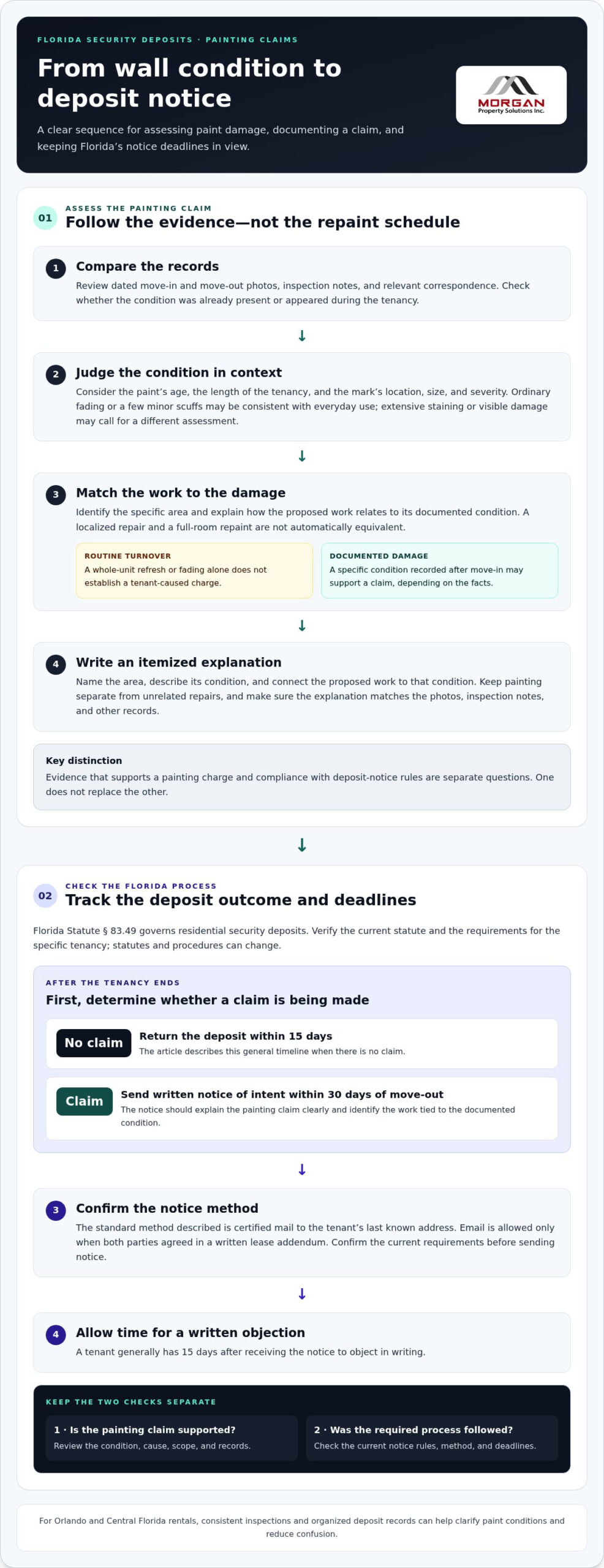
A painting charge has two separate parts: whether the condition supports a claim against the deposit, and whether the landlord follows Florida’s required process for notifying the tenant. A reasonable explanation for painting doesn’t replace the notice rules. Meeting a deadline doesn’t, by itself, prove that repainting is a valid charge either.
Florida Statute § 83.49 governs residential security deposits. Because statutes can change, landlords and tenants should consult the current law rather than rely on an old form or summary alone. The Florida Statute 83.49 text is part of Chapter 83, but this link points to the 2023 edition. Check the latest applicable version before acting. For broader background, Morgan Property Solutions Inc. also shares Florida landlord resources.
What should landlords verify before making a deduction?
Start with the current statute and the lease, then review the tenancy and condition records. Confirm who holds the deposit, when the tenancy ended, whether a claim is being made, and which notice and delivery rules apply. Florida’s general timelines are 15 days to return the deposit if there’s no claim, or 30 days from move-out to send written notice of an intent to claim. A tenant generally has 15 days after receiving the notice to object in writing.
Verify the current requirements for the notice method, too. Certified mail to the tenant’s last known address is the standard method described here, with email allowed only when both parties agreed in a written lease addendum. Confirm that this still applies to the tenancy before sending notice. Don’t base the deduction on the paint bill alone. The condition, cause, and scope of work need their own support.
What should an itemized painting claim explain?
A useful notice should make the painting claim understandable rather than leaving the tenant to guess. Identify the specific area, describe its condition, and explain how the proposed work relates to that condition. For example, distinguish a charge tied to a damaged bedroom wall from general painting scheduled as part of turnover. Keep painting separate from unrelated repairs, and make sure the written explanation matches the inspection notes, photos, and other records.
Clarity helps both sides respond to the actual issue. A tenant who disagrees can compare the claim with the lease, move-in and move-out documentation, and communications about the condition. A landlord can use the same records to check that the notice describes the claim accurately and was sent on time. Florida deposit rules can be technical, so this overview isn’t legal advice. Verify the current statutory requirements for the specific situation.
For Orlando and Central Florida landlords, organized inspections and deposit records can make this process easier to manage. Orlando property management from Morgan Property Solutions Inc. can help keep condition documentation and deposit handling organized. Direct legal questions to a qualified attorney.
Routine Repainting vs. Tenant-Caused Paint Damage: How to Compare
Use three questions to assess a painting charge: Was the work a planned refresh? Does the condition fit ordinary use? Is there evidence of specific damage that needs repair? These questions help organize the facts, but they don’t decide a claim by themselves. Severity, location, the length of the tenancy, and the condition documented at move-in all matter.
| What you see | What it may indicate | What to compare |
|---|---|---|
| Painting scheduled between residents | Routine turnover refresh | Whether the work was planned regardless of the tenant’s wall condition |
| Gradual fading or minor scuffs | Possible ordinary wear from time and occupancy | Move-in condition, duration of tenancy, and the location and extent of marks |
| Extensive marks or unusual staining in a defined area | Damage that may need closer review | Dated photos, inspection notes, cause, and the repair scope tied to that area |
Which paint conditions may point to ordinary use?
Paint can lose its fresh appearance gradually. Fading across a sunlit wall or a few light scuffs in a lived-in area may be consistent with ordinary occupancy, but context matters. Compare the same wall at move-in and move-out, and consider the tenancy’s length and the paint’s prior condition. A routine turnover repaint is different from work needed to address a specific, documented condition.
When might wall damage call for closer review?
Extensive marks, unusual staining, or damage concentrated in one area deserve a closer look, especially if dated records show that the condition changed during the tenancy. Compare the affected wall with move-in photographs and inspection notes before deciding what work the evidence supports. A localized repair may differ from repainting an entire room simply because that is the preferred finish.
Paint age is useful context, not a shortcut to a conclusion. Morgan Property Solutions’ handbook offers approximate useful-life guidance of 2-3 years for flat interior paint and 5 years for semi-gloss interior paint. These figures aren’t statutory cutoffs, and they don’t automatically establish damage or determine a deduction. A recently painted wall can still show ordinary use; older paint doesn’t prove a tenant caused a particular mark.
For landlords weighing security deposit deductions for painting florida properties, separate two judgments: whether the evidence connects a condition to tenant-caused damage, and whether the proposed work is limited to addressing that condition. If a small area needs repair but the estimate covers a full-room refresh, document why that broader scope is necessary rather than assuming the entire job belongs in the claim. Keeping the decision tied to the records is fairer than relying on a general desire to make the unit look new.
How to Document and Respond to a Florida Painting Deduction
A clear record helps both sides focus on what changed, where it changed, and whether the proposed work matches the condition. Keep dated photographs, inspection reports, the lease, relevant correspondence, and any itemized claim together. A consistent review can make a disputed painting charge easier to understand, even when the landlord and tenant see the condition differently.
What evidence helps clarify the condition of the paint?
Compare move-in and move-out photographs of the same walls whenever possible. Inspection notes should identify the room, wall or area, and visible condition, rather than simply saying “paint damaged.” Morgan Property Solutions’ handbook describes 100-500 photos per property inspection. Organized images and notes can help show what was present before the tenancy and what appeared by move-out. Practical landlord recordkeeping resources can also help owners build a consistent documentation routine.
Use this workflow to assess the claim or prepare a response:
- Gather the records. Collect dated photos, move-in and move-out inspection reports, the lease, the itemized notice, and messages about the wall’s condition or repairs. Keep original files when possible so dates and context remain clear.
- Match the affected area. Compare images of the same wall or surface. Note differences in lighting, angle, and distance, since these can make paint appear lighter, darker, or more marked than it is.
- Describe the condition specifically. Record the location and extent of the marks or staining. Separate observations from conclusions: “dark marks across the lower portion of the west bedroom wall” is more useful than “tenant damaged paint.”
- Compare the proposed work with the evidence. Identify whether the claim concerns a specific repair or broader repainting. Consider whether the described work is limited to the affected area, and preserve any estimate, invoice, or explanation that supports its scope.
- Communicate in writing. Keep messages factual and save copies. A landlord can explain how the condition and repair relate; a tenant can identify the particular charge and records they dispute.
How can a tenant respond to a disputed charge?
Review the itemized claim alongside the lease, inspection records, and applicable Florida deposit procedure. If you disagree, write a concise response that identifies the specific painting charge, the evidence you believe conflicts with it, and any relevant photographs or notes. Keep a copy and track any response deadlines under current law. A disagreement doesn’t guarantee a particular outcome. Consult a qualified attorney for advice about your circumstances.
For landlords who want a more organized inspection and deposit process in Orlando and Central Florida, explore property management with Morgan Property Solutions Inc.
How Central Florida Property Management Can Reduce Painting Disputes
A consistent inspection process gives owners a practical way to manage property condition records from one tenancy to the next. Keeping inspection notes and deposit paperwork organized makes turnover decisions easier to review and explain. It won’t guarantee that a deduction is lawful or prevent a disagreement, but it can help landlords make decisions based on the available record rather than memory.
What a consistent inspection process contributes
Recording visible conditions before and after occupancy creates a useful history for the property. Notes can identify the room, wall, and area being observed, while photographs keep those observations available for later review. A consistent approach also makes it easier to find the relevant record when questions come up during turnover.
Paint-life guidance can provide context about a surface’s age, but it isn’t a legal standard or an automatic deduction rule. Keep that information separate from the question of who caused a particular condition. Any decision still depends on the circumstances, supporting documentation, and applicable Florida requirements.
When professional management may help landlords
Turnover involves several details that are easier to manage when records are organized as part of a broader process. Professional management can help landlords keep inspection information and deposit records together for review, instead of searching through scattered files when a question arises. This structure can support a clearer conversation with a departing tenant, while keeping the decision tied to the evidence.
Morgan Property Solutions Inc. provides residential property management in Orlando and Central Florida, including move-in and move-out inspections, photo documentation, and security-deposit handling. These processes help organize information involved in a painting claim, but they don’t guarantee that a deduction will be lawful or undisputed. Landlords still need to assess the specific facts and follow current legal requirements.
Morgan Property Solutions serves property owners in Orlando, Winter Park, Lake Nona, Clermont, Oveido, Windermere, Winter Garden, Apopka, Wedgefield, and Hunters Creek. For these Central Florida communities, professional management can bring routine inspection and deposit records into a process that’s easier to review when questions arise.
Explore Orlando property management support for your Central Florida rental.
Make Your Next Turnover Easier to Assess
A clear, consistent process can make future move-outs less stressful. Set a routine for recording property condition, keeping deposit documents together, and reviewing the current rules before making a claim. For landlords weighing security deposit deductions for painting florida rentals, that preparation can help keep decisions focused on the facts instead of assumptions.
Morgan Property Solutions Inc.’s landlord handbook states that security deposits are held in a reconciled escrow account and refunds are processed per Florida law. Organized management can keep these responsibilities part of a broader process, while each painting claim still depends on its circumstances and supporting records.
If you own a rental in Orlando or Central Florida, take the next step toward a more organized management process. Explore professional property management in Central Florida, and move forward with greater clarity and confidence.
Frequently Asked Questions
Can a landlord deduct painting from a security deposit in Florida?
Possibly, but a fresh coat alone doesn’t establish a valid claim. Florida Statute § 83.49 governs residential security-deposit procedures, so review the current statute and lease before acting. For a specific painting charge, keep the work record separate from the turnover budget so the reason for the work and the amount claimed can be reviewed independently. Disputes depend on their facts, and a qualified Florida attorney can advise on a specific case.
Is repainting after a tenant moves out considered normal wear and tear in Florida?
Not necessarily. Before treating turnover painting as a tenant charge, identify what prompted the work and whether the refresh was already planned without a specific concern. The length of the tenancy alone doesn’t settle the question. Keep the repainting plan and any repair notes distinct, then compare the records for the areas at issue. The specific facts and current Florida law govern how a particular situation should be assessed.
Can a Florida landlord charge for minor scuffs or small paint marks?
It depends on the extent and setting, so there’s no blanket answer for every mark. Consider how many areas are affected, whether the marks can be cleaned, and whether they require repair. A tenant can ask for the specific basis of the charge in writing. A landlord can keep close-up images and inspection notes together, making it easier to review the condition and explain the decision.
How does paint age affect a security deposit deduction in Florida?
Paint age can provide context, but it isn’t itself a statutory calculation. Morgan Property Solutions Inc.’s landlord handbook provides approximate useful-life guidance, not a legal cutoff. To establish the paint’s history, look for dated invoices, maintenance entries, or earlier inspection notes showing when the surface was last painted and what type of paint was used. Consider that history separately from responsibility for the condition.
What should a landlord include when documenting a painting deduction in Florida?
Use a separate entry for painting rather than combining it with cleaning or unrelated repairs. Identify the room and surface, describe the work being claimed, and retain records that explain the connection. Keep the original invoice or estimate, and note whether it covers a localized repair or broader work. Clear organization helps the tenant understand the charge and lets the landlord check that the written claim matches the supporting documents.
What can a tenant do if a Florida landlord deducts painting costs from a deposit?
Check the deadline and response method that apply under the current Florida process, then send a dated written objection if you dispute the claim. Refer to the specific item and briefly explain what you contest, such as the amount, the work described, or a record that conflicts with the charge. Save a copy and proof of delivery. A qualified Florida attorney can advise on legal options for your situation.

Article by
Oliver Overton-Morgan
Oliver Overton-Morgan is a full-time Real Estate Broker since 2003, with years of experience helping thousands of people purchase and sell real estate throughout Central Florida. He holds a Graduate Realtor Institute designation, LCAM, and has held licenses in good standing as a Florida Mortgage Broker and a Notary Public. Oliver immigrated to central Florida in 2001, and within 5 years Oliver built a successful Real Estate brokerage in central Florida, where he recruited over 75 Sales Associates with 25+ million in sales production.