
What if a tenant’s bankruptcy filing pauses an eviction but doesn’t decide whether they can stay? If you’re wondering what happens if a tenant files for bankruptcy in Florida, the immediate answer is that the automatic stay generally pauses most collection efforts and eviction proceedings. But it doesn’t automatically end the lease, erase every rent obligation, or determine the tenancy’s outcome.
It’s understandable to feel unsure about whether to pursue unpaid rent, continue an eviction, or take steps to recover the property. The safest next move depends on details such as whether a court had already entered a judgment for possession and whether rent comes due after the bankruptcy filing. Pause potentially affected actions and get guidance from a qualified bankruptcy attorney before proceeding.
This article explains the automatic stay, what may happen to the lease and unpaid rent, and which facts can shape a landlord’s next steps. It also covers practical ways to keep rent records, lease documents, and routine property management organized while legal questions are addressed.
Key Takeaways
- When considering what happens if a tenant files for bankruptcy in Florida, identify which actions may be paused and get case-specific guidance before proceeding.
- Chapter 7 and Chapter 13 can raise different lease questions. The filing alone doesn’t determine whether the tenant will stay.
- Keep pre-filing rent separate from rent due afterward, and have bankruptcy counsel review the effect on collection, eviction, and the security deposit.
- Preserve the lease, notices, payment history, and court communications without changing existing records.
- Organized rent statements, inspection reports, and maintenance coordination can help keep routine property management on track while counsel addresses legal decisions.
What happens immediately when a tenant files for bankruptcy in Florida?
A tenant’s bankruptcy filing can change what a landlord may do next, even if an eviction case or rent dispute is already underway. The first question is whether the filing has triggered a legal pause on a specific action, not simply whether rent is unpaid. If you’re asking what happens if a tenant files for bankruptcy in Florida, the key immediate change is usually the automatic stay under federal law, subject to exceptions and the facts of the case.
What is the automatic stay in a tenant bankruptcy?
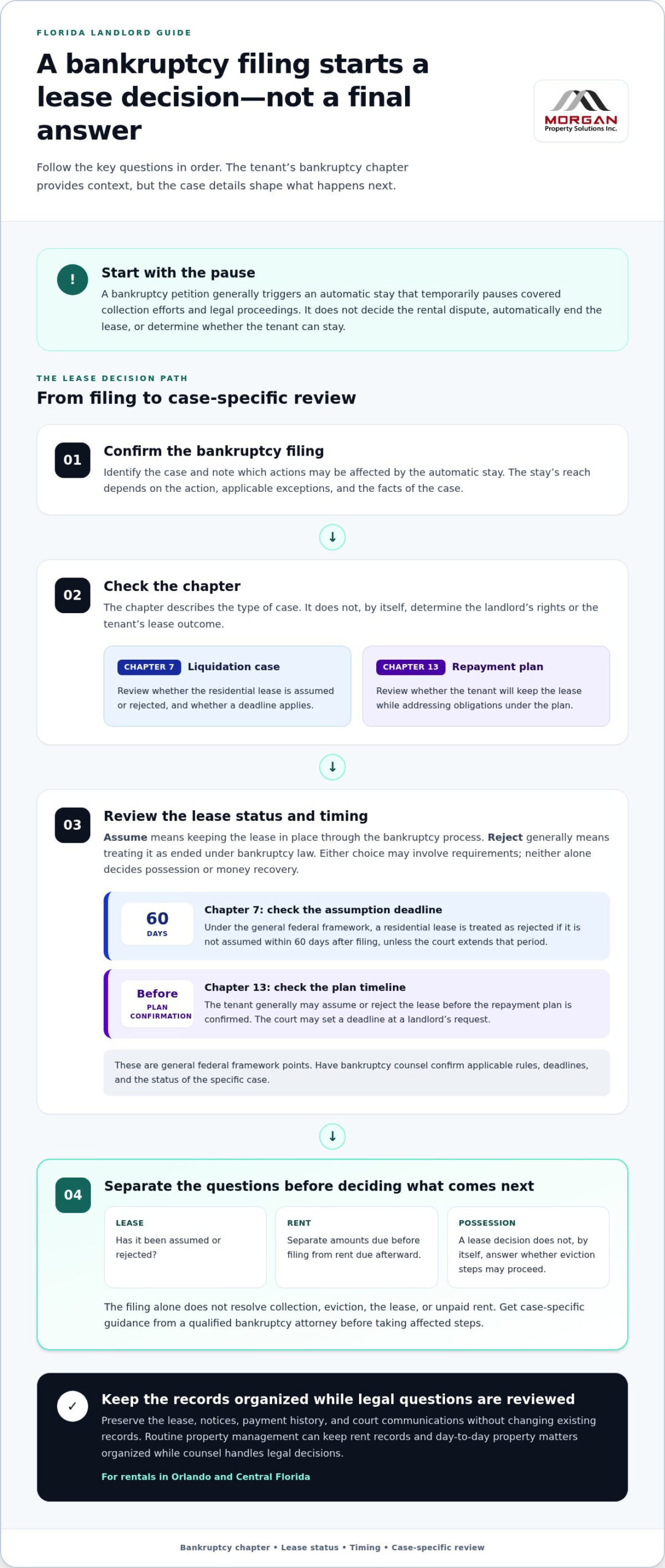
The automatic stay is a federal court protection that generally takes effect when a bankruptcy petition is filed. In plain language, it can temporarily stop certain collection efforts and legal proceedings against the tenant while the bankruptcy case moves forward. The stay’s reach depends on the action and any applicable exceptions, so it isn’t a blanket ruling on every landlord action.
In general, the automatic stay temporarily pauses covered collection and legal actions while the bankruptcy process proceeds. It doesn’t decide the final outcome of a rental dispute.
Does the filing automatically end a Florida residential lease?
No. A bankruptcy filing alone doesn’t automatically mean the tenant must leave or that the lease has ended. Whether the stay applies to a particular eviction step and whether the lease continues are separate questions. A petition starts a bankruptcy case; it isn’t a final decision about possession, the lease, or unpaid rent.
That distinction matters in practice. A landlord may have a pending eviction, an unpaid balance, or a lease that remains in effect, but the filing doesn’t resolve those issues on its own. The status and timing of any court action can affect the available options. Exceptions may apply, so don’t assume an eviction can continue simply because it began before the bankruptcy filing.
If you learn that a tenant has filed, pause further collection efforts or eviction steps until you understand how the stay applies. This is a careful pause, not a conclusion that you’ve lost the right to seek payment or possession. Keep the notice and related records together, and have a qualified bankruptcy attorney review the case before you act. A property manager can maintain routine records and coordinate day-to-day property matters, but legal decisions about the bankruptcy belong with counsel.
How Chapter 7, Chapter 13, and lease decisions can affect a Florida landlord
A tenant’s bankruptcy chapter offers useful context, but it doesn’t answer every question about the rental. The lease may be kept or ended through the bankruptcy process, and timing and requirements can differ by chapter. Knowing which chapter was filed helps you frame questions for counsel, but it doesn’t predict whether you’ll recover rent or regain possession.
What should landlords understand about Chapter 7 versus Chapter 13?
Chapter 7 is generally a liquidation case, while Chapter 13 involves a repayment plan. Neither label alone tells a landlord what will happen to the lease or an unpaid balance. Confirm the chapter in the bankruptcy docket or with counsel, then review how the tenant’s specific case treats the lease and related claims.
The chapter describes the type of bankruptcy case. It doesn’t, by itself, determine a landlord’s rights in that tenant’s case.
Chapter 7
General context: A liquidation case.
Lease question: Will the residential lease be assumed or rejected?
What requires counsel: Whether a lease decision has been made, what deadlines apply, and how the decision affects your options.
Chapter 13
General context: A case involving a repayment plan.
Lease question: Will the tenant keep the lease while addressing obligations under the plan?
What requires counsel: How the plan and lease decision affect rent claims, possession, and any next steps.
What can happen if a tenant assumes or rejects a lease?
To assume a lease means to keep it in place through the bankruptcy process; to reject it generally means to treat it as ended under bankruptcy law. Assumption can involve requirements such as addressing defaults and providing assurance of future performance. The details depend on the case, so don’t treat either choice as an automatic ruling about possession or recovery of money.
Residential lease decisions have chapter-specific timing rules. Under the general federal framework, in Chapter 7, a residential lease is treated as rejected if it isn’t assumed within 60 days after filing, unless the court extends that period. In Chapter 13, the tenant generally may assume or reject the lease before the repayment plan is confirmed; the court may set a deadline at a landlord’s request. Have bankruptcy counsel confirm how these rules apply to the case.
Keep the chapter, lease status, and possession question separate as you organize your records. A tenant’s decision about the lease doesn’t, by itself, tell you what collection or eviction steps may proceed. For landlords managing rentals in Orlando and Central Florida, professional property management can help keep routine records and property matters organized while counsel handles legal decisions.
How bankruptcy may affect rent, eviction, and the security deposit
After a bankruptcy case is filed, separate rent that came due before filing from rent that comes due afterward. These amounts arise at different points in the case, and their treatment may differ. Don’t assume the filing erases every unpaid balance or that you can collect in the usual way. The case details and bankruptcy law govern how a claim can be handled.
What happens to unpaid rent and rent due after filing?
Rent owed before filing is generally treated as a pre-petition debt, meaning it arose before the bankruptcy case began. Rent that becomes due afterward is a post-petition obligation. That distinction can matter, but it doesn’t guarantee that a landlord will recover arrears or establish which steps are permitted if later rent goes unpaid.
A tenant may want to stay and make a payment arrangement, or may not be able to pay ongoing rent. Don’t rely on a verbal promise or send an informal collection demand without case-specific legal guidance. Ask bankruptcy counsel how to communicate about amounts due and whether a proposed payment arrangement is appropriate. Keep your ledger current, with dates and amounts separated by rent period instead of combined into one unexplained balance.
Can an eviction continue, and what about a security deposit?
The eviction’s procedural stage can matter. A pending case is not the same as a judgment for possession entered before the bankruptcy filing. Federal law includes a limited exception relating to a pre-filing possession judgment, but it has conditions, including a possible tenant opportunity to cure the default within a specified period. Don’t assume the exception applies without counsel reviewing the judgment, filing date, and circumstances.
Scenario for attorney review
Bankruptcy filed before a possession judgment: The automatic stay may affect the eviction case. Ask counsel whether the case must pause and what steps, if any, are available to seek permission to proceed.
Bankruptcy filed after a possession judgment: A statutory exception may affect the stay, but its conditions and any tenant rights to delay enforcement need careful review before taking action.
Security deposits require the same caution. A deposit may be treated as property of the bankruptcy estate, so don’t assume you can apply it to unpaid rent, keep it, or return it as though no bankruptcy case exists. Get legal guidance before changing how the deposit is held or accounted for.
What happens if a tenant files for bankruptcy in Florida depends partly on when rent became due and where the eviction stood when the petition was filed. Preserve your payment records, lease, notices, and court documents. Have qualified bankruptcy counsel review the specific facts before collecting, advancing an eviction, or making a decision about the deposit.
What should a Florida landlord do after learning of a tenant’s bankruptcy?
A filing can leave you with urgent questions, but an organized response can help you distinguish routine property management from legal decisions. If you’re wondering what happens if a tenant files for bankruptcy in Florida, start by preserving information and pausing any step that could affect rent collection, eviction, the lease, or the deposit until bankruptcy counsel reviews the case.
The safest general response is simple: pause, document, and seek case-specific guidance before taking action.
- Pause potentially affected actions. Don’t send a collection demand, advance an eviction, change the lease, or make a deposit decision based on assumptions. Ask bankruptcy counsel what the filing means for any planned or ongoing action.
- Gather the filing details. Record the filing date and case information provided to you. Confirm the information through appropriate official court records or counsel, and distinguish verified facts from what you’ve heard informally.
- Preserve your records. Save the lease, notices, payment history, communications, and court documents. Keep originals and existing entries intact. Don’t revise past records to reflect a new interpretation of the case.
- Get legal guidance before deciding next steps. Have qualified bankruptcy counsel assess the stay, the history of any eviction, the lease, and available court procedures before you pursue collection, possession, or changes involving the deposit.
Which records should landlords organize?
Put the relevant documents in one secure, easy-to-review file. Include:
- The signed lease and any written amendments
- A rent ledger and payment history, with dates and amounts clearly recorded
- Notices sent or received, plus communications with the tenant
- Inspection reports and relevant court communications or orders
- The bankruptcy filing date and any case information you’ve received
Keep communications factual and respectful. For example, note when a payment was received or a notice arrived without adding a conclusion about what the bankruptcy permits. Follow counsel’s instructions for any case-related communication.
When should a landlord speak with bankruptcy counsel?
Speak with counsel promptly, especially before taking an eviction, collection, deposit, or lease-enforcement step. Counsel can review the filing and procedural history, assess how the stay may apply, and advise whether a court process may be available. A property manager can help keep rent statements and property records organized, but bankruptcy advice and legal decisions belong with a qualified attorney.
For landlords in Orlando and Central Florida, organized residential property management can help keep routine records and property matters in order while counsel addresses the legal questions. Explore Orlando property management for support with day-to-day rental oversight.
How professional property management can support landlords during a tenant bankruptcy
A bankruptcy case can raise legal questions while everyday property responsibilities still need attention. Professional property management can help keep routine tasks organized, but it doesn’t replace bankruptcy counsel or determine what the landlord may legally do. Counsel should guide decisions about the stay, rent collection, eviction, lease enforcement, and the security deposit. Management support is practical: maintain clear payment information, document property condition, and coordinate maintenance in line with legal and lease guidance.
Which routine management tasks can stay organized?
Online rent payment processing and statements help owners review payment information and keep routine financial records together. Clear records make it easier to see what was received and when, without turning administrative work into a legal conclusion about the tenant’s obligations.
Photo inspection reports provide a visual record of the property’s observed condition. Morgan Property Solutions’ reports include hundreds of photos. They document what was seen during an inspection, but they don’t decide a bankruptcy issue or resolve a legal dispute. Keep reports with other property records so they’re available for review if needed.
Maintenance coordination is another part of managing a rental. Morgan Property Solutions coordinates maintenance 24/7, including emergency and routine requests. Any work or communication that could be affected by the lease or bankruptcy case should follow counsel’s guidance. Keeping this boundary clear helps owners avoid treating routine management as a substitute for legal advice.
How can Central Florida landlords get practical support?
For an Orlando-area owner, professional management can bring recurring tasks such as payment processing, statements, inspections, and maintenance coordination into a consistent routine. Morgan Property Solutions serves residential property owners across the Central Florida area, including Orlando, Winter Park, Lake Nona, Clermont, Oveido, Windermere, Winter Garden, Apopka, Wedgefield, and Hunters Creek. That support can help reduce the administrative burden during a stressful period, while legal counsel remains responsible for advising on the bankruptcy case.
Lease preparation is another distinct management function. Morgan Property Solutions uses leases written by Florida eviction attorneys. That does not guarantee a particular outcome, provide bankruptcy advice, or replace legal review of a tenant’s individual case.
If you’re considering what happens if a tenant files for bankruptcy in Florida, separate day-to-day property oversight from decisions that require legal judgment. A property manager can help keep routine rental operations organized; qualified bankruptcy counsel can assess the case and advise on permitted next steps.
For practical support with rental operations in Orlando and Central Florida, explore Orlando property management and the services available for residential property owners.
Make your next move with a clear plan
A tenant’s bankruptcy can make ordinary landlord decisions feel uncertain. Instead of trying to resolve every question at once, use a steady process: keep routine property operations organized and let qualified bankruptcy counsel guide decisions that depend on the case. That balance can help you protect your time, communicate thoughtfully, and make informed choices without treating an uncertain situation as settled.
If you’re still weighing what happens if a tenant files for bankruptcy in Florida, remember that each case turns on its own facts. The right support can help you manage the rental day to day while you address legal questions through the proper channel. You don’t have to handle the administrative side alone.
For practical support with your rental in Orlando or Central Florida, explore Orlando property management support. With organized management and case-specific legal guidance, you can take the next step with greater confidence.
Frequently Asked Questions
Does the automatic stay stop an eviction in Florida?
Generally, the automatic stay pauses an eviction while the bankruptcy case is pending, but the result can depend on the eviction’s status and applicable exceptions. For example, federal law provides a limited exception when a landlord obtained a judgment for possession before the bankruptcy filing. Residential tenants may have a chance to delay enforcement by curing the default within the period allowed by law. Have counsel review the judgment and case facts before acting.
Can a Florida landlord evict a tenant after a bankruptcy filing?
Possibly, but a landlord generally must not continue an eviction covered by the stay without court permission or a confirmed exception. If there’s no qualifying pre-filing possession judgment, a landlord may ask the bankruptcy court for relief from the stay. Unpaid rent that comes due after filing may be relevant to that request, but it doesn’t authorize a landlord to bypass the court process or take possession without following the law.
Does Chapter 7 bankruptcy end a residential lease in Florida?
No, filing Chapter 7 doesn’t itself end the lease. Under the general federal rule, the trustee or debtor has 60 days from the filing to assume or reject a residential lease, unless the court extends the period. If no one assumes it by the applicable deadline, it’s generally treated as rejected. Ask bankruptcy counsel to confirm the deadline and its effect on the lease and possession in the specific case.
Can a tenant stay in a rental after filing Chapter 13 bankruptcy?
Yes, a tenant may be able to remain, but Chapter 13 doesn’t guarantee continued occupancy. The tenant may seek to assume the lease before the repayment plan is confirmed, and the case may address how defaults are handled. The tenant also needs to meet ongoing obligations. A landlord should review the filed plan and any lease-related court documents with counsel rather than infer the tenant’s status from the chapter alone.
Can a landlord collect rent after a tenant files for bankruptcy?
It depends on when the rent became due and what collection step the landlord proposes. The tenant’s pre-filing balance is handled through the bankruptcy case, while rent that comes due afterward is generally a continuing obligation. Before sending a demand, accepting a proposed arrangement, or applying a payment to older arrears, get case-specific legal guidance. If you’re assessing what happens if a tenant files for bankruptcy in Florida, keep separate records for each rent period.
What happens to a security deposit when a tenant files for bankruptcy?
A security deposit may be treated as property of the bankruptcy estate, so don’t assume you can apply it to overdue rent or make another change to it without court permission. The right handling can depend on the lease, case, and applicable law. Keep the deposit accounting and related records intact, and have bankruptcy counsel advise you before applying, retaining, or returning any funds.
Should a landlord contact a tenant directly after a bankruptcy filing?
Don’t assume every practical message is prohibited, but avoid collection demands, payment negotiations, or eviction-related communications until counsel advises you. If you need to address a routine property matter, keep the message factual and follow any instructions from the tenant’s attorney or bankruptcy counsel. For an Orlando or Winter Park rental, record the date and purpose of any communication so the property file stays clear and complete.

Article by
Oliver Overton-Morgan
Oliver Overton-Morgan is a full-time Real Estate Broker since 2003, with years of experience helping thousands of people purchase and sell real estate throughout Central Florida. He holds a Graduate Realtor Institute designation, LCAM, and has held licenses in good standing as a Florida Mortgage Broker and a Notary Public. Oliver immigrated to central Florida in 2001, and within 5 years Oliver built a successful Real Estate brokerage in central Florida, where he recruited over 75 Sales Associates with 25+ million in sales production.