A difficult tenant is defined by a pattern of behavior, not one frustrating interaction. Landlord anxiety over difficult tenants often grows when rent is repeatedly late, communication becomes disrespectful, or a tenant ignores lease rules, such as limits on occupants or indoor smoking. These issues deserve attention, but one stressful moment alone does not mean you need to sell.
It’s understandable to feel worn down when a rental takes more time and emotional energy than expected. A practical next step is to distinguish specific, documented behavior from the stress it causes, then respond calmly and consistently. This guide explains how to assess tenant conduct, address late rent and disrespect, keep useful records, and decide whether selling your rental property makes sense. It also explains when professional property management can create a buffer between you and tenant issues.
Key Takeaways
- Judge tenant behavior by recurring, specific actions and lease concerns, not one frustrating exchange.
- Before deciding to sell, weigh the ongoing stress against the property’s role in your plans and understand the terms of any fixed-term tenancy.
- Address late rent calmly and promptly, and discuss a practical payment plan when a normally reliable tenant is facing hardship.
- Set clear expectations for communication, maintenance requests, and emergencies so both sides know what to expect.
- Keep organized records of rent, repairs, and tenant communications to make patterns easier to assess and next steps clearer.
1. Should I sell my rental property if it is causing me stress?
Selling may make sense if managing the rental is affecting your wellbeing or no longer fits your plans. First, separate the tenant problem from the investment decision. Write down what is causing stress, how often it happens, and whether a clear process or professional property management could reduce your direct involvement. A property manager can act as a buffer between landlord and tenant.
Review your agreement before responding to a request to leave early. For example, a tenant may have signed a fixed-term agreement lasting 12 months, then ask to end it before the term expires. Read the early-termination language, clarify the requested move-out date, and discuss any proposed terms in writing. Don’t treat the request alone as an agreed end to the tenancy; record what both parties accept.
What does it cost to evict a tenant, including court fees and lost rent? There’s no single total: court-related expenses, legal assistance, unpaid rent, the time needed to regain possession, and vacancy losses can all affect the amount. Estimate direct expenses separately from lost income so you can compare eviction with a negotiated resolution.
What landlord insurance or legal protections cover tenant-related damage and liability? Coverage depends on the policy’s terms, limits, and exclusions. Review the policy documents for provisions on tenant-caused damage and liability, and distinguish covered events from ordinary wear or excluded losses. Keep photographs, repair records, and written communications together to support a claim if damage occurs.
Concerns about control and possession can intensify conflict. Use the written agreement to identify who may occupy the home, which changes require approval, and how to handle tenant requests. Keep communication factual and in writing. Avoid unilateral steps that could escalate a dispute. If possession is contested, get advice on the applicable process before acting.
A healthy property management relationship depends on clear roles. Agree on who receives tenant messages, who coordinates repairs, and how decisions are shared with you. Professional conflict management can keep a tense conversation focused on the issue: document a repair request, confirm the next action, and share updates rather than arguing about tone or blame.
Before selling, compare three practical paths: continue managing the property yourself, delegate tenant matters through property management, or prepare the rental for sale. Consider recurring problems, the time spent resolving them, and your financial and personal goals. If the main source of stress is constant direct contact, changing how the property is managed may address the cause without an immediate sale.
2. Late rent payment communication and payment plans
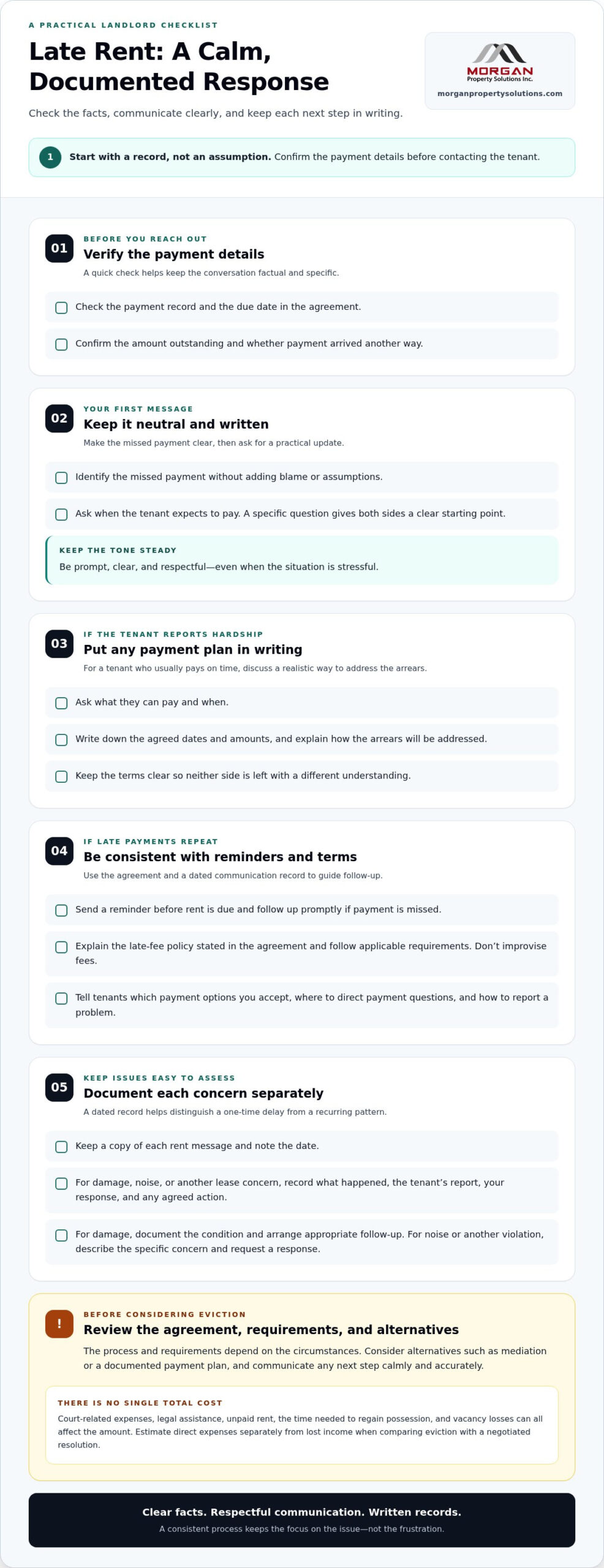
Start addressing late rent by checking the payment record and agreement. Confirm the due date, amount outstanding, and whether payment arrived another way. Then contact the tenant in writing with a clear, neutral message: identify the missed payment and ask when they expect to pay. A specific request gives both sides a practical starting point.
How can landlords handle late rent, property damage, noise complaints, or lease violations? Address each issue separately: record what happened, refer to the relevant agreement terms, and tell the tenant what action is needed. For damage, document the condition and arrange appropriate follow-up. For noise or another violation, describe the specific concern and request a response.
If a tenant who usually pays on time reports hardship, discuss a realistic payment plan. Ask what they can pay and when, then put any agreed dates and amounts in writing. The plan should explain how the tenant will address the arrears, rather than leaving everyone with an unclear understanding. Keep your tone respectful, even when the situation is stressful.
For repeated late payments, communicate consistently instead of making unrecorded exceptions. Send a reminder before rent is due, explain the late-fee policy stated in the agreement, and follow applicable requirements. Late fees may discourage repeated delays, but they should not be improvised or replace clear communication.
Convenient payment methods and open communication can help prevent avoidable delays. Tell tenants which payment options you accept, where to direct payment questions, and how to report a problem. If someone misses a payment, follow up promptly and keep a copy of each message. A dated record helps distinguish a one-time delay from recurring arrears.
Consider eviction carefully. It can involve lost rent and other expenses, and the process and requirements depend on the circumstances. Before taking that step, review the agreement, understand the applicable requirements, and consider alternatives such as mediation or a documented payment plan. Don’t threaten eviction during a tense exchange; communicate the next step calmly and accurately.
When rent problems overlap with damage, noise, or other lease violations, create a separate record for each issue. Note the date, the tenant’s report, your response, and any agreed action. This keeps dealing with the matter focused on facts, rather than frustration. For practical landlord resources, use guidance that helps you manage rent communication and property concerns consistently.
3. What is the best way to respond to a disrespectful tenant?
Keep your response calm, specific, and focused on the issue. If a tenant sends an insulting message about a repair, don’t answer in the same tone. Acknowledge the concern, state the next step, and provide a clear update when you have one. For example: “I’ve received your dishwasher complaint and will share the repair plan once it’s arranged.”
For maintenance complaints, first identify the problem and whether it needs urgent attention. Ask where it is, what stopped working, and whether there is visible damage. Record the report and your reply, then arrange an appropriate response. If a repair is delayed, explain what has happened and what comes next. A tenant demanding next-working-day delivery of a broken dishwasher may need a clear explanation of the repair timeline, not an argument.
When can landlords legally charge for damage or deduct costs from a security deposit? A charge should relate to documented tenant-caused damage, not ordinary wear, and must follow the lease and applicable rules. Keep dated photographs, inspection notes, and repair records to show what happened and how you calculated the cost.
Repeated complaints can feel excessive, but assess each on its facts. Use a simple log with the date, concern, response, and outcome. If a tenant reports the same dripping faucet several times, compare the messages with the repair record before deciding the complaint is unreasonable. Thorough records help you gather relevant details and spot unresolved issues.
Regulatory or compliance demands also call for a measured response. Ask the tenant to identify the specific concern, review the relevant lease terms, and note any property conditions that need attention. For example, a complaint about a loose stair rail calls for documenting its location and arranging an appropriate assessment. Don’t dismiss a concern simply because the tenant’s tone is difficult.
Set communication boundaries without refusing reasonable requests. Tell tenants how to report routine repairs, what information to include, and how you’ll provide updates. Explain which issues need immediate attention and which can follow the usual maintenance process. Clear expectations help tenants understand how to raise concerns while giving you a consistent way to respond.
Separate the tenant’s manner from the substance of each complaint. A rude message about a leak still identifies a maintenance concern that needs review. Respond to the leak, keep the exchange professional, and preserve the message with related repair notes. If tenants attempt repairs themselves, clarify how they should report the work and any resulting damage before taking further action.
4. Keeping records of payments, maintenance, and communications
Good records turn a tense tenant relationship into a clear sequence of events. Keep a dated file for each rental property, including rent received, deposits, property-related financial transactions, maintenance reports, and tenant communications. If a tenant disputes a payment or says a repair was ignored, you can review the timeline instead of relying on memory.
Make entries specific. Record when rent was due and received, the amount, and any outstanding balance. For a repair, note the reported problem, when it was reported, who arranged the work, and what happened afterward. Save invoices, inspection notes, and photographs with the related entry. “Leak reported, plumber contacted, repair completed” is more useful than “handled leak.”
Communication records matter even when someone doesn’t respond. Keep copies of emails and letters, and note the date and purpose of phone calls. Record each contact attempt, including whether you left a message. If a tenant reports a concern, acknowledge it clearly, describe the next step, and note when you shared an update. These records help show how the issue was handled.
Responsive maintenance supports stronger tenant relationships. After receiving a report, confirm what you understand and ask for any details needed to assess the problem. Keep the tenant informed about repair status and actions taken, especially if scheduling changes. For example, if a contractor cannot access the property as planned, record the missed visit and promptly share the revised plan.
A separate maintenance reserve can help you prepare for repairs without confusing maintenance spending with rental income. One planning guideline is to hold around 10 to 15 percent of annual rental income in a separate maintenance reserve. Track contributions and withdrawals, then connect each withdrawal to an invoice or repair record. This makes property cash flow easier to review.
For a possible emergency, record the tenant’s exact report and when you received it. Note whether the issue involves immediate danger or continuing damage, such as water spreading from a broken pipe. Document who was contacted, what steps followed, and when the tenant received an update. Clear details help distinguish urgent maintenance from a routine request.
Keep the system simple enough to use consistently. A spreadsheet or organized digital folder can separate rent, repairs, and communications by property. Use consistent labels for each entry, such as “payment,” “maintenance,” or “tenant contact.” Review open repair reports and unpaid balances regularly. A quick check can reveal an unanswered message, an unfinished repair, or a pattern that needs attention.
5. Defining difficult tenant behavior
Common causes of landlord anxiety include repeated late rent, property damage, disrespectful communication, and lease violations. Uncertainty can make each issue feel more serious, especially when you’re unsure whether it’s a one-time problem or a pattern that needs action.
A useful distinction is behavior versus personality. A tenant who sounds abrupt in one message may still follow the agreement and pay rent as arranged. By contrast, repeated missed payments, unauthorized occupants, or indoor smoking can create concrete concerns. Compare what happened with the written expectations before deciding how serious the behavior is.
Look at frequency, impact, and response. Has the same issue happened again after you raised it? Does it affect the rental, another resident, or the agreed terms? Has the tenant responded to a clear request? One tense exchange differs from repeated hostile messages that prevent practical communication. These questions help distinguish an unpleasant interaction from an ongoing management problem.
Some situations need attention even without an argument. Unauthorized occupants may stay in a rental home for months, while indoor smoking or illegal activity may violate lease rules. Record what you observe, compare it with the agreement, and address the specific concern. Don’t treat an assumption or rumor as established fact. A measured response starts with evidence.
Everyday habits also need context. One example describes a tenant who had lived in a property for over six months and left dirty plates in their bedroom. That detail alone doesn’t establish a serious lease problem. Consider whether the condition causes damage, affects shared areas, or conflicts with an agreed requirement. Then communicate the expectation and record any follow-up.
For a consistent assessment, sort concerns into three groups: a one-time disagreement, repeated behavior, or a specific lease concern. This simple step helps keep frustration from defining the whole relationship and makes expectations clearer for both sides. Sometimes the right response is a calm conversation; sometimes you need to address a documented pattern through the process set out in the agreement.
Landlord anxiety over difficult tenants can ease when you judge conduct by evidence, repetition, and its effect on the property. Start with a dated note, identify the relevant expectation, and choose a proportionate next step. If you’re preparing to rent a property, review tenant screening criteria to consider how clear standards can help set expectations from the start.
Morgan Property Solutions Inc.: Residential Property Management
Morgan Property Solutions Inc. provides Residential Property Management for owners in Orlando and across Central Florida who want help managing tenant communication, rent, and property concerns. If repeated disputes or maintenance demands take too much of your time, professional management can create a clearer process and reduce direct involvement. Discuss your rental’s needs to decide whether ongoing management fits your situation.
If you’ve weighed the options and decided to sell, Real Estate Seller Representation can support that next step. For owners who want to keep renting but need a new tenant, Tenant Placement and Leasing may be relevant. The right option depends on whether your priority is delegating day-to-day responsibilities, selling, or finding a tenant.
To talk through your rental property needs, contact Morgan Property Solutions Inc.
Choose a steadier path forward
Landlord anxiety over difficult tenants can make every property decision feel urgent. Give yourself room to choose based on what you want from your Orlando or Central Florida rental, not just the latest difficult exchange. You might continue owning the property with support, sell it, or consider a different real estate opportunity.
Morgan Property Solutions Inc. offers Residential Property Management for owners in Orlando and Central Florida who want help managing a rental, along with Real Estate Seller Representation for those ready to sell. If your plans involve purchasing another property, Real Estate Buyer Representation can support that move. Start by identifying which decision would make your property responsibilities more manageable.
Explore your Orlando-area real estate options with Morgan Property Solutions Inc. and take the next step at your own pace. A clearer plan can help you move forward with more confidence.
Frequently Asked Questions
Who Exactly Are the ‘Difficult Tenants’?
Difficult tenants are those whose repeated actions create ongoing problems, not simply people who are outspoken or have different preferences. A tenant who questions a repair decision isn’t automatically difficult; repeated refusal to follow agreed procedures may signal a pattern. Consider the behavior, its effect on the rental, and whether it continues after expectations are explained. This distinction keeps decisions fair and focused on observable conduct.
Is being a landlord stressful?
It can be, because property ownership involves decisions that affect both the rental and the tenant’s home. A burst pipe, a vacant unit, or a disagreement about a repair can all need attention while you manage other responsibilities. Stress may rise when several issues overlap or communication feels constant. Setting aside time to review open matters and decide who handles each task can make the workload easier to organize.
Should I sell my rental property if it is causing me stress?
Selling may be worth considering if owning the rental no longer matches your financial or personal goals. Before deciding, compare continuing as is, changing how the property is managed, and selling. Consider the property’s condition, the time you spend overseeing it, and what you would do with the proceeds. A written comparison can help you choose deliberately instead of reacting to one upsetting tenant interaction.
What About the Tenants Who Are Just Too Demanding?
Separate a legitimate need from the way a tenant expresses it. A tenant who sends several messages about one unresolved issue may need a clear update and a known channel for follow-up. Set expectations for routine requests, explain how you’ll share progress, and group messages by issue. If requests keep changing, confirm the current concern in writing so both sides know what you’re addressing.
What is the best way to respond to a disrespectful tenant?
Keep the exchange brief, professional, and centered on the next practical step. For example, you might say, “I can discuss the repair concern, but let’s keep our messages focused on the issue.” Don’t trade insults or make decisions while angry. If the conversation becomes unproductive, pause and respond later in writing. A calm boundary protects the working relationship without ignoring the tenant’s underlying concern.
What steps should landlords take to document tenant problems and communicate effectively?
Use a consistent format that someone else could understand later. For each incident, note the date, specific issue, relevant agreement terms, and action taken. Preserve original messages rather than relying only on summaries, and label files by property and topic. Before sending an update, check that it states what you know, what remains unresolved, and what happens next. This reduces confusion when several issues are active.
What are the legal rules for notices, eviction, and tenant privacy in the United States?
There isn’t one nationwide notice or eviction procedure for every rental. The rules depend on the property’s location and the reason for the notice, including how it must be delivered and what steps follow. Tenant privacy and property access also depend on applicable rules and the rental agreement. Before serving a notice or entering the property, identify local requirements and follow the relevant process carefully.
How do landlord-tenant laws and eviction timelines vary by state and city?
State and local rules can affect notice requirements, court procedures, and the steps landlords must take before seeking possession. The reason for the action and the tenant’s response can also shape how a case proceeds. A landlord in Orlando should follow the rules that apply to that property, rather than assume a process from another city applies. Identify each locally required step before choosing a timeline or taking action.

Article by
Oliver Overton-Morgan
Oliver Overton-Morgan is a full-time Real Estate Broker since 2003, with years of experience helping thousands of people purchase and sell real estate throughout Central Florida. He holds a Graduate Realtor Institute designation, LCAM, and has held licenses in good standing as a Florida Mortgage Broker and a Notary Public. Oliver immigrated to central Florida in 2001, and within 5 years Oliver built a successful Real Estate brokerage in central Florida, where he recruited over 75 Sales Associates with 25+ million in sales production.