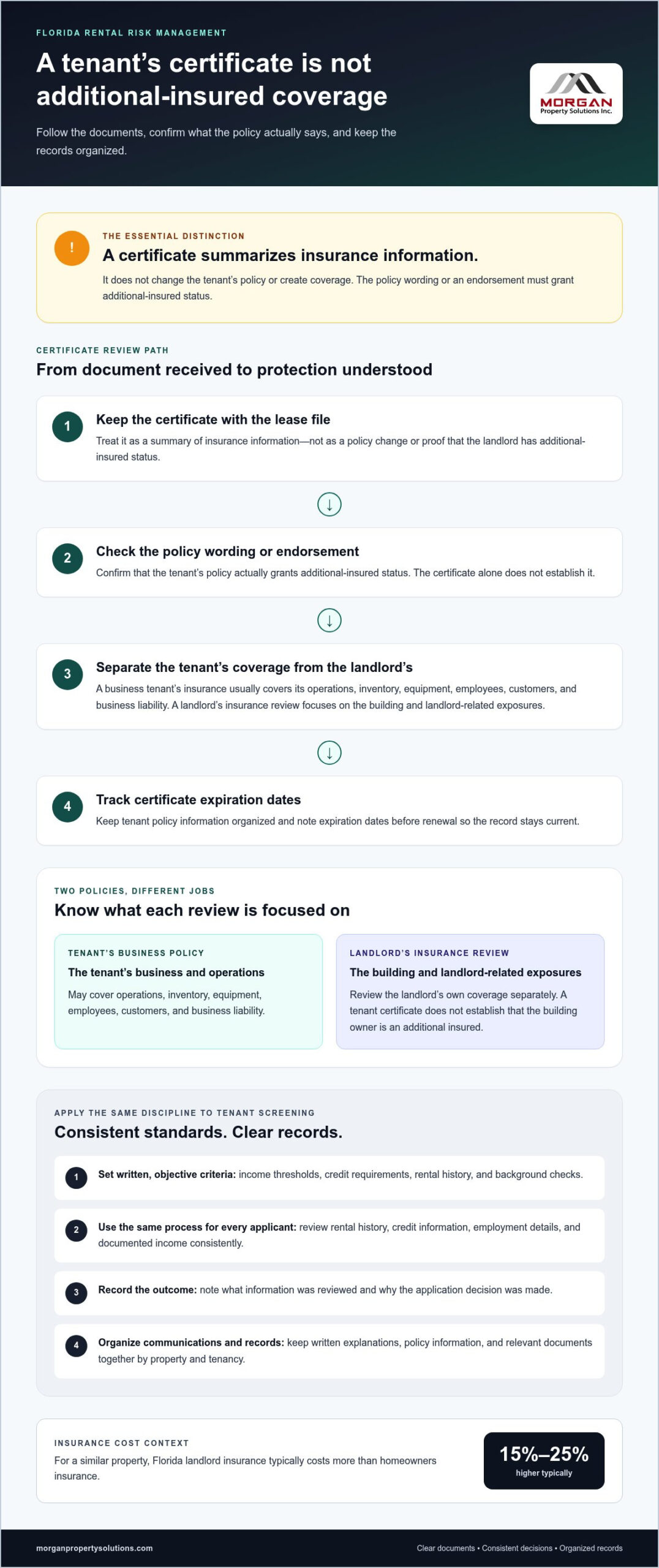
A tenant’s certificate of insurance doesn’t make a Florida landlord an additional insured. The tenant’s policy must provide that status through its wording or an endorsement. For rental property risk management in Florida, insurance costs are also part of the picture: landlord insurance typically costs 15%–25% more than homeowners insurance for a similar property.
It’s understandable to expect a certificate to confirm protection, but it’s important to know what the document does and doesn’t change. A sound rental property risk management plan in Florida also looks beyond insurance to property condition, tenant records, and day-to-day responsibilities.
This guide explains what landlord insurance may cover, how to handle tenant certificates, and how routine maintenance and inspections can help identify problems early. You’ll also learn why consistent tenant screening and documented rental decisions matter for fair housing compliance, helping you manage a Florida rental with a clearer, more practical plan.
Key Takeaways
- Review building coverage against replacement cost, and consider how roof condition, wind deductibles, flood exposure, and policy exclusions affect your protection.
- Use consistent tenant-screening criteria and keep clear records of application decisions, communications, and policy enforcement.
- Make emergency maintenance reports, response steps, and completed repairs easy to track so urgent issues don’t get lost.
- Schedule inspections and preventative maintenance to spot safety concerns, wear, and repair needs before they grow.
- Document the reasons for rental application decisions and apply your screening process consistently to support fair housing compliance.
1. How Much Does Landlord Insurance Cost in Florida?
Florida landlord insurance typically costs 15%–25% more than homeowners insurance for a similar property. That comparison offers a starting point, not a specific rental’s premium. Location, construction, roof condition, coverage limits, deductibles, and property exposures all affect the cost. A homeowners policy designed for an owner-occupied home may not cover a rental, so rental use should be reflected in the coverage.
Set building coverage based on the cost to rebuild, not the property’s purchase price or tax value. Those figures may differ from the cost of materials and labor needed to repair or replace a building. Property coverage may pay for repairs or rebuilding after covered damage and may include landlord-owned items such as appliances. Loss-of-rent coverage may also replace income when a covered loss makes the home uninhabitable. Review exclusions and limits together, because an exclusion can leave a specific loss outside the policy.
Hurricane and windstorm exposure can affect coverage terms and deductibles. Florida landlord policies may have hurricane deductibles commonly set at 2–5% of Coverage A. Standard landlord policies exclude flood damage, so rising-water protection requires separate flood insurance. Sinkhole exposure also makes policy wording and exclusions important; don’t assume every cause of ground movement is covered.
Short-term vacation rental rules vary by location, and local restrictions may limit rental nights per calendar year. Tax obligations may depend on the rental’s location and arrangement, so identify applicable taxes before setting rates or accepting bookings.
Tax and liability planning starts with organized records. Track rental income, repairs, insurance, and other property expenses separately. Choose a business-entity structure with ownership, financing, insurance, and tax treatment in mind. An entity doesn’t replace liability insurance or safe property maintenance.
Florida landlords also face legal risks, including fair housing violations, improper notices, lease errors, and mishandled evictions. Keep leases, notices, inspection reports, maintenance records, and tenant communications organized. Multifamily owners should keep up with landlord-tenant laws, building codes, and fair housing regulations. For Orlando owners, Orlando property management involves coordinating the practical work of rental ownership.
Liability insurance addresses a different risk from building coverage. It may help protect an owner facing third-party injury or property-damage claims, such as a visitor’s slip and fall. Review potential pool- and pet-related exposures, and make sure the policy addresses them. A practical rental property risk management plan in Florida pairs suitable liability protection with clear leases, timely repairs, and records that help explain decisions if disputes arise.
2. Does a tenant certificate make me an additional insured?
No. A tenant’s certificate of insurance doesn’t make a Florida commercial landlord an additional insured. The tenant’s policy must grant that status through its wording or an endorsement. A certificate summarizes insurance information, but it doesn’t change the policy or create coverage. Keep the certificate with the lease file, and review the policy language or endorsement to understand the actual protection.
Screening is another part of managing tenant-related risk. Use consistent, documented criteria focused on objective factors, such as income thresholds, credit requirements, rental history, and background checks. Review every application against the same standards instead of changing requirements from one applicant to another. Written criteria also give staff a consistent process for reviewing applications and explaining decisions.
Background, credit, and employment checks can help assess whether an applicant is prepared for the tenancy. Review rental history, credit information, and employment details using the same process for each applicant. Consider whether documented income appears sufficient for rent and living expenses. Record the information reviewed and the reason for the outcome. Consistent records make decisions easier to explain if an applicant questions them.
A business tenant’s insurance usually covers its operations, inventory, equipment, employees, customers, and business liability. A landlord’s insurance review focuses on the building and landlord-related exposures. The policies serve different purposes. For example, a tenant’s certificate may show business coverage, but it doesn’t establish that the building owner has additional-insured status. Keep tenant policy information organized, and track certificate expiration dates before renewal.
Clear communication can support tenant retention and reduce avoidable vacancies. Respond to repair reports with a documented update, even when a repair takes more than one visit. Note the report date, the next action, and when the tenant receives an update. Timely maintenance and responsive communication can encourage longer tenancies. Clear explanations of lease terms and property expectations can also prevent routine issues from becoming disputes.
Keep written records of communications about maintenance, inspections, and policy enforcement. A dated email about a repair, an inspection report, or a written explanation of a lease decision can help establish what happened. Use consistent communication templates so applicants receive the same information and timelines. Organize records by property and tenancy to find relevant details more easily during renewals, repairs, or disputes.
For a practical framework, review the company’s tenant screening criteria and use written standards to guide each application. Pair that process with current insurance documents, clear tenant communications, and a reliable record of repairs. Together, these steps help distinguish what a certificate shows from what the policy actually covers.
3. Emergency maintenance response
Set a clear process for urgent maintenance before a tenant reports a problem. Give tenants one reliable way to report issues, such as a dedicated phone number or online portal. Ask them to describe the location, visible damage, and immediate safety concerns. A burst pipe, for example, calls for different first steps than a broken appliance. Record when the report arrived and who will respond.
Start by sorting reports according to danger and potential property damage. A gas odor, sparking outlet, or major water leak needs immediate attention to protect people and limit damage. A dripping faucet can follow the routine repair process. Tell tenants what to do while help is arranged, such as avoiding a wet area near exposed wiring. Keep instructions simple and specific.
To prepare for Florida hurricanes, establish property-specific emergency procedures and identify likely hazards before a storm. Document the property’s condition beforehand, then photograph damage afterward and keep repair estimates, invoices, and tenant reports together. These records create a useful timeline of the damage and response.
Use one maintenance log for tenant reports, response times, vendor visits, and completed repairs. Note the issue, date reported, steps taken, and any follow-up still needed. If a ceiling leak returns after a repair, for example, link the new report to the earlier work order. This record helps owners spot recurring problems and explain how they addressed safety concerns.
A short emergency checklist can make a stressful call easier to manage. Include the property address, utility shutoff locations, access instructions, emergency contacts, and the process for updating tenants. Keep the checklist available to anyone coordinating repairs, and review it when contact details or property systems change. For a multifamily building, include shared areas such as hallways, entry systems, and laundry rooms.
Preventative maintenance reduces the chance that a small issue becomes an emergency. Schedule HVAC servicing, plumbing checks, and pest control, then save invoices and service notes. During a routine visit, look for water stains, slow drains, damaged screens, and signs of pests. A small stain beneath a sink, for instance, can prompt a plumbing check before hidden moisture spreads.
After each urgent repair, confirm the work is complete and tell the tenant what changed. If a technician identifies another concern, record who will handle it and when the next update is due. Review open work orders regularly, especially after severe weather or repeated reports. A consistent checklist and complete maintenance records help owners coordinate repairs, preserve safety information, and plan the next preventative step.
4. Routine inspections and preventative maintenance
Routine inspections give property owners a chance to identify safety issues, habitability concerns, and lease violations early. Use a consistent checklist for each visit, then record the date, areas reviewed, and follow-up needed. A slow drain, damaged window screen, or loose handrail can be noted before it becomes a larger repair. Keep inspection notes with maintenance records so you can compare conditions over time.
Focus each walkthrough on the property’s main systems and common problem areas. Check visible plumbing for leaks, inspect doors and windows for damage, and look for stains that could signal moisture. In multifamily buildings, include shared spaces such as stairways, hallways, and laundry rooms. Routine reviews can reveal hazards that affect residents or lead to property damage.
Preventative maintenance helps address wear before equipment fails. Schedule regular HVAC servicing, plumbing checks, and pest control, then save the service records. An HVAC visit, for instance, can document the system’s condition and any recommended repair. If a technician identifies a recurring issue, add it to the property’s maintenance plan rather than treating each service call as unrelated.
Inspections also help identify aging infrastructure that may need closer attention. Watch for recurring leaks, unusual equipment sounds, cracked surfaces, or doors that no longer close properly. One sign may have a simple fix, while several related signs can point to a broader problem. Document what you observe, assign a next step, and track whether the repair resolved the issue.
Pair property inspections with financial reviews. Compare repair invoices, maintenance spending, and rental income records to understand where costs recur. If plumbing repairs appear repeatedly in the same unit, review the work orders and inspection notes together. This can help owners distinguish a one-time repair from a pattern that may require a larger maintenance decision.
Track rental income alongside expenses, outstanding repairs, and vacancies. A financial review should make it easy to see which costs relate to a specific property and whether an unresolved issue could affect occupancy. Organize invoices, inspection reports, and tenant repair requests by address. Clear records help owners plan maintenance and explain property expenses without relying on memory.
Turn each inspection into an action list. Record the concern, the person responsible, the repair status, and the completion date. If a tenant reports the same issue later, compare that report with the earlier inspection and work order. Regular inspections, preventative servicing, and financial reviews work best together: each creates information the next review can use to address risks and limit avoidable property damage.
5. Fair housing compliance
Fair housing compliance starts with consistent rental decisions and clear records. Use the same written screening criteria for each applicant, including income thresholds, credit requirements, rental history, and background checks. If an application is declined, document the specific reason using the criteria applied. A dated record can help explain the decision if it’s questioned later. Avoid relying on informal impressions or changing standards midway through an application review.
Keep application communications consistent, too. Use templates so applicants receive the same information and timelines, then save messages in the property file. Record when an application was received, what information was reviewed, and when the decision was communicated. If an applicant asks why a decision was made, respond with the documented reason. Clear, factual communication reduces confusion and supports a consistent process.
Apply property rules and maintenance procedures consistently after move-in. If two tenants report similar repair issues, document both reports and the steps taken. Keep inspection reports, maintenance records, and written tenant communications together. These records help show how issues were handled, especially if a tenant raises a concern or a claim follows a disagreement. Consistency matters across application decisions, lease enforcement, repairs, and inspections.
Separate objective property conditions from assumptions about a tenant. An inspection may identify damage that needs repair, but the report should describe what was observed, where it occurred, and what action followed. For example, note a broken window latch in a specific room rather than making general judgments about the resident. Detailed records make follow-up clearer and give owners useful information for risk mitigation.
Prepare for unusual events in the same way. After a hurricane, record property damage, tenant reports, inspection findings, and repair actions by address. Use a clear process to prioritize urgent safety issues and track follow-up. A dated photo and work order can connect an observed condition with the repair. Organized information helps distinguish storm-related work from unrelated maintenance concerns.
Review your process periodically. Compare application files to see whether staff used the same criteria and recorded reasons for outcomes. Check that templates remain current, inspection notes are factual, and tenant communications are saved. If you spot a pattern, such as missing decision notes or inconsistent repair follow-up, clarify the procedure and apply it going forward. A short internal review can catch gaps before they complicate a later dispute.
Consistent records don’t replace fair housing obligations, but they make decisions and property actions easier to explain. For a practical starting point, review landlord resources and organize your screening, inspections, and communication records around one consistent process.
Morgan Property Solutions: Residential Property Management
Morgan Property Solutions Inc. provides Residential Property Management for owners who want help coordinating the ongoing work of a rental property. This support can be useful when tenant communication, repairs, inspections, and property records become difficult to manage alongside other responsibilities.
For owners preparing to rent a home, Tenant Placement and Leasing can help with the leasing stage. Morgan Property Solutions Inc. also provides Real Estate Buyer Representation and Real Estate Seller Representation for clients making a purchase or sale decision. Each service addresses a different point in the property journey, so choose the support that fits your immediate need.
To discuss your rental property needs, visit Morgan Property Solutions Inc. online.
Build a Steadier Plan for Your Rental
Good rental property risk management in Florida is an ongoing practice, not a document to file away. As your property, tenants, and ownership goals change, revisit how your management approach supports the investment you want to maintain. A clear next step is to decide which responsibilities you’ll handle yourself and where professional support would make day-to-day ownership easier.
Morgan Property Solutions Inc. provides Residential Property Management, Real Estate Buyer Representation, and Real Estate Seller Representation. Whether you’re refining how a rental is managed or considering your next property decision, choose support that fits the step ahead and keeps your priorities in view.
Contact Morgan Property Solutions Inc. today to discuss your property goals. A thoughtful plan can help you move forward with greater clarity and confidence.
Frequently Asked Questions
Does a tenant certificate make me an additional insured?
No. A certificate by itself doesn’t grant additional-insured status. For a commercial lease, compare the tenant’s insurance documents with the lease’s insurance terms and note any differences for follow-up. Keep the documents associated with the correct tenant and leased space. If the tenant changes business activities or renews its policy, review the updated documents instead of relying on an older certificate.
Does the tenant’s business insurance cover my building?
Usually, it isn’t a substitute for coverage arranged for the building owner. Start by identifying the tenant’s permitted use in the lease, then compare that use with the information on the tenant’s insurance documents. A change from a quiet office to a customer-facing operation, for example, may change the exposures to review. Keep the lease, tenant documents, and your own policy information together.
What Is Lessors Risk Insurance?
Lessors risk insurance is a term commonly used for insurance associated with an owner who leases a building or space to tenants, often in commercial property settings. The owner’s occupancy and the tenant’s activities help shape the coverage review. Before renewal, note whether the space is occupied, vacant, or being renovated, and make sure the insurer has an accurate description of its current use.
What is loss of rents coverage?
Loss-of-rents coverage is intended to address rental income lost after covered property damage disrupts occupancy. To understand how it applies, review the policy’s trigger, covered period, limits, and any conditions for documenting income. Keep lease information and rent records organized so you can show the income arrangement before a disruption. Don’t treat an empty unit or missed rent payment as equivalent to a covered property loss.
What should a landlord require from tenants?
Set clear written expectations before move-in. A lease should identify approved occupants, permitted use, payment terms, the maintenance-reporting process, and property rules. For a business tenant, address insurance documentation and permitted business activity in the lease. Give every applicant the same written application instructions, and retain a completed copy of the signed lease. These steps help everyone understand the arrangement from the start.
What insurance coverage do Florida rental property owners need, and what does landlord insurance typically cost?
Coverage should reflect the property’s location, construction, occupancy, and use. To compare prices meaningfully, request quotes using the same building limit, deductible structure, and coverage options. Review the hurricane deductible separately from the standard deductible, and consider whether flood exposure calls for separate protection. Premiums vary with property and policy details, so comparing unlike quotes can make one option appear cheaper without showing equivalent protection.
What are Florida landlords’ legal duties for repairs, maintenance, and habitability?
Landlords should understand the repair and upkeep responsibilities that apply to their property and tenancy. Establish a dependable way for tenants to report problems, arrange property access, and track unresolved issues. For a recurring leak, for example, note whether the repair addressed the source, not just the visible stain. Property type, lease terms, and applicable rules all matter when assessing responsibilities.
What are Florida’s landlord-tenant rules for security deposits, notices, and evictions?
Florida rules govern how landlords handle security deposits and the procedures for notices and evictions. Treat each step as a formal process: use the appropriate written document, preserve proof of delivery, and keep a timeline of actions taken. For a deposit, reconcile the amount received, any permitted deductions, and the amount returned. Notice periods and procedures depend on the situation, so use the applicable requirements rather than a generic template.

Article by
Oliver Overton-Morgan
Oliver Overton-Morgan is a full-time Real Estate Broker since 2003, with years of experience helping thousands of people purchase and sell real estate throughout Central Florida. He holds a Graduate Realtor Institute designation, LCAM, and has held licenses in good standing as a Florida Mortgage Broker and a Notary Public. Oliver immigrated to central Florida in 2001, and within 5 years Oliver built a successful Real Estate brokerage in central Florida, where he recruited over 75 Sales Associates with 25+ million in sales production.