
A property manager’s fee is only one part of the cost of managing a rental yourself. To decide whether hiring a property manager makes sense, compare the fee and services with rental income, the time involved, your responsibilities, and the expertise required. If you’re wondering how to convince your spouse to hire a property manager, a clear side-by-side comparison is more useful than focusing on the fee alone.
It’s reasonable to want to protect your rental income and avoid paying for help you may not need. Start with shared goals, then discuss who handles tenant communication, maintenance, leasing, and financial tracking, and how much time those tasks take. Weigh the costs and responsibilities together, consider what professional management could add, and decide whether it suits your property and plans.
Key Takeaways
- Compare management costs with rental income and the work involved, rather than weighing the fee in isolation.
- Make household responsibilities clear and agree on which decisions or tasks you’d prefer to hand off.
- Consider how professional expertise in leasing, tenant communication, and maintenance coordination could support your rental goals.
- Use a simple cost-and-time comparison to assess whether management could make sense for your property.
- Discuss your shared investment priorities before deciding what level of management support fits.
1. Dividing responsibilities and setting boundaries
Start by listing every task your rental creates, including tenant messages, rent collection, lease paperwork, maintenance requests, inspections, and seasonal care. Beside each task, note who handles it and how much time or stress it adds. One spouse might manage the bookkeeping while the other coordinates repairs. This shifts the conversation from who is doing enough to how the workload fits your investment priorities.
A property manager can take on agreed duties such as processing applications, leasing a vacant property, addressing tenant concerns, coordinating maintenance, and collecting rent. Decide together which decisions you want to retain. For example, you might approve major improvements while the manager handles routine maintenance within an agreed spending limit. Set those boundaries in the management agreement and review the arrangement against the actual workload and your rental goals.
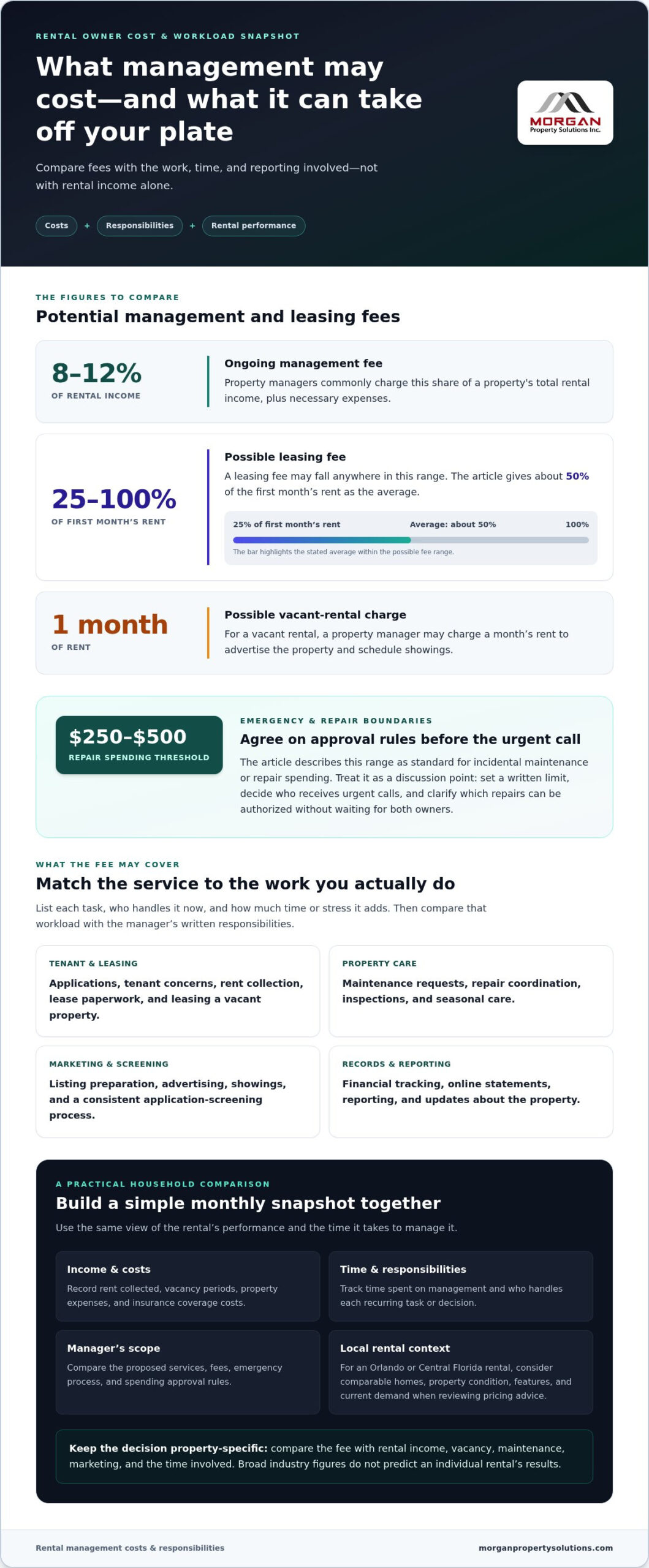
Set an emergency plan before hiring. Decide who receives urgent calls, how the manager reaches either owner, and which repairs they can authorize without waiting for both spouses. The research describes a $250 to $500 threshold for incidental maintenance or repair spending as standard. Use that range as a discussion point, then agree on a written limit and a clear process for costs above it.
Landlord-tenant laws and licensing requirements depend on the state where the rental is located. Match the manager’s duties to the rules that apply and make sure the agreement clearly assigns responsibilities. Professional management can help organize tenant screening, rent collection, maintenance coordination, lease enforcement, and inspections, making it easier to identify and address property issues.
When assessing a property manager, compare experience with similar properties, local market knowledge, services, reviews, fees, and contract terms. Speak with clients who can describe the manager’s communication and follow-through, then compare the written responsibilities with your task list. This helps you decide whether the arrangement fits your household instead of relying on general promises of support.
Before hiring, ask which duties the manager handles, including maintenance, tenant communication, inspections, and financial reporting. Clarify how emergencies are handled, what spending requires your approval, and how either party can end the agreement. Ask how often you’ll receive updates and who your main contact will be. Specific answers make the division of work easier to evaluate.
To discuss how to convince your spouse to hire a property manager, begin with a shared goal, such as protecting rental income or freeing time for other responsibilities. Acknowledge the concern about cost, then compare it with the hours and tasks you currently manage. Propose a defined trial period only if the agreement allows it, and set a review date using agreed measures, such as response quality, workload, and financial reporting. Working as spouses doesn’t require being together 24 hours a day, seven days a week; clear boundaries can help make the investment more successful for both owners.
2. Property management and rental-owner income
Management should support your rental’s long-term value and income, not just collect rent. Compare rent received with vacancy, maintenance, marketing, and the time you spend coordinating tasks. Morgan Property Solutions Inc. provides online statements and financial reporting, helping owners review income and expenses together. Clear financial records make it easier to follow the property’s performance over time.
Marketing affects how quickly a vacant rental attracts suitable applicants. A management company may prepare the listing, coordinate advertising, arrange showings, and respond to prospective tenants. Owners can compare the listing’s description and photos with the property’s actual features before it goes live. For example, a listing that clearly explains parking, appliances, and nearby amenities gives applicants a more accurate picture and helps focus inquiries.
Local rental-market knowledge can inform marketing and rental-rate decisions. A manager familiar with Orlando and Central Florida can consider comparable rentals, property condition, included features, and current demand when recommending a rate. The goal is to price the property in line with its features and market, rather than relying only on hoped-for income. If the home remains vacant, review the rate, listing details, and showing feedback to identify possible changes.
Tenant screening also connects management decisions with income. A consistent process can help owners assess applications against their stated criteria, while clear lease terms set expectations for rent and property care. Ask how screening is handled, what information owners receive, and how the process fits the property’s needs. Insurance belongs in the financial picture too: owners can review their policy and account for coverage costs when evaluating rental performance, rather than treating collected rent as available profit.
For a useful conversation with your spouse, build a simple monthly snapshot together. Record rent collected, vacancy periods, property expenses, and time spent on management. Then compare that picture with the services a manager would handle and the financial reporting they provide. The U.S. property management industry generates up to $88 billion in income each year, but that broad figure does not predict an individual property’s results. Your rental’s location, condition, tenant demand, and operating costs matter more to your household decision.
If local pricing, marketing, and day-to-day management are central concerns, explore Orlando property management as one way to understand the support available for rental owners.
A property manager’s objective is preserving the real estate property’s value and helping the owner generate income. Property managers commonly charge 8% to 12% of a rental property’s total rental income, plus necessary expenses, so owners can weigh the cost against the work and reporting they receive. For a vacant rental, a property manager may charge a month’s rent to advertise the property and schedule showings.
A leasing fee can range from 25 to 100% of the first month’s rent, and the average leasing fee is about 50% of the first month’s rent. Comparing these possible charges with rental income and necessary expenses can help owners assess how management fits their property’s finances, especially when working with Morgan Property Solutions Inc.
3. Balancing management costs against time
Compare the management fee with the hours and tasks your household handles now. Track a representative month, recording time spent answering tenant messages, arranging repairs, reviewing applications, and following up on rent. Note which tasks interrupt work, family plans, or other investment priorities. This gives you a fuller comparison than looking at the fee alone. Paying for management also means choosing which responsibilities to hand over.
Self-management gives you direct control over tenant communication, spending, and property care. It may suit owners who have time, enjoy hands-on work, and can respond consistently. Hiring a manager can reduce day-to-day workload and provide organized support with leasing, maintenance coordination, and records. The tradeoff is a management expense and less direct involvement in routine decisions. The right fit depends on your rental, available time, and preferred level of control.
Before discussing the decision, make a simple comparison. List rental income and operating expenses, then separate costs that apply whether you self-manage or hire help. Identify time-consuming duties, such as coordinating a repair after a tenant reports a leak, and compare them with the services in the management agreement. A fee is easier to assess when you can see what work it covers and what remains yours.
Management fees vary with the services, property, and contract terms. Read the agreement for its fee structure, included duties, additional charges, maintenance approval process, and termination terms. Ask whether leasing a vacant unit, tenant communication, inspections, and financial reporting are included. Agreements can cover different work, so comparing only the headline fee may hide important differences.
Regulations also affect the work involved in managing a rental. Owners need to understand the rules that apply to their property and responsibilities toward tenants and leases. A manager may handle paperwork and tenant concerns, but the agreement should clearly assign each task. For example, decide who tracks a repair request and who updates the tenant. Clear responsibilities help prevent missed follow-ups.
If your spouse is concerned about cost, acknowledge that concern and compare the fee with the time and interruptions involved in self-management. If they’re worried about losing control, identify decisions they want to keep, such as approving major work. Then evaluate both options using the same financial and time records. This turns disagreement into a shared review of the rental’s needs, your capacity, and the tasks you want to handle yourselves.
4. Property management expertise
Professional management means more than completing a task list. Morgan Property Solutions offers tenant screening, rent collection, attorney-written leases, maintenance coordination, and photo inspection reports. Detailed reports contain hundreds of photos, giving owners a documented view of the property’s condition. Organized processes can help owners make informed decisions about maintenance and property care.
Local market knowledge matters, too. A manager can use familiarity with rental trends, pricing, and applicable rules to inform leasing and property operations. In Central Florida, the right rent and marketing approach can depend on a property’s location, condition, and features. Share your investment plans and goals with the manager so recommendations support the purpose of your rental.
Tenant relationships require steady communication. A manager may address tenant concerns, collect rent, enforce lease terms, and coordinate repairs with independent contractors. If a tenant reports a leak, for instance, the manager can follow the agreed process, arrange the repair, and keep owners informed. This creates a clear point of contact and helps prevent both spouses from receiving separate requests without knowing who is responding.
Some situations call for careful documentation and consistent follow-through. Property managers may handle eviction processes, tenant contracts, and related paperwork, alongside application screening and scheduled inspections. Their role can help owners manage these demanding tasks, but owners should understand which responsibilities the agreement assigns to the manager. Clear reporting and defined approval points keep the professional relationship collaborative rather than leaving owners unsure about important decisions.
Assess the manager’s approach with practical questions: How do they handle a vacant unit, urgent repair, tenant complaint, or lease issue? Compare the answers with the services and reporting described in the agreement. Look for clear processes that explain who acts, how you’ll receive updates, and which decisions remain yours. A property management company should help carry out your plans, not replace your shared investment goals.
One real estate broker recommends hiring professional advisors once rental-property net equity exceeds $1 million. Treat that as one perspective, not a universal threshold. A property with lower equity may still demand substantial time, while a more valuable rental may be straightforward to manage. Consider the property’s workload, your experience, and the expertise needed for leasing, repairs, tenant communication, and records. Those specifics can help spouses decide whether professional support fits their situation.
5. How can a landlord calculate whether a property manager will pay for themselves?
Use your rental’s records to compare self-management with professional management. Start with rent collected, vacancy periods, operating expenses, and the time you spend. Then account for the services in the proposed agreement. The useful question isn’t whether a manager eliminates every expense. It’s whether the income and workload that remain fit your shared investment goals.
Build a comparison with two columns. In the first, list the current arrangement: rent received, recurring expenses, maintenance coordination, leasing work, and hours spent. In the second, list the same income and property expenses, plus management services and any additional charges in the agreement. Include leasing, tenant communication, reporting, and repair coordination only if they’re included. This keeps the comparison tied to the actual scope of service.
Next, estimate how much time your household spends managing the rental. Add hours spent answering tenant messages, arranging contractor visits, reviewing applications, and following up on paperwork. Separate routine tasks from occasional interruptions, such as coordinating a repair during work hours. Don’t assign an arbitrary dollar value to your time. Instead, discuss what those hours displace, such as paid work, family commitments, or other investment responsibilities.
Use the same period for both columns, such as a representative month, and compare the results. Subtract operating expenses and management charges from rental income, then compare the remainder with self-management. Review vacancy separately: it affects collected income, while leasing support changes who handles marketing and showings. Don’t count a hoped-for rent increase as a saving. Base the calculation on actual records and the proposed responsibilities.
Maintenance is another factor in the comparison. One rental investor reported that a management company’s maintenance crew charged one-third of what a commercial handyman had charged for repairs. Treat this as one investor’s experience, not a typical result. For your property, compare actual repair invoices, contractor coordination, and the work covered by the agreement. Include materials and other expenses consistently so one option doesn’t appear cheaper because costs were left out.
Finally, review the calculation together and test different situations. Compare a month with a tenant repair request against one with no major maintenance. Consider whether one spouse’s work schedule or travel makes timely coordination difficult. If management improves the household’s available time while leaving an acceptable net result, that benefit belongs in the decision too. For help weighing rental operations and investment goals, discuss your property management needs.
Morgan Property Solutions: Residential Property Management
Morgan Property Solutions Inc. provides Residential Property Management for owners who want professional support managing a rental. If you and your spouse have reviewed the workload, income, and responsibilities and would like help managing the property, this service can be a practical next step. The company’s management services include an online portal, online payments, detailed inspections, and financial reporting to help simplify ownership.
For couples still discussing the decision, start with the needs you’ve already identified together. Consider which parts of ownership you want help managing and how professional support fits your shared investment plans. Morgan Property Solutions Inc. also assists with Real Estate Buyer Representation, Real Estate Seller Representation, and Tenant Placement and Leasing when those needs arise.
Make your next move a shared decision
The next step doesn’t need to be an immediate yes or no. Agree on what you both need from the rental, then decide what would make professional support worthwhile. If you’re considering how to convince your spouse to hire a property manager, make room for their concerns and treat the decision as a joint plan, not a debate to win.
Morgan Property Solutions Inc. offers Residential Property Management, along with Real Estate Buyer Representation and Real Estate Seller Representation. If you’d like help considering your property’s management needs or discussing your next real estate step, contact Morgan Property Solutions Inc..
A thoughtful conversation can turn a difficult decision into a practical next step. You and your spouse can choose a plan that works for both of you.
Frequently Asked Questions
How Much Does It Cost to Hire a Property Manager?
There isn’t one universal price for managing a rental. Fees depend on the property, selected services, and whether leasing or other tasks are included. Some management fees are based on rent collected, and separate leasing or renewal charges may apply. To understand the cost for your situation, request a quote and compare its written fee structure with the services you want handled.
What does a property manager do for a rental property?
A property manager can coordinate practical rental tasks, from rent payments and tenant communication to inspections and financial records. Morgan Property Solutions offers online payments, detailed photo inspection reports, and financial reporting. The agreement sets out the manager’s specific role, so match each service to a responsibility you want handled.
What is the average cost of hiring a property manager compared with self-managing?
Compare management charges with the out-of-pocket costs and owner time involved in self-management. A management fee is a visible expense; self-management may avoid that charge but still requires time, coordination, and attention. For a useful comparison, review a full rental cycle, including tenant turnover and routine operations, rather than judging from a quiet month alone. The service mix and agreement terms also affect the comparison.
How much time does self-managing a rental property typically take?
The time involved varies with the property’s condition, tenant needs, vacancies, and maintenance requests. A quiet period may require little attention, while a move-in or repair can create several tasks close together. To estimate your workload, log time spent on messages, appointments, paperwork, and follow-ups across different stages of the rental. That record gives your household a more useful estimate than a general average.

Article by
Oliver Overton-Morgan
Oliver Overton-Morgan is a full-time Real Estate Broker since 2003, with years of experience helping thousands of people purchase and sell real estate throughout Central Florida. He holds a Graduate Realtor Institute designation, LCAM, and has held licenses in good standing as a Florida Mortgage Broker and a Notary Public. Oliver immigrated to central Florida in 2001, and within 5 years Oliver built a successful Real Estate brokerage in central Florida, where he recruited over 75 Sales Associates with 25+ million in sales production.