
A fear of being sued by a tenant in Florida is understandable, especially when a dispute involves a security deposit or the end of a lease. If you don’t intend to claim the deposit, you generally must return it within 15 days after the tenancy ends; if you do intend to claim it, the Florida Legislature says written notice stating the amount and reason is due within 30 days. Missing a required step can lead to a dispute over the deposit and potential money damages.
It’s understandable to feel uncertain when a tenant complains, alleges a lease breach, or challenges a move-out decision. This guide explains how Florida rules apply to common landlord-tenant disputes, including deadlines and actions that can affect your risk. You’ll learn why ending a tenancy requires particular care, what to know about security deposits, and how complaints and lease violations can lead to legal action.
Key Takeaways
- Learn how Florida’s landlord-tenant rules shape common disputes and why following the proper process matters.
- Understand the security-deposit notice deadline and the steps that can affect a tenant’s right to dispute a deduction.
- See how lease breaches and unresolved habitability complaints can lead to different outcomes.
- Compare the notice rules that may apply when ending a tenancy, based on the rental arrangement.
- Find out how organized property management can help keep rental decisions and records on track.
Florida landlord-tenant law
Florida’s residential landlord-tenant rules appear in Chapter 83, Part II of the Florida Statutes. They set boundaries for rental agreements, property duties, notices, and disputes between landlords and tenants.
Landlord and Tenant Rights
Landlord and tenant rights are the legal protections and responsibilities each party has during a rental. They matter because a complaint or alleged breach can become a dispute over damages, housing conditions, or possession.
For example, a tenant must follow the rental agreement, while a landlord must meet applicable property duties. A landlord also cannot retaliate against a tenant for exercising legal rights under Florida Statute §83.64. Keep communications and records of complaints, repairs, and notices together. A clear timeline helps show what each party reported and did.
Rental Agreement Provisions
A rental agreement sets the terms for a particular tenancy, but it operates within Florida law. A lease clause cannot replace statutory requirements governing landlord and tenant conduct.
Review the agreement for rent terms, responsibilities, notice procedures, and any rules for using the property. For example, a tenant may not use the rental property for a purpose the lease doesn’t cover. If a disagreement arises, compare the relevant lease term with Chapter 83, Part II, then preserve the signed agreement and related written messages. Those records can clarify what the parties agreed to.
Statutory Rules and Property Duties
Florida statutes establish minimum duties that apply alongside rental agreements. These duties are especially important when a tenant reports a repair or habitability problem.
Florida Statute §83.51 requires landlords to maintain rental properties in compliance with applicable building, housing, and health codes. So, what are Florida landlord-tenant laws on repairs, habitability, and maintenance? A landlord’s duties include meeting those applicable codes, and a tenant’s written complaint can help document the reported condition and response. Keep repair requests, inspection notes, and work records organized. A reported leak, for instance, should be tracked from the first notice through the repair.
Insurance and Legal Assistance
Insurance coverage for a tenant lawsuit depends on the policy wording, the claim, and any exclusions. Don’t assume a policy covers every dispute. Review its liability provisions and exclusions for the situation involved.
A landlord may face a claim after a tenant or guest suffers a dog bite if the landlord knew the dog was dangerous and did nothing to protect others. For free or low-cost legal help with tenant disputes, seek referrals through the Florida Bar or a local county bar association, and ask local legal aid organizations about available landlord-side assistance. For an insurance claim or legal notice, preserve the documents and contact the relevant professional promptly.
Can your landlord refuse to return your security deposit?
A landlord may claim a deposit for a valid reason, but Florida law sets deadlines for notice and objections. Missing a deadline or disputing a deduction can lead to a claim for damages.
Deposit Returns and Deductions
A security-deposit claim is a landlord’s written notice that some or all of the deposit will be kept. The notice must explain the amount and reason so the tenant knows the basis for the deduction.
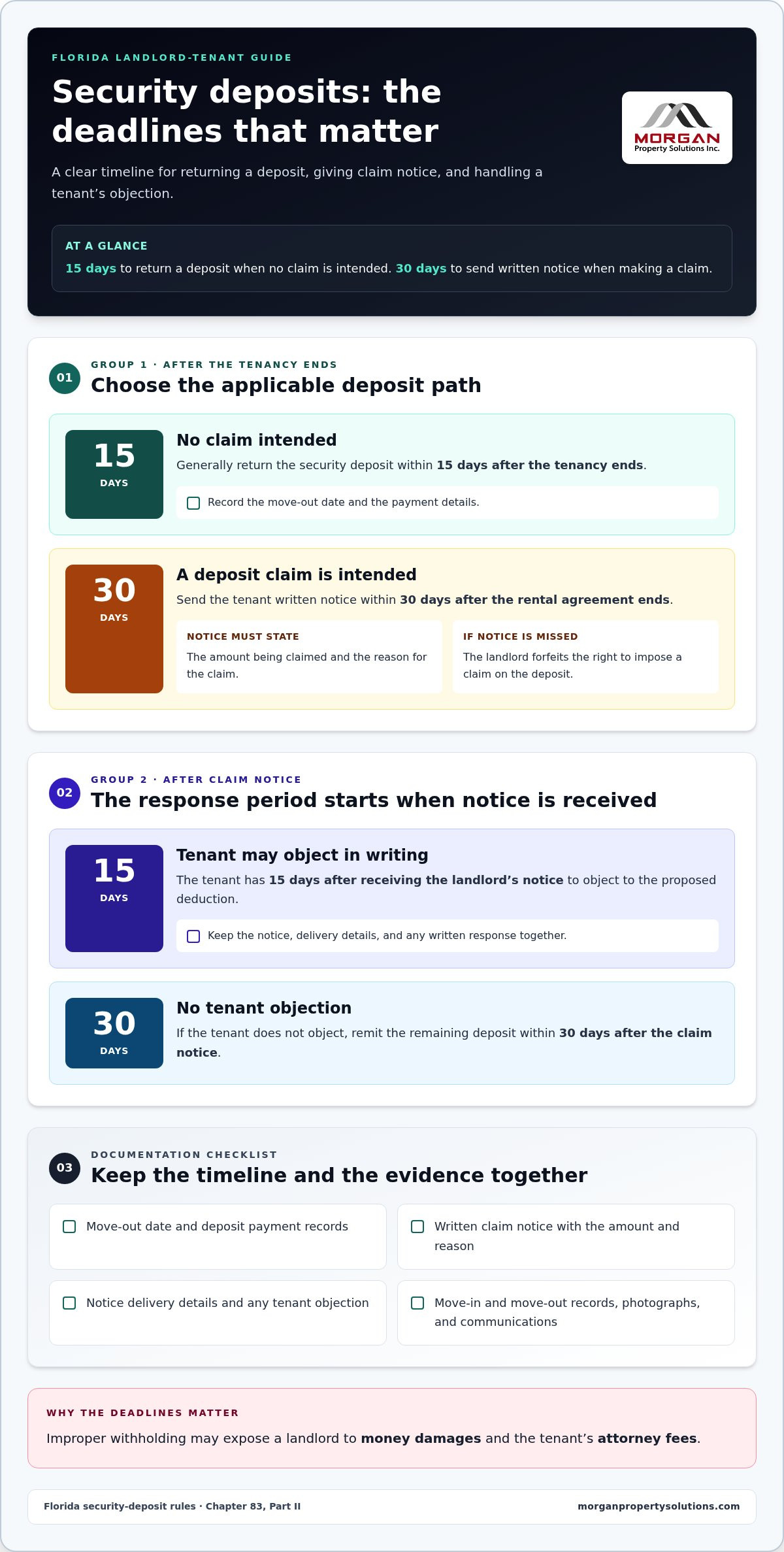
According to the Florida Legislature, a landlord intending to claim a security deposit must notify the tenant in writing within 30 days after the rental agreement ends. If the landlord doesn’t intend to make a claim, the deposit must generally be returned within 15 days after the tenancy ends. Keep the move-out date, notice, and payment records together.
For example, a landlord who identifies a deduction should connect it to a specific charge and supporting records. If no claim notice is sent within 30 days after the tenant vacates, the landlord forfeits the right to impose a claim on the deposit. If the tenant doesn’t object, the remaining deposit must be remitted within 30 days after the claim notice.
Tenant Objections and Disputes
A tenant objection is a written response challenging a proposed deposit deduction. A timely objection can preserve a dispute about the claim’s basis or amount.
A tenant has 15 days after receiving the landlord’s notice of intention to impose a claim to object in writing. A landlord should retain the notice, delivery details, and any response. A tenant can compare the stated reason with move-in and move-out records, photographs, and communications. Clear documentation helps both sides identify what they actually disagree about.
Can a Florida tenant sue a landlord over a security-deposit dispute, and what are the deadlines? Yes. Improper withholding may expose a landlord to money damages and the tenant’s attorney fees; the key notice and objection periods are 30 days and 15 days, respectively.
Common Tenant Claims
Common tenant claims concern deposits, repairs, retaliation, access, or eviction practices. Knowing these issues matters because different conduct can lead to different disputes and require different evidence.
A tenant may claim damages over an improperly withheld deposit, an unaddressed property condition, or retaliation after exercising legal rights. Disputes may also involve entry without required notice, utility shutoffs, lock changes, or removal of belongings without an eviction order. A tenant may raise an injury claim involving an unsafe common area or a known dangerous dog.
The federal Fair Housing Act prohibits refusing to rent based on discriminatory reasons. Consistent, documented decisions can help clarify the reason for a rental decision or deposit action. For practical landlord guidance, review these Florida landlord resources.
Lease and rental agreement breaches
A lease breach can lead to a dispute over rent, property use, damages, or whether a tenant must vacate. The agreement and Florida’s notice rules help determine what happens next.
What Counts as a Breach?
A breach occurs when a landlord or tenant fails to meet an obligation in the rental agreement. Examples include unpaid rent or using the property for a purpose the lease doesn’t allow. Either party may bring a legal action for damages if the other breaches the agreement. The lease, payment history, and written communications can help establish what happened.
For a curable lease violation, a Florida landlord generally must give the tenant 7 days to correct it after receiving notice. A landlord may terminate the tenancy without another chance to cure if the tenant repeats the same or similar curable violation within 12 months. That makes the details of earlier notices important. Keep copies showing the issue, delivery, and whether the tenant corrected it.
Abandonment of Rental Property
Abandonment can create uncertainty about possession, unpaid rent, and belongings left behind. Florida law presumes a tenant has abandoned a rental dwelling after an absence of at least 15 days without notifying the landlord. The presumption has stated exceptions, including when rent is current or the tenant notified the landlord of an intended absence.
An empty home alone doesn’t establish that a tenant has ended the rental. If you find the property unoccupied, review the rent status and any messages about travel before treating the tenancy as abandoned. Document the property’s condition and your communications. Don’t assume that a tenant’s absence automatically ends the agreement or authorizes a different process for possession.
Ending the Rental Agreement
Notice periods depend on the rental arrangement and the agreement’s terms. If a rental agreement doesn’t set a notice period, a tenant paying monthly generally must give 15 days’ notice. A tenant paying generally must give 7 days’ notice. A written lease may also require the tenant to give between 30 and 60 days’ notice of nonrenewal.
A tenant who vacates before the lease ends, or whose agreement doesn’t state the tenancy duration, must give at least 7 days’ written notice by certified mail or hand delivery. Clear written notices can help avoid misunderstandings about a tenant’s move-out. For a month-to-month tenancy without a written agreement or different lease term, a landlord must give at least 15 days’ written notice before the end of a monthly period.
These distinctions matter if a tenant leaves early or disputes a termination. An attorney can assess how the lease terms, notices, and conduct affect a particular claim. Keep the signed agreement and notice records together.
Tenant complaints and lease violations
A written complaint can signal a repair issue, a lease dispute, or both. Florida’s notice rules help distinguish a correctable violation from a reason to end a tenancy.
Tenant Complaints
A tenant complaint reports a concern about the premises or the landlord’s obligations. The landlord’s response, or lack of one, may affect the tenant’s rights and the tenancy.
For a material violation of habitability requirements or the lease, the Florida Legislature says a tenant may terminate the rental agreement if the landlord fails to correct it within 7 days after receiving the tenant’s written notice. Keep the complaint, delivery record, and repair communications together. For example, a written report of a serious leak creates a clearer timeline than an undocumented conversation.
A landlord must also avoid retaliation. Florida Statute §83.64 prohibits retaliation against tenants who exercise legal rights. A rent increase or termination following a complaint can raise questions about the reason for that action. Record the timeline and the business reason for decisions affecting the tenant. Separate documentation of a lease violation can help show whether action responds to conduct rather than a protected complaint.
Reviewing the Lease
Lease review means comparing the signed agreement with the tenant’s complaint and the landlord’s proposed response. This helps identify the relevant permitted uses, responsibilities, and notice procedures.
Check the exact clause before treating conduct as a breach. For example, assess a repair complaint alongside the lease’s maintenance terms and applicable statutory duties. A tenant may not use the rental property for a purpose the agreement doesn’t cover. Keep the relevant clause with notices, payment records, and messages so the issue and response are clear.
For a curable lease noncompliance, a Florida landlord generally must give the tenant 7 days to remedy the issue after notice. If the same or similar curable violation repeats within 12 months, termination may be possible without another chance to cure. A notice should identify the conduct and the action needed to correct it. If mailed, the landlord generally adds 5 days to the applicable period, excluding weekends and legal holidays.
Ending a tenancy without cause depends on the rental arrangement and governing notice rules. A landlord ending a month-to-month tenancy without a written rental agreement or different lease term must give at least 15 days’ written notice before the end of a monthly period. Florida law also describes month-to-month termination notice as at least 30 days before the next rent due date. Review the agreement and applicable rule before setting a termination date. A tenant facing eviction can challenge a notice or assert retaliation, so preserve delivery records and the basis for the decision.
Ending a tenancy
Ending a residential tenancy requires proper notice and a lawful process, not simply a request to leave. The reason for termination, lease terms, and tenant response can affect possession and potential liability.
Match the Notice to the Reason
For unpaid rent, a Florida landlord must give the tenant 3 days to pay or vacate. Weekends, holidays, and the date of service don’t count toward that period. A notice should clearly state what the tenant must do and preserve a record of how and when it was served.
Other lease violations follow different rules. A tenant generally receives 7 days to correct a curable noncompliance after notice. For non-curable noncompliance, Florida’s handbook sample notice gives the tenant 7 days from delivery to vacate. These notices aren’t interchangeable. For example, a landlord dealing with unpaid rent shouldn’t substitute a lease-violation notice for the required rent notice.
Use the Court Process
If the tenant doesn’t comply, a landlord may seek possession through the process in Chapter 83, Part II of the Florida Statutes. A landlord can’t use self-help eviction, such as changing the locks, shutting off utilities, or removing the tenant’s belongings without an eviction order. Those actions can expose the landlord to a tenant claim for damages.
After a landlord files an eviction case, the tenant receives a summons and complaint. The tenant has 5 days, excluding the date of service, weekends, and legal holidays, to file a written answer. If the tenant raises a defense other than payment, the tenant must also pay accrued rent into the court registry or file a motion to determine the amount within 5 days after service of process, excluding Saturdays, Sundays, and legal holidays.
Keep the Timeline Clear
Written records help connect the reason for termination to each later action. Keep the lease, rent ledger, notices, delivery details, repair communications, and court papers together. If a tenant reported repairs before receiving a termination notice, dates and written responses can clarify what happened and why the landlord acted.
Once a Florida sheriff notifies a tenant that an eviction will take place, eviction will take place in 24 hours. That follows the court process; it doesn’t authorize a landlord to remove a tenant independently. A landlord who uses prohibited self-help measures may be liable for actual and consequential damages or three months’ rent, whichever is greater.
For practical guidance on rental operations, review these Florida landlord resources and keep each written notice tied to its specific purpose.
Morgan Property Solutions: Residential Property Management
Morgan Property Solutions Inc. provides Residential Property Management for owners who want support coordinating rental responsibilities. Clear records of tenant communications, maintenance requests, lease terms, and notices can make disputes and tenancy changes easier to manage.
Consider professional management when day-to-day rental matters take too much time or you want help keeping property operations organized. If you’re considering a change in direction, Morgan Property Solutions Inc. also offers Tenant Placement and Leasing, Real Estate Seller Representation, and Real Estate Buyer Representation.
To discuss residential property management for your rental, contact Morgan Property Solutions Inc.
Build a steadier plan for your rental
Turn what you’ve learned into a routine that fits your property and goals. A clear process for tracking tenant communications, documenting decisions, and handling rental responsibilities can make ownership more manageable. If fear of being sued by a tenant in Florida is weighing on you, focus on practical steps within your control and get support with time-consuming property management tasks.
Morgan Property Solutions Inc. offers Residential Property Management, Real Estate Seller Representation, and Real Estate Buyer Representation. Whether you’re continuing to manage a rental or considering a change in your real estate plans, you can explore an option that suits your needs.
Contact Morgan Property Solutions Inc. to discuss your next step. A thoughtful plan can help you move forward with greater confidence.
Frequently Asked Questions
What Should You Do?
If you fear being sued by a tenant in Florida, keep communication calm and preserve relevant records. Save the lease, messages, payment history, repair reports, and notices together. Don’t respond by changing locks, shutting off utilities, or removing belongings. If you receive court papers, note the deadlines stated in them and consult an attorney promptly. A clear record helps explain the sequence of events.
What legal duties do Florida landlords owe tenants under state law?
Florida landlords must maintain rental properties in compliance with applicable building, housing, and health codes under §83.51. They must also avoid retaliation against tenants exercising legal rights. For a residential rental agreement lasting one year or longer, landlords must provide a flood disclosure to prospective tenants beginning October 1, 2025. For an Orlando rental, keep a record of the disclosure and other tenant communications alongside the signed agreement.
What notice and eviction procedures must Florida landlords follow?
Florida landlords must use the legal eviction process rather than personally removing a tenant or blocking access. For notices requiring compliance that are mailed, landlords generally add 5 days to the applicable period, excluding weekends and legal holidays. Required notices may be delivered by email only when both parties signed an addendum agreeing to email notices and provided valid email addresses. Keep proof of delivery with the notice itself.
What damages or penalties can tenants recover in Florida landlord lawsuits?
Possible recovery depends on the claim and the evidence. A tenant whose rights are violated may seek compensation for losses and damages. For prohibited self-help eviction measures, a tenant may sue for actual and consequential damages or three months’ rent, whichever is greater. Improperly withholding a security deposit may also expose a landlord to money damages and the tenant’s attorney fees. The conduct and resulting loss shape the claim.
How can Florida landlords reduce the risk of being sued by tenants?
To ease fear of being sued by a tenant in Florida, use consistent processes for documenting rental decisions, responding to maintenance reports, and keeping tenant records. For example, log when an Orlando tenant reports a repair, the steps taken, and any follow-up communication. Apply lease terms consistently, keep required disclosures with the rental file, and preserve proof of notice delivery. These habits help clarify what happened and support organized property management in Orlando, Winter Park, Lake Nona, Clermont, Oveido, Windermere, Winter Garden, Apopka, Wedgefield, and Hunters Creek.

Article by
Oliver Overton-Morgan
Oliver Overton-Morgan is a full-time Real Estate Broker since 2003, with years of experience helping thousands of people purchase and sell real estate throughout Central Florida. He holds a Graduate Realtor Institute designation, LCAM, and has held licenses in good standing as a Florida Mortgage Broker and a Notary Public. Oliver immigrated to central Florida in 2001, and within 5 years Oliver built a successful Real Estate brokerage in central Florida, where he recruited over 75 Sales Associates with 25+ million in sales production.