A missed message may have a simple explanation, but repeated silence needs a clear response. Knowing what to do when your property manager is unresponsive starts with documenting your attempts to make contact, following up, and escalating the concern to the management company or property owner. Review your management agreement for communication expectations, and consider a formal complaint or legal advice if the issue remains unresolved.
It’s frustrating to need an answer about your rental property and not get one. A manager may have missed your message, be handling a heavy workload, or be unsure who is responsible for the issue. Whatever the reason, keeping a written record and choosing a practical next step can help move the conversation forward.
This guide explains how to escalate concerns, what to look for in your management contract, when a complaint or legal action may be appropriate, and why a manager might not respond. It offers a clear path for property owners and tenants in Orlando and across Central Florida.
Key Takeaways
- Keep a dated record of messages, calls, repair requests, and any supporting photos or documents.
- Use the communication method in your management agreement, then escalate unresolved concerns to the company or property owner.
- Review your contract for response expectations, maintenance responsibilities, and the process for ending the agreement.
- Choose a complaint route that fits the issue, and organize your evidence before submitting it.
- Consider legal advice when documented communication failures involve serious safety concerns, damages, or unresolved obligations.
1. Escalating concerns to a WDU program administrator or property owner
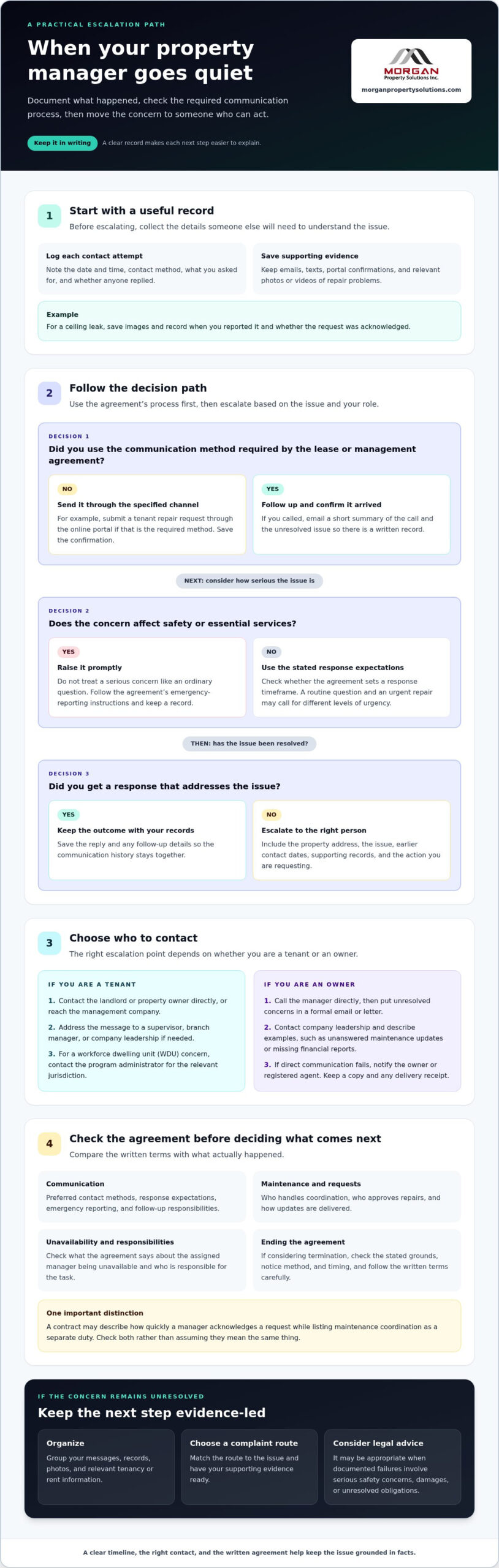
If your property manager hasn’t responded, escalate the concern one step at a time. Start with a clear follow-up, then contact the management company, its leadership, or the property owner. For a tenant in a workforce dwelling unit (WDU), the program administrator for that jurisdiction may also be an appropriate contact. If you’re deciding what to do when your property manager is unresponsive, first identify who can act on the specific issue.
Keep a record of communications before escalating. Note the date and time of each call, email, or repair request, the method used, and any reply. Save emails and texts, and take photos or videos of repair problems. For example, a tenant reporting a ceiling leak can keep images and record when the request was sent and whether it was acknowledged.
Use the repair-request method specified in your lease, then follow up to confirm the request was received. If the lease directs tenants to an online portal, submit the issue there and save the confirmation. If you called, send an email summarizing the call and the unresolved problem. This written record helps the owner or management company understand what happened without relying on memory.
Who can tenants contact if a property manager is unresponsive? Contact the landlord or property owner directly, or reach the management company and explain that the manager hasn’t replied. For a WDU concern, contact the program administrator responsible for the tenant’s jurisdiction. Include the property address, the issue, dates of earlier contact attempts, and the action you’re requesting.
To escalate within the management company, address your message to a supervisor, branch manager, or company leadership. Describe the unresolved issue, list your previous contact attempts, and attach relevant records. A phone call can clarify whether your message reached the right person. Follow up by email to keep a written record of the conversation.
Owners can contact company leadership and send a formal email or letter. Include examples, such as unanswered maintenance updates or missing financial reports, and explain how the silence affects the property. If direct communication fails, notify the owner or registered agent. Keep copies of the letter and any delivery receipt with your records.
For tenants, what to do when your property manager is unresponsive may also depend on whether the issue involves a WDU program. Share the concern and supporting records with the relevant administrator. Keep tenancy and rent records organized with your communications so you can explain the situation clearly if it continues.
Landlords can call the manager directly, then document unanswered concerns in a formal email or letter to the property owner.
2. Reviewing communication provisions in the management contract
Your management agreement is the best place to find how and when the manager should communicate. Review the sections on contact methods, response expectations, maintenance duties, tenant requests, and termination. Look for specific instructions about email, phone calls, emergency reporting, and follow-up responsibilities. A clause may name a preferred channel without promising a response within a particular timeframe.
What should tenants do first when a property manager doesn’t respond? Check the lease or tenant communication instructions, then resend the request through the required channel. Include the property address, the issue, and the date of your earlier message so the manager can find it quickly.
How long should tenants wait for a property manager to respond to maintenance requests? Follow any response timeframe in the agreement, while considering how serious the problem is. A routine question and a repair affecting safety or essential services require different levels of urgency. Raise a serious concern promptly rather than waiting for an ordinary response window.
Owners reviewing a management contract should distinguish response expectations from task responsibilities. For example, the agreement may explain how quickly a manager acknowledges a request while listing maintenance coordination as a separate duty. Check who approves repairs, how updates are delivered, and what happens if the assigned manager is unavailable. These details can show whether silence reflects a missed communication step or an unresolved service issue.
If the contract names email as the preferred channel and your emails go unanswered, try calling. If you can’t reach anyone, use the company’s listed office contact or visit during its stated business hours. Keep your message consistent across channels and ask for confirmation that it reached the right person. Avoid sending conflicting instructions that could make the issue harder to track.
Owners can assess communication when choosing a manager. Ask how routine updates are delivered, who responds to maintenance questions, and how urgent issues are routed. Note whether the answers are clear and consistent. A prospective manager’s communication during this conversation offers a practical example of how they explain processes and set expectations.
Before renewing or ending an agreement, compare the written terms with your communication history. Mark missed updates, unclear duties, and any differences between the stated process and what occurred. If the agreement permits termination for specific reasons, follow its notice method and timing carefully. Owners considering a different management arrangement can review Orlando property management as they evaluate what support they need.
Compare the agreement with actual practice. A property management contract can specify response times and preferred contact methods, while also setting out maintenance duties, tenant management responsibilities, and grounds for termination. Compare each provision with how requests and updates have been handled, and identify any gap that needs clarification before deciding how to proceed. If emails go unanswered, try calling or visiting the manager’s office. Landlords choosing a replacement manager can look for responsiveness, transparency, proactive maintenance, and a proven track record.
3. Filing complaints with consumer protection agencies
A complaint can create a formal record when direct communication hasn’t resolved a property management concern. First, identify the issue: missed updates, neglected repairs, unsafe conditions, or possible discrimination. The appropriate organization depends on the problem and the manager’s professional affiliations. A complaint may bring attention to the situation, but it doesn’t replace urgent steps to address an immediate hazard.
For concerns about a company’s business practices, a property owner can submit a complaint to the Better Business Bureau (BBB). Describe what happened in chronological order, name the management company, and state what response or resolution you’re seeking. Attach relevant records, such as contract pages, messages, repair notices, and evidence of damage. Keep a copy of the complaint and any response for your files.
Industry organizations may offer another route. Before considering an ethics complaint through the National Association of Residential Property Managers (NARPM), check whether the property manager is a member. If so, explain the conduct at issue and provide supporting documents. A property owner can also ask a local real estate association about complaint options, particularly where local rules require property management licenses.
Tenants facing serious property problems, unsafe conditions, or potential legal violations can contact their local housing authority. For example, report a repair problem that appears to threaten health or safety, and provide its location, condition, and any earlier notices. A housing authority may help address habitability concerns. Include clear photos and relevant communications to show the problem and its history.
Fair-housing concerns call for a different response. If a tenant suspects the manager ignored them because of discrimination, document the conduct and submit a fair-housing complaint. Focus on specific interactions, dates, statements, and differences in treatment. For example, preserve messages about a repair request alongside records showing how similar requests were handled. An attorney can explain legal options when the facts suggest discrimination or another serious violation.
Before filing, organize your evidence into a short timeline. Include the lease or management agreement, relevant emails, repair records, photographs, and replies from the landlord or management company. Separate firsthand facts from assumptions, and explain the practical effect, such as an unresolved leak or missed maintenance visit. This makes the complaint easier to review and helps keep important details from being overlooked.
Choose a complaint channel that matches the concern: the BBB for company-related complaints, NARPM for eligible member conduct, a local housing authority for serious housing conditions, and fair-housing processes for suspected discrimination. If there’s an immediate safety issue, prioritize addressing the condition while preserving your records. An attorney can help assess next steps if agency complaints don’t resolve documented harm or ongoing violations.
4. Legal action for unsafe conditions or damages
Unanswered messages become more serious when repairs affect health, safety, or essential services. Landlords and property managers are responsible for maintaining safe, habitable rental properties and addressing repairs that threaten health and safety. Keep evidence of the condition, repair requests, response delays, and related losses. A dated photo of a failed smoke detector or a record of interrupted essential service can help explain the concern.
How do tenant repair-and-deduct laws vary by state? More than half of U.S. states allow repair-and-deduct after a landlord fails to make repairs within a reasonable timeframe following a request. State laws define what counts as reasonable, and required steps vary, so tenants should learn the rules that apply where the rental is located before paying for repairs themselves.
Contact local housing inspectors or code enforcement when a condition appears unsafe, threatens habitability, or may violate local requirements. Share the rental address, describe the hazard, and provide photographs or earlier repair notices. For example, persistent water intrusion that damages a ceiling deserves prompt attention, especially if the damage could create a safety concern. Keep inspection records with your lease and communication history.
Can tenants withhold rent or break a lease if management doesn’t address repairs? Tenants may sometimes have remedies, including withholding rent or ending a lease, but state rules differ, and withholding rent may require a court order. Don’t assume silence alone permits either step. Review the lease and applicable local rules before changing rent payments or moving out.
Consider legal action when documented safety concerns, property damage, or contractual obligations remain unresolved. An attorney can review the rental agreement, repair notices, evidence of losses, and the manager’s response history. These details help assess possible claims and whether a lawsuit is a practical next step. Save receipts, inspection reports, photographs, and records showing how the condition affected the property or tenant.
Tenants can escalate a complaint by contacting the local housing authority, a tenant legal aid organization, or a real estate or civil contracts attorney. Bring the lease, repair requests, photos, and any inspection findings to make the discussion specific. If you serve in the military, a base legal office or Judge Advocate General (JAG) office may help identify resources, but these offices don’t typically handle civil disputes. They may direct tenants to an appropriate attorney.
For a rental in Orlando or elsewhere in Central Florida, start with the local housing authority or code enforcement office serving the property’s location. Local officials can assess reported conditions under the requirements they enforce. Keep inspection findings with your lease and repair records. An attorney can then consider those documents alongside the agreement and applicable Florida and local rules when explaining possible next steps.
5. Possible reasons a property manager may be unresponsive
Silence can have several causes, but the priority is getting the issue addressed. A manager may be handling multiple properties, coordinating repairs, or waiting for an owner’s approval. For example, a plumbing repair may stall while the manager seeks authorization. Even when there’s a reason for the delay, tenants and owners still need clear updates about the next step.
Sometimes a message reaches the wrong person or channel. A tenant might email an individual manager when the company requires repair requests through a portal. A call may go to voicemail during a property visit, or an old contact address may no longer be monitored. Check the lease or management instructions, then make one clear attempt through the specified method.
Workload and triage can affect the order of responses. A manager arranging an urgent repair may postpone a routine question about a lease document. But tenants can’t know whether their request was received unless someone acknowledges it. State the issue plainly, explain its practical effect, and clearly flag urgent safety concerns instead of sending repeated messages with different descriptions.
Approval steps may create a bottleneck. A manager could be waiting for an owner to approve work, obtain a vendor estimate, or decide how to handle a repair. Ask whether approval is pending, who needs to act next, and when you can expect an update. These questions can distinguish a coordination delay from a communication breakdown.
Staff changes and handoffs can leave requests without a clear owner. For example, a maintenance request might remain in a departing employee’s inbox instead of reaching the replacement manager. If a reply refers to someone you haven’t contacted, confirm who now handles the property and what’s happening with open repairs. A clear handoff should identify the next contact and unresolved tasks.
Repeated unanswered attempts differ from a single missed call. Look for a pattern: do emails go unanswered, do repair updates stop, or do promised callbacks repeatedly fail to arrive? Compare the gaps across issues and communication methods. If a manager responds about routine matters but not an unresolved leak, follow up specifically about that repair rather than sending another general message.
Don’t assume silence proves misconduct, but don’t let a plausible explanation replace action. Ask for a status update, a responsible contact, and the next step. If communication remains inconsistent, owners can reassess whether the management arrangement meets their needs. Explore professional property management support if ongoing communication gaps have you reconsidering how your rental is managed.
Morgan Property Solutions: Residential Property Management
Morgan Property Solutions Inc. provides residential property management for owners who want professional support managing a rental home in Orlando or Central Florida. If repeated communication problems have you reconsidering your current arrangement, a new management relationship may be a practical next step. The company also provides tenant placement and leasing, helping owners address rental needs from finding tenants through ongoing property management.
Before making a change, review your current management agreement and follow its process for ending or transferring the arrangement. Keep essential property, tenant, financial, and maintenance records organized to make the transition clear. For owners considering their next step, Morgan Property Solutions Inc. can help make residential property management more manageable.
Visit Morgan Property Solutions Inc. to learn more or get in touch.
Choose a management approach that fits your next move
Once you’ve decided how to address the current problem, consider what you need from your property arrangement going forward. If you’re weighing what to do when your property manager is unresponsive, decide whether you want to manage the relationship yourself, change managers, or make a larger decision about the property.
Morgan Property Solutions Inc. provides residential property management for owners seeking professional support, as well as buyer and seller representation for those considering a property transaction. These services support different goals, so focus on the next decision that fits your situation rather than rushing into a change.
A clear next step can make a complicated property decision feel more manageable. Contact Morgan Property Solutions Inc. to discuss your real estate needs and explore a path forward.
Frequently Asked Questions
But What Happens When There Is a Problem?
First, decide whether the issue needs immediate attention or routine follow-up. A broken exterior lock, for example, is a different concern from a delayed appliance repair. For urgent problems, use the emergency contact instructions in your lease and notify the landlord as well as the manager. For routine concerns, focus your request on the specific repair and its effect on the home, then follow the escalation steps that fit the situation.
What are a tenant’s rights when a landlord or property manager ignores urgent repairs?
Tenants can raise urgent repair concerns with the landlord or property owner and seek help from local housing authorities when conditions threaten safety or habitability. The lease and state or local rules shape the available remedies, so rights can differ by location. Focus on the condition, such as a nonworking essential service, and record how it affects use of the rental. Don’t assume that a missed reply automatically permits withholding rent or ending the lease.
What steps should tenants take if an unresponsive property manager creates an emergency or safety hazard?
Protect yourself first: leave an area that appears immediately dangerous and contact emergency services if someone faces imminent harm. Then use the lease’s emergency contact instructions to notify the property manager and landlord. Describe the location and nature of the hazard, and contact local housing authorities if the unsafe condition continues. Once it’s safe, record what happened and keep incident or inspection documents with your tenancy records.

Article by
Oliver Overton-Morgan
Oliver Overton-Morgan is a full-time Real Estate Broker since 2003, with years of experience helping thousands of people purchase and sell real estate throughout Central Florida. He holds a Graduate Realtor Institute designation, LCAM, and has held licenses in good standing as a Florida Mortgage Broker and a Notary Public. Oliver immigrated to central Florida in 2001, and within 5 years Oliver built a successful Real Estate brokerage in central Florida, where he recruited over 75 Sales Associates with 25+ million in sales production.