A tenant dispute does not automatically mean someone is taking advantage of you. Learning how to not get taken advantage of as a new landlord starts with consistent screening, a clear written lease, careful records, and timely follow-through. You also need to understand your legal responsibilities: rental housing must meet basic habitability standards, including working plumbing and electrical systems.
It is understandable to worry about property damage, late rent, or an occupant who was not part of the original agreement. Respond with a fair, documented process rather than assumptions or rushed decisions. Knowing what to look for can help you address concerns early and protect your property and rights.
This guide explains how to assess property care and rent patterns, check references for every adult occupant, address lease violations, and understand key landlord responsibilities. Use these steps to distinguish warning signs from routine tenant issues and decide what to do next.
Key Takeaways
- Set clear expectations for property care and keep organized records of maintenance reports, communications, and the home’s condition.
- Look at rent-payment patterns over time, and understand how accepting partial payment can affect your options.
- Screen every adult occupant and include clear written terms for occupants, pets, smoking, and subletting.
- Address possible lease violations consistently, while following the rules that apply to rental housing, notices, and landlord entry.
- Residential property management can help owners handle tenant placement, leasing, and the ongoing work of managing a rental.
1. Tenant property care and maintenance responsibilities
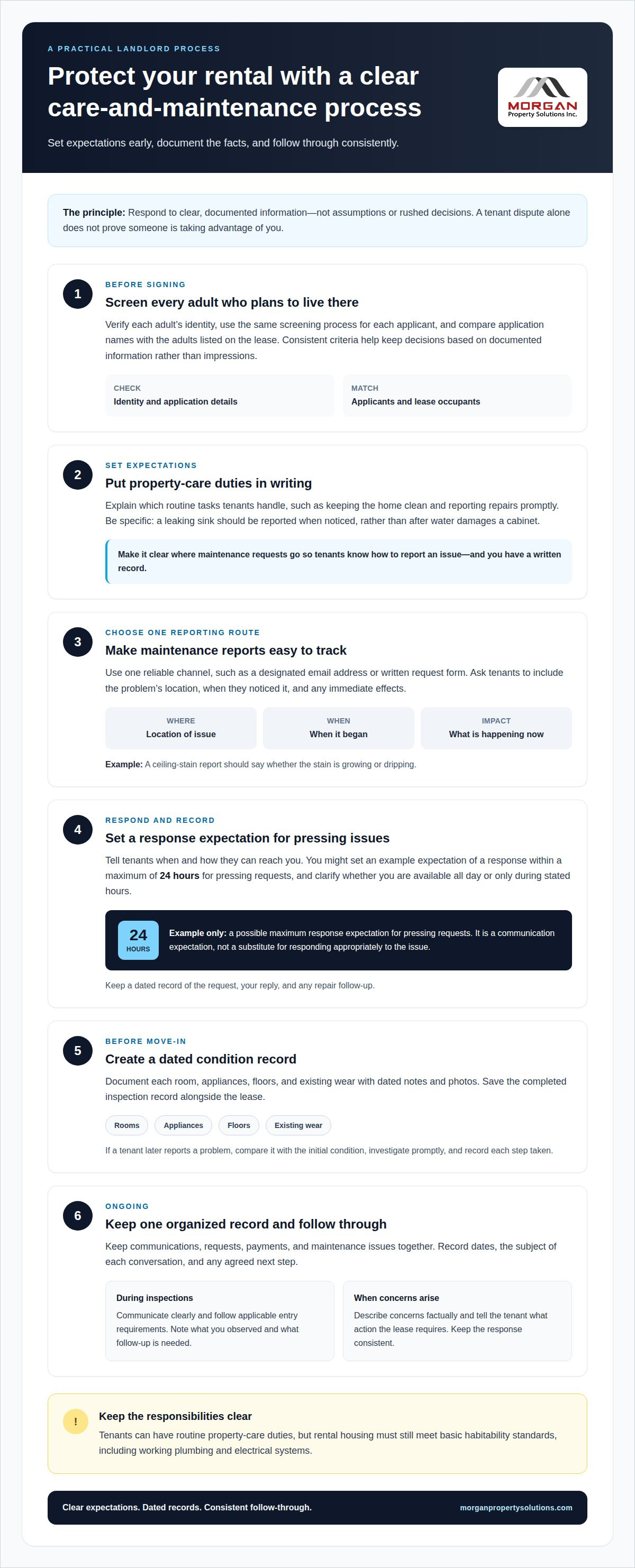
Before signing a lease, screen each prospective tenant and verify the identity of every adult who plans to live in the rental. Compare the names on applications with the adults listed on the lease, and use the same screening process for each applicant. Consistent criteria help you make decisions based on documented information rather than impressions. If you are wondering how to not get taken advantage of as a new landlord, start by gathering reliable information before handing over the keys.
Set clear property-care expectations in the lease. Specify which routine tasks tenants handle, such as keeping the home clean and reporting repairs promptly. Give practical examples: tenants should report a leaking sink when they notice it, rather than waiting until water damages a cabinet. Explain how to submit maintenance requests so tenants know where to send details and you have a written record.
Choose one reliable channel for maintenance reports, such as a designated email address or written request form. Ask tenants to include the problem’s location, when they noticed it, and any immediate effects. For example, a report about a ceiling stain should say whether it is growing or dripping. Learning how to not get taken advantage of as a new landlord also means responding consistently to clear facts instead of allowing poor communication to leave problems unaddressed.
Set a response expectation for pressing issues, and explain when tenants can reach you. You might state that pressing requests receive a response within a maximum of 24 hours, and clarify whether you’re available all day or only from nine to five pm. These are communication expectations, not a substitute for responding appropriately to the actual issue. Keep a dated record of the request, your reply, and any repair follow-up.
Document the property’s condition before move-in with dated notes and photos of each room, appliances, floors, and existing wear. Save the completed inspection record alongside the lease. If a tenant later reports a problem, compare the report with the initial condition and record each step taken. Landlords may be held responsible for damage tenants conceal, so promptly investigating reports and keeping evidence can help clarify what happened.
Keep tenant communications, requests, payments, and maintenance issues in one organized file. Record dates, the subject of each conversation, and any agreed next step. Periodic inspections can help you identify neglected maintenance or possible lease violations, but communicate clearly and follow applicable entry requirements. After each inspection, note what you observed and any follow-up needed. Describe concerns factually and tell the tenant what action the lease requires. A consistent record supports transparent communication and gives you a clearer basis for resolving disputes.
2. Patterns of late or partial rent payments
A late payment may be an isolated problem or part of a pattern. Review the payment history before deciding how to respond. Note the due date, amount received, date the payment cleared, and any explanation from the tenant. One late payment after months of on-time rent is different from repeated shortfalls and missed dates. A written timeline helps you respond consistently instead of relying on memory.
Establish a clear rent-collection process from the start. State the due date and accepted payment methods in the rental agreement, then send reminders through a consistent channel. If tenants can schedule automatic payments, rent may arrive without a monthly manual transfer. Keep a receipt or ledger for each payment, including the date, amount, and remaining balance. Match deposits against the ledger so a partial payment is not mistaken for full rent.
When rent is late or unpaid, contact the tenant promptly and keep the conversation factual. Confirm the amount outstanding, ask when payment is expected, and record the response. If the tenant says a repair caused the delay, document that explanation separately from the rent ledger. Do not let an informal promise replace a clear record of what was paid and what remains due. Consistent records make repeated delays easier to identify.
Handle partial rent carefully. Accepting part of the balance may affect whether you can pursue eviction for that month, and rules vary by state. Before accepting partial payment, understand the rules that apply to your rental. Record the amount received and the remaining balance, and put the payment’s status in writing. Do not assume that accepting a partial amount automatically preserves every available option.
Consider the practical tradeoff before taking further action. For example, a landlord might weigh $1,000 in past-due rent against a $50 late fee when deciding whether to pursue legal action. That comparison doesn’t determine the right response by itself. The payment history, lease terms, communications, and applicable rules all matter. Keep decisions tied to documented facts, not frustration or pressure to resolve the issue quickly.
Repeated late payments can also affect your rental investment planning. A missed deposit may leave less available for scheduled expenses, such as repairs, so update your cash-flow records when rent remains outstanding. Set a consistent follow-up schedule, save notices and tenant replies, and note each payment against the balance. If rent tracking has become part of a wider investment workload, explore Real Estate Investment Management for support related to your property investment.
3. Checking references for all adult occupants
One person’s rental application does not tell you who else will live in the property. Ask each adult occupant to complete the same application and identity checks before approving the household. Match each person’s name to their application and reference details. This helps clarify who will occupy the home and keeps lease records accurate.
Contact previous landlords, not only the applicant’s current landlord. A current landlord may have an incentive to recommend a difficult tenant simply to move them on. Speaking with a landlord from an earlier tenancy can offer another perspective on the applicant’s rental history. Ask specific questions about timely payments, property care, communication, and whether the tenant followed the lease. Record the landlord’s name, relationship to the applicant, and responses.
Ask each reference the same questions. For example, ask whether rent was paid as agreed, whether the tenant reported repairs, and whether the property was left in acceptable condition. If an answer is vague, ask for a specific example. Separate what the reference observed personally from what they heard from someone else. Then compare the information with the applicant’s stated rental history, income documentation, and other application details.
List every approved adult occupant in the rental agreement. Explain that an adult planning to move in must be disclosed and approved through the same process. Periodic check-ins can help you notice occupancy changes before they become lease or property-care concerns. For example, reports of an unfamiliar adult staying long-term may be a reason to review the agreement and speak with the tenant. Do not treat a brief visit as an unauthorized occupancy without clear facts.
Put the pet policy in writing, including how tenants should disclose an animal and request approval. An undisclosed pet can cause damage, such as scratched flooring or stained carpet, and raise questions about responsibility. If you find evidence of an unapproved pet, document what you observed, review the lease, and speak with the tenant before deciding what action to take. Apply the written policy consistently.
Keep applications, reference notes, identity records, and signed lease documents together. If a tenant later disputes who was approved to live in the home, these records can show what information you received and which terms everyone accepted. Screening helps inform your decision, but it cannot guarantee future conduct. A clear process supports informed choices before move-in and gives you a factual starting point if concerns about occupancy, pets, payment, or property care arise.
4. Lease violations and unauthorized subletting
A clear lease gives you a practical reference when a tenant’s actions raise concerns. Spell out rules for occupants, subletting, pets, indoor smoking, property care, and shared spaces. Avoid broad phrases such as “keep the property in good condition.” Instead, state specific expectations, such as reporting damage promptly or getting written approval before another adult moves in. Clear terms make it easier to identify potential noncompliance.
Explain subletting rules before the tenant signs. Rental agreements commonly prohibit subletting, and a tenant who sublets despite that prohibition could face eviction. A sublet can leave you unaware of who lives in the property, making occupancy and damage harder to track. Put the approval process in writing, including how the tenant should request permission. Do not treat an informal conversation as a change to the signed agreement.
Make pet and smoking policies equally clear. Most leases ban indoor smoking, so state whether smoking is prohibited and which areas the rule covers. Set out how tenants must disclose pets and seek approval. If you learn about an undisclosed pet, document what you observed, review the lease language, and address the issue consistently. Clear terms can also help you respond if smoke or an animal causes damage.
Check in periodically about lease compliance, including whether an unapproved occupant has moved in. A routine conversation can clarify who lives in the unit and whether the tenant understands the lease terms. If a neighbor reports frequent visitors, distinguish short visits from signs of a lasting occupancy change. Record the specific information you received, then discuss the concern with the tenant without presenting an unverified report as fact.
Act promptly when you identify a possible violation. Save the relevant lease provision, dated observations, tenant messages, and maintenance records. Describe the concern to the tenant in writing and explain what action would bring the situation into compliance. For example, if the lease requires approval for subletting, ask the tenant to follow that process. If the tenant does not comply, you may issue a formal notice. Keep the notice and any response with the property records.
Watch for tenant hot swapping, where occupants change without your knowledge. Frequent, unapproved changes can leave you unsure who is responsible for rent, maintenance requests, or damage. If it appears a tenant has handed the property to someone else, compare the situation with the lease and contact the named tenant. Apply the same process in each case. Consistency helps prevent a compliance concern from escalating into trouble, unpaid rent, or repair bills.
5. Following landlord laws and regulations
For a rental in Orlando or elsewhere in Central Florida, make compliance part of your ownership routine. Keep a property file with the signed lease, deposit records, notices, maintenance documentation, and tenant communications. Before acting on a dispute, identify the rule that applies to the issue and follow its required process. Consistent records make it easier to explain what happened and when.
Habitability is a core landlord responsibility. An implied warranty of habitability applies in nearly every state, and rental housing must have a solid roof, working plumbing and electrical systems, safe stairs and floors, and no pest infestations. If a tenant reports a problem, such as a broken stair, record the report and your response. Keep repair invoices and other work records in the property file.
Entry requirements also matter. Notice-of-entry rules typically require landlords to give 24 hours’ notice before entering a rental unit. For a planned inspection or repair, send written notice that states the purpose and intended time, then save a copy. Follow the applicable requirements for the property rather than assuming that a lease term replaces them.
Security deposit rules depend on the rental’s location. There is no single amount that applies to every landlord across the United States. For a Central Florida rental, review the applicable requirements for the deposit amount, how funds must be held, required notices, and the process and timing for returning funds or making deductions. Keep the lease, payment record, and move-in and move-out documentation together.
Landlord insurance and liability coverage should reflect the rental property and the risks you want covered. Review protection for the building, liability claims, and rental-related losses with an insurance professional. Compare the policy with your ownership arrangement and lease terms. Insurance supports risk planning, but it does not replace safe housing, timely maintenance, or careful records.
Cash payments require documentation. Cash-payment rules vary by state, and landlords accepting cash must provide a receipt signed by both parties. Record the date and amount, then keep the receipt with the rent ledger. For tax records, rental income must be reported on IRS Schedule E. Track income and property expenses through the year, and retain supporting records.
To prevent avoidable disputes, store notices, receipts, agreements, and repair records in one organized file. Check that each document belongs to the correct property and tenancy. When a question involves a deadline, deposit, entry, or formal notice, follow the rules that apply to the rental’s location. Clear records and location-specific compliance provide a steadier basis for managing a Central Florida rental.
Morgan Property Solutions
Morgan Property Solutions Inc. helps rental property owners organize tenant placement and ongoing property oversight. If you are reviewing applications, managing rent concerns, or working to keep lease terms and maintenance responsibilities clear, professional support can make these tasks more manageable. Tenant Placement and Leasing helps owners find and place tenants, while Residential Property Management supports the ongoing responsibilities of a rental. The right fit depends on whether you need help at the start of a tenancy, throughout ownership, or both. Contact Morgan Property Solutions Inc. to discuss your rental property needs.
Build a steadier path as a rental owner
Knowing how to not get taken advantage of as a new landlord means more than preventing a difficult tenancy. It also means building an ownership process that supports your long-term plans. As your goals change, you can continue managing the rental yourself, bring in professional support, or adjust your real estate portfolio.
Morgan Property Solutions Inc. offers Residential Property Management, Real Estate Buyer Representation, and Real Estate Seller Representation. These services support different stages of owning and managing residential property, whether you plan to hold a rental or consider a change. Choose the next step based on your priorities and the level of involvement you want.
For a conversation about your property goals and the support that may fit, contact Morgan Property Solutions Inc. You can take the next step with a clearer plan and move forward at a pace that feels right for you.
Frequently Asked Questions
Landlord Tenant Disputes – Are Tenants Taking Advantage of the Landlord?
Not necessarily. A disagreement alone does not show that a tenant is acting unfairly. Look for verifiable conduct, such as repeated unpaid balances, damage beyond ordinary use, or occupancy that conflicts with the lease. Compare what happened with the signed agreement and your records. A tenant reporting a repair or disputing a charge may have a legitimate concern, so separate facts from assumptions before responding.
What landlord-tenant laws should a new landlord know in my state and city?
Start with the requirements for the property’s address, because state and local rules can differ. Review requirements for habitability, deposits, notices, entry, rental agreements, and eviction procedures. A rental in Orlando, Winter Park, Lake Nona, Clermont, Oviedo, Windermere, Winter Garden, Apopka, Wedgefield, or Hunters Creek may involve different local considerations. Record which rules you apply and use the same process consistently.
How can landlords screen tenants fairly and legally?
Use written screening criteria and apply them consistently to every applicant. Decide in advance which information matters, such as identity, rental history, income, and references, then assess applications using the same standards. Focus on the applicant’s ability to meet lease terms and provide accurate information. Avoid decisions based on personal impressions or assumptions. Store application information securely and limit access to people involved in the rental decision.
What should a strong residential lease include to protect a landlord?
A useful lease identifies the property, named tenants, rent terms, lease dates, and how notices should be delivered. It should also spell out rules for occupants, pets, smoking, subletting, maintenance reporting, and property use. Attach any agreed move-in condition record, and make sure all parties receive the same signed version. Clear terms help resolve practical questions, such as whether a new occupant needs written approval.
How can landlords document a property’s condition before and after a tenancy?
Create a dated move-in record describing each room, fixtures, appliances, and existing marks. Use consistent photo angles so you can compare the same areas at move-out. Invite tenants to report any disagreement with the initial record in writing, then save their comments with the inspection file. At move-out, record new damage separately from existing wear and link each observation to a specific room or item.
What are the legal steps for handling late rent, lease violations, and eviction?
Start by confirming the lease term and documenting the unpaid amount or specific violation. Follow the notice format, delivery method, and deadlines required in the property’s jurisdiction before taking further action. Keep copies of notices, payment records, and tenant responses. If the issue proceeds to eviction, use the applicable court process. Do not try to remove a tenant by changing locks or shutting off utilities.
How can landlords protect themselves from rental scams, fake documents, and payment fraud?
Use a consistent application process and check that names and details match across submitted documents. Contact references using contact information you obtain independently, rather than relying only on details supplied in a message. Confirm that rent has cleared your account before treating a screenshot or payment alert as proof. Keep application files, communications, and transaction records together, and restrict access to sensitive personal information.
How should landlords handle repairs, maintenance requests, and emergency calls?
Give tenants one clear channel for repair requests and ask them to describe the problem, its location, and whether the damage is getting worse. Treat an active leak, electrical concern, or loss of an essential system as a prompt triage issue. Record when the report arrived, your response, and the repair outcome. For routine maintenance, provide an update so tenants know the request was received and what happens next.

Article by
Oliver Overton-Morgan
Oliver Overton-Morgan is a full-time Real Estate Broker since 2003, with years of experience helping thousands of people purchase and sell real estate throughout Central Florida. He holds a Graduate Realtor Institute designation, LCAM, and has held licenses in good standing as a Florida Mortgage Broker and a Notary Public. Oliver immigrated to central Florida in 2001, and within 5 years Oliver built a successful Real Estate brokerage in central Florida, where he recruited over 75 Sales Associates with 25+ million in sales production.