
Peace of mind for landlords during Florida’s hurricane season starts with preparing before a storm threatens. The season runs from June 1 through November 30, and wind and flood damage can fall under different insurance coverage and deductibles. In Central Florida, heavy rain can also cause flooding inland, even without storm surge.
It’s easy to focus on wind when a hurricane approaches, but flood coverage matters too. A clear plan helps protect the property, preserve useful records, and guide your response if damage occurs.
This guide covers practical steps to prepare a rental, understand the differences between wind and flood deductibles, document the property, and respond to storm damage. It also explains why inland risks and local hurricane-season timing matter for Central Florida landlords.
Key Takeaways
- Build a home inventory with photos and proof of ownership so you have useful property records if you need to make a claim.
- Review wind and flood coverage separately, and understand how each deductible is calculated before a storm threatens your rental.
- Keep leases, inspection reports, insurance documents, and tenant records accessible in secure digital and physical copies.
- After a storm, document damage before repairs and keep records of repair work, receipts, and contractor communications.
- Plan for Central Florida’s inland risks by preparing for heavy rain and flooding, not just wind and storm surge.
1. Florida Landlord Duties Before Hurricane Season
How can landlords secure rental properties and protect tenants during a hurricane? Begin with a pre-season inspection, handle needed maintenance, and give tenants clear safety information. A written plan should clarify who secures outdoor furniture, shares storm updates, and responds to urgent property concerns. These steps can provide peace of mind for landlords during Florida’s hurricane season.
Florida Statute 83.51 requires landlords to keep roofs, windows, doors, and structural components in good repair and comply with applicable building, housing, and health codes. Where those codes don’t apply, The Florida Legislature says landlords must maintain those components in good repair and able to resist normal forces and loads. A pre-season inspection can flag loose roof shingles, damaged windows, weak structures, blocked gutters, and overgrown branches before a forecast makes repairs harder to arrange.
Property preparation starts with routine upkeep. Repair vulnerable exterior features, clear gutters, trim trees and shrubs, and secure outdoor furniture and signs before severe weather approaches. Florida landlords aren’t required by law to install hurricane shutters or board rental windows unless the lease specifically requires it. Check the lease before assigning that task, and make sure tenants understand their preparation responsibilities.
Maintain a home inventory so property details are easy to access if storm damage occurs. Photograph each room and major item, and record descriptions, identifying details, and proof of ownership. Include furniture, appliances, and other owner-provided contents. Store copies of photos and important documents securely away from the property, so damage to the rental doesn’t destroy the records.
Lease terms help clarify repair responsibilities before a storm. Review maintenance and repair provisions with tenants to understand who handles the premises and systems serving it. For a Florida single-family home or duplex, Florida Statute 83.51 allows landlords to assign most non-structural responsibilities to tenants through a written agreement. Review casualty provisions too, since they address responsibilities after full or partial destruction of the leased premises or building.
Professional property management can help coordinate inspections, track repairs, secure exterior items, and communicate preparation steps to tenants. A clear process matters when owners manage a rental from a distance or have multiple properties to prepare. That kind of coordination can bring peace of mind for landlords during Florida’s hurricane season. Practical landlord property management resources can help owners organize records and responsibilities alongside their storm-preparation plan.
2. How do wind and flood deductibles split when a storm hits your rental?
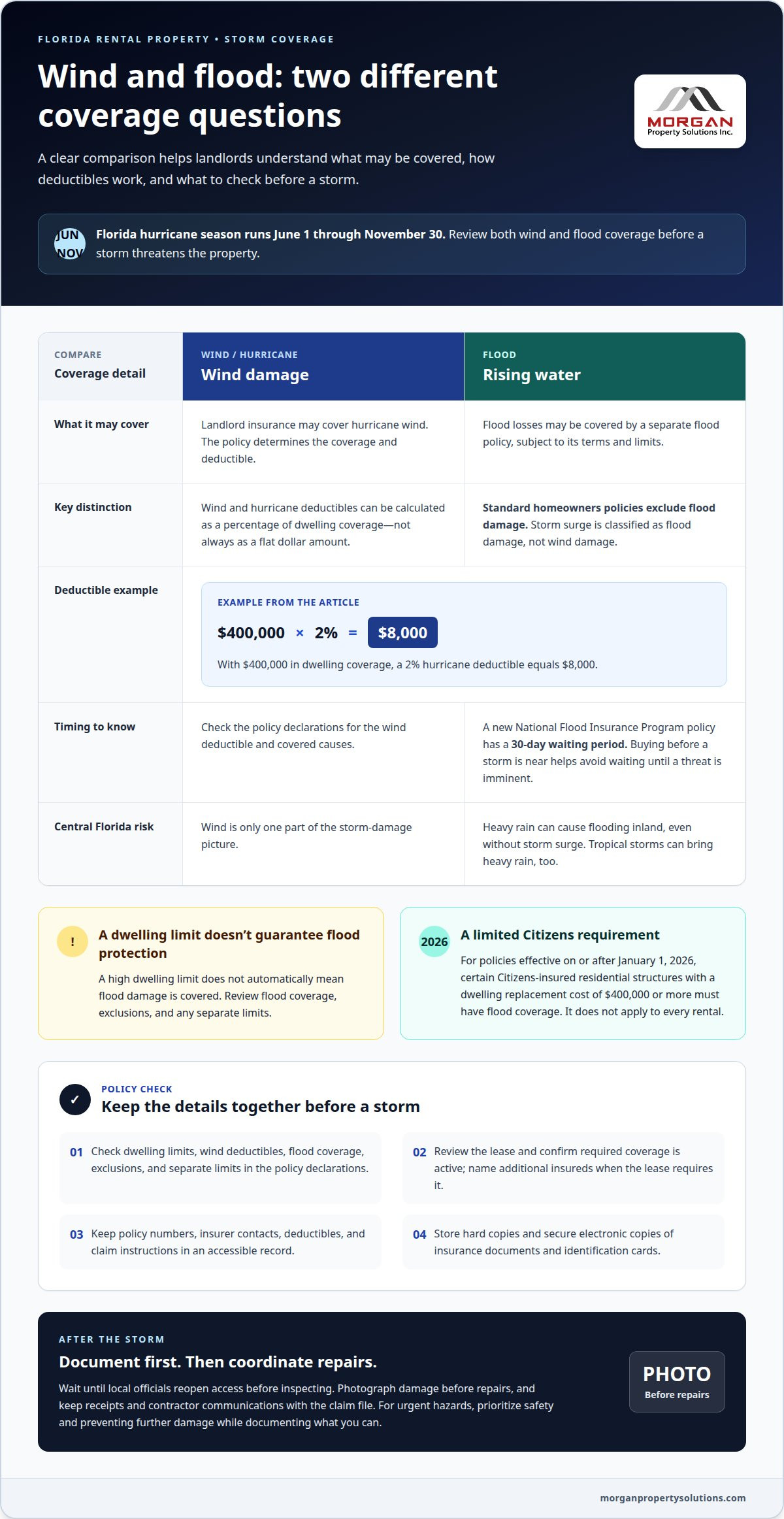
Landlord insurance may cover hurricane wind, but coverage and deductibles depend on the policy. Standard homeowners policies exclude flood damage, and storm surge is classified as flood damage, not wind damage. Tropical storms can also bring heavy rain, so wind coverage alone may leave flood losses uninsured.
Florida rental owners should consider separate flood insurance because standard homeowners policies exclude flood damage. A new National Flood Insurance Program policy has a 30-day waiting period. The policy can cover eligible flood losses, subject to its terms and limits. Buying coverage before a forecast threatens the property helps avoid waiting until a storm is near.
Wind and hurricane deductibles are not always flat dollar amounts. For a rental with $400,000 in dwelling coverage, a 2% hurricane deductible is $8,000. These examples show why the deductible percentage matters as much as the policy limit.
Some Citizens-insured residential structures with a dwelling replacement cost of $400,000 or more must have flood coverage under Florida Statute 627.351(6)(aa) for policies effective on or after January 1, 2026. The requirement applies to certain properties, not every rental. Check the policy declarations for dwelling limits, wind deductibles, flood coverage, exclusions, and any separate limits. A high dwelling limit doesn’t automatically mean flood damage is covered.
Review the lease alongside each policy. Confirm required coverage is active and that the appropriate parties are named as additional insureds when the lease requires it. Keep hard copies of required policies, along with secure electronic copies of insurance documents and identification cards. Store them somewhere accessible if a storm disrupts power or internet service. A brief record of policy numbers, insurer contacts, deductibles, and claim instructions can help you act promptly.
After a storm, wait until local officials reopen access before inspecting the rental. Photograph damage before repairs, then keep receipts and contractor communications with the claim file. Compare the damage with the policy’s covered causes and deductible before arranging non-urgent work. For urgent hazards, focus first on safety and preventing further damage, while documenting what you can. Clear insurance records also help residential property management stay organized when coordinating property issues and owner updates.
3. Local emergency contacts and property documentation
A useful emergency plan brings together each rental’s records, contacts, and evacuation steps. Keep National Hurricane Center storm updates accessible, along with local emergency management information for the property’s county. Tenants should know where to find evacuation guidance and how owners will share updates if the forecast worsens.
Write a communication plan before a storm approaches. Include the owner’s contact details, the tenant’s preferred way to receive updates, and an alternate contact if phone service fails. Specify who shares evacuation notices, how tenants report urgent hazards, and where owners will post updates. Keep the plan with the lease and property records so it’s easy to find.
Save digital copies of insurance policies, identification, leases, inspection reports, and tenant records in a secure location. Keep copies in a waterproof container as well. Electronic documents should remain accessible if the property loses power or internet service. Use a clear folder structure to separate each rental’s policy, contact list, photos, and repair history, reducing confusion when managing multiple properties.
Prepare an emergency kit with enough supplies for at least three days. Florida hurricane-season guidance recommends non-perishable food, water, flashlights, batteries, and first-aid supplies. A basic kit should include one gallon of water per person per day. Store supplies where household members can reach them quickly, and replace used or expired items before hurricane season.
- Keep water and food in an easy-to-carry container.
- Store flashlights and spare batteries together.
- Include first aid supplies and necessary personal items.
Plan evacuation routes before severe weather threatens the area. Identify a destination and backup route, then share those details with tenants. A household emergency plan should explain who communicates, where people meet, and what to do before, during, and after a hurricane. Tenants should stay indoors during severe weather, follow local emergency management guidance, and avoid floodwaters and downed power lines.
Property documentation supports both safety decisions and recovery. Keep current inspection records and photographs with insurance documents. If flooding occurs, these records can help identify affected rooms, compare conditions, and organize repair information. Store records away from the rental so a damaged building doesn’t destroy the only copy.
Make the contact list practical. Include the insurer’s claims contact, maintenance contacts already used for the property, and local emergency management information. Keep a printed copy with the emergency kit and a digital copy in the property file. Update both when tenant details, lease records, or insurance documents change.
4. Post-storm damage and claims steps
Can Florida landlords require tenants to evacuate during a hurricane? Landlords should promptly share local evacuation orders and emergency updates. Tenants should follow local emergency management instructions and avoid returning until officials reopen access.
After a storm, first confirm that local officials have reopened the property area. Don’t enter a building with visible structural damage or active hazards. Once it’s safe to access, inspect the exterior and interior, noting affected rooms, roof areas, windows, and utilities. Take dated photos or videos before cleanup or repairs begin. Keep tenants informed about access restrictions and immediate safety concerns.
Separate urgent safety work from repairs that can wait. If a damaged window leaves the rental exposed to weather, record its condition and arrange to secure the opening. Keep receipts, repair records, and contractor communications together. This documentation shows which work addressed immediate hazards and what remains. Save copies with the claim file and property records.
Contact the insurer promptly and follow its claim instructions. Describe the damage clearly, when it occurred, and what supporting photos or records you have. Log calls, messages, claim references, and documents sent. Before agreeing to non-urgent work, understand how the policy’s coverage, limits, exclusions, and deductibles apply. A contractor’s estimate describes proposed repairs, while the insurer determines coverage under the policy.
Florida hurricane claims generally have a one-year filing deadline. Keep the claim moving and retain records of insurer communications, inspections, and repairs. If a claim involves several areas, organize evidence by room or building component. Clear documentation can help distinguish storm damage from subsequent repair work.
What should Florida landlords include in hurricane lease clauses? Review casualty provisions, repair responsibilities, insurance proceeds, and any rent-abatement terms. Check whether a force majeure clause extends or tolls an obligation deadline during severe weather and whether it requires notice. These provisions help owners and tenants understand what to do if damage affects the rental.
Tenant rights can depend on the extent and cause of damage. Under Florida Statute 83.63, a tenant may terminate a rental agreement when damage not caused by the tenant’s wrongful or negligent acts substantially impairs enjoyment of the premises. A lease may also provide for rent abatement after prolonged loss of use, or until utility service returns. Review the actual lease terms before making decisions about rent or repairs.
Communicate promptly and stick to the facts. Tell tenants which areas are unsafe, which services are unavailable, and how to report new damage. Share inspection findings as they become available, and document repair updates. This record helps owners coordinate contractors, address tenant concerns, and track recovery after severe weather.
5. Central Florida hurricane-season timing and inland risks
Central Florida rentals need a storm plan before the first forecast creates urgency. Florida’s Atlantic hurricane season runs from June 1 through November 30. Hurricane activity in Central Florida typically intensifies by mid-August and peaks in early fall. September is the Atlantic season’s peak. Use that calendar to set preparation reminders, review property records, and make sure tenants know where to find updates.
Seasonal timing is a planning aid, not a prediction for a particular rental. A quiet start does not remove the need to prepare, and a storm can threaten before peak activity. Owners can set calendar reminders before June 1 for reviewing property conditions and insurance policies. As the season progresses, keep an eye on National Hurricane Center updates and local alerts rather than relying on a single seasonal outlook.
Inland locations face risks beyond coastal storm surge. Heavy rainfall can cause flooding and standing water in inland areas of Polk County, even without storm surge. For a Central Florida rental, consider how water moves around the building: note low spots, drainage paths, ground-level entrances, and areas where rainwater collects. These observations help prioritize property checks when severe weather is forecast.
Wind can affect properties far from the coast, too. Before a storm, loose outdoor furniture, signs, and branches can become projectiles. Check windows, doors, and roof areas for visible wear, and address maintenance concerns before severe weather arrives. Keep access paths clear so tenants can move safely around the property. Base preparation on the rental’s actual condition, not just its distance from the coast.
Turn the calendar into a simple sequence. Before June 1, review the property’s storm plan and note outstanding maintenance. As mid-August approaches, revisit tenant contact details and confirm that important records remain accessible. If a storm enters the forecast, follow local emergency updates and communicate property-specific instructions. After the threat passes, record any new concerns for follow-up.
For Central Florida landlords, hurricane preparation shouldn’t be a one-day task. A property in Polk County may need drainage attention, while another rental may have exposed windows or outdoor items to secure. Match each action to the property’s vulnerabilities. This makes inland rainfall, wind exposure, and tenant communication part of one practical plan.
Morgan Property Solutions
Morgan Property Solutions Inc. can help Central Florida rental owners manage the practical work behind property ownership. Residential Property Management brings lease, maintenance, and tenant needs into a more organized process, which can help owners keep storm-preparation responsibilities on their radar. If you’re balancing property records, tenant communication, and ongoing decisions from a distance, professional management can provide a steady point of support. It doesn’t replace insurance coverage or emergency guidance, but it can help simplify the property-management side of preparing for and responding to storm risks. For a straightforward conversation about your rental, contact Morgan Property Solutions Inc.
Make your next property decision with confidence
Storm planning can also clarify what you want from your rental property in the seasons ahead. You may plan to keep managing it, consider a sale, or look for another investment. A clear understanding of your goals gives you a practical starting point for those decisions and supports peace of mind for landlords during Florida’s hurricane season.
Morgan Property Solutions provides residential property management, seller representation, and buyer representation. Whether you’re considering what to do next with a rental or weighing a change in your real estate plans, the company can help make the process more manageable.
Contact Morgan Property Solutions to discuss your property goals and the support that fits your next step. A thoughtful plan today can help you move forward with greater confidence.
Frequently Asked Questions
How do wind and flood deductibles split when a storm hits your rental?
Wind and flood damage are handled under different coverage terms. Flood damage, including storm surge, is generally excluded from standard homeowners policies. Most Florida homeowners policies define a hurricane loss by referring to watches or warnings issued by the National Hurricane Center, so review your policy language to understand which deductible applies.
How does an out-of-state owner prep a rental they can’t see?
An out-of-state owner can arrange a local property inspection and request dated photos of vulnerable areas, such as windows, roof edges, and outdoor fixtures. Set a written plan for who secures loose items and communicates with tenants if severe weather approaches. Keep digital copies of leases, insurance documents, inspection reports, and tenant contacts in an accessible location away from the property.
What does a Florida landlord actually have to do before hurricane season?
Florida landlords must keep rental roofs, windows, doors, and structural components in good repair and comply with applicable building, housing, and health codes under Florida Statute 83.51. Before hurricane season, owners can arrange an inspection, address maintenance issues, and review lease terms for repair duties. Keep a property inventory with photographs and ownership records to help identify belongings if storm damage occurs.
When is Florida hurricane season, and which areas are most at risk?
Florida’s Atlantic hurricane season runs from June 1 through November 30, with September the Atlantic season’s peak. Coastal areas can face storm surge, while inland Central Florida properties also need to account for heavy rain. Inland parts of Polk County can experience flooding and standing water without storm surge. Assess the individual property’s drainage, low areas, and exposure rather than relying only on distance from the coast.
What hurricane preparedness steps should Florida landlords take before the season?
Set a calendar reminder to review property conditions, tenant contacts, and storm procedures before June 1. Make a record of property contents and keep insurance and lease documents accessible. Identify who will communicate with tenants, secure outdoor items, and share local emergency updates if a storm threatens. Tenants should know their evacuation route and follow local emergency management instructions during severe weather.
What does Florida law require landlords to do after hurricane damage?
Florida Statute 83.51 requires landlords to maintain roofs, windows, doors, and structural components in good repair and comply with applicable codes. Florida Statute 83.63 gives tenants the option to terminate a rental agreement when damage not caused by their wrongful or negligent acts substantially impairs their enjoyment of the premises. Document damage and repairs, and keep claim records because Florida hurricane claims generally have a one-year filing deadline.
What are typical Florida landlord insurance costs, hurricane deductibles, and exclusions?
Insurance costs depend on the property and the coverage and limits selected, so compare the premium with the policy’s deductibles and exclusions. Standard homeowners policies exclude flood damage, including storm surge. Review the declarations and policy terms to see whether separate flood coverage is in place and what limits apply.
What are landlords’ responsibilities for repairs, habitability, and rent after a hurricane?
Landlords should assess damage, address needed repairs, and communicate property conditions to tenants. Florida Statute 83.63 may allow a tenant to terminate a rental agreement when qualifying damage substantially impairs enjoyment of the premises. Rent abatement and utility-related rent terms depend on the lease. Review its casualty, repair, insurance-proceeds, and utility provisions to understand how the agreement addresses loss of use and repair responsibilities.

Article by
Oliver Overton-Morgan
Oliver Overton-Morgan is a full-time Real Estate Broker since 2003, with years of experience helping thousands of people purchase and sell real estate throughout Central Florida. He holds a Graduate Realtor Institute designation, LCAM, and has held licenses in good standing as a Florida Mortgage Broker and a Notary Public. Oliver immigrated to central Florida in 2001, and within 5 years Oliver built a successful Real Estate brokerage in central Florida, where he recruited over 75 Sales Associates with 25+ million in sales production.