
A landlord’s death doesn’t automatically mean the tenant has to move. If you’re wondering what to do when you inherit a tenant in Florida, the key point is that the existing lease generally continues, and the estate’s personal representative takes on the landlord’s role. The tenant’s obligation to pay rent continues, too.
It’s understandable to feel unsure about what you can manage or change while the estate is being handled. The rules depend on the lease and on who has legal authority over the property, so clarify those points before making decisions about the tenancy.
This article explains who can manage the rental, what happens to the lease and security deposit, and which Florida real estate and tax obligations may matter after an inheritance. It also covers when a tenant may need to move and how professional property management can help with day-to-day responsibilities in Central Florida.
Key Takeaways
- An inherited rental’s existing lease generally continues, so a tenant doesn’t have to move simply because the landlord has died.
- Learn how legal authority, including the role of a personal representative, affects who can manage or sell the property.
- Understand the deadlines for returning a security deposit or notifying a tenant about a claim against it.
- See how ownership, homestead status, and the estate can affect property taxes and other obligations.
- Explore when professional tenant placement and leasing support can help manage a rental in Central Florida.
Florida landlord-tenant law and rental agreements
Florida’s residential rental rules appear in Part II, Chapter 83 of the Florida Statutes. Knowing what to do when you inherit a tenant in Florida starts with reviewing the agreement and the property’s condition.
Documenting the Death and Securing the Rental
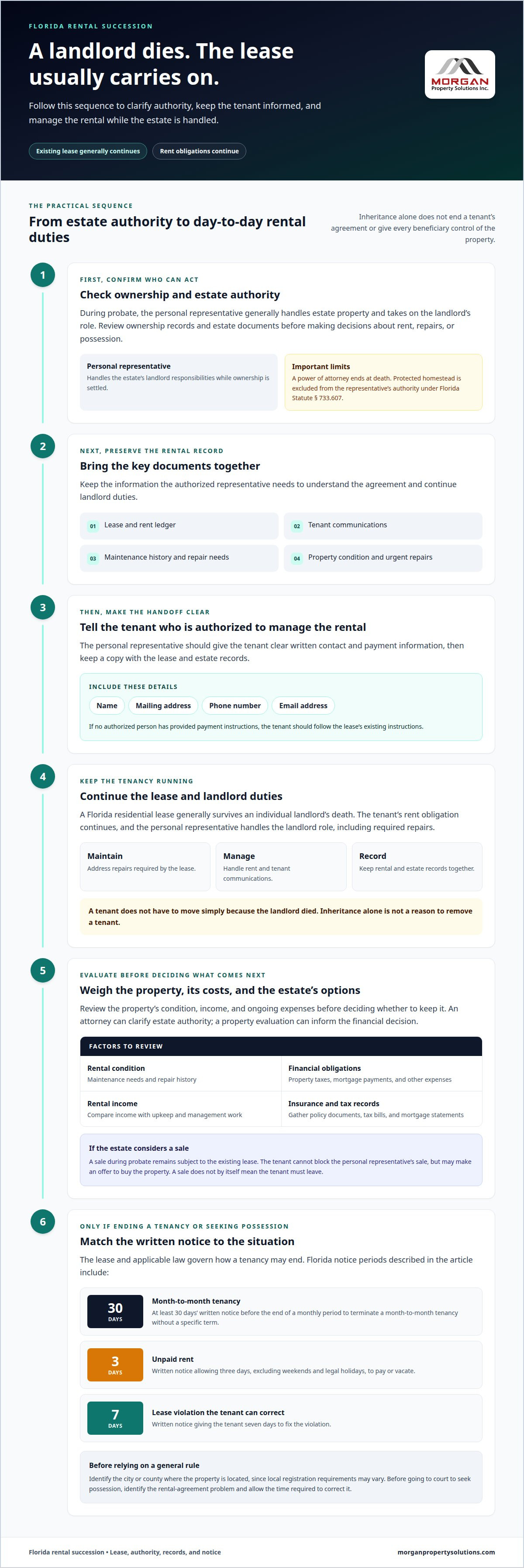
Documenting the death means recording the information needed to manage the rental and preserve its records. Keep the lease, rent ledger, tenant communications, and maintenance history together. Note the property’s condition and any urgent repair needs. These records help the authorized estate representative understand the agreement and continue landlord duties without confusing the tenant about where to pay rent.
Evaluating and Managing the Rental
Evaluating the rental means reviewing its condition, income, and ongoing expenses before deciding whether to keep it. Consider maintenance needs, property taxes, mortgage payments, and the work involved in managing the tenant. For example, an inherited apartment needing repairs may call for a different plan from a well-maintained property with a stable lease. An attorney can clarify estate authority, while a property evaluation can inform the financial decision.
Notice Periods and Eviction Steps
Notice periods set how a tenancy may end and what must happen before an eviction case. For a Florida month-to-month tenancy without a specific term, either party must give at least 30 days’ written notice before the end of a monthly period to terminate it, according to The Florida Legislature. For unpaid rent, a landlord must give written notice allowing three days, excluding weekends and legal holidays, to pay or vacate. For a lease violation the tenant can correct, written notice gives seven days to fix it. A landlord seeking possession must identify the rental-agreement problem and allow time to correct it before going to court.
Local Rental Rules and Registrations
Florida’s statewide landlord-tenant framework doesn’t answer every local registration question. Requirements may depend on the city or county where the property is located, so identify its jurisdiction before relying on a general rule. The lease remains central: unless its terms or applicable law permit a change, inheritance alone doesn’t end the tenant’s agreement.
When deciding what to do when you inherit a tenant in Florida, review the lease before considering a sale. A sale during probate remains subject to the existing lease. The tenant can’t block the personal representative’s sale, but may make an offer to buy the property. Compare rental income and upkeep with sale prospects, and document estate decisions. These details help clarify whether continued management or a sale better suits the property and the estate’s needs.
Heirs and beneficiaries taking over as landlord
Inheritance changes who handles the rental, but it doesn’t automatically cancel the tenant’s agreement. The person authorized to act for the estate must manage landlord duties while ownership is settled.
Lease Status After a Landlord’s Death
A Florida residential lease survives an individual landlord’s death and becomes part of the estate. The tenant’s duty to pay rent continues, and the personal representative takes on the landlord’s role, including handling required repairs. Relatives or beneficiaries can’t demand that the tenant leave simply because the owner died. A power of attorney also ends at death, so it doesn’t provide ongoing authority.
Notifying Tenants of an Ownership Change
Notification means giving the tenant clear written information about who is authorized to manage the rental. The personal representative should provide a name, mailing address, phone number, and email address so the tenant knows where to direct communications and rent. Keep a copy of the notice with the lease and estate records. If no authorized person has provided payment instructions, the tenant should follow the lease’s existing instructions.
Landlord Costs and Responsibilities
Landlord responsibilities include maintaining the property, addressing repairs required by the lease, managing rent, and keeping rental records. Costs can include maintenance, property taxes, mortgage payments, and other property expenses. For example, a roof repair or an unpaid utility bill can affect the estate’s cash flow. Beneficiaries should distinguish estate decisions from personal tasks, since the personal representative handles the estate’s landlord role.
A lease can end or not be renewed only according to its terms and applicable notice rules. Inheritance alone isn’t a reason to remove a tenant. Even if the representative needs to sell the property to address estate debts, the tenant can’t be forced out solely for that reason.
Insurance, Tax, and Liability Issues
Reviewing insurance, taxes, and liability means understanding the property’s current coverage, tax records, and ongoing obligations. Ownership has changed, but the rental and its expenses may continue. Gather policy documents, tax bills, mortgage statements, lease records, and repair history for the estate’s files. An attorney or tax professional can help assess how the inheritance affects estate administration and ownership.
If a company is the named landlord, the death of its authorized signatory doesn’t change the landlord under the lease. The company remains a party to the agreement; the signatory’s estate doesn’t become the landlord. This distinction helps identify who should communicate with the tenant and handle the rental’s obligations.
Who has legal authority to handle the tenant’s property
Authority depends on how the rental is owned and who can act for its owner. During probate, a personal representative generally handles estate property, but protected homestead is excluded from that authority under Florida Statute § 733.607. A beneficiary or family member should not assume inheritance alone grants control over rent, repairs, or possession. The ownership records and estate documents help identify the person authorized to act.
For property held in an individual’s estate, the personal representative manages estate responsibilities and decisions, subject to the homestead exception. That role can include overseeing rent, repairs, tenant communications, and a possible sale. If several heirs become co-owners, one person’s preference doesn’t give them authority over everyone’s interests. When co-owners can’t agree on a sale, a co-owner can generally ask a court to partition the property.
Property taxes remain part of the rental’s carrying costs. Florida’s homestead exemption application has a March 1 deadline in the year after death. Homestead status can affect how the property is treated, so distinguish a rental from a property that qualifies as a homestead. Keep county tax records with the estate documents, and note who is responsible for each payment while ownership is being resolved.
A signed Lady Bird deed or trust document may affect how authority is determined. Review the exact document to identify the property, the people named, and any stated powers or conditions. For trust-owned property, the trustee’s role and the trust terms matter; beneficiary status alone doesn’t establish who can manage the rental. An attorney can interpret the document alongside the estate records before anyone changes rent instructions or signs a new agreement.
Renting an inherited property can provide income while it remains an investment, but it also involves ongoing work. The authorized owner or representative must account for rent, repairs, taxes, and the tenant’s security deposit. For example, a vacant unit needing repairs presents different decisions from an occupied apartment with a current lease. Compare expected rental income with maintenance needs and taxes before deciding whether continued renting suits the estate or owners.
Security deposit deadlines and disputes
An inherited rental comes with deposit records and deadlines, not just a lease. First, match the deposit amount to the tenant’s agreement, payment records, and any receipts. Keep those documents with the estate’s rental file. If a tenant later raises a dispute, a clear record helps explain the deposit balance and the steps taken under the rental contract.
When a tenant leaves, the deadline depends on whether the landlord plans to claim any deposit. If no claim is intended, the landlord generally must return the security deposit within 15 days after the tenant leaves. If the landlord intends to keep some or all of it, written notice of the claim is due within 30 days after the tenant leaves. These deadlines make timely records essential.
A tenant who receives a claim notice has 15 days to object in writing. Keep the notice, delivery record, tenant response, and supporting documents together. If the claim relates to repairs, preserve relevant invoices, photographs, and maintenance records. Those materials can help explain the circumstances behind the claim, though the deposit process still follows the lease and applicable requirements.
Florida permits email notice of an intended deposit claim when the landlord and tenant signed an email addendum under Florida Statute 83.505. A signed addendum matters; an email address alone does not meet that stated condition. Use the agreed notice method and retain a copy. The landlord should return any remaining security-deposit balance promptly.
For an inherited property, the estate’s representative should locate the deposit amount and its handling records before changing payment instructions. Compare the agreement with the deposit receipt and ledger. Record any claim notice date, tenant objection date, and balance returned. A missing receipt or unclear repair record can complicate a dispute, so organize available documents promptly and preserve the timeline.
These steps help separate deposit obligations from estate accounting. For example, if a tenant vacates while probate continues, the applicable 15-day or 30-day deadline still turns on the deposit decision and departure date. Keep the tenant’s forwarding details and a dated copy of each notice. Accurate records make it easier to account for the deposit and explain the result.
Florida real estate laws and tax obligations
Florida’s Save Our Homes cap limits annual increases in a homesteaded property’s assessed value to the lesser of 3% or the change in the Consumer Price Index. This cap concerns homesteaded property, so don’t assume it applies to every inherited rental. The property’s actual use and homestead status matter. Keep county tax records with estate documents, and distinguish assessed value from rental income and expenses. For an apartment that has been rented, its use and tax classification deserve particular attention.
Rental agreements also carry disclosure requirements. Beginning October 1, 2025, Florida landlords must provide prospective tenants with a flood disclosure at or before signing a residential rental agreement for a term of one year or longer. This requirement applies when entering a qualifying agreement with a prospective tenant. Keep the signed disclosure with the lease, so the estate’s records show what was provided and when. Understanding what to do when you inherit a tenant in Florida includes identifying whether a new agreement is being signed.
If the personal representative sells the rental, the sale remains subject to the existing lease. The tenant can’t block the sale, but may make an offer to buy the property. A buyer therefore takes the property subject to the rental agreement, not with an automatic vacancy. The estate should consider the lease, property condition, taxes, and repairs when deciding whether a sale fits its needs.
Renting can produce income and allow property value to appreciate, but ownership also brings continuing obligations. Compare rent received with property taxes, mortgage payments, maintenance, and needed repairs. For example, an apartment requiring substantial work may produce a different financial result from a well-maintained unit with a current tenant. Florida’s homestead rules, rental disclosures, and lease terms each affect a different part of the decision.
The practical takeaway is to base the estate’s plan on documented ownership, tax records, actual rental costs, and the lease, rather than expected income alone. When deciding what to do when you inherit a tenant in Florida, weigh those records together before choosing to keep renting or sell. This connects the property’s legal status with its financial situation and ongoing responsibilities.
Morgan Property Solutions: Tenant Placement and Leasing
Morgan Property Solutions Inc. offers Tenant Placement and Leasing for owners preparing an inherited rental for a new tenancy. This can be a relevant next step when the property is vacant or an existing lease has ended. If a tenant still occupies the home, first account for the current agreement and the authority to manage the property. Tenant placement is for a rental ready to be offered to a prospective tenant, not a way to bypass an existing lease.
Tenant Placement and Leasing supports preparing a property for rent and placing a tenant. It can help when an owner wants to continue renting but doesn’t want to handle leasing alone. A practical starting point is to organize the property details and rental plans, then consider whether the home is ready to be offered. The property’s condition, ownership situation, and intended use help shape the next steps.
If the property is occupied and you plan to keep it as a rental, Residential Property Management may better suit the ongoing need. Property management supports the continuing work of overseeing a residential rental and its tenant relationship. This can help coordinate routine responsibilities alongside estate matters. The person legally authorized to make decisions remains central, particularly while probate or ownership questions are unresolved.
Consider your plans for the property. If it is vacant and will remain a rental, tenant placement and leasing may be appropriate. If it is occupied and you intend to continue renting it, ongoing management may fit better. If you plan to sell, Real Estate Seller Representation relates to that decision instead. These options serve different purposes, so the property’s current status and your intended direction help determine which service is relevant.
For an inherited rental in Orlando or Central Florida, professional support can help organize leasing or management responsibilities around your plans. Useful context includes the current lease, property details, and who can authorize decisions. With those details in view, the next conversation can focus on the rental’s actual needs and whether placement, ongoing management, or a sale is the right direction.
Contact Morgan Property Solutions Inc. to discuss the property’s leasing or management needs.
Frequently Asked Questions
What if my Landlord Dies: Do I Have to Move?
Usually, no. The landlord’s death alone doesn’t end your tenancy or require you to leave. Continue following your lease and paying rent according to its instructions. If the person collecting rent changes, wait for clear payment directions from someone authorized to act for the estate. Keep your lease and rent records together, especially if you receive conflicting instructions about payment or moving out.
Can the Landlord’s Relatives Kick Out the Tenant?
No. A landlord’s relatives can’t make a tenant leave solely because the landlord died. A relative needs legal authority to act for the property, and ending a tenancy must follow the lease and Florida notice requirements. If you receive a demand to leave, keep a copy and note how and when it arrived. A notice from a relative doesn’t by itself establish authority or end your tenancy.
Can you remove the belongings or re-rent the unit?
If the landlord died but the tenant still occupies the unit, the landlord’s belongings or estate transition doesn’t authorize removing the tenant’s possessions or re-renting that occupied home. A separate process applies when the tenant has died. Florida Statute 83.59(3)(d) allows recovery under specified conditions, including unpaid rent, personal property remaining, at least 60 days since death, and no written notice of a probate estate or representative. Don’t treat those conditions as optional.
Does inheriting a Florida rental property change the existing lease or tenant’s rights?
No. Inheriting the property doesn’t automatically rewrite the lease or remove the tenant’s existing rights. For example, a new owner can’t assume the tenant’s rent amount or end date changed just because the deed or estate administration changed. Review the signed agreement, amendments, and notices together. The new ownership affects who handles landlord responsibilities, not the tenant’s agreement by itself.
What documents and records should you obtain when inheriting a tenant in Florida?
Gather the signed lease, amendments, rent ledger, deposit receipt, tenant contact details, and repair history. Include inspection records, open maintenance requests, utility information, and notices already sent or received. Estate documents showing who may act for the property are also important. For example, a ledger can clarify whether rent was paid before ownership changed, while repair invoices help explain outstanding work.
How should a new Florida property owner handle the tenant’s security deposit and accrued interest?
Reconcile the deposit balance against the lease, receipt, account records, and any interest recorded. Preserve those records rather than treating the deposit as rental income. If a tenant leaves, Florida generally requires a deposit return within 15 days when the landlord makes no claim. If claiming any amount, written notice is due within 30 days after departure. Keep a dated copy of the notice and supporting records.
Can you raise rent or change lease terms after inheriting a tenant in Florida?
Not simply because you inherited the property. During a fixed lease term, follow its rent amount and other terms unless the agreement allows a change. For a month-to-month tenancy without a specific term, either party must give at least 30 days’ written notice before the end of a monthly period to terminate it. A new rent amount or lease term needs to follow the agreement and applicable notice rules.
Who is responsible for repairs, utilities, and code compliance after inheriting a Florida rental?
The person legally acting as landlord must address repair duties required by the lease and landlord-tenant law. Review the agreement, existing work orders, utility arrangements, and any property notices to identify immediate responsibilities. For example, a reported plumbing leak needs prompt attention and a written maintenance record. Florida landlords generally need reasonable notice before entering for repairs, defined as 24 hours, and must enter at a reasonable time.

Article by
Oliver Overton-Morgan
Oliver Overton-Morgan is a full-time Real Estate Broker since 2003, with years of experience helping thousands of people purchase and sell real estate throughout Central Florida. He holds a Graduate Realtor Institute designation, LCAM, and has held licenses in good standing as a Florida Mortgage Broker and a Notary Public. Oliver immigrated to central Florida in 2001, and within 5 years Oliver built a successful Real Estate brokerage in central Florida, where he recruited over 75 Sales Associates with 25+ million in sales production.