What if the difference between a high-yield rental property and a costly legal headache came down to a single 24-hour notice or a specific flood disclosure? Owning rental property in Central Florida is a powerful way to build wealth, but the legal landscape is constantly shifting. Many owners feel a sense of anxiety when trying to keep up with landlord responsibilities in Florida, especially with recent changes to notice periods and security deposit rules. You likely want to provide a great home for your tenants while protecting your bottom line, yet the fear of a surprise fine or a dispute can be draining.
We’re here to help you turn that complexity into a clear path for success. This 2026 guide simplifies the latest statutes into manageable steps that protect your investment and your peace of mind. You’ll learn exactly how to handle maintenance requests, manage security deposits correctly, and navigate local ordinances in areas like Orlando and Winter Park. By the end of this article, you’ll have the professional insights needed to ensure full legal compliance, lower your vacancy rates, and enjoy a much more predictable management experience.
Key Takeaways
- Understand how the 2026 updates to Chapter 83 affect your lease agreements and daily operations.
- Learn the clear distinction between mandatory habitability repairs and optional cosmetic updates to protect your property’s value.
- Master the strict timelines and legal procedures for handling security deposits to stay fully compliant with landlord responsibilities in Florida.
- Gain specialized insights into managing Central Florida environmental factors such as humidity, mold, and seasonal hurricane readiness.
- Discover how professional management systems and expert guidance can distill complex legal requirements into a simple, stress-free process.
Navigating Landlord Responsibilities in Florida: The 2026 Landscape
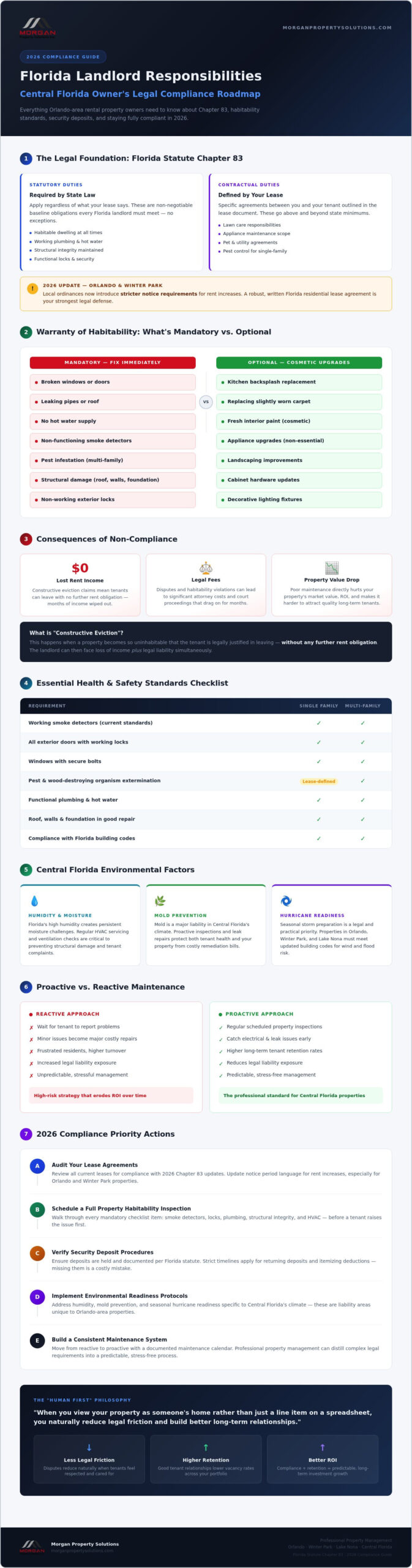
Managing a rental property is often a journey of balance. You’re juggling long-term financial goals with the daily needs of your residents. In its simplest form, landlord responsibilities florida are defined by Florida Statute Chapter 83. This set of laws governs the relationship between you and your tenant, ensuring both parties stay protected. As we move through 2026, the landscape is shifting. Tenant expectations are higher than ever, and local ordinances in places like Orlando have introduced stricter notice requirements for rent increases. We believe in a “human first” approach. When you view your property as someone’s home rather than just a line item on a spreadsheet, you naturally reduce legal friction and build better long-term relationships. Understanding the Florida Landlord Tenant Law isn’t just about avoiding trouble; it’s about setting a foundation for a successful, high-ROI investment.
The Core of Florida Statute Chapter 83
You can break down the Landlord-Tenant Act to make it feel less overwhelming. Essentially, you have two types of duties. Statutory duties are those required by state law regardless of what your lease says. Contractual duties are the specific agreements you’ve made within your lease document. For instance, state law requires you to provide a habitable dwelling, but your lease might specify who handles the lawn care. Following General Landlord-Tenant Law Principles helps ensure your agreements remain fair and enforceable. A robust, written Florida residential lease agreement is your strongest defense. It clarifies expectations from day one, leaving little room for the confusion that often leads to disputes or missed landlord responsibilities florida.
The Consequences of Non-Compliance
Ignoring these rules carries real risks that can be expensive. If a landlord fails to maintain essential services, a tenant might claim “constructive eviction.” This happens when the property becomes so uninhabitable that the tenant is legally justified in leaving without further rent obligation. In these cases, you could lose months of income and face significant legal fees. Beyond the legal risks, poor maintenance directly hurts your property’s value and long-term ROI. We’ve seen how professional management in Winter Park and Lake Nona acts as a shield. By having a steady ally to handle inspections and compliance, you don’t have to worry about missing a deadline or a new regulation. It’s about turning a complex legal burden into a predictable, stress-free process that focuses on your growth.
The Warranty of Habitability: Maintaining a Safe Rental Property
Providing a safe environment is the cornerstone of a successful rental business. Under state law, the warranty of habitability ensures that every rental is safe, sanitary, and fit for human life. This is the foundation of landlord responsibilities florida. You don’t just provide four walls. You must provide a dwelling with working plumbing, hot water, and a reliable heating system. Structural integrity is equally vital. Keeping the roof, walls, and foundation in good repair isn’t just about protecting your investment; it’s about meeting strict Florida building codes. If you’re ever unsure about where the line is drawn, The Florida Bar’s Landlord/Tenant Guide offers a helpful breakdown of these basic requirements.
Understanding the difference between mandatory maintenance and cosmetic repairs is essential for financial success. You must fix a broken window or a leaking pipe immediately. However, upgrading a kitchen backsplash or replacing slightly worn carpet is optional. Knowing these distinctions helps you prioritize your budget while staying fully compliant. If you need help managing these details, our Orlando property management team can help you navigate the nuances of property upkeep.
Essential Health and Safety Standards
Safety standards extend beyond the structure itself. In multi-family dwellings, landlords are usually responsible for exterminating wood-destroying organisms and other pests. For single-family homes, this duty often shifts based on the lease agreement. Fire safety is another non-negotiable area. Your Orlando rental must have functioning smoke detectors that meet current standards. Additionally, providing reasonable security is a core duty. This means ensuring all exterior doors have working locks and windows have secure bolts to keep your tenants safe.
Preventative Maintenance as a Professional Standard
Waiting for a tenant to call with a problem is a high-risk strategy. It often leads to more expensive repairs and frustrated residents. Conducting regular inspections allows you to catch minor leaks or electrical issues before they transform into legal liabilities. Proactive maintenance, the act of addressing potential issues before they fail, is the key to long-term tenant retention in Central Florida. By staying ahead of the curve, you project an image of a dependable and caring owner. This methodical approach is exactly what we provide at Morgan Property Solutions, acting as your steady ally in property care.
Administrative and Financial Duties: Deposits, Rent, and Access
Handling the financial side of a rental requires a methodical approach. One of the most critical landlord responsibilities florida owners face is the “30-Day Rule” for security deposits. Within 30 days of receiving a deposit, you must notify the tenant in writing about where their funds are being held. This transparency builds trust and keeps you compliant with Florida Landlord-Tenant Law. Beyond just holding the money, you need to provide detailed financial reporting. Staying “audit-ready” isn’t just for tax season; it’s a professional standard that protects your reputation. Clear, automated rent collection systems are the best way to reduce disputes and ensure steady cash flow for your investing in rental properties strategy.
Legal Handling of Security Deposits
Florida law is very specific about how you store a tenant’s money. You can’t commingle these funds with your personal cash. You must choose between a non-interest-bearing account, an interest-bearing account, or a surety bond. If you choose an interest-bearing account, the tenant is entitled to a portion of that interest. Returning the money is also on a strict timeline. If there’s no claim, you have 15 days to return the deposit after the tenant vacates. If you intend to claim damages, you have 30 days to send a formal notice via certified mail. To simplify this, many owners are exploring deposit-free renting. This modern approach removes the friction of large upfront costs while still providing protection for the landlord.
Respecting Tenant Privacy and Right of Access
A tenant’s home is their sanctuary. While you own the building, the law protects their right to “Quiet Enjoyment.” This means you can’t just drop by unannounced to check on things. Florida requires a 24-hour notice before you enter for non-emergency repairs or inspections. The entry must also happen at a “reasonable time,” which is generally defined as between 7:30 a.m. and 8:00 p.m. There’s an exception for true emergencies, like a bursting pipe or a fire. In those cases, you can enter without prior notice to prevent further damage. Balancing your right to protect the asset with the tenant’s right to privacy is a hallmark of an experienced property manager. By following these access rules, you maintain a respectful relationship that encourages long-term residency.
Central Florida Specifics: Managing Heat, Humidity, and Hurricanes
Living in Central Florida brings unique challenges that generic legal guides often overlook. While state statutes provide the framework, the local climate dictates many practical landlord responsibilities florida owners must master. For example, the debate over air conditioning is a frequent point of confusion. Florida law doesn’t explicitly mandate A/C statewide, but if you provide a unit in your lease, you’re generally responsible for its maintenance. In our experience, failing to keep the air running in August isn’t just a comfort issue; it’s a habitability risk that can lead to moisture damage. Local rules in Orange County also require 60 days’ notice for rent increases over 5 percent, a detail that catches many DIY landlords off guard. Staying ahead of these regional nuances is what separates a successful investor from one facing constant disputes.
Transparency is your best protection when dealing with environmental risks. As of 2026, you must provide a written flood disclosure before any lease is signed. This document must state if you have knowledge of past flooding or if any flood-related insurance claims have been filed. Sharing this information openly protects you from future liability and helps your tenants prepare for the rainy season. It’s a simple step that builds a foundation of trust and professional reliability.
Humidity and Air Quality Management
Central Florida’s moisture levels are relentless. Proactive A/C servicing is a professional standard that prevents the growth of mold, which can quickly become a health hazard. We recommend educating tenants on their role in this process. Simple habits, like keeping the A/C at a steady temperature and using exhaust fans during showers, help avoid “tenant-caused” mold issues. In historic neighborhoods like Winter Park, older plumbing systems require extra attention. Small leaks in these homes can lead to hidden moisture buildup. Catching these issues early saves you thousands in remediation costs and ensures the home stays safe for your residents.
Storm Season Responsibilities
Hurricane season requires a clear, written plan. While state law doesn’t force you to provide shutters unless specified in the lease, you’re always responsible for the property’s structural soundness. Your lease addendum should clearly state who is responsible for boarding up windows and clearing the yard of debris. After a storm passes, your duty is to assess damage immediately to ensure the home remains habitable. During these high-stress events, having an Orlando property manager acting as your steady ally ensures that emergency protocols are followed and communication remains open. This methodical approach protects your investment and provides the reassurance your tenants need during a crisis.
How Professional Management Simplifies Your Responsibilities
Managing landlord responsibilities florida owners face shouldn’t feel like a burden. While the legal framework of Chapter 83 is complex, our team specializes in turning these requirements into a seamless experience. We act as a professional buffer, handling every tenant request and legal notice so you don’t have to. This third-party oversight reduces the emotional stress that often comes with property ownership. It also ensures that your financial returns are optimized. We track every maintenance log and deposit timeline through automated systems; this ensures you stay compliant without having to micromanage the process yourself.
Professional oversight also helps you avoid the common pitfall of overspending on repairs. By using a methodical approach to maintenance, we distinguish between essential habitability issues and optional cosmetic work. This keeps your property in top condition while protecting your cash flow. You get the benefit of a high-ROI investment without the typical headaches of DIY management.
The Morgan Property Solutions Process
We’ve developed a three-step process to ensure your success. First, we conduct a comprehensive initial inspection and compliance audit of your Orlando rental. This identifies potential liabilities before they become problems. Second, we implement standardized lease agreements that protect your interests under the latest state laws. Finally, we provide responsive maintenance coordination. This ensures the “Warranty of Habitability” is always met, keeping your residents happy and your investment secure.
Peace of Mind for Central Florida Investors
With over 20 years of experience in Clermont, Windermere, and Winter Garden, we understand the local market better than anyone. Our team has built proven systems for inspections and financial reporting that take the guesswork out of ownership. You can access our online portal at any time for real-time updates on your property’s status. This transparency ensures you’re always “audit-ready” and informed. Simplify your landlord journey and reduce your liability with professional management today.
Securing Your Investment for the Future
Staying on top of landlord responsibilities florida owners face doesn’t have to be a source of constant stress. We’ve explored how essential it is to maintain habitability standards and handle security deposits with legal precision. Whether you’re managing a single home in Winter Park or a growing portfolio in Lake Nona, success comes down to consistent, methodical care. By following the updated 2026 guidelines for maintenance and tenant communication, you protect both your property’s value and your professional reputation.
You don’t have to navigate these legal complexities alone. With over 20 years of experience in the Central Florida market, Morgan Property Solutions is ready to be your steady ally. We provide detailed financial reporting and automated payment systems to keep your business running smoothly. Our deep expertise in Orlando and the surrounding areas ensures your investment is always in capable hands. Maximize your rental profits with Orlando’s trusted property managers. We’re here to help you build a more profitable and predictable future.
Frequently Asked Questions
Is a landlord required to provide air conditioning in Florida?
Florida state law doesn’t explicitly require landlords to provide air conditioning. However, if an A/C unit is already installed or included in your lease agreement, you’re generally responsible for its maintenance and repair. In our Central Florida climate, providing working cooling is a standard professional practice. It ensures tenant satisfaction and protects your property from the moisture damage that often follows high indoor temperatures and humidity levels.
How much notice must a Florida landlord give before entering a property?
As of 2026, Florida landlords must provide at least 24 hours’ notice before entering a rental unit for the purpose of repairs. This entry must occur at a reasonable time, which the law defines as between 7:30 a.m. and 8:00 p.m. You don’t need to provide notice in the event of a true emergency, such as a fire or a major water leak that threatens the home’s safety.
Who is responsible for pest control in a Florida rental home?
For multi-family dwellings like apartments or duplexes, the landlord is responsible for exterminating rats, mice, roaches, and wood-destroying organisms. In a single-family home, these landlord responsibilities florida can be modified within the lease agreement. It’s common for owners of single-family rentals to shift pest control duties to the tenant, but this must be clearly stated in writing to avoid confusion or disputes during the tenancy.
Can a tenant withhold rent in Florida if repairs are not made?
A tenant can only withhold rent if the landlord fails to maintain the property in a habitable condition and the tenant follows strict legal steps. The tenant must provide a written 7-day notice stating their intent to withhold rent if the issues aren’t resolved. Because this process is legally complex, we recommend addressing maintenance requests promptly to avoid these escalations and protect your steady rental income.
What is the “Warranty of Habitability” in Florida real estate?
The Warranty of Habitability is a legal requirement that your rental property meets basic health, safety, and building codes. This includes providing a weather-tight structure, working plumbing, hot water, and functional heating systems. It ensures that the dwelling is fit for human life. Failing to meet these standards can lead to legal claims of constructive eviction, where the tenant is permitted to break the lease without penalty.
How long does a landlord have to return a security deposit in Florida?
If you don’t intend to make a claim on the security deposit, you must return the full amount within 15 days of the tenant vacating. If you do intend to claim damages, you must send a written notice to the tenant via certified mail within 30 days. These strict timelines are part of the core landlord responsibilities florida owners must follow to avoid losing the right to claim any damages.
Are landlords responsible for hurricane damage repairs?
Landlords are responsible for repairing any structural damage caused by a hurricane to ensure the property remains habitable. This includes fixing roofs, broken windows, or electrical issues. While you aren’t legally required to provide hurricane shutters unless they’re mentioned in your lease, you must maintain the building’s integrity. We suggest having a clear emergency plan in place before storm season begins to protect your asset and your residents.
What happens if a landlord fails to meet their responsibilities in Florida?
Failure to meet legal obligations can result in serious financial and legal consequences. Tenants may have the right to terminate the lease early, withhold rent, or sue for damages in court. In some cases, a landlord might even be required to pay the tenant’s legal fees. Utilizing professional property management helps mitigate these risks by ensuring every requirement is met through methodical inspections and documented compliance logs.

Article by
Oliver Overton-Morgan
Oliver Overton-Morgan is a full-time Real Estate Broker since 2003, with years of experience helping thousands of people purchase and sell real estate throughout Central Florida. He holds a Graduate Realtor Institute designation, LCAM, and has held licenses in good standing as a Florida Mortgage Broker and a Notary Public. Oliver immigrated to central Florida in 2001, and within 5 years Oliver built a successful Real Estate brokerage in central Florida, where he recruited over 75 Sales Associates with 25+ million in sales production.