Handing over the keys to your home isn’t just a casual way to earn passive income; it’s launching a regulated regional business. If you are stepping into the Orlando market, this first time landlord guide central florida property owners can rely on will help you set up for long-term success right from the start.
It’s completely normal to feel uneasy about Florida’s strict landlord-tenant statutes, security deposit rules, or facing a sudden A/C breakdown in the middle of a humid summer. You want dependable residents who pay on time and respect your space, without the constant stress of legal missteps, HOA violations, or emergency repairs draining your free time.
That peace of mind is entirely achievable. You’ll learn the essential steps to prepare, legally protect, and profitably manage your first Central Florida rental property with total confidence. We’ll walk through practical tenant screening, mandatory state disclosures, local HOA expectations, and regional maintenance strategies to keep your investment thriving.
Key Takeaways
- Shift your mindset from personal homeowner attachment to strategic asset management by completing crucial structural and safety checks before listing.
- Use this first time landlord guide central florida owners trust to master Florida Chapter 83 compliance, mandatory flood disclosures, and security deposit regulations.
- Price your home accurately using actual neighborhood comps rather than online estimates, paired with comprehensive screening to place reliable tenants.
- Defend your property’s value against Central Florida humidity and heat through regular A/C servicing and moisture prevention protocols.
- Weigh the daily demands of DIY management against partnering with an established Orlando property manager to safeguard your time and protect your bottom line.
Preparing Your Central Florida Home for the Rental Market
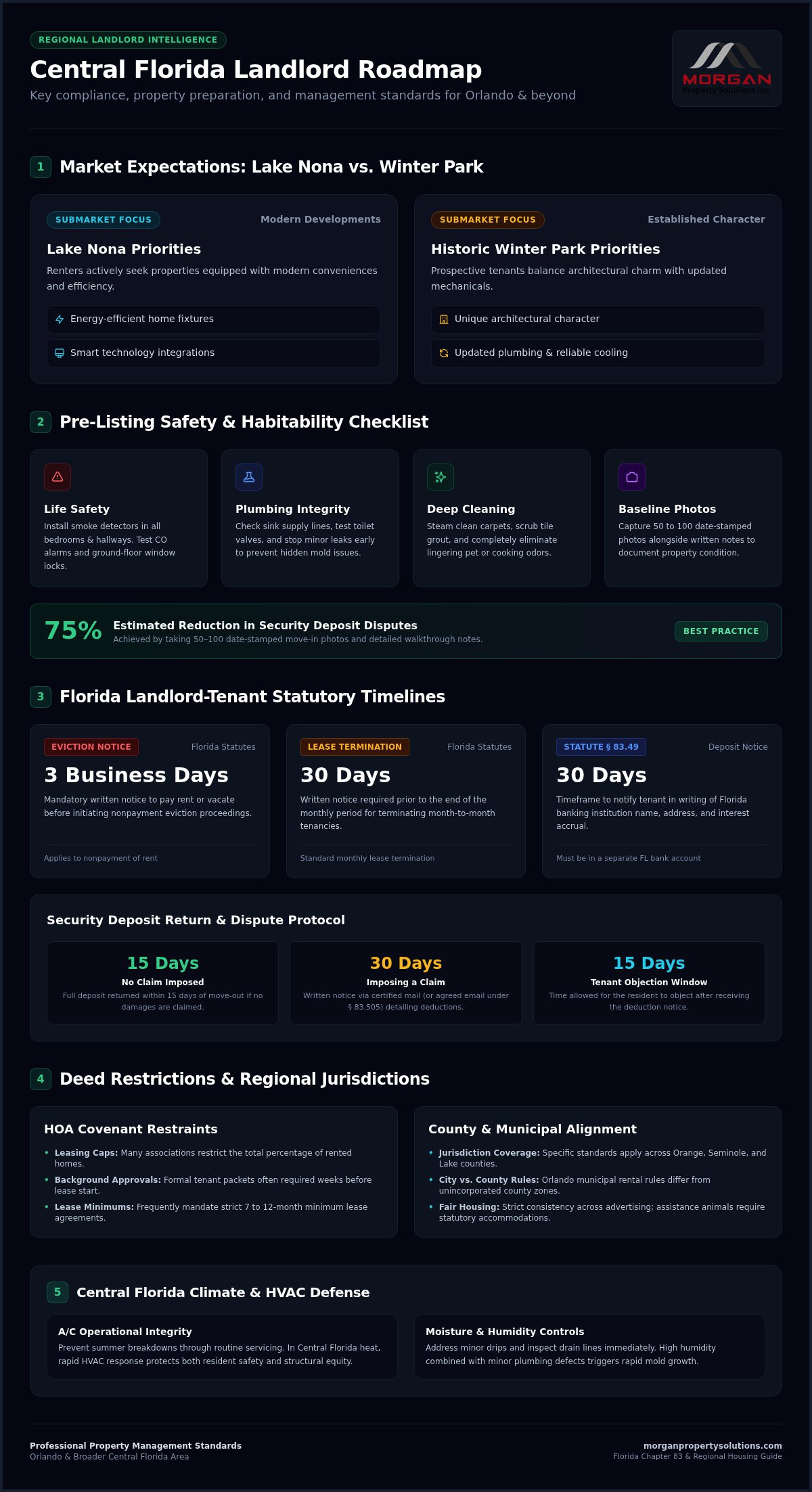
Renting out a house requires a mental pivot. You are transitioning from seeing your property as a beloved home to managing it as an income-generating asset. When setting your expectations, remember that different neighborhoods attract different resident priorities. Renters in Lake Nona often look for energy-efficient fixtures and smart tech, while prospective tenants in historic Winter Park look closely at character paired with updated, modern plumbing and reliable cooling.
Meeting baseline safety and habitability codes across Orange, Seminole, and Lake counties protects your equity and keeps you compliant with regional housing standards. Taking a methodical approach ensures nothing slips through the cracks before your first showing.
The Move-In Ready Safety and Habitability Checklist
Every reliable first time landlord guide central florida owners follow should prioritize an objective pre-listing inspection. Tackle these essentials before marketing the property:
- Life safety devices: Install working smoke detectors in every bedroom and hallway, test carbon monoxide alarms, and ensure all ground-floor window latches lock securely.
- Plumbing integrity: Check supply lines under sinks, test toilet valves, and address minor drips immediately to stop hidden moisture before it triggers mold issues.
- Deep interior cleaning: Steam clean carpets, scrub tile grout, and eradicate lingering pet or cooking odors so the home feels fresh.
- Move-in condition baseline: Take 50 to 100 date-stamped photographs alongside written walkthrough notes. Clear photographic move-in documentation reduces security deposit disputes by an estimated 75%, giving both you and your renter complete clarity.
Navigating Local HOA Bylaws and Municipal Rules
A huge portion of Central Florida homes sit within deed-restricted communities. Before you market your property, review your specific Homeowners Association covenants. Many HOAs enforce leasing caps, require formal background check packets submitted weeks ahead of time, or restrict lease terms to a minimum of seven to twelve months.
City and county rules matter just as much. Orlando and neighboring municipalities enforce specific rental housing standards and registration steps that differ from unincorporated county areas. If juggling association approvals, local compliance, and vendor coordination feels overwhelming, partnering with a provider of professional property management simplifies the entire transition. For tailored local guidance, exploring dedicated Orlando property management resources helps ensure you meet every community requirement before placing your first resident.
Navigating Florida Landlord-Tenant Law and Legal Compliance
Operating a rental property in Orange or Seminole County means managing real legal exposure. State statutes govern your day-to-day operations, meaning a generic lease template downloaded from the internet won’t hold up in a Florida courtroom. Out-of-state forms frequently lack required statutory disclosures, leaving property owners vulnerable during disputes. To protect your investment, you must align every lease covenant with Florida Statutes Chapter 83, including proper notice protocols.
Under current statutes, evictions for nonpayment require a precise 3-business-day written notice to pay or quit. For terminating month-to-month tenancies, Florida law mandates at least 30 days of written notice prior to the end of the monthly period. Familiarizing yourself with current Florida landlord tenant law keeps your agreements airtight and enforceable.
Security Deposit Handling Under Florida Statute 83.49
Any comprehensive first time landlord guide central florida investors rely on must emphasize security deposit rules. Florida law is remarkably strict about these funds:
- Banking location: You must hold security deposits in a dedicated account at a Florida banking institution without commingling the money with your personal funds.
- Initial notice: Within 30 days of receiving the deposit, you must notify the resident in writing detailing the bank’s name, address, and whether the funds accrue interest.
- Return timelines: If you aren’t imposing a claim, return the full deposit within 15 days of move-out. If you intend to make deductions, you have 30 days to send written notice via certified mail (or email if agreed in writing under § 83.505). Tenants then have 15 days from receipt to object.
Because traditional deposits create upfront friction, many owners now offer deposit-free renting to attract qualified applicants while preserving complete damage protection.
Fair Housing Rules and Required Landlord Disclosures
Federal and state regulations require total consistency when advertising and screening. Avoid discriminatory language in your listings regarding familial status, religion, or disability. Under federal guidelines, assistance and service animal accommodation requests cannot be treated as standard pet inquiries, meaning you cannot charge pet rent or pet deposits for certified assistance animals.
Background screening must also align with FTC tenant screening regulations, which govern credit verifications and formal adverse action notices. When signing agreements, remember that residential leases of one year or longer require a standalone flood disclosure detailing known past flood damage or disaster aid under § 83.512, alongside mandatory radon gas and pre-1978 lead-based paint notices. If you want help staying ahead of shifting statutes, partnering with an experienced Orlando property management team ensures full operational compliance every month.
How to Market Your Property and Screen Central Florida Tenants
Pricing your home correctly is the foundation of effective marketing. Automated portal estimates frequently miss local nuances, such as school district boundaries or neighborhood amenity packages in master-planned communities. Pull actual closed lease comps from your immediate subdivision over the last 90 days to find an accurate benchmark. Overpricing leads to extended vacancies, and every empty month quietly drains your yearly returns.
Once you set the price, capture clear, wide-angle photos that showcase functional features. Highlight high-demand Central Florida essentials, including updated air conditioning units, covered lanais, and fenced yards. Distribute your listing across high-traffic syndicated platforms to cast a wide net, ensuring your property gets maximum visibility.
To avoid fair housing complaints and personal bias, establish uniform, written qualification benchmarks before showing the home. Aligning your application process with established screening criteria guarantees every applicant receives fair, consistent treatment.
Five Steps to Comprehensive Tenant Screening
Following a structured framework protects your asset against fraud and missed rent. The best practices in any first time landlord guide central florida owners follow should include these verification steps:
- Income verification: Confirm gross monthly household earnings equal roughly three times the rent using automated bank-linking tools or direct employer confirmations rather than easily altered PDF stubs.
- Credit evaluation: Review consumer reports for recent utility collections, open bankruptcies, and chronic late payment histories.
- Landlord verifications: Call prior property managers to verify exact tenancy dates, cleanliness, and overall lease compliance.
- Public records search: Review nationwide criminal records and eviction filings in compliance with consumer reporting laws. Consult the Florida Department of Agriculture and Consumer Services landlord-tenant guide to ensure your intake workflows follow state standards.
- Fraud prevention: Verify physical government identification carefully. Florida’s CS/HB 1293 establishes severe penalties for obtaining residential leases with false documents, underscoring the necessity of strict ID checks.
Managing Pets and Assistance Animals Compliantly
Central Florida has an exceptionally high population of pet-owning renters. Banning animals entirely shrinks your applicant pool significantly, but welcoming pets without clear guidelines exposes your home to unnecessary wear. Outline clear expectations regarding accepted pet types, routine flea prevention, and non-refundable fees.
Using specialized third-party tools like pet screening makes this process simple by assessing behavioral histories and vaccination records. Most importantly, remember that legitimate service animals and emotional support animals are legally classified as assistance animals rather than pets. You cannot charge pet deposits, fees, or additional rent for valid accommodations under federal Fair Housing guidelines.
Managing Ongoing Operations, Maintenance, and Climate Challenges
Operating a profitable rental in Central Florida demands staying ahead of regional weather patterns. Between torrential summer downpours, soaring heat indices, and sudden thunderstorm power surges, delayed maintenance turns minor repairs into major structural expenses. Establishing automated, digital rent collection keeps cash flow predictable, while scheduling routine walk-through inspections allows you to identify plumbing drips, roof leaks, or exterior settling long before they threaten your equity.
A reliable first time landlord guide central florida owners follow must prioritize preventive climate defenses. Protecting your home against heat, moisture, and wind is essential for preserving property value.
HVAC Maintenance and Humidity Control in Florida
Air conditioning in Greater Orlando is not a seasonal luxury; it is a critical structural safeguard. Outdoor humidity across Central Florida regularly exceeds 75%, and mold thrives once indoor relative humidity creeps past 60%. If an A/C compressor fails in July, interior moisture can trigger serious habitability issues within 24 to 48 hours.
- Filter schedules: Require air filter changes every 30 to 60 days in the lease to maintain system airflow and reduce strain on the air handler.
- Drain line care: Schedule professional bi-annual HVAC tune-ups to clear condensate drain lines. Algae clogs in drain lines are the leading cause of indoor water leaks and ceiling damage in Florida rentals.
- Thermostat guidelines: Advise tenants never to turn cooling units off completely when traveling, keeping vacant settings between 76°F and 78°F.
- Capital reserves: Maintain a dedicated emergency reserve fund specifically for unexpected summer compressor replacements or emergency mechanical repairs.
Hurricane Preparedness and Seasonal Storm Protocols
Tropical storms require crystal-clear operational boundaries. Never leave hurricane preparations to chance when a named storm enters the Atlantic or the Gulf. Your lease should explicitly state whether the owner or tenant is responsible for installing window shutters, clearing drainage paths, and bringing patio furniture indoors.
Trim back heavy tree branches before June, inspect roof boots and flashing, and clear yard gutters of pine needles. Establish a clear emergency protocol to text or email residents when local advisories are issued. Under Florida Statute § 83.63, tenants may terminate their lease immediately if storm damage renders a property uninhabitable, making fast pre-storm preparation and rapid post-storm response critical. If coordinating vendors, storm readiness, and seasonal repairs feels like too much to handle on your own, explore our full-service Orlando property management solutions to safeguard your home year-round.
Self-Management vs. Hiring a Central Florida Property Manager
Deciding between managing your own property and hiring an expert comes down to how you value your personal time and risk tolerance. While self-management appears to save money upfront, the everyday operational load can quickly turn into a second job. Balancing tenant communications, weekend emergency repairs, and shifting state statutes requires constant attention.
If your goal is building sustainable wealth without everyday landlord fatigue, reviewing our guide on residential property management will help you evaluate full-service support. Aligning professional oversight with your long-term wealth goals in investing in rental properties ensures your asset continues generating returns without draining your personal life.
Calculating the Hidden Costs of Self-Management
Self-managing landlords often underestimate the hours required to run a rental successfully. Marketing the home, fielding dozens of unqualified inquiries, and scheduling individual showings can take upwards of twenty hours per vacancy. Every week a home sits vacant waiting for an open weekend showing chips away at your annual net profit.
Beyond lost time, the emotional strain is real. Enforcing late fees, serving formal statutory notices, or inspecting for unauthorized occupants can lead to uncomfortable confrontations. A single compliance error during an eviction or deposit deduction can easily trigger legal fees that exceed the cost of professional management for an entire year.
How Professional Management Protects Your Investment
A trusted property manager functions as your operational partner, insulating you from daily friction while streamlining administrative tasks. Over 20 years of combined real estate and property management experience enables teams like Morgan Property Solutions Inc. to protect your equity and maximize cash flow.
- Transparent digital reporting: Access real-time accounting, maintenance invoices, and year-end 1099 tax summaries through a dedicated online owner portal.
- Vetted vendor networks: Benefit from trusted local contractors who provide prompt, cost-effective service, avoiding inflated retail rates on plumbing or HVAC emergencies.
- Thorough oversight: Routine property inspections identify deferred maintenance early, preserving your home’s structural integrity.
This first time landlord guide central florida owners depend on highlights one central truth: successful rental ownership should support your lifestyle, not consume it. Partnering with seasoned professionals like Morgan Property Solutions Inc. for Orlando property management gives you true peace of mind while ensuring your property operates smoothly year after year.
Start Your Central Florida Rental Journey With Confidence
Turning a home into a profitable rental doesn’t have to be an overwhelming process. When you follow the steps in this first time landlord guide central florida investors rely on, you protect your hard-earned equity. Real long-term success comes down to mastering state compliance, vetting applicants through structured screening, and staying ahead of subtropical climate maintenance before small issues turn into costly headaches.
You don’t have to navigate every legal requirement or unexpected repair alone. Backed by over 20 years of local real estate and property management experience, our team helps owners protect their investments through comprehensive tenant screening, real-time digital reporting, and reliable local maintenance coordination. Ready to safeguard your property and enjoy true peace of mind? Connect with Morgan Property Solutions for stress-free management today, and let’s set your rental up for lasting success.
Frequently Asked Questions
Do I need a special business license to rent my home in Central Florida?
Florida does not require a statewide landlord license for long-term residential rentals, but local requirements vary by municipality. For instance, the City of Orlando requires single-family rentals to obtain a residential rental dwelling permit. Unincorporated areas in Orange, Seminole, or Lake County might require local business tax receipts. Always verify municipal ordinances and your community HOA bylaws before listing your property.
Can I require my tenants to carry renter insurance under Florida law?
Yes, Florida landlords can legally require residents to maintain an active renter’s insurance policy throughout their tenancy. Specifying a standard liability policy, typically around $100,000, protects your asset if a resident accidentally causes water or fire damage. Every thorough first time landlord guide central florida investors read recommends confirming active coverage before handing over property keys.
How much can I legally raise the rent each year in Florida?
Florida does not impose rent control caps on private residential leases. Under state preemption legislation, local municipalities cannot limit rental rate adjustments. You have the right to adjust rent to current fair market value once a lease term ends. However, you must provide proper advance written notice and avoid implementing rent hikes in a discriminatory or retaliatory manner.
What happens if a tenant stops paying rent on my Orlando property?
You must immediately serve a formal 3-business-day written notice to pay or quit under Florida Statute § 83.56. This statutory countdown excludes weekends and legal holidays. If the tenant fails to pay or vacate within three business days, you can file an eviction complaint in county court. You cannot change locks, shut off utilities, or seize property yourself.
How fast do I have to fix a broken air conditioner in Florida?
You should treat a broken air conditioner as an immediate priority, ideally resolving the issue within 24 to 48 hours. While Florida statutes focus on heat, local building codes and standard leases consider cooling systems an essential service once installed. In Central Florida’s climate, a failed unit quickly drives indoor humidity past safe thresholds, triggering dangerous mold growth and potential lease breaches.
Can I enter my rental property without giving advance notice to the tenant?
No, you cannot enter without advance notice unless there is an immediate emergency or the tenant gives explicit permission. Florida Statute § 83.53 requires landlords to provide at least 12 hours of notice before entering for non-emergency repairs or inspections, scheduled between 7:30 a.m. and 8:00 p.m. Providing 24 hours of written notice remains the standard regional practice to protect tenant privacy.
What is the proper way to hold a tenant security deposit in Florida?
You must hold the funds in a dedicated Florida financial institution without mixing them into personal operating accounts. Following this first time landlord guide central florida requirement prevents statutory penalties. Under Florida Statute § 83.49, you must notify the resident in writing within 30 days of receiving the deposit, detailing the bank name, address, and whether the account pays interest.

Article by
Oliver Overton-Morgan
Oliver Overton-Morgan is a full-time Real Estate Broker since 2003, with years of experience helping thousands of people purchase and sell real estate throughout Central Florida. He holds a Graduate Realtor Institute designation, LCAM, and has held licenses in good standing as a Florida Mortgage Broker and a Notary Public. Oliver immigrated to central Florida in 2001, and within 5 years Oliver built a successful Real Estate brokerage in central Florida, where he recruited over 75 Sales Associates with 25+ million in sales production.